What Changes When Amazon AWS Acquires the Mexican Plant
When Amazon AWS acquires an industrial plant in Mexico, the acquired site remains responsible for wastewater compliance at its operating and discharge points; ownership does not create a new exemption. NOM-001-SEMARNAT-2021 has applied since March 11, 2023, to permissible pollutant limits for discharges into surface and groundwater receiving bodies, according to the National Law Review. Direct dischargers may need a wastewater discharge permit, pretreatment, federal fees, maintained measuring devices and sampling access, while state and municipal requirements may also govern sewer connections. The acquisition team should verify permits, compliance records, sampling data, outstanding obligations and treatment capacity before closing.
Amazon AWS acquisition diligence should treat the transaction as the transfer of an operating site with existing environmental permits, treatment assets, discharge points, monitoring records and potential historical violations. The question is not whether the acquisition changes the law; it is which permits, fees, notices, violations, capital projects and remediation obligations must be transferred, corrected or reserved for in the purchase agreement.
Keep two workstreams separate. The AWS Mexico Compliance Guide, first published in December 2024, addresses cloud security, privacy and the shared responsibility model for customers using AWS. It does not establish NOM-001 compliance or discharge obligations for a physical Mexican industrial facility.
For the plant, the relevant facts are its manufacturing process, wastewater characteristics, discharge route and receiving body. Treat the plant’s environmental obligations as an acquisition-control workstream, not as an extension of corporate cloud-compliance review. Further Mexico plant acquisition wastewater requirements should be checked outlet by outlet, rather than against a single facility-wide assumption.
Map Every Wastewater Outlet Before Signing
Every permitted and potential wastewater outlet must be matched to a receiving body and regulatory pathway before the buyer accepts the site’s environmental liabilities. ECIJA states that a Compliance Program must be submitted for each discharge point listed in the applicable wastewater discharge permits. Permit-to-outlet reconciliation is a central diligence step: a permit that appears valid is not adequate if the plant has added, relocated or changed an outlet.
Inventory sanitary sewage, industrial process wastewater, cooling or wash water, stormwater subject to local controls, contaminated stormwater, and any infiltration, land discharge or other on-site release route. For each outlet, identify the receiving body, coordinates, legal ownership, source stream, seasonal variability and where the water ultimately goes: national waters, groundwater, soil, a municipal sewer or another private receiving body.
| Diligence field | Evidence to request | Decision triggered |
|---|---|---|
| Outlet and receiving body | Permit annexes, site plans, coordinates and sewer agreements | Determine whether federal, state or municipal requirements apply. |
| Source and discharge point | Process maps, drainage drawings, flow meters and sampling records | Identify an unpermitted or mismatched discharge point. |
| Current permit coverage | Permit, amendments, production limits and monitoring plan | Check whether current processes, flows and contaminants remain covered. |
| Operational change | Chemical inventory, production history and stormwater routing | Assess altered chemistry, capacity and contamination risk. |
| Treatment system | Design basis, operating logs, maintenance and calibration records | Test whether performance is credible and permit-capable. |
Compare each permit with actual production, measured flows, representative wastewater characterization and the approved sampling points. Flag outlets without permit coverage, process chemistry changes, expanded production, new stormwater routing and treatment equipment without credible operating records. The Mexican industrial pretreatment requirements for a comparable industrial context provide useful structure, but the buyer must use the acquired site’s own evidence.
Apply NOM-001-SEMARNAT-2021 to the Right Discharges
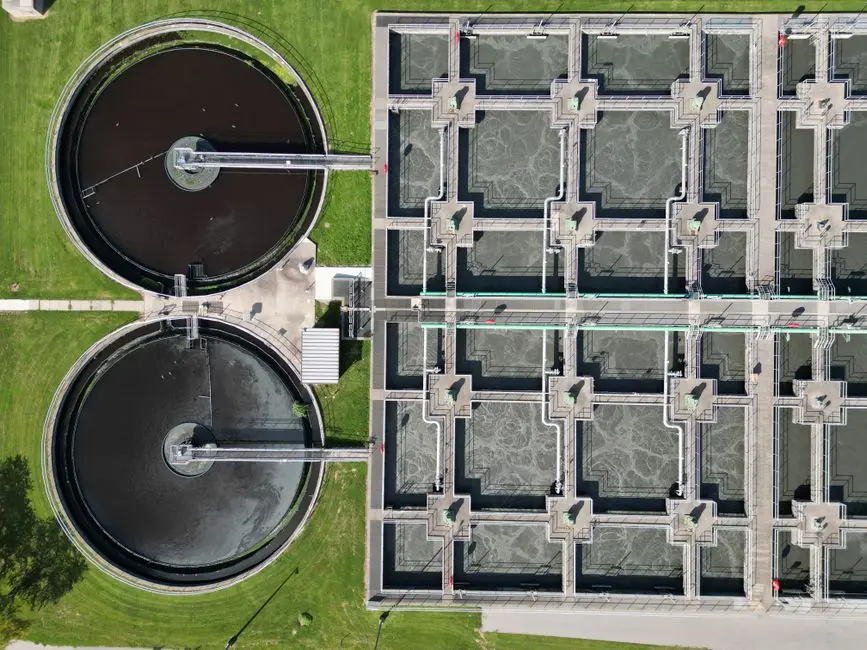
NOM-001-SEMARNAT-2021 became effective on March 11, 2023, replacing NOM-001 of 1996 and introducing more stringent wastewater criteria, including water toxicity and true water color, according to the National Law Review. The standard supplies permissible pollutant limits, but it is not a substitute for the site’s discharge permit or the conditions attached to the relevant receiving body.
The transition question must be resolved from transaction records rather than assumed from the purchase date. The National Law Review reports that the Voluntary Fulfillment Program could extend compliance with NOM-001 of 1996 obligations until March 2027, with twice-yearly progress reports and company-determined modifications to facilities or production processes. Applications were accepted only from March 11 through April 2, 2023.
A 2026 buyer should obtain the application, acceptance evidence, approved milestones, modification records, required reports and closure evidence for nonconformities. If the program was not requested on time or scheduled modifications did not proceed, the National Law Review states that full compliance with NOM-001-SEMARNAT-2021 was required immediately.
| Diligence question | Required evidence | Risk if evidence is missing |
|---|---|---|
| Did the site use the voluntary transition? | Application and authority acceptance | No basis to assume protected 1996 obligations. |
| Were milestones achieved? | Twice-yearly reports and modification records | Unresolved schedule or technical deviations. |
| Were nonconformities closed? | Acceptance, test results and corrective-action records | Unknown treatment or monitoring capital exposure. |
| Does the current permit implement the applicable standard? | Permit, annexes and receiving-body conditions | Limit or monitoring mismatch. |
| Does actual discharge meet applicable limits? | Representative monitoring and laboratory results | Historical violation or abatement exposure. |
Use the permit and receiving-body conditions to determine which NOM-001 parameters apply at each point. Do not infer that one permit, or participation in the historical program, proves compliance for every outlet. The industrial effluent treatment planning guide provides supporting context for separating standard limits, permit conditions and treatment performance.
Resolve Federal, State and Municipal Requirements
Federal, state and municipal requirements can apply simultaneously, and NOM-001 is only one layer. ECIJA identifies four express obligations for persons discharging into federal receiving bodies: a discharge permit, wastewater treatment before discharge, payment of the corresponding federal fee, and maintained measuring devices and access for sampling permit parameters.
Power is distributed among federal authorities, states, municipalities and Mexico City, so the receiving-body classification determines the applicable route. Where a federal receiving body is involved, engage CONAGUA or the competent authority early. The National Law Review identifies CONAGUA as leading the implementation of NOM-001-SEMARNAT-2021 and notes the potential value of early face-to-face engagement on compliance.
| Discharge route | Core documents to obtain | Engineering or commercial issue to test |
|---|---|---|
| Federal receiving body | CONAGUA discharge permit, annexes, fee receipts, Compliance Programs, monitoring and calibration records | Whether pretreatment and treatment consistently meet every permit limit. |
| Municipal sewer | Sewer permit, pretreatment permit or authorization, local limits, monitoring schedule, surcharges and enforcement history | Whether the discharge profile is acceptable without additional equalization or pretreatment. |
| Private land discharge | Land and groundwater analysis, authority correspondence, fee records and contamination assessment | Whether land, subsoil or aquifer liabilities remain. |
| Groundwater or injection route | Applicable authorization, well logs, monitoring and receiving-body conditions | Whether the route is legally available for the current wastewater. |
For a sewer connection, do not stop at NOM-001. Request the sewer permit, current pretreatment permit or authorization, discharge characterization, local limits, monitoring frequency, surcharge rules and enforcement history. ECIJA also notes that discharge onto private land where soil, subsoil or aquifers may be damaged can attract corresponding fees without excluding other contamination liabilities.
The practical control is to assign one compliance route to each outlet and identify every overlapping authority. Missing evidence should become a diligence request, closing condition or contractual reserve—not an assumption that the most lenient rule applies.
Choose the Compliance and Treatment Path
The discharge map determines the treatment scope; a single fit-for-all system should not be specified from NOM-001 alone. Each pathway has a different compliance deliverable, and equipment selection must follow measured flow, pollutant load, required effluent quality and permit conditions.
| Pathway | Scope before procurement | Equipment question |
|---|---|---|
| A — Federal discharge | Verify permit, applicable NOM-001 and permit limits, pretreatment obligation, federal fee, monitoring equipment, sampling access and each discharge-point Compliance Program. | Does the as-built treatment train close every measured permit gap? |
| B — Municipal sewer | Characterize industrial wastewater, local pretreatment limits, permitted flow and pollutant profile, sampling, reporting and sewer surcharges. | Is onsite equalization or pretreatment needed before the sewer connection? |
| C — Onsite treatment and reuse | Confirm reuse quality, storage, process compatibility, permit conditions and the intended reuse endpoint. | What treatment and controls are required for the reuse specification? |
Use a DAF system for industrial wastewater pretreatment where the wastewater profile supports removal of suspended solids, free oil and grease, or colloidal material. Consider an MBR membrane bioreactor for wastewater reuse where biological treatment with membrane separation is justified by flow, load and required effluent quality. These are process-screening conclusions, not equipment selections: the acquired site’s data must establish suitability.
Specify automatic chemical dosing only after identifying the required chemical, target parameter, control strategy, storage and handling requirements. NOM-001 does not by itself establish a chemical dose.
Request an as-is versus as-required comparison covering flow, pollutant load, monitoring, redundancy, operating labor, residuals, utilities and capital needed to close identified compliance gaps. The supplied research provides no universal cost figures, so require site-specific quotations rather than a generic equipment price.
Build a Pre-Closing Wastewater Diligence Checklist
Pre-closing diligence should reconcile legal documents, measured performance and capital obligations for every outlet. The minimum request includes discharge permits, amendments, compliance reports, monitoring results, sampling plans, calibration records, fee receipts, inspection records, notices, violations and corrective-action plans.
- Reconcile authorization: compare each permit and annex with the physical outlet, current production, flow records, wastewater characterization, treatment capacity and maintenance history.
- Test the transition path: establish whether the seller used the Voluntary Fulfillment Program and obtain evidence supporting the March 2027 compliance path, twice-yearly reports, facility or process modifications and closure of nonconformities.
- Verify monitoring: check that metering devices, calibration, sampling points and sampling access satisfy the obligations identified by ECIJA.
- Price the exposure: estimate required treatment upgrades, monitoring, residuals, staffing and operating-utility costs from site-specific engineering inputs.
- Allocate risk: use warranties, indemnities, escrow or capital reserves for known violations, overdue fees, missing permits and required upgrades.
Define the first 90 days after closing as a verification period: validate flows and loads, confirm sampling, inspect treatment assets, reconcile permits, verify operator training and prepare any required capital plan. The acquisition wastewater diligence workflow can support transaction sequencing, but conclusions must remain specific to the Mexican plant and its outlets.
Frequently Asked Questions
Does ownership by Amazon or AWS change the plant’s wastewater obligations?
No. The facility must still comply with the rules applicable to its discharge points and sewer connection. Before closing, inspect permits, violations, treatment performance, monitoring records, fees and any NOM-001 transition status. AWS cloud-security compliance does not establish compliance for the acquired plant’s physical wastewater systems.
Which discharge route should determine the regulatory and treatment scope?
Construct an outlet-by-outlet map. Federal receiving bodies trigger the permit, pretreatment, fee and monitoring duties identified by ECIJA; sewer discharges require municipal authorization and local limits; land or groundwater routes require analysis under their own legal framework. The discharge map, not the company name, determines the route.