What changes when Google acquires a Hungarian plant?
When Google acquires a plant in Hungary, the applicable wastewater requirements come from the site’s current Hungarian environmental and wastewater approvals, authorized discharge route, sewer or receiving-water conditions, monitoring duties and the characteristics of each wastewater stream. Google’s Supplier Code of Conduct also requires suppliers to maintain permits, control and treat wastewater, prevent illegal discharges and retain reliable records. The acquisition does not replace site-specific review, and the supplied research does not establish a universal Hungarian permit, effluent limit or pretreatment threshold. Those conditions must be confirmed from the plant’s documents and the competent authority before treatment capacity, reuse or integration is approved.
A change of control does not create one universal wastewater standard for the acquired Hungarian operation. The legal baseline remains the site’s existing approvals, discharge route, wastewater characteristics, monitoring obligations and any applicable corporate policy. Google’s Supplier Code of Conduct applies to suppliers, vendors, contractors, subcontractors and other partners of Alphabet, Google and its subsidiaries. Its environmental requirements require suppliers to obtain and keep permits and registrations current, fulfill operational compliance and reporting duties, and identify, monitor, control, treat and reduce hazardous wastewater. The Code also requires treatment before discharge or disposal where required, prevention of illegal discharges and spills, and creation and retention of compliant documents and records.
That creates two distinct diligence questions. The first is legal: can the plant continue operating under its permits and applicable requirements, and is there evidence of historical noncompliance or unremediated liability? The second is contractual or policy-based: does the acquired operation meet Google’s supplier expectations, including auditable wastewater controls? Falsification of records, refusal to disclose information or misrepresentation of conditions or practices is unacceptable under the Code and may lead to termination of the supplier relationship. A legal noncompliance issue normally requires regulator-facing corrective action or transaction protection; a corporate policy gap may require a supplier corrective action plan, audit response or integration commitment.
| Review layer | Primary evidence | Decision consequence |
|---|---|---|
| Hungarian legal compliance | Site-specific approvals, conditions, monitoring results and regulator correspondence | Determine lawful operation and unresolved liabilities |
| Google supplier governance | Permit-control system, treatment records, audit trail and disclosure record | Determine supplier-code conformity and escalation needs |
| Technical capability | Stream characterization, hydraulic load, treatment performance and bypass controls | Determine whether installed capacity supports permitted operation |
The acquisition team should treat the Code as an additional assurance layer, not as a substitute for Hungarian approvals. The broader Hungarian plant acquisition wastewater analysis provides context for separating legal obligations from corporate operating expectations, while the plant acquisition wastewater due-diligence guide shows how treatment continuity should be reviewed during integration.
Build the Hungarian permit and liability register
Lawful operation must be demonstrated from primary site documents, not inferred from the plant’s industry, location or new owner. Request the current environmental and wastewater approvals, sewer pretreatment or discharge authorization, water-abstraction records, monitoring plans, compliance reports, inspection findings and regulator correspondence. The permit register should identify the holder, authorized receiving route, permitted discharge points, effluent and sewer-pretreatment conditions, monitoring frequency, reporting duties and expiry date for every relevant authorization.
The evidence boundary is important: the supplied research does not identify the applicable Hungarian permit name, numeric effluent limit or local pretreatment threshold for an unidentified plant. Those values cannot be filled from a generic acquisition checklist. They must be extracted from the site-specific approval and confirmed with the competent authority where the document is incomplete, inconsistent or difficult to interpret. This limitation applies even if another plant in the same sector or region has a different authorization or discharge route.
Review the compliance history as a liability record, not merely as a trend chart. Historical exceedances, incomplete monitoring, unreported discharges, outstanding remediation, sludge destinations and wastewater charges may become acquisition liabilities. For each finding, establish the affected period, responsible party, corrective action, regulator status, continuing operating impact and whether the issue is transferable to the acquiring entity. The comparative plant acquisition wastewater requirements provides a useful structure for separating the legal review from the equipment review.
Add a formal change-of-control review. Determine whether the ownership change alters permit-holder status, whether integration changes the operating organization or process, and whether any planned production, discharge or treatment modification requires notification, amendment or re-approval. Obtain written confirmation from Hungarian counsel and the relevant authority or sewer authority where the permit does not answer the question clearly. Record the conclusion, supporting document, conditions and responsible owner in the transaction register.
| Register field | Evidence to obtain | Diligence test |
|---|---|---|
| Authorization and route | Current approval and sewer or discharge authorization | Does it cover the acquired entity, actual process, discharge points and route? |
| Conditions | Permitted effluent and pretreatment conditions | Are site results demonstrably compliant? |
| Monitoring and reporting | Monitoring plan, results, reports and correspondence | Are duties complete, timely and auditable? |
| Historical liability | Exceedances, unreported events, remediation and sludge records | Is the exposure closed, funded or transferable? |
| Change of control | Permit clauses, counsel opinion and authority correspondence | Is notification, amendment or re-approval required? |
Characterize every wastewater stream before sizing equipment
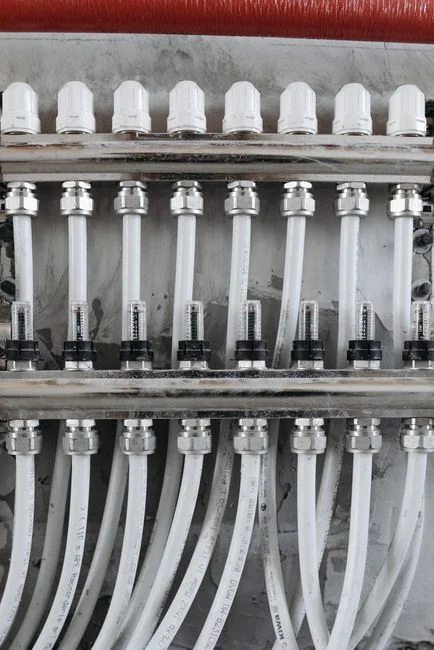
Treatment capacity cannot be selected from total production output or an average daily flow. Build an auditable wastewater mass balance that includes hourly peak flows, storm and firefighting water, laboratory wastewater, cooling blowdown, canteen flows and sanitary wastewater. Then map production streams separately, including paintshop and body-shop wash water, metalworking fluids, machining coolant, cleaning chemicals, oily runoff, sanitary wastewater, cooling blowdown and laboratory wastewater. Each stream needs a source owner, flow profile, destination and sampling point.
Obtain characterization covering metals, oils and grease, suspended solids, pH and biodegradable organics. The list may need to expand where the process or permit identifies other controlled parameters, but it must be based on plant evidence. Separate sampling points should distinguish individual streams from the combined wastewater leaving each treatment stage. This distinction is necessary to determine whether a downstream failure originates in an incompatible production stream or in the treatment process itself.
Test the conditions under which the plant actually operates. The sampling programme should address seasonal variation, shutdowns, restart discharges and any planned production expansion or product-mix change. For each stream, document variability, incompatible constituents, required pretreatment, final destination and whether a bypass could move untreated or off-spec wastewater outside the permitted route. A permit may constrain the final discharge even when an upstream stream would pass through a biological process without immediate failure.
The stream and sewer-limit analysis for petroleum plants and the metal-plant wastewater review provide useful technical comparisons, but their jurisdictions cannot be used as Hungarian limits.
| Characterization layer | Required information | Equipment or liability consequence |
|---|---|---|
| Hydraulic | Hourly peaks, storm and firefighting water, shutdown and restart flows | Sets hydraulic and equalization requirements |
| Pollutant | Metals, oils and grease, suspended solids, pH and biodegradable organics | Determines pretreatment and biological compatibility |
| Operational | Seasonal variation, product mix, expansion and cleaning cycles | Tests whether treatment remains effective under nonsteady loads |
| Routing | Final destination and possible bypass routes | Establishes whether off-spec flow can leave the permitted system |
Match pretreatment and biological treatment to the permit
Treatment selection should start with the function required by verified plant conditions, not with an equipment catalogue. Use DAF where the required function is separation of suspended solids, oil and grease, floatable material and colloidal matter before biological treatment. The available industrial DAF pretreatment system covers 4 to 300 m³/h across 13 standard models. That range is an equipment catalog specification, not proof that a particular model is adequate for the acquired plant.
Assess DAF performance against actual plant wastewater, including mixed and fluctuating loads. A clean-water test or a nominal flow comparison does not establish performance with paint, oils, metals, coolant or cleaning chemicals. The engineer must define the required separation duty, hydraulic peak, flow variability, recovered sludge route, control response and effect on downstream biological treatment. If the stream balance shows a material oil or solids load before biological treatment, DAF may have a defined role, subject to process testing and design verification.
Use MBR when the design basis supports biological treatment followed by submerged PVDF membrane filtration. The available MBR wastewater reuse system combines activated sludge with submerged PVDF membrane filtration and has a catalog range of 10 to 2,000 m³/day with effluent below 1 μm filtration. The filtration figure is an equipment specification. It is not a Hungarian discharge standard and does not by itself demonstrate compliance with the site permit, sewer authorization or reuse specification.
Screen incoming streams for substances that can inhibit biological processes or contaminate a reuse application, especially oils, metals, coolant and incompatible cleaners. Compare each option against required effluent quality, hydraulic and pollutant loads, footprint, reuse destination, sludge route, automation and the existing treatment train. The industrial ETP and DAF selection guide illustrates the screening logic, but the Hungarian site data must control the final selection.
| Selection criterion | DAF pretreatment | MBR treatment or reuse |
|---|---|---|
| Primary verified function | Remove suspended, floatable and colloidal material before biological treatment | Provide biological treatment with submerged membrane filtration |
| Catalog scope | 4 to 300 m³/h across 13 standard models | 10 to 2,000 m³/day |
| Key plant inputs | Oil, solids and floatable-material load; hydraulic variability | Verified feed quality, reuse demand, biological compatibility and residual stream |
| Compliance limitation | Catalog flow does not establish permit conformity | Below-1 μm filtration is an equipment specification, not a Hungarian discharge standard |
Verify monitoring, sludge and bypass controls
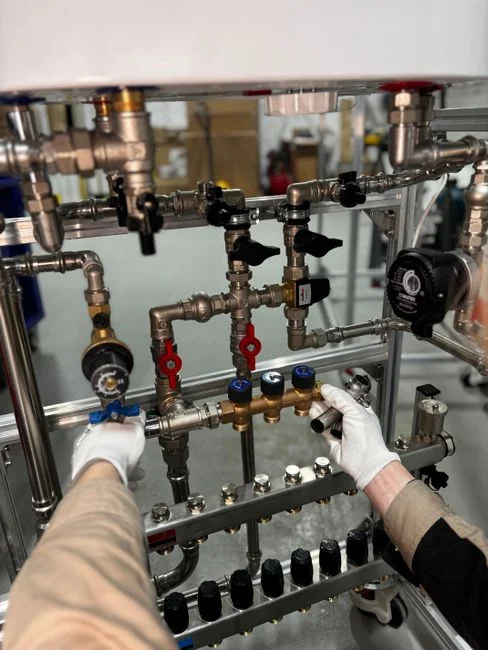
Compliance must remain demonstrable after closing, not merely satisfy a design drawing. Reconcile the monitoring plan with every permit condition, including parameters, sampling points, frequency, responsible personnel, records, reporting deadlines and escalation for exceedances. Verify how combined wastewater leaving each treatment stage is sampled; do not allow a production-stream sample to stand in for the legally relevant final or discharge sample.
Review sludge generation, characterization, storage, handling and destination as part of the wastewater compliance chain. Dewatering equipment should be evaluated together with the permitted residual route and downstream handling obligations. A plate-frame filter press and a mechanical bar screen serve different functions, so catalogue selection cannot replace a mass balance and destination review. In the broader acquisition workflow, solid and liquid handling should be reconciled before the transaction team treats the treatment train as complete.
Test bypass logic and physical isolation to determine whether untreated or off-spec wastewater could leave through an unauthorized route. Review startup, shutdown, peak-flow and production-change scenarios, including automatic diversion, containment, alarm response and operator authority. Confirm that the monitoring and treatment systems remain effective under nonsteady conditions rather than relying only on normal-production records.
Google’s Supplier Code of Conduct permits information requests and audits, requires compliant documents and records, and treats falsification or misrepresentation as unacceptable. The diligence evidence package should therefore be indexed, dated, traceable to the relevant permit condition and internally consistent with laboratory results and operating logs. Where data are missing, record the gap rather than reconstructing it retrospectively.
Decide whether wastewater reuse is legally and technically viable
Reuse is viable only when required water quality, process compatibility and the legal route are demonstrated together. Volkswagen Group’s 2024 Annual Report provides corporate-practice context: a growing number of its sites reuse treated wastewater in production processes, cooling towers, sanitary facilities or irrigation. The report also states that closed-loop circulation of cooling or process water reduces freshwater consumption and wastewater generation. These are corporate practices, not Hungarian approvals for the unidentified acquired plant.
The same 2024 Annual Report expects a production-wastewater recycling system operating since 2023 to reduce water withdrawal at that site by around 15%. That figure must not be transferred to an unidentified Hungarian facility. The buyer instead needs the verified flow, feed quality, intended reuse specification, process demand, residual discharge, monitoring plan and legal route for each proposed destination.
Map each reuse destination separately. A closed-loop process-water or cooling application may have different quality demands from sanitary reuse, while irrigation introduces its own application and receiving-site conditions. Reuse does not remove monitoring, recordkeeping or residual-discharge duties. An MBR wastewater reuse system can be screened where the verified flow, feed quality and reuse specification justify membrane treatment, but its 10 to 2,000 m³/day catalog range and below-1 μm filtration specification do not establish site suitability or legal reuse authority.
The data-center wastewater treatment guide can help separate treatment functions, but the Hungarian permit and process acceptance criteria remain controlling. The final investment case should state what is legally approved, what remains technically unverified and what operating evidence is required before reuse begins.
Use a closing-risk and post-acquisition improvement decision
A wastewater issue is a closing risk when it threatens lawful operation or creates a material unresolved liability; it is an investment when lawful operation can continue while capability is improved. This distinction prevents a proposed expansion, reuse project or equipment upgrade from obscuring a current permit failure.
Test each material finding against permit continuity, exceedance history, unpermitted routes, monitoring integrity, treatment capacity, sludge liabilities and evidence quality. A missing permit, unresolved exceedance, unauthorized discharge route or treatment train unable to meet the authorized conditions belongs in the closing-risk workstream. A treatment improvement, additional automation or reuse expansion that is not needed to maintain lawful operation can be a post-close investment.
| Decision test | Closing-risk classification | Post-acquisition investment |
|---|---|---|
| Legal operation | Approval is absent, invalid, non-transferable or does not cover current operation | Current authorization supports lawful operation |
| Past compliance | Material unresolved exceedance, unreported discharge or remediation liability | Historical issue is closed and supported by evidence |
| Treatment and monitoring | Installed treatment or monitoring cannot demonstrate required performance | Capability can be improved without jeopardizing continuity |
| Reuse | Proposed reuse lacks a legal route or is necessary to resolve noncompliance | Reuse is optional, technically verified and separately approved |
Define approval gates before signing. The environmental lead should clear the permit and liability register; operations should validate the process mass balance, monitoring and bypass response; procurement should convert verified design inputs into a supplier scope; and transaction counsel should resolve change-of-control and liability allocation. Use the acquisition wastewater due-diligence guide as a cross-functional review structure. The sign-off should distinguish continuity conditions from funded improvement commitments and assign an accountable owner and evidence deadline to each action.
Frequently Asked Questions
What is the budget for wastewater compliance and treatment after a Hungarian plant acquisition?
The supplied research provides no acquisition-project price or budget. A buyer should request a cost estimate based on the verified hourly and daily flows, stream characterization, permit conditions, required treatment functions, reuse target, existing-equipment condition and monitoring or bypass gaps. The estimate should separate immediate continuity work, permit-driven remediation and optional post-close improvement rather than presenting one undifferentiated capital number.
How should DAF or MBR capacity be sized for the acquired plant?
The DAF catalog covers 4 to 300 m³/h across 13 standard models, while the MBR catalog covers 10 to 2,000 m³/day. Neither range replaces verified plant data. Size from the wastewater mass balance, hourly peaks, seasonal and production variation, pollutant loads, treatment objectives, reuse requirements and redundancy needed for operating continuity.
What should a buyer require when selecting a wastewater equipment supplier?
Require performance evidence based on actual acquired-plant wastewater and the verified permit or reuse conditions, not catalogue claims alone. The selection package should cover hydraulic and pollutant loads, feed and treated-water characteristics, required separation or membrane function, sludge route, automation, bypass response, commissioning tests and after-sales support. The supplier should also demonstrate how its proposed equipment meets each verified site condition.
When is a wastewater finding a closing risk rather than a post-close investment?
It is a closing risk when the plant cannot lawfully operate, may use an unauthorized route, has unresolved monitoring or exceedance evidence, or carries a material unresolved environmental liability. It is a post-close investment when lawful operation can continue while treatment capability, automation, reuse or efficiency is improved. The classification must be supported by permit continuity, historical performance, monitoring integrity and verified treatment capability.