
Which treatment system does an Abu Dhabi factory actually need?
An Abu Dhabi factory generally needs DAF when wastewater contains FOG, oil, suspended solids or colloids that must be removed before discharge or biological treatment. It needs a full industrial ETP when the stream also has high or variable organic load, pH swings, dissolved salts, metals or other contaminants requiring biological, tertiary or zero-liquid-discharge treatment. Selection must follow wastewater characterisation, peak flow, discharge or reuse route, and Abu Dhabi EAD or free-zone conditions. UAE.S 885 sewer limits cited by one UAE supplier are BOD <30 mg/L, COD <250 mg/L, TSS <100 mg/L, oil and grease <10 mg/L and pH 6–9.
The decisive point is that flow alone cannot select the equipment. Two factories discharging the same daily volume can require different treatment trains because the contaminant profiles, production schedules and permitted destinations differ. The design basis must include representative wastewater analysis, average and peak flow, batch-discharge behaviour, available footprint, power supply and operating conditions.
DAF means dissolved air flotation: a physical separation process that removes suspended solids, FOG, oil and grease, and colloidal material from industrial wastewater. It can operate as a pretreatment unit ahead of biological treatment or as the primary clarification stage in a broader treatment train. An industrial DAF system should therefore be evaluated as a process stage, not automatically as a complete wastewater treatment plant.
| Situation | Starting treatment route | Selection condition |
|---|---|---|
| Free oil, FOG, colloids or suspended solids dominate the treatment problem | Equalisation and screening or oil separation, followed by chemical conditioning where necessary and DAF | Confirm that the downstream discharge or reuse route is compatible with the clarified water. |
| Soluble organic load remains substantial or varies materially | DAF followed by biological treatment and clarification | Include biological process design, aeration, sludge handling and downstream polishing. |
| Reuse requires tightly controlled water quality | DAF plus biological treatment, filtration and disinfection | Define the intended reuse and the applicable quality requirements before selecting membranes or disinfection. |
| Maximum water recovery or zero liquid discharge is required | Advanced treatment train with RO-based ZLD | Resolve concentrate handling, evaporation duty and site constraints before procurement. |
A practical process flow is: industrial effluent characterisation and equalisation; screening or oil separation where required; chemical conditioning where justified; DAF or clarification; biological treatment where soluble organics remain; filtration and disinfection where reuse quality requires them; and discharge, reuse or further ZLD treatment. Sludge handling must be included throughout. For an integrated MBR wastewater treatment system, the biological and membrane stages would sit within that broader train rather than replace the need to define the destination and required effluent quality.
What wastewater conditions decide DAF versus a full ETP?
DAF is the primary option when the main treatment objectives are FOG, free oil, suspended-solids or colloid removal; it becomes part of a complete ETP when dissolved or finely divided organic load, pH instability, dissolved salts, metals or reuse quality also require downstream treatment. DAF does not remove every contaminant merely because it removes the visible oil and solids.
| Wastewater condition | Role of DAF | Required downstream stages | Decision |
|---|---|---|---|
| FOG or free oil | Remove floatable oils and associated material | Biological treatment and polishing may still be required | DAF is normally justified, subject to the analysis. |
| Suspended solids or colloids | Provide clarification after suitable conditioning where needed | Filtration if the destination demands finer solids control | Compare DAF with clarification using performance and operating requirements. |
| High or variable BOD and COD | Reduce solids and FOG that could burden the biological stage | Equalisation, biological treatment and clarification | Specify a combined DAF–ETP train. |
| pH swings | Follow controlled neutralisation where required | Biological treatment where the corrected stream remains amenable | Provide pH correction and automatic controls; do not select dosing rates without analysis. |
| Dissolved salts or metals | Can remove associated suspended material but does not reliably eliminate dissolved contaminants | Targeted physical or chemical treatment, RO or another advanced process | Define contaminant-specific removal stages. |
| Tight reuse or ZLD requirement | Serves as upstream separation where needed | Biological treatment, filtration, disinfection and possibly RO and evaporation | Design the complete train around the reuse destination. |
Spans’ UAE wastewater guidance gives a useful food-processing and FMCG example: effluent may have BOD of 500–8,000 mg/L, FOG from frying and dairy operations, and pH swings from CIP chemical cleaning. Its stated treatment logic for this stream includes equalisation, DAF, biological treatment and tertiary polishing (Spans Envirotech, 2026). This is a sector example, not a blanket specification for every Abu Dhabi factory.
Chemical, metalworking and pharmaceutical wastewater require a more specific approach because conventional solids removal or a standard biological package may not address refractory organics, heavy metals, colour, salts or other stream-specific contaminants. Gulf Water Treatment states that UAE industrial effluent is assessed using parameters such as BOD, COD, TSS, pH, oil and grease and heavy metals, with additional assessment for sulphates and fluorides where relevant (Gulf Water Treatment, 2026). Those contaminants should be tied to treatment stages rather than assumed removable by a standard DAF.
Automatic chemical dosing is justified where pH correction, coagulation or flocculation is needed. The automatic chemical dosing system should use feedback from the wastewater analysis and process conditions, because coagulant and flocculant rates depend on the specific effluent profile. Sludge removal also needs a defined route; a plate-frame filter press is a potential dewatering method, not a substitute for deciding the solids separation and residue-disposal route.
How should an Abu Dhabi DAF or ETP be sized?
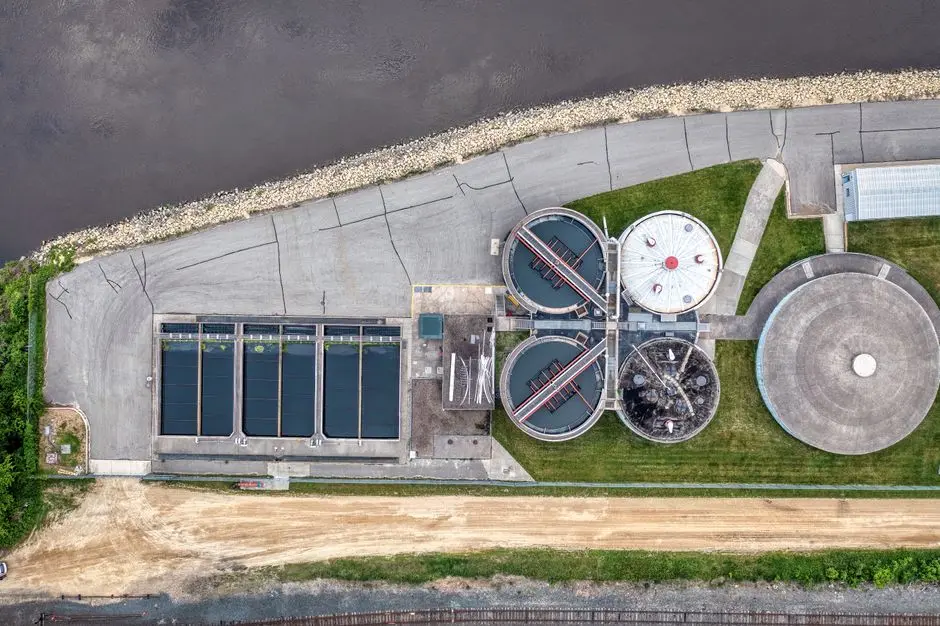
Size the plant from representative wastewater data and the governing hydraulic duty, not from a catalogue flow label. The minimum procurement brief should identify the production process, pH, COD, BOD, TSS, oil and grease, process-specific contaminants, average flow, peak flow, batch volume, discharge or reuse route, available area and utility requirements.
Average daily flow is necessary but insufficient where production, cleaning or wash-down releases create concentrated batches. The supplier must establish whether the DAF reactor, equalisation tank and pumping system must handle the peak-hour flow, a complete batch, or both. Equalisation may reduce short-term loading, but it does not remove the need to define the tank working volume, buffering strategy and maximum discharge condition.
| Sizing input | Question for the factory | Why it affects equipment selection |
|---|---|---|
| Representative analysis | Which production and cleaning streams enter the system, and what contaminants do they contain? | Defines separation duty, chemical demand, biological loading and downstream treatment. |
| Average flow | What is the normal daily wastewater volume? | Establishes the baseline treatment load and storage requirement. |
| Peak and batch flow | Does the factory discharge continuously, intermittently or in concentrated batches? | Sets reactor, equalisation and pumping duties and may require temporary storage. |
| Treatment objective | Is the outlet destined for sewer, surface water or a defined reuse application? | Determines the required biological, polishing, disinfection or ZLD stages. |
| Site constraints | What footprint, power, drainage, access and lifting arrangements are available? | Determines whether a packaged, skid-mounted, containerised or civil-built arrangement is suitable. |
| Operating basis | How many operating days and shifts are required, and who will maintain the plant? | Defines redundancy, controls, service access, training and maintenance scope. |
For market context only, Spans lists UAE containerised and skid-mounted ETPs in the 5–200 m³/day range and its DAF systems at 5–500+ m³/hr (Spans Envirotech, 2026). These are supplier supply ranges, not universal sizing limits for Abu Dhabi factories. HydropureWater’s DAF catalogue covers 4–300 m³/h across 13 standard models, but the final selection must follow hydraulic duty, required separation performance, available footprint and treatment objectives.
Every technical proposal should state design flow, batch strategy, operating availability, recycle ratio, materials of construction, controls, sludge-handling method and the basis of the performance claim. A quotation that gives only reactor capacity, treatment-stage names and a generic outlet specification is not a defensible sizing basis.
What compliance and reuse route changes the system selection?
The discharge or reuse destination determines the treatment boundary. For municipal sewer discharge, Spans cites UAE.S 885 limits of BOD <30 mg/L, COD <250 mg/L, TSS <100 mg/L, oil and grease <10 mg/L and pH 6–9 (Spans Envirotech, 2026). These figures describe the limits cited by that supplier; they do not replace the current permit, sewer-entry agreement or regulator confirmation.
Spans describes UAE.S 999 surface-water discharge limits as more stringent and states that free-zone operating licences are typically conditional on effluent compliance with periodic third-party testing (Spans Envirotech, 2026). The factory therefore needs a sampling and monitoring plan consistent with its licence, not only treatment equipment capable of meeting a headline limit during commissioning.
Reuse adds quality requirements that cannot be inferred from sewer discharge. Irrigation, cooling-tower makeup and toilet flushing may require tertiary filtration and disinfection. Spans identifies UV disinfection or chlorination within the tertiary treatment needed for Abu Dhabi recycled-water classes. The applicable class, end use and monitoring requirements must be confirmed before selecting the reverse osmosis water purification system or UV sterilizer for water treatment.
Spans reports that MBR permeate TSS is typically <1 mg/L and describes it as suitable for direct reuse applications including cooling towers, boiler makeup, toilet flushing and landscaping (Spans Envirotech, 2026). That supplier-reported result does not remove the need to verify the complete effluent specification and reuse standard applicable to the factory.
For water-sensitive manufacturing or stringent zero-discharge conditions, RO-based ZLD becomes a candidate. Spans states that integrating RO with MEE or MVR evaporation achieves >95% water recovery, while the final train remains site-specific (Spans Envirotech, 2026). Concentrate management, energy demand, evaporator performance and residual disposal must therefore be included in the technical and commercial scope.
Confirm current requirements with Abu Dhabi’s Environment Agency or the relevant free-zone regulator. A generic industry guide may inform the brief, but it is not permit approval, and it does not establish whether UAE.S 885, UAE.S 999, a reuse standard or licence-specific condition governs the discharge route.
How to compare DAF and ETP supplier proposals in Abu Dhabi
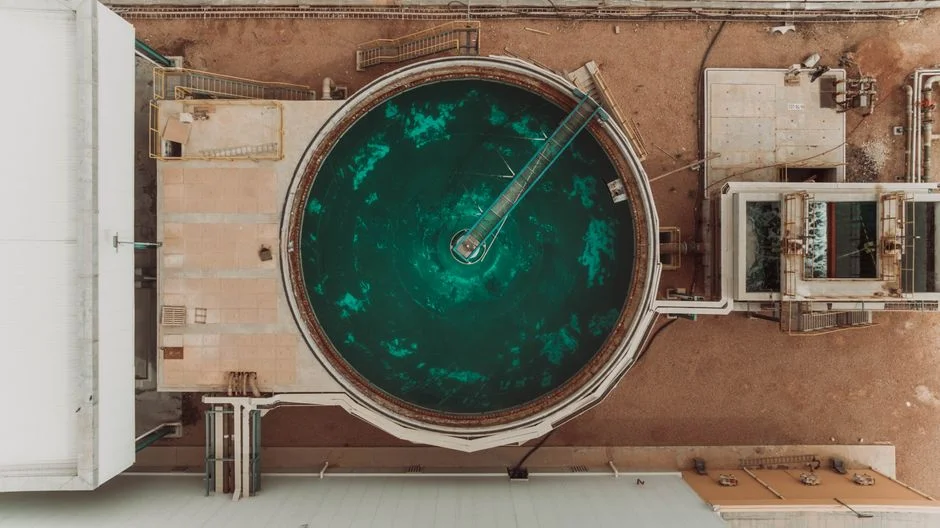
A defensible proposal must trace every treatment stage to a named contaminant and a measured or representative influent characteristic. Reject bids that select a DAF or ETP from average daily flow alone, because that approach does not demonstrate how the equipment will handle peak loads, changing production, batch discharges or the required outlet quality.
Performance commitments require equal scrutiny. Ask which parameters are guaranteed, which test method applies, where sampling occurs, how startup is demonstrated, and what happens when wastewater composition changes outside the design envelope. Do not allow a general claim of “compliance” to replace a parameter-by-parameter duty and guarantee schedule.
| Proposal check | Information to require | Reason it matters |
|---|---|---|
| Process basis | Influent analysis, flow basis, batch strategy and treatment objective | Shows that the equipment matches the actual wastewater and destination. |
| Complete treatment scope | Equalisation, screening, oil separation, dosing, DAF or clarification, aeration, membranes, filtration, disinfection, sludge dewatering, controls, utilities, installation and commissioning | Prevents omissions that inflate apparent value or create retrofit cost. |
| Performance schedule | Parameter, test method, sampling point, guaranteed value and operating condition | Separates measurable obligations from broad compliance statements. |
| Equipment format | Containerised, packaged, skid-mounted or civil-built proposal with site requirements | Connects the system to available footprint and construction constraints. |
| Operations and service | Operator training, preventive maintenance, spares, chemicals, media supply and local response arrangements | Defines the resources needed to maintain performance after handover. |
| Commercial boundaries | Equipment, civil works, foundations, installation, commissioning, utilities, training, maintenance and sludge disposal | Allows like-for-like comparison and exposes exclusions. |
For a compact industrial plot, compare the construction format and associated site work rather than assuming one format is automatically cheaper. Gulf Water Treatment identifies containerised, packaged, skid-mounted and civil-built ETPs as distinct options, each linked to capacity, permanence and installation conditions (Gulf Water Treatment, 2026). Spans similarly notes that packaged and containerised systems can reduce site construction requirements and provide more predictable commissioning timelines (Spans Envirotech, 2026).
Before award, confirm local service access, operator training, chemical and media availability, spare-parts strategy, maintenance responsibility and response arrangements. Use the 2026 DAF unit selection framework to interrogate the treatment logic and equipment basis, and the DAF system for food-processing wastewater guide when the stream includes FOG and variable organic loading.
Frequently Asked Questions
How much does an industrial DAF or ETP cost in Abu Dhabi?
No defensible price can be given without wastewater analysis, average and peak flow, treatment objective and site information. A comparable quotation should separate equipment from civil works, foundations, installation, utilities, commissioning, chemicals, sludge handling, operator training and maintenance. Ask suppliers to state exclusions and price the complete operating scope so that proposals can be compared on total cost of ownership rather than on the initial skid price.
How do I size a DAF or ETP for a factory with batch discharges?
Do not apply a generic flow rule. Provide representative wastewater results, production and cleaning schedules, average flow, peak-hour flow, batch volume and the required outlet quality. The supplier should then state its design flow, equalisation strategy, reactor duty, pumping arrangement and any assumptions about batch accumulation. If those inputs are incomplete, require the supplier to identify them as design exclusions before accepting a fixed-capacity proposal.
Which supplier should an Abu Dhabi factory select for DAF or ETP equipment?
Select against written technical and commercial criteria, not presentation quality. The shortlist should demonstrate a process narrative tied to the actual contaminant profile, complete scope definition, measurable performance conditions, suitable construction format and local operating support. Verify who handles installation, commissioning, operator training, spares and maintenance. A local support commitment should identify the service entity, response arrangements and ongoing maintenance responsibilities.
Does treatment equipment guarantee an Abu Dhabi EAD or free-zone wastewater permit?
No. Equipment selection supports compliance, but it does not constitute regulator approval. The factory must confirm its current EAD permit, free-zone licence, sewer agreement or surface-water conditions with the relevant authority. Check permitted discharge parameters, monitoring and third-party testing requirements, reuse conditions and any site-specific limits. These should be translated into the equipment guarantee schedule and sampling plan before award.
How long will DAF or ETP delivery and commissioning take?
Do not assume a delivery period from a catalogue or a generic market statement. The supplier must confirm the manufacturing scope, approval sequence, transport arrangements, site readiness, foundations or civil work, utility connections, installation method, commissioning duration and operator-training responsibilities. Distinguish equipment ex-works, delivery to site, mechanical completion, performance testing and permit-related acceptance, because each creates a different schedule dependency.
Related Equipment
- integrated MBR wastewater treatment system — specifications, capacity range, and technical data