What Changes When a Mining Site Chooses MBR Instead of Activated Sludge
MBR is usually the stronger option when compact equipment, reliable solids separation and water reuse justify added membrane maintenance; conventional activated sludge can be more economical when flows are large and dilute, land is available and reliable aeration and clarification assets already exist. Neither process automatically removes dissolved metals, so precipitation, pH control and equalization remain essential. For Starkville-area mining operations, compare options using actual flow duration, a seven-day composite influent analysis, the current NPDES permit and a 60–90 day pilot with site water.
Conventional activated sludge combines biological treatment with gravity clarification. Effluent performance depends on biomass condition, settling and any downstream filtration or disinfection. An MBR adds submerged membrane separation to activated-sludge biology, retaining biomass and solids through membranes rather than relying only on gravity settling. This can remove the secondary clarifier and conventional filtration stage from the biological train, but it does not establish dissolved-metals removal or compliance with the current NPDES permit.
The distinction matters because mining water can contain both solids-associated metals and dissolved metals. Membrane capture can remove particulate metals carried with captured solids; it cannot be credited automatically with removing dissolved arsenic, lead, zinc, copper, nickel, cadmium or other specified constituents. Those require separately validated treatment, such as metal hydroxide precipitation or downstream polishing.
Municipal pilot evidence illustrates the separation performance that MBR can provide without proving mining-water performance. In the University of Manitoba Phase I municipal pilot, the MBR operated at a 20-day solids retention time and 10-hour hydraulic retention time, producing BOD below 6 mg/L, TSS below 5 mg/L and TKN of 1.3 mg/L (University of Manitoba, 2006). Those results cannot be transferred to Starkville mining water.
The same study also identified an integrity lesson. Phase II produced higher coliform and TSS results than Phase I, with possible membrane compromise, sampling error and biological regrowth identified as causes; tertiary disinfection might therefore be required (University of Manitoba, 2006). A Starkville acceptance plan must address membrane integrity, controlled sampling and any required disinfection rather than treating the membrane as an absolute barrier. An integrated submerged-PVDF MBR system can be evaluated within that framework, while the 2026 MBR cost-per-m³ guide provides commercial planning context rather than site performance evidence.
Build the Treatment Train Around the Contaminant, Not the Equipment Name
Mining wastewater treatment must allocate each contaminant to a defined process stage before bidders select a biological or membrane package. The required sequence begins with influent characterization, equalization, pH control, precipitation where warranted, manufacturer-specified fine screening, biological treatment or MBR, optional polishing and sludge handling.
Metal fractions determine who performs the removal. Particulate metals may report to captured solids, while dissolved metals require validated precipitation, adsorption, ion exchange, membrane-based treatment or another process. Membrane retention must not be entered as dissolved-metals removal unless actual-water testing demonstrates it.
| Treatment stage | Primary function | Procurement information required |
|---|---|---|
| Influent characterization | Defines the treatment problem and variability | pH, total and dissolved metals, suspended and settleable solids, BOD, COD, hardness, sulfate, TDS, toxicity, acidity or alkalinity, flow duration, peak flow and batch-discharge conditions |
| Equalization | Reduces hydraulic and concentration shocks | Working volume in hours of average flow; mixing, aeration and disposal provisions |
| pH control and precipitation | Conditions water and supports metal hydroxide precipitation where appropriate | Target metals, dosing basis, sludge generation and residual-chemical handling |
| Fine screening | Protects pumps, membranes and controls from abrasive material | Supplier’s module-specific screen cutoff; no generic substitution |
| Biological treatment or MBR | Removes biodegradable organics and separates biological solids | Measured biodegradability, salinity, toxicity, loading and SRT basis |
| Polishing | Meets a defined reuse specification | RO, UF, ion exchange or another process selected from the target water chemistry and recovery requirement |
| Sludge handling | Stabilizes and dewaterates captured solids | Solids mass balance, selected disposal route, cake transport and final disposal assumptions |
Fine screening protects equipment but does not remove dissolved metals. The GX Series fine screening system should therefore be specified using the MBR supplier’s module-specific cutoff. An automatic chemical dosing system may support pH control, but reagent selection and dose must follow the site chemistry.
Where influent testing shows substantial suspended solids, floatables, oil or high turbidity, a DAF pretreatment system may provide a solids-removal stage. It should not be added by assumption. For closed-loop water reuse, RO, UF, ion exchange or another polishing step may be needed; the required quality must come from the reuse destination, not from the MBR label.
Federal 40 CFR Part 440 supplies the Ore Mining and Dressing framework, while the current NPDES permit and applicable Mississippi or local conditions establish enforceable site-specific requirements. No Starkville effluent limit can be assigned without the current permit and site data.
Compare CAS, MBR and Hybrid Treatment on Site Constraints
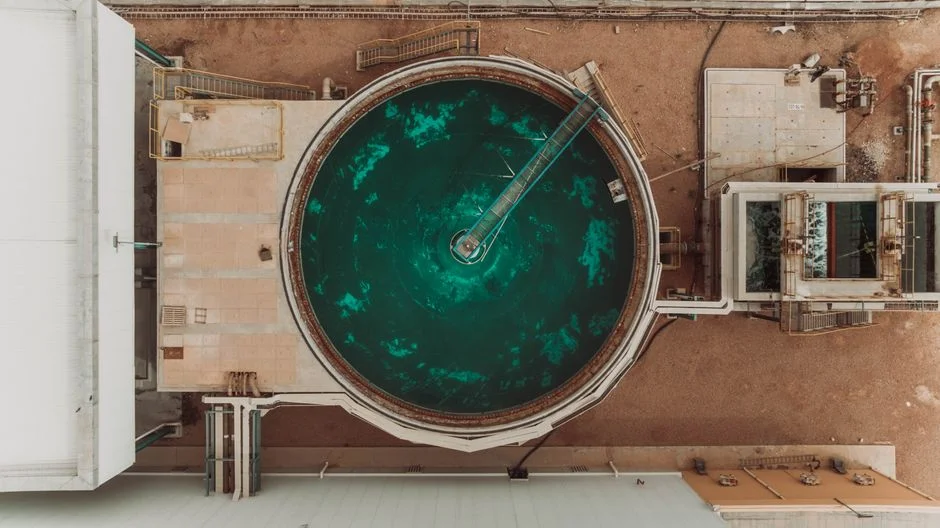
The defensible architecture depends on flow and duration, available footprint, reuse objectives, existing assets and operator capability—not on equipment category alone. Conventional activated sludge is simple in principle but exposes settling to biological upsets and metal shocks. MBR removes the dependence on secondary-clarifier settling while adding fouling, cleaning and integrity-management duties. A hybrid can preserve useful existing clarification while adding membrane polishing where only the reuse stream needs higher quality.
| Decision factor | Conventional activated sludge | Packaged MBR | Hybrid clarifier-plus-MBR |
|---|---|---|---|
| Biological duty | Mixing, aeration, biological reaction and sludge wasting | Activated-sludge biology plus membrane solids separation | Existing biology or clarification retained where justified, with MBR polishing |
| Solids separation | Gravity settling; carryover can occur | Submerged membrane separation; independent of gravity settling | Clarifier performs bulk separation; MBR polishes the selected stream |
| Footprint | Basins, clarifiers, piping and access occupy more area | Can consolidate biology and solids separation | May retain substantial civil footprint but limit new construction |
| Dissolved-metal treatment | Not inherent to biology or clarification | Not inherent to membrane separation | Not inherent to either unit; define separately |
| Reuse readiness | Usually requires downstream filtration or polishing | Supports a solids-controlled stream before polishing | Useful when only the reuse stream requires higher quality |
| Operational complexity | Aeration, settling, RAS and waste-sludge management | Adds fouling control, cleaning, replacement elements and integrity checks | Combines legacy-asset operation with membrane maintenance |
| Failure response | Clarifier carryover, biomass upset, aeration or pumping failure | Loss of membrane capacity, fouling, mechanical failure and cleaning downtime | Both upstream asset and membrane risks must be managed |
A commercial screening rule favors MBR when flow is below 2,000 m³/day, available footprint is below 500 m², and reuse or zero-liquid-discharge is required; otherwise CAS and a hybrid should be compared rather than assuming MBR (HydropureWater commercial comparison, 2026). These are early planning filters, not sizing criteria or compliance thresholds.
HydropureWater’s verified product catalog lists an integrated submerged-PVDF MBR with capacities from 10–2,000 m³/day, filtration below 1 μm and a claimed 60% smaller footprint than conventional systems (HydropureWater verified product catalog, 2026). These are supplier specifications, not independently demonstrated Starkville results. A separate commercial comparison gives approximately 50–70% less MBR footprint for equivalent capacity (HydropureWater commercial comparison, 2026). Neither percentage establishes the installed area because foundations, equalization, chemical rooms, access, odor control and electrical service also consume space.
The commercial planning context gives MBR mixed-liquor suspended solids of 8,000–12,000 mg/L and clarifier-based CAS at 2,000–4,000 mg/L (HydropureWater commercial comparison, 2026). The selected solids retention time must still be demonstrated against measured biodegradability, salinity and toxicity. Likewise, the commercial claim of 30–60% CAS efficiency loss during the 24–72 hours after a metal pulse is not a Starkville guarantee; it is a reason to test actual feed. A serviceable sedimentation asset may be retained in a hybrid only after hydraulic, structural, sludge and solids-removal reviews.
Normalize Capital and Operating Costs Before Awarding the Contract
Commercial MBR cost premiums are material, so capital bids are comparable only when bidders receive the same flow, chemistry, pretreatment and lifecycle assumptions. HydropureWater’s commercial comparison estimates MBR capital expenditure at roughly 20–40% above equivalent-flow CAS and operating expenditure at 15–30% higher per cubic metre (HydropureWater commercial comparison, 2026). These are planning ranges, not Starkville quotations.
Require each bidder to use the same average-flow basis, peak and duration profile, equalization volume in hours, pretreatment scope, polishing requirements, sludge handling and controls boundary. A bid based only on average daily flow is incomplete unless it also states the duration used to calculate equalization and peak equipment requirements.
| Cost boundary | Required bidder information |
|---|---|
| Equalization and civil work | Tank volume, foundations, access, odor control, electrical service and site-specific civil exclusions |
| MBR equipment | Membrane area, material, flux basis, connected and average electrical loads, automatic controls, scour aeration and permeate pumping |
| Operating resources | Cleaning chemicals, laboratory supplies, labor, power, chemicals, sludge handling and disposal |
| Replacement | Membrane cassettes or elements, fine screens, compatibility, replacement intervals and 10-year replacement pricing |
| Ownership | Warranty conditions, spare-parts lead time, training, commissioning, controls and service-response commitments |
The commercial 1,000 m³/day example in the 2026 MBR cost-per-m³ guide discusses purchased-water or brine-disposal value above roughly $2/m³ and electricity thresholds of $0.07/kWh and $0.09/kWh. Those are commercial example conditions, not Starkville assumptions. Replace them with the site’s actual tariff, avoided water purchases, disposal charges and value assigned to a defined reuse stream.
The same commercial source gives a 5–8 year MBR service-life range as planning guidance (HydropureWater commercial comparison, 2026). Pretreatment quality, abrasive fines, scaling and aggressive cleaning can change actual life, so the bid should price replacement assumptions rather than extend the range contractually. The commercial view is summarized in the DAF versus clarifier comparison.
Run a Pilot That Can Disqualify the Wrong Treatment Train
A 60–90 day pilot using actual Starkville mine wastewater can test whether the selected train survives startup, steady operation, chemical and flow excursions, fouling development, cleaning and recovery. A seven-day composite influent characterization is the minimum planning baseline, with additional sampling across normal, peak, batch and upset conditions. Synthetic or clean-water testing is not a substitute.
The pilot should measure dissolved, filtered and total-metal fractions before and after precipitation and after biological treatment. That sequence prevents membrane capture from being mistaken for dissolved-metals removal. The same sampling design should characterize pH, suspended solids, organic loading, hardness, sulfate, TDS, toxicity and flow duration.
Across the test, record normalized flux, transmembrane pressure, cleaning frequency, post-cleaning recovery, downtime, chemical consumption and performance through pH and flow excursions. Cleaning should have defined triggers, a post-cleaning acceptance condition and a documented recovery method. The bidder should also identify module isolation, redundancy, spare-parts lead time and the response plan for loss of membrane capacity.
Final acceptance must be tied to the current NPDES permit or the reuse specification, with analytical methods, sampling points and test duration defined before the pilot begins. No enforceable Starkville limit should be invented without the permit. Where reuse is the objective, the specification must also define recovery, relevant dissolved contaminants and any post-treatment requirements.
Residual-sludge handling belongs in the same test. The commercial comparison reports 25–35% dry solids from a plate-and-frame press (HydropureWater commercial comparison, 2026), but that outcome must be confirmed against the selected disposal route and cake-transport assumptions. A plate-and-frame sludge filter press should be quoted with those constraints, while any UF polishing system should be evaluated from the target reuse chemistry and pretreatment needs.
Issue a Bid Package That Keeps Performance and Lifecycle Assumptions Comparable
A comparable bid package begins with the governing project requirement: attach the current NPDES permit and state whether the project is for discharge, closed-loop reuse or an upgrade to existing pretreatment. Give every bidder the same flow-duration data, seven-day composite chemistry, footprint, elevation, access, electrical tariff, reuse destination and operator requirements.
- Require the MBR supplier to state screen cutoff, membrane area and material, flux basis, controls, connected load, warranty, replacement-membrane compatibility and 10-year replacement pricing.
- Require CAS bids to define aeration, settling, return sludge, waste sludge, filtration, redundancy, structural work and civil scope.
- State whether chemical cleaning, sludge handling, equalization, polishing, commissioning, operator training, spares and replacement membranes are included.
- Define pilot acceptance against the permit or reuse specification, including analytical methods, sampling points, duration, upset testing, cleaning triggers and recovery measurement.
- Require lifecycle inputs for membrane cassettes, fine screens, permeate pumps, PLC upgrades, scour aeration, cleaning chemicals, labor, power, chemicals, sludge and disposal.
Make rejection criteria explicit. Reject bids based only on clean-water testing, synthetic feed, average flow without duration data or generic mining-wastewater assumptions. Do not permit a bidder to transfer municipal pilot results, catalog specifications or commercial planning claims into a binding Starkville performance guarantee.
The RO, UF membranes and filter elements should be evaluated against the defined reuse specification and pretreatment assumptions. The mining wastewater permit and pretreatment guide can support bid-document preparation, but the Starkville permit and actual-water testing must control the final specification.
Frequently Asked Questions
How much more does MBR cost than conventional activated sludge for mining wastewater?
HydropureWater’s commercial comparison estimates MBR capital expenditure at roughly 20–40% above equivalent-flow CAS and operating expenditure at 15–30% higher per cubic metre (HydropureWater commercial comparison, 2026). These are planning ranges, not Starkville quotations. Request equal-scope bids and enter the site’s actual electricity tariff, avoided water purchases, disposal charges, cleaning labor, chemicals and 10-year membrane replacement price into the lifecycle model.
When should a Starkville mining plant size an MBR instead of CAS?
Use flow below 2,000 m³/day and available footprint below 500 m² only as early commercial screening filters, especially when reuse or zero-liquid-discharge is required (HydropureWater commercial comparison, 2026). Final sizing requires the flow-duration profile, equalization volume, seven-day composite chemistry, reuse specification and actual-water pilot results.
Which supplier qualifications should a mining-wastewater MBR bidder provide?
Require demonstrated testing with site-representative feed, disclosed performance guarantees, membrane area and flux basis, controls scope, warranty terms, service response, spare-parts lead time and replacement-membrane pricing. Ask whether prior evidence came from actual mine water or synthetic feed, and require the bidder to specify how losses of membrane capacity will be managed.
Does an MBR ensure compliance with the current NPDES permit for dissolved metals?
No. Federal 40 CFR Part 440 provides the Ore Mining and Dressing framework, but the current NPDES permit and applicable Mississippi or local conditions establish site-specific requirements. Specify precipitation or another validated dissolved-metals treatment where needed, and sample dissolved, filtered and total-metal fractions to distinguish chemical removal from solids-associated capture.