Start With the Wastewater and the Receiving Environment
An effluent treatment plant in Davao should be selected after confirming wastewater flow and contaminants, the applicable DAO 2016-08 category or site-specific discharge limits, reuse goals, flood exposure, and available space. Conventional A/O may suit suitable wastewater, while dissolved air flotation addresses oil, grease, and solids, and MBR suits compact, high-quality installations. Before quotations are opened, the buyer must define the treatment objective, characterize the influent, establish the permit basis, and translate those inputs into hydraulic and contaminant-loading requirements.
Begin with a source-separated wastewater inventory. It should distinguish production wastewater from floor washdown, cleaning water, sanitary streams, stormwater entry, and other intermittent discharges. Record average flow, production-shift peaks, storm or rainfall entry, operating schedules, and the proposed reuse or discharge point. Without this information, an equipment flow rate is not a defensible design capacity.
Test the actual wastewater for COD, BOD, TSS, pH, oil and grease, coliforms, and sector-relevant contaminants before freezing the design basis. Do not copy another facility’s results into the Davao submission. HydropureWater’s Package Wastewater Treatment Plants in Mindanao Philippines engineering guide reports palm-oil-mill wastewater at COD of 1,500–3,000 mg/L and hospital wastewater at BOD of 200–500 mg/L. Those figures are screening references, not Davao-specific inputs.
Document whether the treated water will enter a sewer, receive surface-water discharge, support agricultural or industrial reuse, or combine reuse with permitted discharge. The destination changes the treatment objective: pretreatment may be sufficient for part of a stream, while reuse requires stable quality under variable influent and operating conditions.
Request the current DENR-EMB permit conditions, applicable DAO 2016-08 category, and any Davao City or local-government-unit requirement. The same 2025 HydropureWater guide states that specific industries or LGUs may face stricter limits. Use a mechanical bar screen for inlet protection and DAF pretreatment for industrial wastewater only after the waste inventory and sampling program define their duty.
| Design input | Evidence required | Procurement consequence |
|---|---|---|
| Hydraulic profile | Average flow, production-shift peak, rainfall entry, clean-water flows | Defines equalization, treatment capacity, pumping, and standby provisions |
| Contaminant load | COD, BOD, TSS, pH, oil and grease, coliforms, and sector parameters | Determines biological loading, pretreatment, polishing, and sludge generation |
| Receiving objective | Discharge point, reuse application, and required reliability | Sets final effluent values and operating safeguards |
| Regulatory basis | Current permit, DAO category, and Davao City or LGU conditions | Controls technology acceptance and monitoring scope |
Build the Davao Compliance and Design Basis
The design basis must use the stricter of the applicable permit conditions and the procurement objective, not a generic Class C or Class D label. HydropureWater’s 2025 Mindanao guide states planning targets of BOD below 50 mg/L, TSS below 70 mg/L, and pH from 6.5 to 8.5 for DAO 2016-08 Class C and Class D. These are the source’s stated planning targets, not substitutes for the current permit.
For food processing, the guide reports a Davao City requirement of BOD below 30 mg/L. Confirm this with the relevant authority and establish whether additional fats, oils, and grease controls apply. Healthcare projects require a separate pathogen-control review and should not inherit food-processing assumptions.
The buyer should also identify the parameters that will demonstrate compliance: sampling point, frequency, laboratory, chain of custody, analytical methods, reporting responsibility, and response action after an exceedance. Include the operating envelope, including seasonal production, cleaning cycles, power interruptions, and membrane or biological recovery after downtime.
Polishing should follow the core treatment train unless site-specific analysis proves otherwise. A University of Twente thesis, Direct nanofiltration of wastewater treatment plant effluent, identifies nanofiltration as a technology for polishing treatment-plant effluent and evaluating effluent reclamation. It does not support using a polishing membrane as a substitute for necessary biological treatment.
Constructed wetlands are another possible route, but only when land, climate, hydraulics, and the treated-water objective support them. Wageningen University and Research’s 2022 doctoral thesis, Removal of micropollutants from wastewater treatment plant effluent by constructed wetlands, investigated this application. A Davao tender should therefore ask for the wetland’s design basis and site conditions rather than treat it as a default low-cost substitute.
For reuse projects, review an ultrafiltration system for downstream solids removal and an integrated MBR wastewater treatment system against the complete compliance and reuse envelope. Neither device removes the need for characterization, pretreatment, controls, and site-specific validation.
| Basis item | What must be confirmed | Evidence to place in the tender file |
|---|---|---|
| DAO 2016-08 class | Class C, Class D, or another applicable category | Current DENR-EMB permit and category justification |
| Effluent values | BOD, TSS, pH, and sector-specific parameters | Current permit, LGU conditions, and design targets |
| Reuse objective | Application, reliability, and treated-water quality | Reuse specification and sampling plan |
| Monitoring | Parameters, frequency, laboratory, and reporting | Accreditation details and contractual responsibilities |
Match the Treatment Train to the Industrial Wastewater
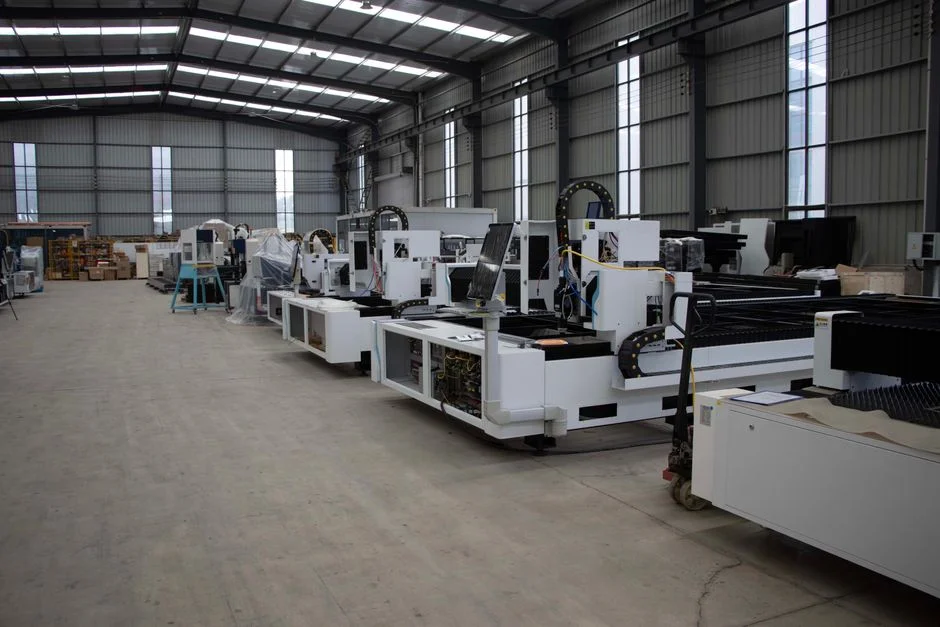
A suitable industrial effluent treatment system begins with the contaminant, not the package name. The normal sequence is screening and equalization, contaminant-specific pretreatment, biological treatment where required, solids separation, polishing or disinfection, and sludge handling. Omitting equalization or pretreatment can overload the downstream process even when the quoted daily capacity is adequate.
Use dissolved air flotation where oil, grease, suspended solids, or colloidal material could interfere with biological treatment or membranes. HydropureWater describes a DAF pretreatment range of 4–300 m³/h across 13 models, using micro-bubble flotation and automatic skimming. This is a pretreatment role; DAF should not be presented as a universal biological ETP.
For suitable sewage-type flows, an underground A/O package sewage treatment plant can integrate anoxic and aerobic biological treatment, sedimentation, and disinfection below grade. HydropureWater’s catalog range is 1–80 m³/h. Confirm that the wastewater characteristics, loading, groundwater, soil, flood level, access, and odor controls permit a buried installation.
Choose MBR when compactness and stable solids separation are central to the reuse or discharge objective. HydropureWater specifies an MBR capacity range of 10–2,000 m³/day and filtration below 1 μm. Require confirmation that the quoted flow basis, membrane configuration, cleaning strategy, redundancy, and performance guarantee match the actual Davao wastewater.
UF is a downstream solids-removal and polishing barrier, not a substitute for characterization or biological treatment. HydropureWater specifies 2,000–40,000 L/h, 0.03 μm PVDF membranes, automatic backwash, and air scour. Determine whether the required water quality justifies its capital, energy, and maintenance burden.
Where oils, solids, or pH excursions threaten the core process, include DAF, chemical dosing, clarification, and sludge dewatering in the process design rather than treating them as optional accessories. A complete enquiry should identify the chemical feed, contact points, solids destination, and equipment interlocks.
| Treatment function | Indicative equipment role | Decision test |
|---|---|---|
| Inlet protection | Mechanical screening | Will debris be removed before pumps and treatment equipment? |
| Oil, grease, and solids removal | DAF pretreatment | Are FOG or solids loads high enough to protect downstream systems? |
| Biological removal | A/O package treatment | Is the wastewater compatible with the proposed biological process? |
| Compact solids separation | MBR | Are footprint and reuse reliability the governing priorities? |
| Final solids barrier | UF or another polishing step | What specific reuse or discharge parameter remains unresolved? |
| Residual solids | Plate-and-frame dewatering | Is there a lawful and practical sludge destination? |
Compare Technologies, Footprints and Operating Demands
Footprint, effluent consistency, control burden, and residual-solids handling distinguish the available treatment routes. A compact package may reduce civil works while increasing dependence on aeration, membrane maintenance, controls, and specialist support. A nature-based route may require more land and careful site management. Selection should follow the discharge or reuse objective.
Conventional A/O is a conventional biological route for wastewater compatible with the process. HydropureWater’s Mindanao guide identifies it as a compact option for general wastewater and notes a larger footprint and lower effluent quality than MBR. Those trade-offs make it a screening alternative, not a universal answer.
MBR and A/O are not equivalent on footprint or consistency. HydropureWater describes its MBR as producing near-reuse-quality effluent with a footprint 60% smaller than conventional systems. Treat that as supplier-provided information and ask for the quoted equipment boundary, civil works, and replacement assumptions.
A buried WSZ installation can preserve usable surface area and support automated operation, but the purchase order must address flood elevation, groundwater intrusion, soil bearing, buoyancy or flotation risks, access, odor, and maintenance. A compact equipment footprint does not eliminate the civil and geotechnical work around it.
DAF-led treatment provides strong physical-chemical pretreatment for the listed oil, grease, and solids loads, but it is not equivalent to complete biological treatment. A DAF-centered train still needs a defined route for the separated solids and a biological, membrane, or other core treatment stage where required.
UF adds a solids-removal barrier after upstream treatment. For reuse, require stable quality across variable influent, cleaning cycles, power interruptions, and operator changes. One laboratory sample cannot demonstrate operating reliability.
For healthcare applications, HydropureWater’s 2025 hospital wastewater article describes ozone systems with a claimed 99%+ pathogen kill rate. Present that as supplier-provided product information requiring site-specific validation, not as a universal performance guarantee.
| Option | Primary strength | Principal constraint | Best fit |
|---|---|---|---|
| Conventional A/O | Established biological treatment approach | Footprint and effluent consistency relative to MBR | Compatible wastewater where a conventional process is adequate |
| MBR | Compact installation and stable solids separation | Controls, energy, cleaning, and membrane replacement | Reuse or discharge objectives with limited space |
| DAF-led train | Oil, grease, solids, and colloid pretreatment | Sludge handling and need for downstream treatment | Wastewater that would overload biological or membrane stages |
| UF polishing | Downstream solids barrier | Energy, cleaning, and disposal of reject water | Projects needing a defined final polishing step |
| Constructed wetland | Potential micropollutant-removal application | Land, climate, hydraulics, and variable industrial flows | Site-specific reuse or polishing objectives |
Budget for Capacity, Site Work, Testing and Lifecycle Costs
The first-pass budget must state its capacity and technology boundary. HydropureWater’s 2025 Mindanao guide gives indicative ranges of ₱120,000–₱500,000 for conventional A/O serving 10–50 m³/day and ₱1.5 million–₱2.5 million for MBR serving 50–200 m³/day. These are commercial-guide ranges, not quotations for a Davao site.
Require each bidder to identify whether its price includes pretreatment, biological treatment, clarification, polishing, disinfection, controls, civil works, pumps, electrical supply, installation, sludge removal, commissioning, taxes, and training. Otherwise, a low equipment price can conceal the cost of the supporting works needed to make the plant operational.
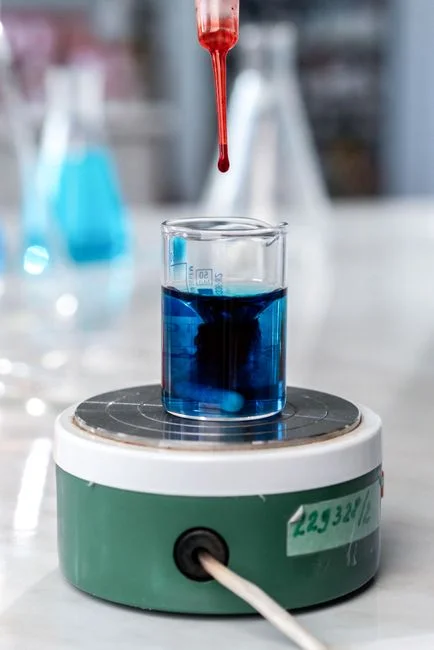
HydropureWater reports quarterly effluent testing at ₱5,000–₱15,000 per test for BOD, COD, TSS, pH, and coliforms. Confirm the current laboratory price and include monitoring, laboratory work, sampling, and reporting in the operating comparison. This is an important distinction: the quoted treatment capacity is only one part of the permit and operating cost.
For site planning, the 2025 guide recommends locating a treatment facility ideally within 500 meters of the influent source to reduce pumping costs. That is a planning recommendation, not a fixed site constraint. Compare the civil savings against flood exposure, access, utilities, odor, and future expansion.
For underground installations, the same source cites a minimum soil bearing capacity of 100 kPa. Require a site-specific geotechnical assessment. The cited value does not resolve settlement, groundwater, flood, buoyancy, or installation-method risks.
Lifecycle comparison should include membrane cleaning or replacement, aeration, pumping, chemicals, sludge volume, odor control, operator attendance, laboratory testing, and backup power. If the plant produces a dewaterable residual, obtain a plate-and-frame filter press for sludge dewatering and an automatic chemical dosing system proposal only where the process basis supports them.
| Budget component | Required quotation detail | Buyer check |
|---|---|---|
| Equipment | Technology, capacity boundary, materials, controls, and serial scope | Is the same treatment scope being compared? |
| Civil and site works | Tanks, foundations, access, drainage, power, and installation | Which costs are excluded? |
| Pretreatment and polishing | DAF, clarification, UF, disinfection, and chemical dosing | Is each stage required by the wastewater basis? |
| Operations | Energy, chemicals, sludge removal, testing, maintenance, and operator attendance | Are lifecycle assumptions disclosed? |
Protect the Plant from Davao Site Risks and Operational Failure
Flood resilience must be designed into the plant rather than added after equipment selection. HydropureWater’s 2025 Mindanao guide reports that the 2023 floods damaged 30% of Davao’s treatment plants. Elevate critical equipment, control access, drainage, emergency containment, and power resilience against the site-specific flood assessment.
The same guide reports typical Mindanao rainfall of 2,000–3,000 mm annually. Use local rainfall records when assessing stormwater ingress, influent variability, equalization requirements, access, and emergency operation. Do not automatically add the full rainfall allowance to the wastewater flow; distinguish clean stormwater from contaminated runoff.
Define acceptance tests before purchase. Hydraulic tests should establish the design flow and peak-flow response. Performance testing should verify contaminant removal against the permit and reuse values. Control tests should exercise automatic sequences, alarms, interlocks, power-failure recovery, and data recording.
HydropureWater’s Mindanao guide describes commissioning as covering hydraulic testing, biomass seeding for biological systems, and performance validation through effluent sampling. Define who provides influent and effluent sampling, what constitutes acceptable stability, how exceedances are corrected, and when provisional acceptance becomes final.
Sludge is part of the permit and operating system. Set the destination, removal frequency, sampling method, transport arrangement, and responsibility for final disposal or reuse. A filter press for sludge dewatering only solves containment; it does not establish a lawful disposal route.
Before signing, confirm laboratory accreditation, operator competency, spare parts, remote support, maintenance response, warranty boundaries, and support for valves and media. The treatment-parts, valves, and media supply list should identify critical spares and compatible replacements rather than generic inventory.
Issue a Supplier Enquiry That Produces Comparable Quotes
A comparable enquiry starts with the same design basis for every bidder. Include the wastewater characterization, average and peak design flow, permit or effluent values, receiving point, reuse target, site drawings, flood information, utility requirements, and soil or geotechnical data. State explicitly whether domestic, stormwater, or other non-industrial flows enter the treatment system.
Ask each supplier to identify its process assumptions, treatment stages, pretreatment, equipment dimensions, materials, controls, utilities, guarantees, delivery scope, installation scope, and commissioning exclusions. Require a priced base-flow option and a priced peak-flow option so hydraulic assumptions cannot hide inside the headline price.
Request lifecycle estimates for energy, chemicals, membrane maintenance, sludge handling, laboratory testing, operator attendance, and disposal. Also require the monitoring plan, discharge-permit pathway, commissioning protocol, operator training, spare-parts list, warranty, local technical support, and response arrangements.
Use HydropureWater’s Mindanao ranges as a benchmark range to challenge unexplained deviations, not as a fixed price or guaranteed market rate. A quotation outside the range may be justified by scope or site conditions; the bidder should show where the difference arises.
Evaluate the bid in four linked categories: process suitability, compliance evidence, site resilience, and total cost of ownership. For an integrated MBR wastewater treatment system, test the reuse and consistency claims against the actual permit and influent. For a DAF pretreatment proposal, verify the oily, greasy, and solids load it is intended to remove. A supplier should be able to connect every major line item to the design basis and acceptance criteria.
Frequently Asked Questions
What should a Davao factory include in its wastewater analysis before requesting an ETP quotation?
Include a source-separated flow inventory, production and peak flows, rainfall entry, and sampling for COD, BOD, TSS, pH, oil and grease, coliforms, and sector-relevant parameters. Also provide the discharge or reuse route and current permit conditions. This establishes whether biological treatment, DAF, UF, or another step is required.
Is a package wastewater treatment plant cheaper than a custom-built plant in Davao?
Do not decide from the equipment price alone. HydropureWater’s 2025 guide gives indicative ranges of ₱120,000–₱500,000 for 10–50 m³/day conventional A/O and ₱1.5 million–₱2.5 million for 50–200 m³/day MBR, but these are not site-specific quotations. Request itemized prices for civil works, pretreatment, pumps, electrical supply, sludge handling, disinfection, commissioning, and lifecycle costs, then compare complete scopes.
When is DAF pretreatment required instead of biological treatment alone?
Evaluate DAF when oil, grease, suspended solids, or colloidal material could overload the biological or membrane stage. Confirm the actual load through sampling. DAF is a physical-chemical pretreatment step and should not be assumed to replace required biological treatment or provide the final effluent by itself.
Which technology is more suitable when treated water must be reused?
MBR is a strong candidate when compactness and stable solids separation are required, while UF may provide a downstream solids barrier. Require the supplier to demonstrate stable performance against the specific reuse objective across variable influent and operating conditions. A one-time laboratory result is not enough.
How should a buyer verify a supplier’s compliance and performance claims?
Check the proposed process against the current permit, then require hydraulic and contaminant-removal acceptance tests, automatic-control demonstrations, power-failure tests, and effluent sampling by the agreed laboratory. Also verify sludge handling, operator training, spare parts, warranty, local support, and the commissioning protocol. Supplier claims should remain conditional on site-specific validation.