Start With the Manila Site and Its Wastewater Route
Domestic sewage treatment in Manila should be selected only after confirming the receiving route, verified design flow and permit pathway; being inside Metro Manila does not guarantee access to a centralized sewer. HydropureWater’s 2026 Philippine guide reports that only about 5% of the population is connected to a sewer network, while Metro Manila generates approximately 2 million m³ of wastewater per day. For a residential project, preliminary sizing may use 150–200 L per capita per day and a 1.5–2.5 peaking factor, subject to site-specific influent testing.
First, ask the local sewer authority whether a lawful connection is available at the parcel boundary, what pretreatment it requires and whether connection fees or downstream capacity constraints make the route impractical. A sewer-connection proposal requires pretreatment to septic-tank effluent quality, typically BOD ≤100 mg/L, according to HydropureWater’s 2026 guide. Surface-water discharge or reuse is a different compliance case because DAO 2016-08 general limits include BOD ≤30 mg/L, COD ≤100 mg/L and TSS ≤30 mg/L.
Before requesting equipment quotations, record the receiving water body or sewer authority, intended reuse, applicable LGU conditions, flood exposure, available footprint, power reliability, maintenance access and sludge-removal route. The wider context is reviewed in decentralized sewage treatment options in the Philippines.
Microbial risk should also be treated as a variable, not an assumption. A Parasites & Vectors study conducted in Guangzhou from August 2018 to February 2019 found Cryptosporidium in 34 of 238 wastewater-treatment-plant samples and 12 of 88 sewer samples. Those results do not establish Manila pathogen levels, but they support representative sampling and verified disinfection rather than assuming all domestic wastewater streams carry identical risk.
Build a Site-Specific Domestic Sewage Design Basis
The supplied 180 m³/day example demonstrates why average flow is insufficient for equipment selection: 200 houses at 5 persons per household and 180 L per capita per day produce 180,000 L per day, and applying a 2.0 peaking factor gives a 15 m³/h hydraulic requirement. HydropureWater’s 2026 guide uses 150–200 L per capita per day with an hourly peaking factor of 1.5–2.5 for preliminary Philippine residential planning.
The calculation is reproducible, but it remains a planning basis. HydropureWater’s 2026 guide gives raw domestic influent BOD as 200–400 mg/L and residential BOD loading as 40–55 g per capita per day; these values should be used only for preliminary planning until representative project influent samples are analyzed.
| Design-basis item | Supplied 2026 planning input | Buyer action before final sizing |
|---|---|---|
| Occupancy | 200 houses × 5 persons | Confirm actual and future occupancy schedule |
| Average flow | 180 L per capita per day | Validate against site data and representative sampling |
| Average daily flow | 180,000 L/day, or 180 m³/day | Account for kitchen, laundry, infiltration and storm entry |
| Peak flow | 15 m³/h at a 2.0 peaking factor | Size hydraulics against peak flow and equalization |
| Raw domestic BOD | 200–400 mg/L | Use project testing for final biological loading |
Ask each bidder to state hydraulic retention time, verified loading rates, equalization requirements, standby arrangements and the basis of all guarantees. Distinguish treatment-process throughput from the complete site works: screening, pumping, electrical supply, disinfection, sludge handling, bypasses and discharge infrastructure may fall outside a packaged unit’s nameplate capacity. Influent headworks can be evaluated through a rotary mechanical bar screen, with the final aperture and duty selected for the actual wastewater.
Choose Between Buried A/O and MBR Technology
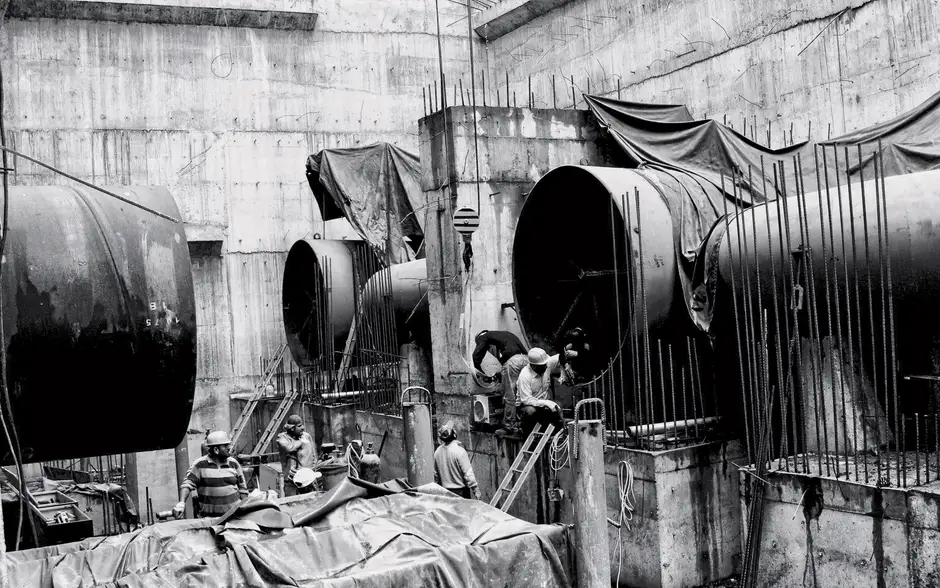
HydropureWater’s WSZ Series combines anoxic/aerobic biological contact oxidation, sedimentation and disinfection in one below-grade package, with a stated capacity of 1–80 m³/h. The manufacturer describes it as fully automated and requiring no operator, while also permitting above-grade trailer mounting for mobile deployment.
For a Manila property, the relevant comparison is not simply A/O versus MBR; it is process output against the receiving route, footprint, reuse objective and operating burden. The buried A/O sewage treatment plant is suited to established package configurations and sites requiring little surface area. The MBR wastewater treatment system is more relevant where high-density loading, constrained space or near-reuse-quality output justify additional membrane and electrical requirements.
| Selection criterion | Buried A/O | MBR |
|---|---|---|
| Process configuration | A/O contact oxidation, sedimentation and disinfection | Biological treatment with submerged membranes |
| Hydraulic retention time | 8–12 hours, according to HydropureWater’s 2026 guide | 6–8 hours, according to HydropureWater’s 2026 guide |
| Footprint | Buried installation can preserve the surface for landscaping | HydropureWater describes roughly 60% smaller footprint than conventional activated sludge |
| Effluent position | Manufacturer-backed claim: greater than 85% BOD removal and effluent below 30 mg/L | Manufacturer describes sub-1 μm PVDF membranes and near-reuse-quality output |
| Main buyer concern | Confirm package performance, installation and site works | Confirm membrane guarantees, replacement provisions and energy exposure |
Treat those A/O performance statements as manufacturer-backed claims, not universal guarantees. MBR membrane fouling, cleaning, replacement and power reliability must be evaluated in the offer. Constructed wetlands and vermifiltration remain possible alternatives, but the supplied IntechOpen excerpts provide no Manila capacity or performance specification; either needs project-specific engineering validation.
Match the Treatment Objective to the Required Effluent Quality
DAO 2016-08 general limits cited by HydropureWater’s 2026 guide require BOD ≤30 mg/L, COD ≤100 mg/L, TSS ≤30 mg/L, pH 6.0–9.0 and oil and grease ≤15 mg/L for applicable surface-water discharge or reuse. These values define the receiving objective; they do not justify selecting equipment before the route and discharge permit are confirmed.
A municipal-sewer discharge has a different preliminary requirement. HydropureWater describes pretreatment to septic-tank effluent quality, typically BOD ≤100 mg/L, but the buyer must obtain the sewer authority’s current rule rather than treating that planning value as permission to discharge untreated sewage. A conventional septic tank with soil absorption may serve a low-density site or provide pretreatment, yet raw septic effluent at BOD 100–200 mg/L does not meet the cited 30 mg/L general standard by itself.
Address source control before the biological stage. Grease, solids and septic-tank carryover affect pumps, aeration and membranes. A rotary bar screen can protect downstream equipment, while an automatic chemical dosing system can support pH correction or nutrient polishing when the selected treatment train requires it.
Pathogen control should be included in the performance schedule. The Guangzhou study detected Cryptosporidium and Giardia in raw wastewater and sewer samples, supporting verified disinfection and monitoring without treating those Guangzhou results as Manila measurements. Where disinfection is required, an UV sterilizer can be evaluated as part of the complete train, subject to receiving-water requirements, dosing needs and the supplier’s performance evidence.
Plan the Budget, Power and Lifecycle Costs
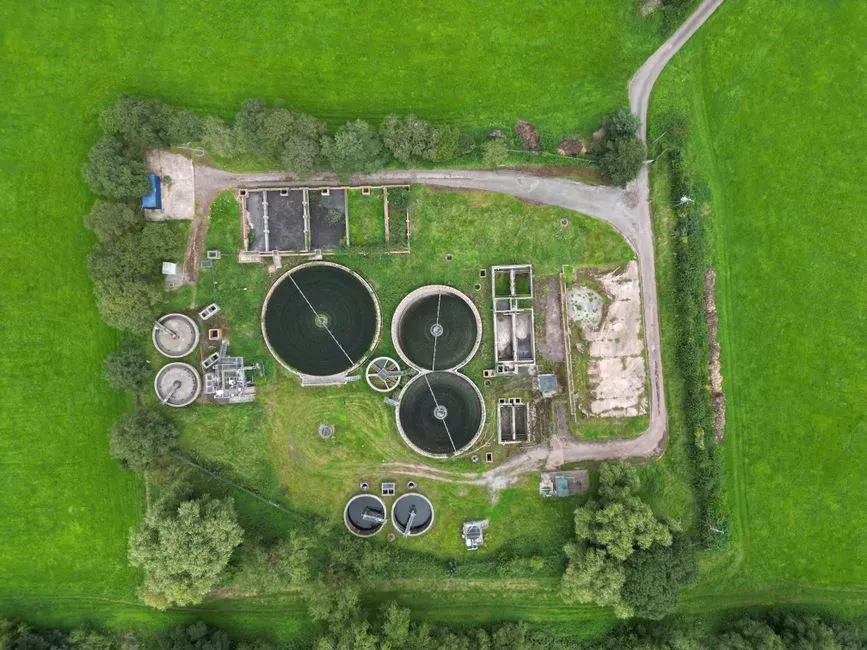
HydropureWater’s 2026 planning allowances are ₱45,000–₱80,000 per m³/day for packaged A/O and ₱90,000–₱120,000 per m³/day for MBR. These are early budget figures, not quotations, and they exclude land, power upgrades and permitting; they should not be compared without checking whether tankage, blowers, controls, membranes and installation are included.
For the supplied 180 m³/day example, HydropureWater estimates A/O capital expenditure at roughly ₱9 million–₱16 million and MBR at ₱18 million–₱24 million before land and connection works. That is a planning example rather than a price for the proposed property.
| Cost or operating item | Supplied 2026 planning benchmark | Scope to confirm in quotations |
|---|---|---|
| Packaged A/O | ₱45,000–₱80,000 per m³/day | Tankage, blowers, controls, installation and civil works |
| MBR | ₱90,000–₱120,000 per m³/day | Membranes, permeate equipment, controls and replacement provisions |
| A/O electricity | 0.8–1.5 kWh/m³ | Consumption at the verified load profile |
| MBR electricity | 1.8–2.5 kWh/m³ | Air scour, permeate pumping and cleaning loads |
| ECC and permitting | ₱50,000–₱200,000 | Applicable LGU and project-class scope |
| Sludge hauling | 2–5% of CAPEX annually | Volume, dewatering, transport and disposal basis |
Request itemized prices for civil works, commissioning, training, spares, disinfection, sludge removal, power backup, monitoring and discharge infrastructure. Sludge handling must be included in the comparison: for the 180 m³/day case, an plate-and-frame filter press can be evaluated for on-site dewatering, but its suitability depends on sludge characteristics, staffing, logistics and the final waste-disposal route.
Build a Permit, Climate and Operational Readiness Plan
Republic Act 9275, the Philippine Clean Water Act of 2004, requires wastewater-generating establishments to install appropriate on-site treatment or connect to a centralized sewer; HydropureWater’s 2026 guide also identifies ECC, discharge-permit and additional LGU-review obligations. The permit pathway should therefore be recorded before a supplier’s process is treated as compliant.
HydropureWater’s 2026 guidance calls for monthly monitoring of BOD, COD, TSS, pH, FOG and fecal coliform through a DENR-accredited laboratory, with results compiled in the Discharge Monitoring Report. The RFQ should identify the sampler, laboratory, parameters, reporting frequency and responsible operator rather than leaving compliance records outside the equipment scope.
Climate resilience needs explicit design criteria. HydropureWater’s 2026 guide cites post-Haiyan monitoring in which 44% of collected water samples were contaminated three weeks after landfall and 65% tested positive for E. coli ten months later. It recommends placing the tank top at or above the site’s 100-year flood elevation, using IP68 pumps, and providing standby power for 4–8 hours at ordinary sites or 24+ hours in typhoon-prone coastal zones.
Also place sludge management, odor control, maintenance access, bypass provisions, remote alarms, operator training and emergency power in the supplier scope. The project engineer should verify flood elevation, groundwater and infiltration conditions, as the supplied research does not provide site-specific values. Relevant planning for hotel and resort wastewater treatment in the Philippines and regulated industrial wastewater treatment in the Philippines should not replace a project-specific environmental assessment.
Issue a Complete Request for Proposal
A comparable RFQ must carry the same verified design inputs to every bidder: average and peak flow, wastewater characteristics, receiving route, required effluent values, footprint, flood elevation, power supply, sludge route and future expansion. Without these inputs, a unit price comparison may compare different projects rather than equivalent proposals.
Require each bidder to state the process type, design basis, hydraulic retention time, treatment capacity, disinfection method, sludge-production estimate, equipment list, utilities, monitoring controls, commissioning tests, operator training, maintenance schedule, spare parts, warranty, local service support and exclusions. Installation civil drawings should identify tank levels, pipe routes, pumping, controls and discharge works.
Also request a complete O&M estimate and require the bidder to identify the permit and receiving-route assumptions used in its proposal. Final compliance remains subject to the relevant authorities and the project engineer. Evaluate A/O and MBR bids on total installed cost, required footprint, energy exposure, operator involvement, reuse capability, guarantees and compliance evidence—not purchase price alone. The broader procurement lessons in packaged sewage treatment selection apply here because the receiving route and complete site scope still determine the result.
Frequently Asked Questions
How much does domestic sewage treatment cost in Manila?
HydropureWater’s 2026 planning ranges are ₱45,000–₱80,000 per m³/day for packaged A/O and ₱90,000–₱120,000 per m³/day for MBR, before land, power upgrades and permitting. For budgeting, request an itemized bid that also prices civil works, discharge infrastructure, sludge handling and commissioning; do not treat the ranges as quotations.
Should a Manila property choose A/O or MBR?
Choose based on verified flow, effluent and reuse targets, footprint, power reliability and operating capacity. A/O is a candidate where buried installation and a packaged configuration fit the site; MBR warrants consideration where footprint or output requirements dominate. Require process guarantees, energy estimates and exclusions from each bidder before comparison.
What sewage capacity does a Manila residential project need?
For preliminary planning, apply 150–200 L per capita per day and a 1.5–2.5 peaking factor, then validate with occupancy schedules, site drainage conditions and representative influent testing. Size hydraulic equipment against peak flow, not the average used for the worked example alone.
Can the WSZ Series replace a municipal sewer connection?
The WSZ underground integrated sewage treatment plant can provide permitted on-site treatment where a sewer route is unavailable, but it cannot establish connection availability or regulatory approval. Confirm the route, pretreatment requirements and discharge authority with the relevant agencies before ordering.
What should a buyer verify before choosing a packaged sewage supplier?
Check design capacity against peak flow, treatment guarantees, receiving-route compliance, flood and power provisions, sludge handling, monitoring, commissioning evidence, local service support and lifecycle exclusions. Also ask for the supplier’s permit assumptions and a complete O&M cost estimate so bids can be evaluated on the same basis.
Related Equipment
- MBR wastewater treatment system — specifications, capacity range, and technical data