Start with the cooling architecture and wastewater inventory
An Evaton data center needs a treatment strategy based on its cooling architecture and measured wastewater streams—not one generic wastewater plant. A sealed closed-loop liquid-cooling system is filled once at commissioning and normally consumes no additional water, while an evaporative system requires makeup control and continuous cooling-tower blowdown management. The baseline blowdown train is side-stream filtration, chemical conditioning and UF before RO reuse; sewage and intermittent bleed-off streams should be segregated. A 2026 LCA found reuse energy is a major carbon tradeoff, but improved cycles of concentration can reduce blowdown and chemical use. Final sizing requires measured water chemistry, a site water balance and confirmed Evaton discharge conditions.
The first procurement decision is therefore not whether to buy an RO skid. It is whether the facility has a recurring cooling-water blowdown stream to treat. WSP states that sealed liquid cooling is filled once at commissioning and consumes no additional water during normal operation; continuing consumption indicates leakage rather than an intended discharge. Its circuit typically uses demineralised water, so the treatment issue shifts to controlling scaling, biological growth and fine cold-plate contamination within the coolant loop, not sizing a blowdown plant.
An evaporative cooling system creates a different problem. Makeup is concentrated by evaporation, so control chemicals accumulate and a defined blowdown is required. Inventory that stream separately from domestic sewage, humidifier bleed-off, chiller flush water, generator cooling or test water, rainwater and condensate. Sanitary sewage is biologically active and should follow a biological treatment route; intermittent streams require equalization and characterization; clean condensate can offset freshwater demand.
The supplied research contains no Evaton-specific intake analysis, discharge tariff or municipal wastewater limit. Those must be obtained from the relevant authority rather than inferred from Johannesburg-area examples or the Soweto guide. The reference to a 100 MW facility requiring up to 2 million litres per day—cited in the 2026 Soweto guide—shows why scale matters, but it does not size a 1–5 MW Evaton facility. Each site needs its own monthly balance.
| Site stream | Likely treatment decision | Design input still required |
|---|---|---|
| Cooling-tower blowdown | Filtration, conditioning and possible UF/RO reuse or permitted discharge | Measured flow, cycles of concentration and feed chemistry |
| Sanitary sewage | Separate biological treatment | Headcount, peak flow and effluent permit |
| Humidifier bleed-off and chiller flush | Characterized equalization | Intermittent volume and constituent profile |
| Generator test water | Equalization or collection, then a decided route | Test frequency and chemical composition |
| Rainwater and condensate | Potential clean-water offset after quality review | Collection reliability and contamination risk |
The data center cooling blowdown treatment methodology provides a useful cross-check, but its location-specific assumptions must not be transferred to Evaton without evidence.
Calculate the blowdown load before choosing equipment
Blowdown flow is calculated as makeup flow multiplied by one minus the reciprocal of cycles of concentration, or COC. The 2026 Soweto guide gives the clearest sourced example: at 4 COC, approximately 25–30% of makeup water leaves as blowdown, so 10 million US gallons of monthly makeup produces approximately 2.5–3 million gallons of monthly blowdown.
COC expresses how many times the concentrated cooling-water chemistry exceeds makeup-water chemistry under steady-state assumptions. TDS measures total dissolved solids; silica, hardness and chloride identify scaling and corrosion risks; SDI indicates the potential for membrane fouling; recovery is the product-water fraction of the feed; permeate is the product water; and concentrate is the residual rejected stream. Procurement teams should require these terms to be used consistently rather than accepting “recovery” without a defined basis.
Raising COC reduces blowdown volume, but it also increases the concentration and scaling burden entering the treatment train. The design must balance freshwater savings against membrane fouling, antiscalant demand and concentrate volume. A treatment supplier should guarantee performance at the actual feed TDS and silica, not at a generic recovery curve.
- Create a monthly water balance for each cooling system.
- Reconcile makeup, evaporation, blowdown, product water, sludge and disposal routes.
- Validate the balance against meter data and operating logs.
- Size filtration, UF and RO from validated flow and feed chemistry.
For preliminary process development, the multi-media filtration skid can be evaluated against the measured circulation and blowdown data. It should not be sized from facility MW alone.
| Calculation field | Evidence needed | Equipment consequence |
|---|---|---|
| Makeup flow | Monthly meter total | Sets the upper flow basis |
| COC | Makeup and circulating-water chemistry | Determines blowdown and concentration load |
| Blowdown flow | Calculated balance and meter validation | Sets pretreatment and RO capacity |
| Recovery | Feed chemistry and pilot result | Sets permeate production and concentrate volume |
| Makeup-water offset | Permitted reuse and operational limits | Determines financial value |
Characterize the water before freezing the design basis
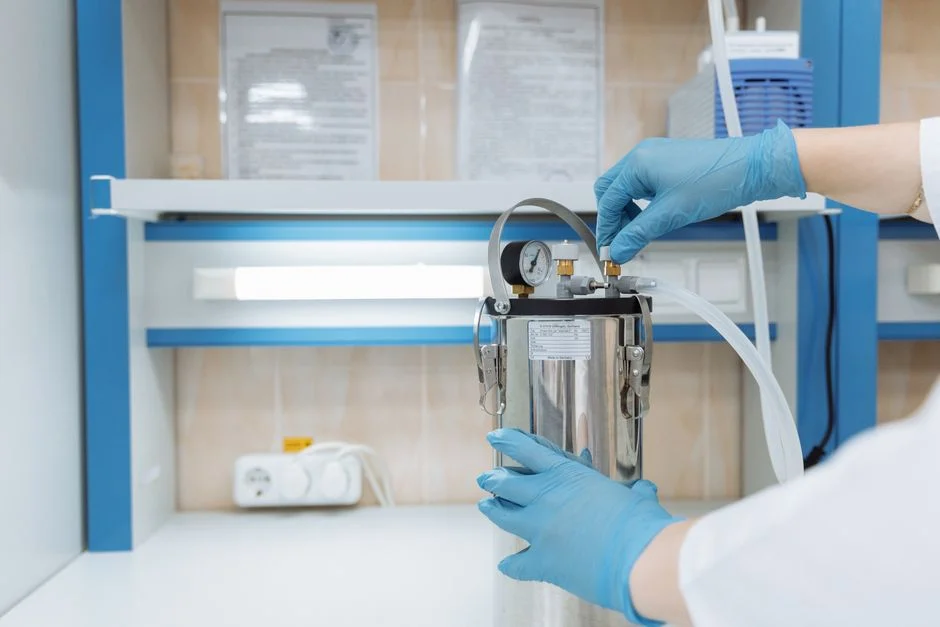
The feed analysis must establish whether the proposed recovery train can operate without excessive scaling or fouling; no Evaton TDS, hardness or silica value is established in the supplied research. The 2026 Soweto guide reports comparative blowdown evidence of 1,200–6,000 mg/L TDS, described as 4–8 times makeup-water concentration. That range is not an Evaton result and must not be used as the site design value.
Measure silica, calcium carbonate and calcium sulfate scaling potential, hardness, chloride, suspended solids, colloids, SDI and biocide residuals. Record the cooling-water chemical program—including antiscalant, biocide, corrosion inhibitor, pH control and cleaning chemicals—because the residual chemistry can change both membrane compatibility and concentrate disposal. Legacy chromate, high-phosphate or oxidizing-biocide programs may require reformulation before reuse is technically or contractually acceptable.
The intake-audit request should cover 12 months of representative data so seasonal source quality and cooling chemistry are captured. Monthly or event-based samples should be reconciled against chemical-dosing logs and operating events. The 2026 Pretoria guide identifies the same missing-evidence problem: without an intake dataset, the RO recovery ceiling remains a guess.
Generic recovery curves cannot replace testing at the actual feed composition. The pilot should expose the filtration and membrane train to representative chemistry, including concentration excursions, chemical carry-over and expected cleaning conditions. Automatic antiscalant and pH dosing can then be specified around measured control requirements, with PVDF ultrafiltration pretreatment evaluated where suspended solids, colloids or SDI cannot be reliably controlled upstream.
| Parameter | Why it matters | Design consequence |
|---|---|---|
| TDS | Establishes osmotic and salt-loading conditions | RO recovery and concentrate quality |
| Silica and hardness | Identifies precipitation and scale risk | Antiscalant strategy and recovery limit |
| Chloride | Relevant to corrosion and concentrate management | Material and disposal selection |
| SDI, suspended solids and colloids | Indicates membrane-fouling potential | Filtration and UF requirement |
| Biocide and corrosion-inhibitor residuals | May damage membranes or constrain reuse | Chemical reformulation or dechlorination |
Route each stream through the right treatment train
The baseline blowdown route is side-stream mechanical filtration, automatic antiscalant and pH conditioning, UF pretreatment and industrial RO, with permeate returned as cooling makeup where chemistry, cooling operations and permit conditions allow. The 2026 South African guides specify filtration to less than 10–15 microns and side-stream filtration sized at 1–5% of circulation flow. Those values are design-guide benchmarks, not measurements for Evaton.
The cited UF configuration uses 0.01–0.1 μm PVDF hollow-fiber membranes, achieves 90–95% recovery and requires chemical cleaning every 1–3 months. In practice, the required recovery must be reconciled with the RO feed flow and the site’s actual feed-water quality. The industrial RO system for cooling-blowdown reuse should be selected only after the pretreatment and concentrate routes are fixed.
Sanitary sewage must remain separate. The 2026 Pretoria guide describes it as low-TDS, high-ammonia and biologically active, and recommends biological treatment rather than routing sewage through RO. Intermittent humidifier bleed-off, chiller flush and generator test water should enter characterized equalization; untreated mixing into the RO feed would transfer an undefined load onto the membranes.
Rainwater and condensate should be evaluated as clean-side offsets. They do not belong in raw blowdown equalization unless contamination risks are assessed and controlled. Generator test water also requires its own chemical characterization because test procedures may add products not present in the cooling loop.
For the RO comparison, the 2026 Soweto guide reports permeate at 10–50 mg/L TDS. The design must nevertheless confirm actual recovery and product quality using the measured Evaton feed. A supplier should provide membrane-normalized energy data, feed limits and chemical-consumption figures for the specified feed composition.
| Process stage | Function | Required output |
|---|---|---|
| Equalization and screening | Balance intermittent flows and remove gross solids | Characterized, stable feed |
| Side-stream filtration | Remove suspended solids and biofilm | Low-solids stream for conditioning |
| Antiscalant and pH control | Limit scale formation | Controlled chemistry at membrane inlet |
| PVDF UF | Provide a barrier for colloids, bacteria and residual solids | RO-compatible pretreatment water |
| Industrial RO | Remove dissolved salts | Permeate for reuse and a managed concentrate |
| Biological sewage treatment | Remove organic and ammonia loads | Separately compliant sewage effluent |
Compare reuse, compliant discharge and zero liquid discharge
The appropriate train depends on confirmed discharge conditions, water demand, energy availability and concentrate management; it cannot be selected from water-saving potential alone. Closed-loop or hybrid cooling with side-stream filtration addresses the smallest recurring blowdown stream. Side-stream UF plus RO reuse converts blowdown into replacement cooling makeup. Partial or full ZLD adds a concentrate-conversion step for sites with severe discharge constraints or a demonstrable need to recover the remaining water.
The 2026 LCA found the wastewater scenario had about twice the global warming potential of the freshwater case. Treatment energy accounted for roughly 80% of the difference, while the UF+RO scenario used more than five times the freshwater energy. The same study found that improved COC reduced blowdown and chemical consumption, partly balancing the additional energy burden. This is the correct context for evaluating reuse: freshwater displaced, treatment electricity, chemicals and concentrate consequences belong in one model.
For MVC and full ZLD, the research reports 95–98% recovery with distillate below 10 mg/L TDS and energy consumption of 15–25 kWh per 1,000 US gallons. It gives installed capital benchmarks of US$1–3 million for 10,000–30,000 GPD and US$3–8 million for full ZLD with a crystallizer. These are class benchmarks, not Evaton quotations.
ZLD becomes credible only after the buyer has confirmed a discharge restriction, completed the 12-month intake audit, identified a concentrate-management route and assessed energy availability. The reported direct-discharge fee of US$5–15 per 1,000 gallons is a benchmark for water-stressed regions, not a verified Evaton tariff. Obtain the current local charge before crediting avoided disposal costs. The 2026 data center wastewater treatment guide provides the broader comparison context, but local permit data must replace its assumptions.
| Train | Water benefit | Energy and operating burden | Decision condition |
|---|---|---|---|
| Closed-loop or hybrid cooling with side-stream filtration | Reduces recurring cooling-water demand | Lowest treatment complexity | Cooling architecture and residual stream permit it |
| Side-stream UF plus RO reuse | Returns treated blowdown as cooling makeup | Requires membrane, chemical and concentrate management | Measured feed chemistry and a viable permeate destination |
| Partial ZLD with MVC | Recovers additional water from RO concentrate | Reported at 15–25 kWh per 1,000 US gallons of distillate | Discharge constraint and energy supply support it |
| Full ZLD with crystallizer | Converts residual liquid into distillate and solid salt | Highest capital, maintenance and disposal burden | No acceptable discharge route and a site-specific feasibility case |
Build a site-specific cost, energy and compliance case
The commercial case must compare freshwater and sewer charges with treatment energy, chemical demand, membrane replacement, labour, sludge disposal and concentrate management. The cited 50,000 GPD blowdown-RO benchmark is US$250,000–500,000 installed, with operating cost of approximately US$1.50–3.00 per 1,000 gallons treated. It is an indicative class benchmark requiring a site-specific quotation; the research does not establish an Evaton price.
Build the model around validated blowdown flow, feed and permeate TDS, recovery, electricity price, antiscalant and biocide consumption, membrane replacement, labour, sludge disposal, sewer charges, brine disposal and freshwater cost. Include peak demand and outages because treatment equipment must operate when makeup cannot be curtailed. The Evaton research identifies electricity availability and load-shedding exposure as material constraints, so electrical demand should be included in resilience and operating-cost decisions.
Request written confirmation of current Evaton or Johannesburg Water trade-effluent requirements, sewer acceptance, applicable TDS limits, discharge fees and concentrate-haulage capacity. Do not assume that the 1,500 mg/L limit cited for some jurisdictions applies locally. Where no limit is available, state that explicitly and obtain it before freeze.
Suppliers should be evaluated on guaranteed performance at the actual feed TDS, the feed-analysis method, normalized energy consumption, chemical dosage, recovery, cleaning intervals, membrane guarantees, spare-part lead times and lifecycle cost. RO and UF membrane elements and treatment valves, filter media and service parts should be evaluated for compatibility, local availability and lead time, not only purchase price.
| Commercial input | Source required | Treatment in the model |
|---|---|---|
| Validated blowdown flow | Metered monthly water balance | Annual treated volume |
| Feed TDS, silica and scaling profile | 12-month intake audit | Recovery, cleaning and chemical demand |
| Electricity and outage exposure | Current tariff and resilience assessment | Energy cost and availability |
| Sewer charge and permit | Current local authority confirmation | Disposal cost and compliance risk |
| Equipment and spares | Site-specific quotations | CAPEX, maintenance and downtime exposure |
Implement the treatment system through a staged commissioning plan
The 2026 South African guides support a sequence of 12-month intake audit, slip-stream pilot, engineering design, permit confirmation, procurement, commissioning and performance testing. This sequence prevents the design from freezing around missing feed chemistry or an unconfirmed discharge route. The pilot should run at representative blowdown flow and chemistry and include expected concentration excursions and chemical residuals.
For the selected reuse train, specify equalization, filtration, chemical conditioning, UF, RO, permeate storage, concentrate management and sludge handling as applicable. Include online conductivity and flow measurement plus PLC alarms. Integrate filtration, dosing, UF and RO controls into one platform so operating and compliance records come from one source.
Start-up testing should verify flow, differential pressure, permeate quality, recovery, energy consumption, chemical feed, reject chemistry and controls interlocks. The acceptance test must use the agreed feed basis; generic factory performance does not establish site performance. A plate-frame filter press can be considered for sludge dewatering where the measured waste mass supports it.
Operator handover should cover membrane cleaning, feed limits, chemical compatibility, spare parts, alarm response and rejected-water disposition. The maintenance team should receive the operating manual, cause-and-effect records, calibration records and a clear escalation route before the system enters normal service.
Frequently Asked Questions
What treatment does an Evaton data center need if it uses closed-loop liquid cooling?
Closed-loop liquid cooling normally requires treatment of the coolant circuit rather than continuous blowdown treatment. WSP states that the system is filled once at commissioning and normally consumes no additional water. The design still needs controls for scaling, biological growth and cold-plate contamination, using demineralised water and compatible treatment chemistry. Confirm leaks and any replacement or flushing flows before adding RO capacity.
How should cooling-tower blowdown be sized for an Evaton site?
Calculate blowdown as makeup flow multiplied by one minus 1/COC, then validate it against meter data. The 2026 Soweto guide gives the example that at 4 COC, approximately 25–30% of makeup is lost as blowdown. Obtain 12 months of feed data covering TDS, hardness, silica, chloride, suspended solids, SDI and chemical residuals before sizing filtration, UF and RO.
What budget should be allocated for wastewater treatment and cooling-blowdown reuse?
Do not adopt the research benchmark as an Evaton price. The 2026 Soweto guide cites US$250,000–500,000 installed for a 50,000 GPD blowdown-RO system and approximately US$1.50–3.00 per 1,000 gallons treated, but the actual quote requires validated flow, feed chemistry, local power costs and disposal charges. Request both installed capital and lifecycle operating cost, including membrane replacement, chemicals, sludge, labour, sewer charges and brine disposal.
How should suppliers be selected for sizing, reliability and compliance?
Select the supplier on guaranteed performance at the actual feed composition, not generic recovery. Request the feed-analysis method, normalized energy consumption, chemical dosage, recovery, cleaning intervals, membrane guarantees and controls scope. Confirm local permit acceptance separately, and require evidence that spare membranes, valves and filter media are available with acceptable lead times. The PVDF ultrafiltration pretreatment, industrial RO system for cooling-blowdown reuse and underground integrated sewage-treatment unit should be scoped as separate duties, with sewage kept out of the RO feed.