What an Effluent Treatment Plant in Tijuana Must Achieve
An effluent treatment plant in Tijuana is an industrial treatment system selected around the waste stream, hydraulic profile, discharge route and reuse objective—not a single off-the-shelf machine. A treatment train may combine screening or equalization, contaminant-specific pretreatment, biological or physicochemical treatment, solids separation, membrane polishing and disinfection. The right configuration depends on flow variability, pH, oil and grease, suspended solids, toxicity and required effluent quality. Final sizing and permit compliance require representative wastewater analysis and site-specific design.
The buyer must first state where the treated water will go: direct permitted discharge, indirect discharge to a sewer subject to a pretreatment agreement, reuse in an industrial process, or further treatment for irrigation or another controlled reclamation route. Each destination changes the required process, monitoring and operating evidence.
Industrial effluent treatment is not residential sewage treatment. Industrial sources may contain oil and grease, high organics, salts, metals, pigments, biocides or process chemicals. Those contaminants determine whether pretreatment, biological treatment, physical separation or desalination is technically necessary.
The supplied academic research supports membrane polishing and water-reclamation studies, including direct nanofiltration for wastewater treatment plant effluent at the University of Twente. It does not establish a current numerical Tijuana discharge limit. The applicable requirements must be confirmed with the receiving sewer, water authority and other relevant Tijuana authorities during engineering design. A general guide to pharmaceutical wastewater treatment requirements in Mexico may provide sector context, but it does not replace project-specific approval.
Build the Treatment Train from the Wastewater Profile
The process flow should be fixed before equipment is selected: source characterization → headworks or flow equalization → contaminant-specific pretreatment → biological or physicochemical treatment → solids separation → polishing → disinfection → reuse or permitted discharge. Every stage has a defined duty, and removing or bypassing one stage changes the loading and performance assumptions for everything downstream.
- Characterize the source. Sample across normal production, cleaning, tank-emptying and batch-discharge cycles. Record average flow, peak hourly flow, pollutant concentrations, pH, temperature, toxicity indicators and materials that may enter through floor drainage.
- Stabilize the flow. Use equalization and controlled feed where production washing or batch reactions generate peaks. The hydraulic design must cover the governing peak, not only the daily average.
- Remove contaminants that would impair the main process. Screening protects downstream equipment. Oil and grease removal, dissolved air flotation, pH adjustment, coagulation or flocculation address specific loads identified by the analysis.
- Apply the principal treatment process. Biological treatment addresses biodegradable organics; physicochemical treatment addresses contaminants that must be removed by precipitation, flotation or adsorption. MBR combines biological treatment with membrane separation in a compact train.
- Separate solids and polish the effluent. Clarification or flotation removes separated solids. Ultrafiltration, nanofiltration or reverse osmosis is selected only against the required final water quality and residual contaminant risks.
For oil, grease, FOG, colloids or suspended solids that could overload downstream biological or membrane equipment, dissolved air flotation systems for industrial wastewater pretreatment are a relevant starting point. HydropureWater’s published product information lists capacities from 4–300 m³/h across 13 standard models; this is equipment-range evidence, not a site sizing calculation. A DAF versus lamella clarifier comparison can help frame the choice between floatation and inclined-plate separation.
Where flocculation, sludge recirculation and compact inclined-plate solids separation are appropriate, the published lamella clarification catalog cites surface loading rates of 20–40 m/h. An industrial lamella sedimentation tank should therefore be evaluated on the required solids capture, hydraulic duty and sludge-handling basis.
Where biological treatment and membrane separation must be combined, the integrated MBR wastewater treatment system published range extends from 10–2,000 m³/day, with membrane filtration below 1 micron. These figures describe the catalog range; influent loading, peak flow, sludge properties and target water quality still require engineering verification.
PLC-controlled chemical dosing should follow demonstrated need. An automatic chemical dosing system may be appropriate when the wastewater characterization shows repeatable demand for coagulant, flocculant or pH adjustment. Without representative data, automatic dosing should not be treated as a substitute for process chemistry.
| Process stage | Use when the characterization shows | Design information required |
|---|---|---|
| Equalization and flow control | Batch discharges, washing, or variable production flows | Average and peak flows, batch profile, operating schedule |
| DAF | Oil, grease, FOG, colloids or floatable solids | Oil and grease load, suspended solids, required removal, peak flow |
| Lamella clarification | Flocculated solids require inclined-plate separation | Flocculation basis, hydraulic duty, sludge concentration and withdrawal |
| MBR | Biological treatment and fine membrane separation are required together | Organic load, nutrients, peak flow, mixed liquor behavior, target water quality |
| Chemical dosing | pH, coagulation or flocculation conditions require repeatable control | Dosage range, chemical concentration, storage and safety requirements |
Choose Membrane or Non-Membrane Polishing
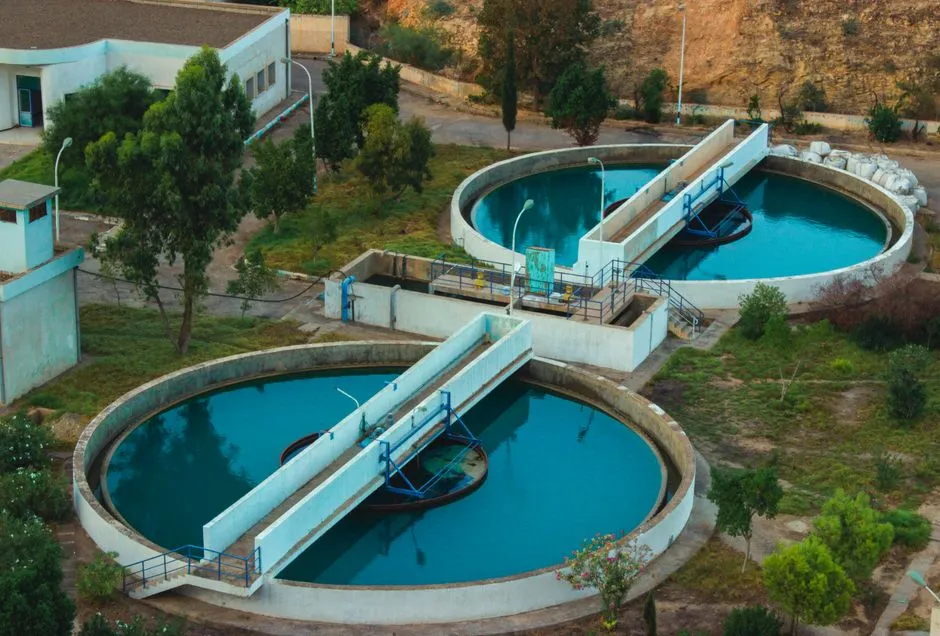
Membrane selection depends on the contaminant to be removed, required recovery and acceptable reject or concentrate stream. No membrane should be credited with removing contaminants that remain upstream as oil, suspended solids, scale-forming salts or unstable pH.
Use ultrafiltration when the objective is bacteria, colloid and suspended-solid removal without chemical addition. HydropureWater’s published UF product information specifies 2,000–40,000 L/h capacity, 0.03-micron PVDF membranes and turbidity acceptance up to 300 ppm. Those limits describe the equipment envelope; they do not establish what a particular industrial effluent will deliver without pretreatment and validation.
Use MBR when biological treatment and fine membrane separation can be integrated and the required effluent supports that configuration. If the target is broader reuse or desalination, a dedicated ultrafiltration pretreatment stage may be needed ahead of reverse osmosis.
| Option | Primary role | Main decision point | Residual stream to resolve |
|---|---|---|---|
| Non-membrane clarification or flotation | Remove bulk floatable or settled solids | Are the required removals achievable without membrane polishing? | Separated sludge and flotation scum |
| UF | Remove bacteria, colloids and suspended solids | Will the specified flow and turbidity basis match the actual feed? | Backwash water and retained solids |
| MBR | Combine biological treatment with membrane solids separation | Does the organic and hydraulic load suit the biological process? | Waste sludge and membrane cleaning waste |
| Nanofiltration | Polish WWTP effluent for reclamation applications | Does the water chemistry permit direct application? | NF concentrate and lost water recovery |
| Reverse osmosis | Final desalination or high-quality polishing | Can the feed be controlled to prevent scaling and membrane fouling? | RO reject requiring disposal or further treatment |
The University of Twente’s doctoral research evaluated direct nanofiltration for polishing wastewater treatment plant effluent and reclamation. It identified membrane technology as a potential route to standards suitable for agricultural or direct or indirect potable use, but suitability still depends on water chemistry, treatment validation and applicable standards; the research does not create a Tijuana reuse approval.
Reverse osmosis may be justified where desalination or high-quality polishing is required. A 2017 University of South Africa dissertation reports that RO is often preferred as a final stage but is more expensive because membranes require regular replacement. The same dissertation examined evaporation and crystallization for acidic platinum-refinery wastewater containing 18,200 mg/l sodium ions and 104,900 mg/l chloride ions. That case supports recovery assessment where dissolved salts are economically important; it is not a default treatment prescription for Tijuana.
Evaluate lime precipitation or crystallization only when high dissolved salt makes recovery valuable and the resulting solids have a credible route. For a reusable membrane train, review ultrafiltration pretreatment for the industrial process, reverse osmosis for final desalination and the appropriate membrane and filter-element supply. Each stage must be evaluated against the same influent characterization and target water quality.
Design for Variable Industrial Flows and Sludge
Industrial treatment capacity must be checked against peak conditions because average flow can hide a batch discharge, cleaning surge or tank-emptying event. The design basis should include average flow, peak hourly flow, batch-discharge profile, operating schedule, and the pollutant load associated with each production state.
Equalization and flow control are warranted when production washing, tank emptying or batch reactions create hydraulic peaks. Confirm that the selected DAF or MBR duty covers the governing peak condition—not merely the daily average—and identify whether chemicals, membranes or clarification equipment can accept the associated pollutant surge.
Sludge is a treatment objective in its own right. Biological treatment produces excess solids, while coagulation and flocculation create chemical sludge. Where sludge volume is significant, add dewatering and define moisture content, cake handling and residual disposal. A plate-and-frame filter press can be evaluated where the sludge characteristics and required dewatering duty support its use.
The University of South Africa’s 2017 platinum-refinery study demonstrates the recovery logic rather than a Tijuana default. It addressed a 20,000 l/day acidic wastewater stream, proposed recovering 10,000 l/day for freshwater-demand reduction and reducing the disposal stream to 10,000 l/day. The case depended on high salt concentration and value recovery; it should not be extrapolated to ordinary industrial effluent.
Design a separate management plan for membrane concentrate, reverse-osmosis reject, backwash waste, spent chemical solutions and flotation scum. Their hydraulic loads and compositions may differ materially from the treated effluent, and a plant that omits these streams can become unbalanced after commissioning.
Tijuana Site, Compliance and Procurement Checklist
Local approval and technical selection are separate workstreams. Confirm the receiving authority, sewer or discharge route, pretreatment agreement and applicable current permits before freezing the process. The supplied research does not provide a defensible current numerical effluent limit for Tijuana, so no permit threshold should be inferred from generic treatment literature.
Before requesting comparable proposals, issue one design basis to every supplier. It should include the representative wastewater analysis, average and peak flows, batch schedule, reuse objective, utility availability, installation footprint and sludge-disposal plan. Require each bidder to confirm that its guarantee and duty assumptions correspond to that basis.
| Procurement item | Information or commitment required | Reason it affects comparison |
|---|---|---|
| Design flow | Average flow, peak hourly flow and batch-discharge profile | Defines hydraulic equipment size and equalization |
| Wastewater characterization | Representative pH, oil and grease, organics, solids, toxicity and relevant ions | Defines pretreatment, chemistry and biological loading |
| Treatment target | Discharge route or required water quality for reuse | Determines whether polishing and desalination are justified |
| Process proposal | Flow diagram, unit duties, control philosophy and bypass strategy | Shows how the complete train handles the influent |
| Equipment basis | Materials, capacities, membrane specifications and replacement assumptions | Supports durability and lifecycle-cost review |
| Commissioning | Acceptance tests, sampling protocol, training and performance criteria | Prevents an untested handover |
| Commercial scope | Supply, installation boundary, utilities, chemicals, spares, local service and delivery terms | Prevents exclusions from obscuring total project requirements |
Ask suppliers to state the design flow, process diagram, duty basis, materials of construction, control philosophy, membrane replacement assumptions, spare-parts strategy and commissioning acceptance criteria. Confirm delivery scope, installation, commissioning, training, chemical supply, membrane availability and local service support in the offer. A proposal based on different influent assumptions is not directly comparable with one based on the buyer’s characterization.
Treat the full effluent train as a system. A membrane cannot compensate for untreated oil, unstable flow, unsuitable pH or excessive upstream solids. For industry-specific context, review What Industrial ETP or DAF System Does a Seoul Factory Need? 2026, while recognizing that geography does not supply the wastewater analysis, permit basis or hydraulic profile.
Frequently Asked Questions
How much does an industrial effluent treatment plant cost in Tijuana?
There is no defensible Tijuana price range in the supplied research. A comparable quotation requires design flow, representative wastewater analysis, treatment targets, footprint, utilities, installation boundary and sludge handling. Request a capital-cost breakdown by train, operating-cost assumptions, membrane replacement intervals, chemical demand and excluded items; do not compare headline prices from proposals using different influent and effluent bases.
How do I choose an ETP supplier?
Require a matched design basis, process diagram, equipment-duty schedule, performance guarantee, commissioning criteria and lifecycle support. Also request the membrane replacement assumptions, spare-parts strategy, local service arrangements and explicit scope exclusions. A supplier that cannot explain how its equipment handles the characterized peak flow and sludge stream is not yet comparable with one that can.
What capacity data are needed to size the treatment equipment?
Provide average flow, peak hourly flow, batch-discharge data, operating schedule, contaminant loading and required final water quality. Capacity must be checked against both hydraulic and contaminant duties. Catalog ranges can identify a possible configuration, but they cannot substitute for site-specific sizing.
Which Tijuana authority should confirm discharge and reuse requirements?
Confirm the current requirements with the relevant Tijuana authority and the receiving sewer, water utility or reuse authority before finalizing the process. The University of Twente research provides technical context for nanofiltration and reclamation, but it is not a substitute for local approval, permit conditions or a validated reuse assessment.
Related Equipment
- industrial DAF wastewater treatment system — specifications, capacity range, and technical data