What changes for Mexican sewage projects in 2026
Domestic sewage treatment in Mexico depends on the project’s flow, available footprint, discharge route, reuse goals and operation resources. Compact A/O package plants combine biological treatment, sedimentation and disinfection in one buried unit; the HydropureWater WSZ covers 1–80 m³/h and is fully automated. MBR systems offer finer solids separation and reuse potential, with catalog capacities from 10–2,000 m³/day. Infrastructure risk is also significant: in 2026, Tijuana projects included a planned 10 MGD treated-effluent diversion and a new 80 MGD pumping capacity milestone. Final selection requires site-specific wastewater testing, permit review and hydraulic verification.
The Tijuana program shows why treatment procurement cannot be separated from infrastructure condition. The EPA reported in 2025 that the South Bay International Wastewater Treatment Plant expansion increased planned capacity from 25 MGD to 35 MGD. Baja Daily News reported on June 30, 2026, that Mexico began construction on Tijuana Pump Station PB-1 on April 27, 2026, with completion planned for November 2027 and designed total pumping capacity of 80 MGD.
The same report stated that Tijuana River Gates Phase 1 was expected by mid-July 2026 and was intended to block at least 5 MGD of sewage from entering the river channel. These projects address collection, pumping and overflow-control constraints at metropolitan scale. A site treatment unit cannot compensate for an undersized sewer, inadequate pumping, poor equalization or an unpermitted discharge route. Engineers should therefore evaluate collection reliability alongside treatment capacity, as discussed in this domestic sewage treatment equipment guide.
Collection-system capacity, treatment capacity and discharge authorization are separate engineering and regulatory questions. Each must be verified for the project site.
Define the project before selecting a treatment process
A defensible equipment selection begins with measured flow and wastewater quality, not with a treatment-unit catalog capacity. Obtain a wastewater study that documents average, peak-hour and peak-day flows across relevant operating and seasonal conditions. For domestic sewage, characterize organics, suspended solids, nutrients and pH, and identify the hydraulic peaks that could overload biological treatment or shorten solids-separation performance.
Keep process streams distinct. Industrial process water may require additional pretreatment, stormwater infiltration changes hydraulic and solids loading, and hauled septage has different receiving and handling requirements. Define the receiving route before procurement: connection to a municipal sewer, reuse within the property, surface-water discharge or another authorized destination. The route determines the required treatment train and the evidence needed for authorization.
Map site constraints as well. Confirm footprint, burial depth, groundwater, flood exposure, electrical supply, access for maintenance and whether full-time operators are available. These constraints can eliminate an otherwise capable process before the commercial comparison begins.
| Design input | Information required | Decision affected |
|---|---|---|
| Flow | Measured series covering seasonal variation, peak hour and peak day | Treatment capacity, equalization and bypass controls |
| Wastewater quality | Organics, suspended solids, nutrients and pH | Biological loading and solids handling |
| Source streams | Domestic sewage, industrial wastewater, infiltration and septage boundaries | Pretreatment and process suitability |
| Receiving route | Municipal connection, reuse, surface-water discharge or other authorized destination | Treatment objectives and permit dossier |
| Site and operations | Footprint, burial depth, groundwater, flooding, power, access and staffing | Installation format and lifecycle support |
For decentralized applications, IntechOpen’s 2024 study describes vermifiltration as efficient, viable, requiring less expertise and capable of decentralized treatment. Its reported application used domestic septic-tank sewage, so it should not be generalized automatically to every municipal or commercial sewer. Solids management, local feasibility and discharge approval still require evaluation. Where the incoming stream contains material that could foul equipment, a mechanical rotary mechanical screen should be assessed as part of the headworks decision.
Compare A/O package plants, MBR and decentralized options
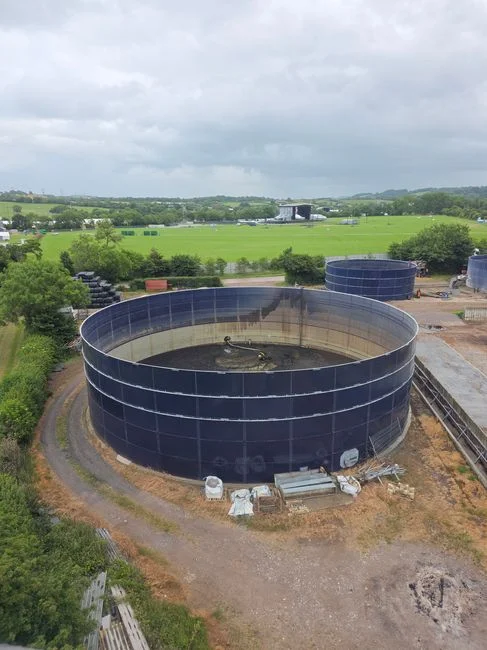
A/O package plants and MBR systems address different project constraints, while decentralized processes require a suitable source and local operating model. The HydropureWater WSZ integrates anoxic and aerobic biological contact oxidation, sedimentation and disinfection in one buried package. Its stated capacity is 1–80 m³/h, operation is fully automated without requiring an operator, and installation may be below grade with landscaping above or on a trailer for mobile deployment. These are manufacturer specifications for the WSZ underground package sewage treatment plant.
The HydropureWater MBR combines activated sludge with submerged PVDF membrane filtration. Catalog capacities run from 10–2,000 m³/day, filtration is specified below 1 μm, and the listed footprint is 60% smaller than conventional systems. The footprint statement is a manufacturer specification, not a universal MBR benchmark, and should be checked against the proposed civil works. See the integrated MBR wastewater treatment system for the published configuration.
Vermifiltration is a decentralized option where the feed is domestic septic-tank sewage and local feasibility, solids management and discharge approval are acceptable. DAF has a different role: it may pretreat a defined oily or solids load, but it does not replace biological treatment for domestic sewage.
| Option | Published configuration or capacity | Best fit to evaluate | Principal limitations to verify |
|---|---|---|---|
| WSZ A/O package | Anoxic/aerobic contact oxidation, sedimentation and disinfection; 1–80 m³/h | Compact, buried installations with automated operation | Hydraulic and organic loading, solids removal, odor control and maintenance access |
| Integrated MBR | Activated sludge and submerged PVDF membranes; 10–2,000 m³/day | Footprint-constrained sites with defined effluent or reuse objectives | Membrane cleaning, module replacement, electrical demand and pretreatment |
| Vermifiltration | Decentralized treatment described for domestic septic-tank sewage | Small decentralized applications with acceptable local conditions | Feedstock fit, solids management and discharge approval |
| DAF | Manufacturer equipment for suspended solids, oil and grease or FOG separation | Pretreatment of a defined contaminant load | Not a substitute for the domestic biological process |
Use this comparison as a screening framework. If the priority is a compact below-grade unit with integrated automation, examine the WSZ. If the receiving route or reuse plan requires membrane separation and the site can support membrane maintenance, examine MBR. If the source is septic-tank sewage and the site can manage the associated residuals, examine decentralized vermifiltration. For a defined oily load, assess the DAF pretreatment machine before the biological stage.
Build the treatment and reuse train around the chosen process
The treatment train must match both the selected process and the authorized discharge or reuse objective. In a WSZ installation, the internal sequence is anoxic contact, aerobic contact oxidation, sedimentation and disinfection. External treatment still depends on influent characteristics and site requirements; screening, equalization and final sampling do not disappear simply because the main unit is packaged.
An MBR installation uses activated sludge followed by submerged membrane filtration. Disinfection follows where required by the project’s reuse or discharge plan. The separation mechanism differs from sedimentation, but the complete train still needs controlled influent, biological removal, solids handling, disinfection, controls and a clear route for the final effluent.
Add mechanical screening when rags, plastics or fibrous material could foul pumps, aeration equipment or membranes. The incoming stream must be assessed rather than assuming domestic wastewater contains no damaging solids. A screen protects downstream process equipment; it does not replace biological treatment or adequate flow equalization.
DAF belongs in the train only where there is a defined oily, FOG or solids-removal objective before biological treatment. It should be evaluated as pretreatment, not presented as the primary treatment process for domestic sewage.
For modular replacement or expansion, the DF flat-sheet MBR module specification provides a 0.1 μm pore size, 80–225 m² membrane area and 32–135 m³/day output. These figures identify the available module envelope; they do not establish the capacity of an entire plant without reviewing the biological system, hydraulic configuration and project demand. The DF flat-sheet MBR module should be checked against the proposed arrangement and future expansion.
Keep treated-effluent reuse conditional. Final water quality, sampling and permissible applications must be confirmed through project-specific analysis and the applicable authorization. If disinfection is required, evaluate the chlorine dioxide generator as part of the defined treatment and dosing train, with safety, storage and control requirements included in the design.
Size the system using peak flow and operating envelopes
Sewage treatment capacity sizing must test both peak hydraulics and treatment performance. The WSZ range of 1–80 m³/h is an equipment-selection envelope; it does not establish that a selected unit will meet the site’s organic load or required effluent quality. The MBR range of 10–2,000 m³/day is a catalog range for preliminary comparison, not a substitute for peak-flow analysis, biological design and solids-removal verification.
- Obtain a measured or defensible flow series, including seasonal variation and peak-hour and peak-day conditions.
- Request peak factors supported by the project’s wastewater study rather than applying undocumented generic multipliers.
- Check equalization, flow splitting, biological residence requirements and solids removal against the selected process.
- Define redundancy, bypass controls, maintenance access and the operating response for each equipment state.
- Verify that the selected unit has documented hydraulic and water-quality envelopes for the proposed application.
| Sizing check | Evidence required | WSZ question | MBR question |
|---|---|---|---|
| Flow | Average, peak-hour, peak-day and seasonal series | Does the selected m³/h rating cover the verified envelope? | Does the selected daily rating cover verified flow and expected expansion? |
| Loading | Organics, suspended solids, nutrients and pH | Are biological and solids-removal duties defined? | Are biological loading and membrane feed conditions defined? |
| Hydraulics | Equalization, splitting, bypass and connections | Can the package handle the specified flow sequence? | Can the membrane train operate through the specified peak sequence? |
| Delivery and installation | Transport envelope, foundations, lifting access and utilities | Can the buried or trailer-mounted configuration be delivered and installed? | Can modules be transported, lifted and connected for future expansion? |
For a phased project, compare the WSZ trailer-mounted configuration with the MBR modular format. Verify transport routes, foundations, lifting access and final utility connections rather than assuming modular equipment avoids site works. The package sewage treatment plant comparison and sizing packaged sewage treatment for housing developments provide useful frameworks, but the Mexican project must still use its own measured data.
Plan permits, procurement and lifecycle support before ordering
Permit review should begin with the proposed treatment train, discharge point and reuse application, not after a catalog unit has been selected. Confirm the applicable federal, state and municipal requirements with the authorities responsible for the site. The EPA’s Tijuana information is useful as infrastructure context, but it does not establish discharge limits for a private project elsewhere in Mexico.
Request a complete supplier package before comparing commercial offers. It should include process guarantees, drawings, electrical requirements, control philosophy, commissioning, spare parts, remote support and operator training. Each offer must define what is included in the package scope: inlet works, equalization, odor control, screens, blowers, sludge handling, disinfection, controls, piping and discharge testing. A capacity statement is not a complete scope definition.
Compare lifecycle requirements as well as acquisition cost. For the WSZ, assess biological media maintenance, aeration, sludge removal, chemical use and energy demand. For MBR, add membrane cleaning and replacement. Confirm how routine work, consumables and failures will be handled after commissioning, particularly where full-time operators are unavailable.
Link purchase approval to an independent design check and the permit dossier. The reviewer should test the selected capacity against peak flow, confirm the process train is appropriate for the influent, and identify exclusions that could otherwise become field changes. The lifecycle review should also consider membrane replacement or media maintenance, biological solids handling, disinfection, controls and power requirements.
The sequence should be: verify inputs, define the receiving route, screen technologies, perform process and hydraulic design, confirm permits, obtain comparable supplier scopes, then select the lifecycle solution. This ordering reduces the risk of buying a treatment unit whose headline capacity does not resolve the project’s actual constraint.
Frequently Asked Questions
How much does a domestic sewage treatment plant cost in Mexico?
There is no defensible project price without the wastewater flow series, treatment objectives, site constraints and permit route. Ask each supplier for a scope-based quotation that separates equipment, civil works, utilities, installation, commissioning, training and consumables. Also request membrane or media replacement, sludge handling, energy use and remote support as lifecycle cost items.
Should I choose a WSZ package plant or an MBR system for a site in Mexico?
Choose the WSZ when a compact, below-grade integrated process and automated operation are the primary project drivers, subject to verified hydraulic and organic loading. Choose MBR when the discharge or reuse plan supports membrane separation and the site can provide membrane maintenance and electrical reliability. The receiving authorization and measured influent data must make that decision; catalog capacity alone cannot.
What flow information do I need before asking for equipment sizing?
Provide average, peak-hour, peak-day and seasonal flow data, together with the wastewater characteristics needed for biological treatment. Include the planned development phase and any separate streams entering the system. If those measurements are unavailable, the supplier should identify the study required rather than apply an undocumented peak factor.
Can packaged sewage treatment equipment be installed below grade in Mexico?
The WSZ is specified for below-grade installation with landscaping above or trailer mounting for mobile deployment. Installation still requires project-specific checking of burial depth, groundwater, flooding, access, lifting, ventilation, odor control and utilities. The applicable local authority must also confirm the installation and discharge conditions.
What should I include in a wastewater treatment supplier request for quotation?
Include measured flows and wastewater quality, the receiving route, reuse requirements, site drawings, burial and flood conditions, power availability, operator availability, applicable permits, required guarantees and the commissioning schedule. Ask the supplier to list included and excluded equipment, utilities, civil interfaces, testing, training, spare parts and remote support so that offers can be compared on equal scope.