What Domestic Sewage Treatment Means for Ashgabat Projects
Domestic sewage treatment in Ashgabat can follow centralized, decentralized or hybrid pathways. Turkmenistan’s official government portal reported in 2017 that the capital’s sewage treatment facilities had a designed capacity of 300 thousand cu.m. per day for domestic wastewater, with gravity drainage and pump-station conveyance. For new developments, hotels, hospitals and remote sites, a distributed system may provide greater implementation control. Final selection requires verified flow, wastewater analysis, site and seismic constraints, discharge or reuse requirements, and confirmation of Ashgabat’s current utility arrangements.
Domestic sewage treatment means treating wastewater generated by residential, commercial, hospitality, institutional and similar sanitary uses before lawful discharge or approved reuse. It is not drinking-water purification, and it is not a substitute for industrial wastewater pretreatment where a property introduces process contamination.
The treatment boundary may include collection and headworks, biological treatment, clarification, disinfection, sludge handling, monitoring, and the final receiving or reuse route. Equipment selection should therefore begin with the whole service obligation, not just the treatment tank. A separate SBR design and selection guide can help buyers clarify biological process options, while the WSZ underground package sewage treatment plant illustrates a packaged A/O route.
The 2017 capacity figure is a designed treatment capacity, not confirmation of spare capacity, connection availability or current operating performance for a new project. Likewise, a centralized plant may exist while a remote compound, phased development or poorly connected hotel still needs an on-site system. Collection infrastructure and treatment capacity are separate decisions.
Ashgabat’s Existing Sewerage and Water-Scarcity Context
The official government account from 2017 recorded 1,293.7 kilometres of sewage systems in Ashgabat and described domestic wastewater entering a drainage communication tunnel, moving by gravity to a pump-station reception chamber and then being pumped to treatment facilities. The same account reported three drinking-water plants and six water intakes supplying 789 thousand cubic metres of water annually. These are historical infrastructure facts, not a 2026 availability statement.
| Documented item | Official figure or description | Source and date | Decision use |
|---|---|---|---|
| Sewage systems | 1,293.7 kilometres | Turkmenistan government portal, 14 July 2017 | Historical network context only |
| Domestic wastewater treatment capacity | 300 thousand cu.m. per day, designed | Turkmenistan government portal, 14 July 2017 | Does not establish spare capacity for a new connection |
| Drinking-water supply | 789 thousand cubic metres annually from three plants and six intakes | Turkmenistan government portal, 14 July 2017 | Historical supply context |
| Conveyance | Drainage communication tunnel, gravity flow to reception chamber, then pumping | Turkmenistan government portal, 14 July 2017 | Confirms the centralized system described in 2017 |
| Reuse and residue | Cleaned and disinfected water may be used for irrigation; waterless silt may be used as fertilizer or landfill | Turkmenistan government portal, 14 July 2017 | Reuse remains subject to project approval and receiving design |
Ashgabat’s official account describes the city as being in an arid zone where water has particular value. It also states that cleaned and disinfected wastewater can be used for irrigation. That makes wastewater reuse relevant, but it does not establish that any proposed effluent composition or reuse destination is acceptable. The receiving route, treatment requirements and approval authority must be confirmed for each project.
Before placing a centralized option in the budget, obtain written confirmation of the connection point, transfer capacity, available connection date, tariffs, ownership of the receiving infrastructure and testing or acceptance conditions from the responsible utility. The supplied evidence does not establish Ashgabat’s 2026 network capacity or commercial terms. A broader domestic sewage treatment equipment guide can support route comparison, but it cannot replace project-specific confirmation.
Choose a Centralized, Decentralized or Hybrid Treatment Route
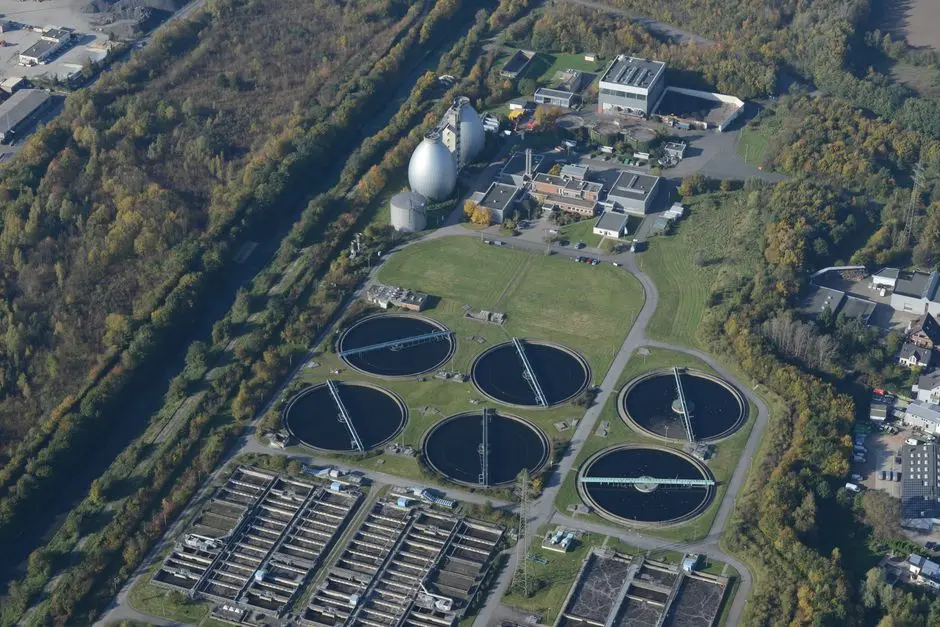
The defensible route is the one supported by a confirmed receiving path, verified flow, suitable site conditions and sustainable ownership—not the one assumed from the citywide infrastructure description. Centralized treatment should be considered only when the sewer connection, transfer capacity, permitted discharge route and operating interface are confirmed for the project.
Decentralized treatment is the stronger candidate for an isolated compound, remote facility, phased development or location where connection timing is uncertain. The HydropureWater catalog identifies the WSZ as suitable for residential communities, hotels, hospitals, factories and rural areas. That application coverage supports preliminary screening, but it does not establish suitability at a particular Ashgabat site.
A hybrid arrangement may allow near-term flows to use an available network while preserving space and services for future decentralized capacity. This is a project concept, not evidence that hybrid infrastructure is already available at any Ashgabat location. Collection, treatment and future expansion interfaces would still need design and confirmation.
| Decision question | Centralized route | Decentralized route | Hybrid route |
|---|---|---|---|
| What must be confirmed? | Sewer point, transfer capacity, discharge route, tariffs and utility obligations | Site, treatment package, receiving route, power and operator responsibility | Both interfaces, phasing plan and future expansion space |
| Best project fit | Connected development with confirmed capacity and discharge path | Remote, isolated or phased property requiring implementation control | Development with a credible near-term network connection and staged future demand |
| Main risk | Assuming citywide designed capacity means available project capacity | Omitting civil works, sludge handling, monitoring and long-term support | Leaving the future treatment interface undefined |
| Required commercial evidence | Written utility confirmation and connection conditions | Installed project scope and site-specific design | Priced phases and responsibility matrix |
Alternative decentralized routes should also be tested. An IntechOpen study on vermifiltration describes it as efficient, viable, less expertise-intensive and suitable for decentralization, with application to domestic septic-tank sewage. It is an option to evaluate through project testing and local acceptance, not a default recommendation. The final decision should follow from four inputs: verified flow, receiving route, site constraints and ownership of long-term operation. Reviews of packaged sewage treatment plants for housing developments provide useful comparison questions, but their local assumptions must not be transferred directly to Ashgabat.
Compare A/O, MBR and Decentralized Treatment Packages
The WSZ series combines anoxic/aerobic A/O biological contact oxidation, sedimentation and disinfection in one buried package. HydropureWater’s verified catalog specifies full automation, no operator requirement and a capacity range of 1–80 m³/h. It can be installed below grade with landscaping above or mounted on a trailer for mobile deployment; these are materially different installation concepts.
The integrated MBR wastewater treatment system combines activated sludge treatment with submerged PVDF membrane filtration. Its catalog identifies municipal sewage and water-reuse applications, a capacity range of 10–2,000 m³/day and filtration below 1 μm. The catalog states a 60% smaller footprint than conventional systems. Buyers should verify that comparison against the same reference design, footprint definition and treatment objective.
| Criterion | WSZ A/O package | Integrated MBR | Vermifiltration or another decentralized route |
|---|---|---|---|
| Treatment configuration | A/O contact oxidation, sedimentation and disinfection | Activated sludge with submerged PVDF membrane filtration | Earthworm-assisted filtration; project testing required |
| Published capacity class | 1–80 m³/h | 10–2,000 m³/day | No applicable project capacity supplied |
| Installation concept | Buried unit with landscaping above, or trailer-mounted mobile deployment | Footprint and arrangement require project-specific design | Site-specific decentralized installation |
| Automation and operator need | Catalog states full automation and no operator requirement | Project automation and operating responsibility must be specified | Academic source describes a lower-expertise approach |
| Reuse consideration | Requires project-specific effluent and receiving approval | Catalog identifies water-reuse applications and below-1 μm filtration | Performance and acceptance must be demonstrated |
| Key procurement check | Module count, duty allocation, civil works and maintenance access | Wastewater characteristics, membrane design, sludge handling and cleaning | Test evidence, acceptance, local operation and residual handling |
Do not rank these options from process names alone. Compare treatment objectives, footprint, automation, reuse potential, sludge management, maintainability and underground suitability on one design basis. A buried A/O package may suit a compact decentralized site, while an MBR may warrant assessment where membrane filtration or a defined reuse objective is central. Vermifiltration may be considered where its test results, acceptance and lifecycle requirements are demonstrated.
Build the Project-Specific Sizing and Compliance Brief
A package should be sized from verified wastewater flow and characteristics, not a nominal headcount alone. Obtain average daily flow, peak flow and the applicable design period from utility records or measured operating data. The supplied research does not establish an Ashgabat population-equivalent factor or a default design-flow allowance.
The wastewater brief should identify COD, BOD, suspended solids, nutrients where relevant, pH, temperature, salinity and any industrial inputs. Where a property combines domestic sewage with restaurant, laundry, clinical or other process waste, define whether separate pretreatment is required. No default limits for Ashgabat are supplied by the research, so the tender must request values against the buyer’s confirmed discharge and reuse criteria.
Also define the receiving route: centralized discharge, approved irrigation reuse, land disposal or another permitted destination. Name the party that owns the sewer connection, reuse infrastructure, sampling point and any required pretreatment. Reuse objectives should be translated into required effluent parameters and monitoring, not assumed from the 2017 statement that cleaned and disinfected water could be used for irrigation.
Document soil conditions, groundwater, footprint, burial depth, maintenance access, utilities, flood exposure and seismic constraints. A 2022 study in the Galaxy International Interdisciplinary Research Journal warns that seismic zones should be considered during underground network laying because network failures can cause damage exceeding the earthquake itself. This supports early geotechnical and civil coordination; it does not establish Ashgabat site-specific design loads.
| Brief item | Information to obtain | Why it affects the decision |
|---|---|---|
| Flow basis | Average daily flow, peak flow and design period | Defines equipment duty and civil capacity |
| Wastewater characterization | COD, BOD, suspended solids, relevant nutrients, pH, temperature, salinity and industrial inputs | Determines biological, clarification and pretreatment requirements |
| Receiving route | Discharge point, reuse destination, ownership and approval conditions | Links treatment output to a lawful receiving path |
| Site and seismic conditions | Soil, groundwater, footprint, burial depth, access, utilities, flooding and seismic constraints | Sets civil, structural and installation requirements |
| Supplier scope | Process, guaranteed flow basis, effluent parameters, disinfection, sludge handling, automation, alarms, spares, boundaries and operator requirements | Allows technically comparable tenders |
Require the tender to state treatment process, guaranteed flow basis, required effluent parameters, disinfection method, sludge handling, automation, alarms, spare parts, installation boundaries and long-term operator needs. Catalog capability is not proof of project-specific compliance. Current acceptance requirements must be obtained from the relevant authority. Maintenance planning should address grit and sediment accumulation in line with the buyer’s access and service arrangements, as discussed in this guide on wastewater maintenance schedules.
Plan Installation, Commissioning and Lifecycle Support
The project must assign responsibility for collection works, tank installation, power, controls, commissioning, sampling, operator training and remote monitoring before equipment is ordered. Unclear responsibility at these interfaces is a common source of schedule and compliance risk.
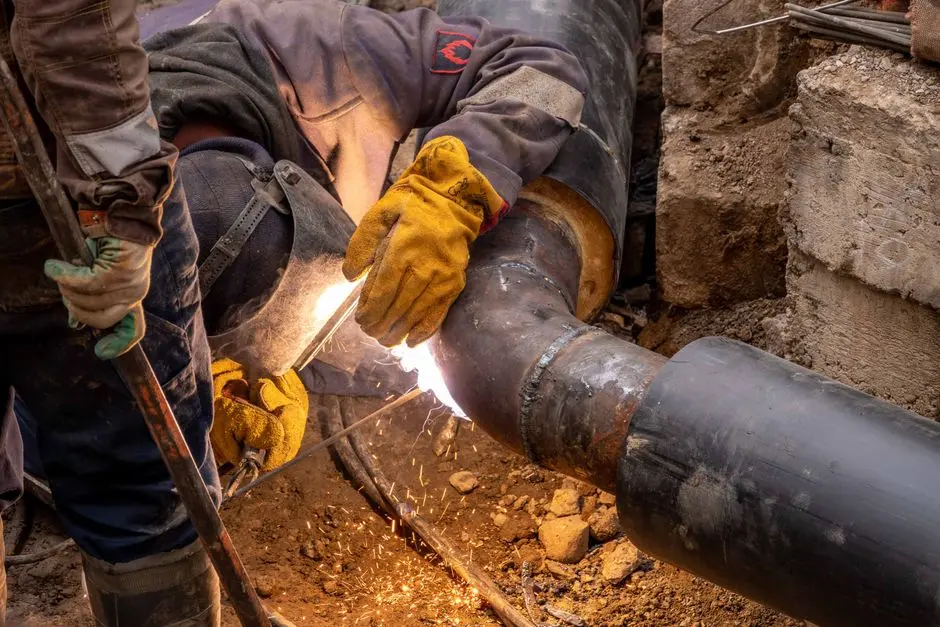
For an underground WSZ installation, require a site-specific civil and structural design addressing excavation, buoyancy, access, corrosion protection, odor control and safe lifting or replacement. A buried treatment unit still needs a maintainable operating envelope; landscaping over the plant does not remove the need for access, lifting provision or inspection points.
Use the catalog range of 1–80 m³/h only to define the candidate WSZ equipment class. Final module count and duty allocation require verified flow data, the wastewater profile and the selected operating arrangement. Likewise, the published 10–2,000 m³/day MBR range identifies a candidate equipment class; final MBR sizing requires wastewater characteristics and project reuse targets.
Make handover conditional on agreed sampling, instrument calibration, operator training, maintenance schedules and a documented spare-parts package. Define what is tested, who witnesses it, what constitutes acceptance and which party resolves a nonconforming result. Lifecycle support should also identify remote-monitoring responsibilities, routine inspections, consumables, sludge removal and major maintenance access.
The supplied evidence does not provide installation lead times, local service coverage, unit prices or a total-cost model. These items must be obtained through project-specific quotations. A package-plant procurement guide for Tanzania provides a useful structure for separating equipment, civil works and operating obligations, but its project assumptions cannot be applied to Ashgabat without confirmation.
Make the Equipment Decision with a Clear Selection Framework
The selection sequence starts with the receiving route: use centralized infrastructure only where the connection, transfer capacity and discharge conditions are confirmed in writing. If those conditions cannot be established, assess a decentralized package and define who owns collection, operation, sludge disposal and monitoring.
For a compact, automated, below-grade decentralized solution, assess the WSZ A/O package when expected flow falls within its catalog range and the site can provide the required civil works and maintenance access. Assess an integrated MBR when the project requires compact biological treatment with membrane filtration or has a defined water-reuse objective within the catalog range. Consider vermifiltration or another decentralized route only when wastewater characteristics, site conditions, operator capability, local acceptance and lifecycle evidence support it.
| Step | Decision test | Required output |
|---|---|---|
| 1 | Is a sewer connection and receiving route confirmed? | Written utility confirmation or a decentralized project brief |
| 2 | Are flow and wastewater data verified? | Design flow basis and wastewater characterization |
| 3 | Does the site support the selected installation? | Geotechnical, civil, access, utilities and seismic basis |
| 4 | Which treatment family meets treatment and reuse objectives? | Documented A/O, MBR or alternative evaluation |
| 5 | Do bids use the same complete scope? | Comparable installed-price, performance and lifecycle schedules |
| 6 | Who operates and supports the system? | Commissioning, training, maintenance and spares responsibility matrix |
Compare offers on one common basis: verified flow, required effluent and reuse criteria, civil works, installation, power, sludge disposal, maintenance, monitoring and warranty. Require every bidder to identify exclusions, assumptions, design margins and utility interfaces. A low equipment quotation is not necessarily a low installed project cost.
Supplier review should focus on demonstrated application evidence, process suitability, scope clarity, commissioning support, warranty terms and local service capability. The WSZ underground package sewage treatment plant and the integrated MBR wastewater treatment system provide documented starting points for that comparison. Neither catalog record substitutes for project-specific engineering and acceptance.
Frequently Asked Questions
What will domestic sewage treatment in Ashgabat cost?
The supplied evidence contains no Ashgabat equipment prices, installed budgets or total-cost model. Request itemized quotations using one scope covering equipment, civil works, installation, power, controls, commissioning, sludge disposal, monitoring, training, maintenance and warranty. Also request exclusions and assumptions so that bidders’ prices can be compared rather than treated as interchangeable.
How should a treatment package be sized for an Ashgabat development?
Size it from verified average daily flow, peak flow, design period and wastewater characteristics. A nominal headcount or population-equivalent calculation is not a substitute for those inputs. Submit the resulting design basis with the tender and require the supplier to state the flow basis and module duty used in its offer.
Which supplier characteristics should be checked before selecting equipment?
Check relevant application evidence, process suitability, treatment guarantees, scope clarity, commissioning support, operator training, warranty and local service capability. Ask the supplier to identify who maintains controls, membrane or mechanical equipment, sludge handling, instrumentation and consumables. These checks distinguish an equipment supplier from a partner capable of supporting the operating asset.
Does a catalog treatment claim prove that the project will meet local compliance requirements?
No. Catalog claims describe supplier capability, not current acceptance conditions for a specific discharge or reuse route. Confirm current effluent and reuse requirements, testing methods and the responsible authority before purchase. Include the confirmed requirements in the tender, guarantee and acceptance test, and make handover conditional on the agreed sampling outcome.