Where IFAS Fits in a Snack Food Wastewater Treatment Train
IFAS can suit snack food wastewater when the objective is to add attached-growth treatment capacity to an existing activated-sludge basin while maintaining suspended biomass for organic-load shocks. It is not a substitute for solids, FOG, starch, screening, or equalization. Starch-based snack wastewater commonly contains elevated TSS, BOD/COD and FOG, together with starch residues and soil or peeling solids. A defensible train segregates difficult streams, applies DAF or equivalent pretreatment, equalizes production and cleaning loads, and then uses IFAS for biological treatment. Final sizing must be based on plant-specific characterization, permit limits, reuse targets, temperature and basin configuration.
The process boundary should be explicit:
- Characterize and segregate production and cleaning streams.
- Remove debris and screenings.
- Remove suspended solids, FOG and applicable starch fractions.
- Equalize flow and composition.
- Apply IFAS biological treatment.
- Separate biological solids downstream.
- Disinfect, reuse or discharge in accordance with the applicable requirement.
This sequence is consistent with integrated food processing wastewater treatment planning, which places IFAS within a complete treatment train rather than treating it as a stand-alone plant.
Aquacycl identified elevated TSS, organic load and FOG in starch-based snack wastewater in February 2024, along with cleaning residues that can solidify and rinse water carrying silt, dirt and peeling solids. It recommends separating the strongest and most difficult streams for independent treatment before they are combined with the full flow. This side-stream approach is particularly relevant where potato, corn or grain streams are already collected for starch separation and recovery.
The same source cautions that one conventional technology may not satisfy every requirement; physical, chemical and biological methods may be required together. That makes the pretreatment boundary decisive. IFAS can protect downstream reuse equipment and add biological resilience only after the plant has controlled solids, FOG, starch carryover, debris and cleaning-slug variation.
Characterize Each Production and Cleaning Stream
Snack plants should characterize each production and cleaning stream separately because mixed-product operations generate variable organic load, nutrient load, suspended solids, contaminants and volume, according to Aquacycl in February 2024. Sampling by source is more useful than relying only on a composite sample at the plant inlet.
| Stream to map | Reason for separate review | Data required before biological sizing |
|---|---|---|
| Potato peeling, slicing, trimming and washing | Aquacycl identifies these potato operations as water-intensive; rinse water can carry soil and peeling solids. | Flow, TSS, BOD/COD, FOG, starch or residual solids, pH and temperature. |
| Cooking and blanching | Organics and starch carryover may differ substantially from wash water. | Flow, BOD/COD, TSS, residual starch, pH and temperature. |
| Corn and grain washing | Cleaning can introduce silt, dirt and grain-processing residues. | Flow, TSS, BOD/COD, starch, FOG, nutrients, pH and temperature. |
| Frying and oil-bearing drains | FOG can foul carriers and interfere with transfer and settling. | FOG, emulsification characteristics, TSS, flow and discharge routing. |
| CIP and production washes | Cleaning chemicals, temperature and flow spikes can disturb biomass. | Flow, pH, temperature, residual chemicals, BOD/COD and event duration. |
Include nitrogen in the analytical program because Aquacycl identifies it as a parameter that can vary among production streams. Additives, nutrients, pH, temperature and residual solids also belong in the dataset used to define the IFAS envelope. Collect information across the production schedule, product changeovers, recipes and cleaning practices; an average effluent value will hide the loads that control biological resilience.
Aquacycl recommends sensors and consistent monitoring at collection and discharge points so abnormal loading is detected before it reaches the biological stage. At minimum, the monitoring plan should distinguish production flow, cleaning flow and combined flow, with trend data for TSS, organic load and pH. Automatic sampling or dosing controls should not be selected from a single averaged influent analysis.
Color must also be characterized. Discover Water’s 2026 review states that snack-food processing may generate natural colorants such as annatto, creating color pollution that can require targeted pretreatment. Where color matters to reuse or discharge acceptance, request color data alongside COD rather than assuming a COD-compliant effluent will also meet the color requirement.
Protect the IFAS Biology with Pretreatment
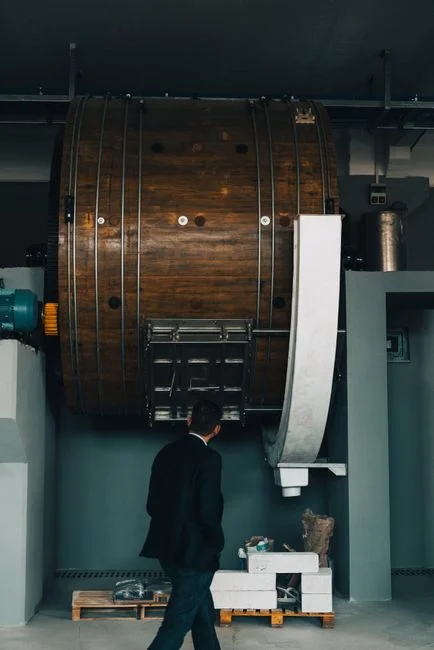
DAF is the appropriate pretreatment reference where suspended solids, FOG, oil, grease or colloidal material must be removed before biological treatment. HydropureWater’s DAF range covers 4–300 m³/h across 13 models and is specified for food-processing pretreatment applications, so the available DAF pretreatment for snack food wastewater still requires a plant-specific hydraulic and contaminant duty calculation.
| Pretreatment duty | Equipment or action | Acceptance evidence required |
|---|---|---|
| Debris and fibrous material | Mechanical screening and upstream rag or packaging control. | Screen opening selection based on actual debris; documented screenings handling. |
| Suspended solids and FOG | DAF with site-selected coagulation and pH control. | Residual TSS and FOG under normal production and cleaning conditions. |
| Starch carryover | Source separation, starch recovery or side-stream treatment. | Residual starch data and confirmation that recovered starch remains usable. |
| Flow and composition peaks | Equalization before IFAS, with pH correction where required. | Event simulation showing hydraulic, organic and chemical loads reaching the basin. |
| Color | Targeted pretreatment where monitoring shows color exceeds the reuse or discharge requirement. | Color removal data for the relevant production and product-change conditions. |
Do not transfer the pet food guide’s numerical FOG thresholds into snack food design as universal limits. HydropureWater’s 2026 pet food guide reports DAF performance of 80–95% FOG removal and 60–90% TSS removal under its stated hydraulic loading and pretreating 200–1,500 mg/L FOG to below 50 mg/L. Those values are adjacent-sector references, not snack food acceptance criteria. Require DAF performance data under the plant’s actual cleaning and production regime and identify the residual loads on which the biological design will rely.
Screening remains necessary where peels, packaging, fibrous material or other solids could reach pumps and biological equipment. For starch-bearing side streams, Aquacycl notes that some facilities already segregate potato, corn or grain streams for starch separation and recovery. The design should establish whether starch recovery is an operating objective, a pretreatment mechanism or both, because that decision changes the flow diagram and residual-solids criteria.
Discover Water’s 2026 review gives broader food-sector screening values: BOD5 of 1,000–3,000 mg/L and COD above 5,000 mg/L can justify integrated treatment, while COD above 3,000 mg/L points toward anaerobic pretreatment. These are sector-level decision thresholds, not snack plant design values. They identify when anaerobic or other high-strength pretreatment may need evaluation before IFAS.
How IFAS Handles Variable Snack Food Organic Loads
IFAS combines suspended-growth MLVSS with attached-growth biofilm carried on media retained downstream by perforated screens. The suspended fraction handles carbonaceous organic-load shocks, while the attached biomass retains slow-growing nitrifiers that would be vulnerable to washout in a suspended-growth system. The engineering result is more biological inventory per unit of basin volume, not a guarantee of treatment performance.
For existing basins, HydropureWater’s 2026 pet food guide identifies Type 1 co-current IFAS as the retrofit-oriented configuration: aeration and carrier media move in the same direction, and cylindrical or perforated screens retain the media at the basin outlet. Type 2 systems use draft-tube circulation and are generally more relevant to greenfield layouts. The final choice depends on basin geometry, aeration arrangement, retention screens, freeboard and site constraints.
The same guide provides a reference configuration of a 2–4 h pre-anoxic zone below 0.3 mg/L DO, followed by a 4–6 h aerobic zone at 2.0–3.0 mg/L DO. These values come from pet food wastewater guidance and must be validated against snack plant organic load, temperature, nutrient balance, settleability and the required nitrogen-removal objective.
Aquacycl confirms that mixed snack production creates variable organic and nutrient loads and that conventional systems are sensitive to inconsistent flow and composition. The IFAS mechanism is relevant to that variability because attached biomass is retained independently of the suspended-growth wasting rate. It does not remove the need for equalization or source control: a cleaning slug that overloads equalization, changes pH, raises temperature or carries excessive FOG can still impair both biomass populations.
Use the detailed IFAS media and operating parameters as a reference only. HydropureWater reports a 30% media-fill design point, a 20–50% operating window and 6–10 mm retention-screen slots for the referenced food-industry applications. Media specification, aeration performance and screen sizing still require site-specific verification.
Select IFAS, CAS, MBBR, or MBR by the Binding Constraint
IFAS is the appropriate choice when the binding constraint is additional biological capacity in an existing basin or maintaining nitrification through hydraulic and composition changes. It retains downstream solids separation and does not deliver membrane-quality effluent by itself.
| Route | Most defensible selection condition | Main limitation or trade-off |
|---|---|---|
| IFAS | More biological inventory or attached-growth retention is needed in an existing basin; shock absorption and nitrification retention are both required. | Requires media retention, compatible aeration and downstream clarification; does not provide MBR clarification. |
| MBBR | Attached-growth treatment is desired and downstream solids separation can accept the system’s solids output; capital cost is the dominant constraint. | HydropureWater’s 2026 pet food guide uses 50–150 mg/L TSS as its comparison condition for MBBR. |
| CAS | There is sufficient basin volume, a stable influent envelope and no requirement for additional attached-growth inventory. | Limited resilience to hydraulic washout and composition peaks without added treatment or control capacity. |
| MBR | Near-reuse-quality effluent is required and the site can accept membrane operation and fouling control. | HydropureWater specifies filtration below 1 μm and a 10–2,000 m³/day capacity range; IFAS alone does not provide this separation. |
For a reuse project, compare IFAS plus clarification and filtration against the MBR alternative for near-reuse-quality effluent. An MBR integrates membrane solids separation, whereas IFAS is a biological stage. The comparison must therefore include downstream solids separation, membrane maintenance, energy, chemical use and reuse-specific acceptance criteria.
Include biological nitrogen removal only when monitoring demonstrates that it is needed. Discover Water’s 2026 review identifies ammonia above 50 mg/L as a decision threshold for biological nitrogen removal. That threshold is a screening point from a broader agroindustrial review, not proof that a snack plant requires denitrification.
Specify Media, Zones, Aeration and Controls Without Over-Sizing
A Type 1 food-industry retrofit can begin with 30% media fill as an initial design reference because HydropureWater’s 2026 related guide identifies it as the standard point within a 20–50% operating window. Final media quantity must reflect actual basin volume, usable zone volume, density and the required attached-growth inventory.
| Specification item | Reference or required decision | Buyer check |
|---|---|---|
| Media fill | 30% initial reference within a 20–50% window from the 2026 pet food guide. | Confirm that the calculation uses usable basin volume and leaves the required freeboard and aeration access. |
| Media | Specify material, density, effective area, shape and abrasion characteristics. | Request compatibility with the plant’s cleaning chemicals and mechanical handling. |
| Retention screens | 6–10 mm slots are a referenced mechanical consideration from the 2026 pet food guide. | Select after reviewing actual debris, biofilm accumulation and the risk of carrier escape. |
| DO and zoning | Reference: 2–4 h pre-anoxic below 0.3 mg/L DO and 4–6 h aerobic at 2.0–3.0 mg/L DO. | Validate with snack plant organic load, temperature, nitrogen objective and mixing. |
| Aeration | Vendor must demonstrate the proposed air distribution supports the selected media fill. | Evaluate energy demand and the media-escape risk identified by the 2026 guide above higher fills. |
| Controls | Monitor DO, airflow, pH, temperature, TSS and nutrients; include equalization response. | Define alarms, operator actions and cleaning-slug response logic. |
The IFAS design for high-strength food processing wastewater is useful as a specification framework, but adjacent-sector figures should not be treated as snack food inputs. Require the supplier to tie performance guarantees to the characterized influent, final discharge or reuse specification, start-up protocol and media-retention condition.
Plan for Foaming, Fouling, Washout and Color
FOG fouling should be managed as a media-surface problem, and HydropureWater’s 2026 pet food guide identifies loss of nitrification after 4–8 weeks when feed FOG runs above 80 mg/L. It describes water washing or air scour as corrective actions. The 80 mg/L observation is not a snack food limit; it is a warning that residual FOG must be checked against DAF performance and actual biofilm behavior.
Foaming can arise from proteins, starch and cleaning chemicals. HydropureWater’s related guide reports foam layers of 0.3–1.0 m during peak pet food production, but snack plants need their own event record because recipes, products and cleaners differ. Source control, equalization and a written operator response are the primary controls. The response should identify when to divert flow, stop a chemical slug, inspect screens or change operating conditions.
Sudden carrier movement, rising basin level or media passing over the screens indicates a retention-screen or debris problem. Inspect screens, upstream rag control and basin hydraulics before attributing the event to biology alone. Media escape is a mechanical failure with direct biological and maintenance consequences.
Track color independently from COD. Aquacycl notes that colorants and preservatives add treatment complexity, while Discover Water’s 2026 review highlights natural colorants such as annatto. Where color affects reuse or discharge acceptance, verify whether pretreatment, biological removal or downstream polishing is required under the actual product mix.
Build a Site-Specific Procurement and Acceptance Checklist
A complete procurement package should convert the process decision into measurable operating and acceptance obligations. The buyer should require a wastewater mass balance covering normal production, peak production, product changeovers, washing, starch recovery and CIP events.
| Submission item | Required content | Acceptance or commercial check |
|---|---|---|
| Mass balance | Stream-by-stream flow and characterization under normal and event conditions. | Reconcile peak and average wastewater generation with production records. |
| Treatment-train diagram | Screening, solids/FOG and starch pretreatment, equalization, IFAS, solids separation and final treatment. | Confirm every flow path and all intermediate sample points. |
| IFAS design | Media specification, fill calculation, zones, aeration, retention screens and controls. | Check against site geometry, temperature, wastewater characteristics and reuse objective. |
| Performance guarantees | Effluent quality, energy, chemical use, sludge production, media retention and response to the characterized peak load. | Define test methods, sampling conditions, duration and remedies for noncompliance. |
| Scope allocation | Ownership of pretreatment, biological treatment, solids separation, sludge handling, controls, commissioning and training. | Reject interfaces left ambiguous between suppliers. |
| Compliance and reuse | Final proposal checked against current permit limits, reuse requirements and site test data. | Do not accept generic food-industry values in place of site evidence. |
Discover Water’s 2026 review notes that pretreatment and advanced treatment may become necessary as detection of recalcitrant compounds increases. That supports a modular design review, but it does not establish that a particular snack plant requires advanced oxidation or membranes.
For solids handling, include downstream dewatering and disposal in the train. A plate-and-frame filter press may be relevant to the sludge-dewatering interface, but its selection must follow the solids characteristics generated by the selected treatment route rather than a generic equipment offer.
Frequently Asked Questions
Can IFAS treat snack food wastewater without dedicated pretreatment?
No. IFAS is a hybrid biological stage that still requires removal of excessive solids, FOG and applicable starch carryover, screening and flow equalization. Aquacycl’s February 2024 snack food guidance identifies those constituents as challenges for conventional treatment, so pretreatment is part of the IFAS design boundary rather than an optional accessory.
When should IFAS follow DAF instead of treating the full wastewater flow?
IFAS should follow DAF when site data show that suspended solids, FOG, oil, grease or colloidal material would overload the biological stage or foul the carriers. Ask the supplier to demonstrate residual TSS and FOG under actual production and cleaning conditions. HydropureWater’s 2026 pet food thresholds may inform the question, but they must not be copied as snack food guarantees.
How does IFAS differ from MBR for a snack plant requiring reuse?
IFAS retains suspended and attached biomass but requires downstream solids separation; MBR integrates membrane solids separation. HydropureWater specifies MBR filtration below 1 μm and a 10–2,000 m³/day capacity range, making MBR the direct comparison when near-reuse quality is required. Compare the complete reuse trains, including membrane maintenance and energy, rather than biological removal alone.
How should media fill and supplier capacity be selected?
Use HydropureWater’s 2026 pet food guide—30% initial reference within a 20–50% window—as an initial reference, then verify basin geometry, aeration, freeboard and retention-screen risk. Require a supplier to size the system from the plant’s characterized peak load, guarantee media retention, and demonstrate performance at the final discharge or reuse specification. Final sizing also requires current site testing and permit review.