What Changes When Heineken Acquires a German Brewery?
Wastewater acquisition diligence in Germany must establish whether the brewery’s discharge authorization remains usable after the change of control, whether its treatment plant reliably complies with the site-specific permit or municipal pretreatment conditions, and whether its metering data can enter Heineken’s treated-volume reporting. Heineken reported that 97% of wastewater volume was treated before discharge at the end of 2020 and in 2019, according to the Water Action Hub’s project record. The acquirer should therefore review at least 36 months of monitoring, permit correspondence, ETP capacity, bypass records, sludge disposal and CIP impacts. No universal German concentration limit should be assumed: the controlling document is the site-specific consent-to-discharge schedule or applicable municipal sewer conditions.
The transaction therefore combines a legal authorization review, an engineering verification and a corporate reporting integration. These are distinct workstreams. A valid German discharge permit does not prove that the ETP has adequate capacity, and a compliant sample does not resolve whether a change of control triggers notification, amendment or re-approval.
Heineken’s Every Drop commitment to treat 100% of wastewater worldwide, reported by Water & Wastewater Magazine in its coverage of Heineken’s 2030 strategy, is a forward-looking corporate objective. It does not displace the acquired brewery’s enforceable German permit, sewer conditions or operating record. A site reporting below Heineken’s 97% benchmark therefore requires reconciliation of authorization, capacity, metering and undocumented bypasses rather than an assumption that non-treatment is acceptable.
Brewery wastewater contains organic material and cleaning agents, according to the Water Action Hub’s Heineken project record. The supplied HydropureWater acquisition guide reports typical raw BOD of 1,000–2,000 mg/L, with significant COD, suspended solids and oil and grease, while CIP caustics can raise pH above 10 and temperature above 40 °C. For equipment and process selection, see the guide to MBR treatment options for brewery wastewater.
The deal team cannot defer three questions: Can the authorization be used or transferred? Can the ETP treat present loads and expected production and CIP variability? Can metering and monitoring records reproduce the plant’s treated volume in Heineken’s reporting format?
The German Compliance Record to Obtain Before Signing
The German compliance record must establish both the enforceable discharge route and the seller’s historical compliance, because a valid current permit does not extinguish permit excursions, undocumented discharges or legacy contamination.
Request the current German wastewater discharge permit or consent to discharge, every amendment, expiry date, attached monitoring schedule, and correspondence with the sewer authority or regulatory authority. If the brewery discharges through a municipal sewer, also obtain the applicable indirect industrial discharger or municipal pretreatment requirements. Those documents should identify discharge parameters, flow controls, monitoring duties and consequences of non-compliance. Do not substitute generic mg/L limits for the written site-specific schedule.
German counsel must establish whether the transaction requires notification, a permit amendment, re-approval or a new authorization. The supplied research does not support a universal German rule, so the mechanism must be confirmed for the specific permit, sewer connection and authority rather than inferred from general corporate-acquisition practice.
The historical request should cover at least 36 months of self-monitoring reports, all Notices of Violation, warning letters and administrative orders from the prior 10 years, as recommended by HydropureWater’s acquisition guide. It should also include bypass and emergency-overflow logs, stormwater cross-connection records, original ETP design specifications, maintenance and upgrade-capex records, sludge manifests, and the CIP chemical inventory.
Map environmental liens, indemnities and prior asset-purchase obligations against any historic non-compliance or soil and groundwater findings. The legal team should determine which exposure can be fixed before closing and which requires continuing protection after closing.
| Record | Acquisition issue to resolve | Required decision output |
|---|---|---|
| Discharge permit, amendments and expiry dates | Whether the route is enforceable and transferable | Authority confirmation and transfer path |
| Site-specific discharge schedule or municipal pretreatment conditions | Which limits and monitoring duties actually apply | Performance test matrix |
| 36 months of self-monitoring and 10 years of enforcement correspondence | Historic excursions and recurring non-compliance | Price adjustment, indemnity or closing condition |
| Bypass, overflow and stormwater records | Possible undeclared releases | Remediation scope and operating controls |
| ETP design, maintenance and upgrade records | Actual condition and deferred capital | Reserve and capex plan |
| Sludge manifests and CIP inventory | Disposal-chain, chemical and worker-safety exposure | Remediation scope and post-close controls |
| Liens, indemnities and prior purchase obligations | Allocation of historic liabilities | SPA protection mechanism |
How to Verify Brewery ETP Performance Under German Conditions
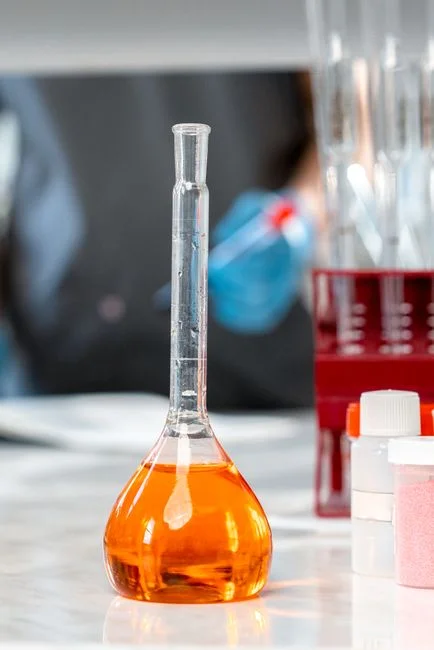
Performance verification must reproduce the worst credible production and CIP conditions and compare them with the written German requirements, rather than relying on one compliant grab sample.
Deploy a 24-hour flow-proportional composite sampler for at least one full production week and include a CIP-heavy day. Analyze BOD, COD, TSS, pH, temperature, total nitrogen and oil and grease. The HydropureWater acquisition guide states that brewery influent can swing by 2–3 times in BOD and by 4 pH units within one shift, so a grab sample can miss material excursions.
Verify calibration of each relevant flow meter and reproduce the treated-volume calculation from raw meter data. A plant that cannot explain the numerator, denominator and treatment-status logic cannot demonstrate alignment with Heineken’s 97% benchmark. Metering should also distinguish flow routed through the ETP from flow sent to a holding tank, bypass or other route.
Test the treatment train against its actual design basis and current production conditions. Where a DAF unit is present, assess free oil, emulsified oil and grease, and colloidal material; check polymer dose, hydraulic residence time and skimming performance. The DAF system for brewery FOG and colloidal-load pretreatment should be evaluated against measured load and existing equipment, not selected from a generic wastewater range.
Assess biological treatment for the risk that residual CIP chemicals disrupt the biological population. Confirm that acid and caustic storage, bunding, dosing shut-offs, chemical segregation and downstream compatibility are documented. Where an MBR or higher-quality reuse case is justified, compare it against MBR wastewater treatment for higher-quality reuse, but require site-specific performance and compliance evidence.
Inspect structural and mechanical condition, aeration, clarification, sludge handling, alarms, power resilience and bypass arrangements. A compliant sample does not prove reliability under upset conditions.
| Verification area | Minimum evidence | Decision consequence |
|---|---|---|
| Representative influent and effluent | 24-hour flow-proportional composites across one production week, including a CIP-heavy day | Compare results with the site-specific permit or pretreatment schedule |
| BOD, COD and TSS | Influent and final-effluent results with flow and production context | Identify missing capacity or treatment deterioration |
| pH and temperature | Time-resolved or composite evidence covering CIP effects | Determine biological upset and chemical-control risk |
| Total nitrogen and oil and grease | Representative laboratory analysis | Assess biological nutrient capacity and DAF or pre-treatment performance |
| Metering | Calibration records and reproducible treated-volume calculation | Determine reporting reliability and metering capital need |
| Reliability and safety | Maintenance, alarms, power resilience, bypass and chemical-control records | Separate isolated defects from systemic capacity risk |
Sludge, Worker Safety and Hidden Environmental Liabilities
Effluent compliance does not close the wastewater liability because sludge, worker exposure and legacy contamination can remain outside the discharge permit’s immediate scope.
Reconcile sludge from generation through dewatering and disposal using manifests, disposal route, volume and receiving facility. HydropureWater’s acquisition guide identifies sludge mass balance as a frequently neglected control and notes that an unbalanced account may reveal an undocumented bypass. It should be tracked monthly as a KPI, expressed as dry sludge mass per cubic metre treated, with reconciliation to the licensed disposal route. Where dewatering constrains treatment expansion, evaluate the plate-frame filter press for brewery sludge dewatering against actual sludge characteristics and operating requirements.
Review confined-space entry records, H2S monitoring and alarm calibration for covered equalization and flotation equipment. The acquisition guide says to confirm emergency shut-offs and eyewash provisions near CIP dosing points; its cited control specifies eyewash coverage within 10 m of dosing points. Confirm acid and caustic storage segregation, bunding, emergency isolation, safety procedures and training rather than treating these as administrative records alone.
Check for soil or groundwater impact around legacy caustic or fuel storage. The acquisition guide states that contamination outside the containment area may make the acquisition financially non-viable. That finding requires a separate hydrogeological and legal assessment; the buyer should not infer a remediation cost from the existence of a storage area alone.
Separate operating deficiencies from legacy liabilities. Operational deficiencies may support a price adjustment or funded remediation before closing. A liability identified after closing should be covered, where available, by a specific environmental indemnity, holdback or escrow with a defined scope, duration and release mechanism. Historic permit violations, bypasses and contamination should not be pooled into an indistinct general indemnity.
Turn Wastewater Findings into an Acquisition Decision
The wastewater finding must be translated into a bounded remediation reserve, an appropriate SPA protection mechanism and a staged capital plan; an open-ended post-closing work list is not an adequate acquisition outcome.
HydropureWater’s acquisition guide gives indicative capital bands: below USD 200,000 for operational fixes, USD 200,000–1 million for component upgrades and above USD 1 million for a full rebuild or MBR retrofit. The source qualifies these as bands rather than point estimates because influent characterization may change under new ownership and vendor quotations can move by 15–25% between feasibility and EPC stages. They are not site-specific bids or German compliance thresholds.
| Finding and cause | Indicative capital band from HydropureWater’s 2026 acquisition guide | Transaction protection |
|---|---|---|
| Metering or controls gaps affecting compliance and treated-volume reporting | Below USD 200,000: operational and instrumentation corrections | Closing deliverable or price adjustment; retain reporting holdback if evidence remains incomplete |
| DAF or pre-treatment constraints caused by FOG or colloidal load | USD 200,000–1 million: component upgrades | Price reduction or seller-funded scope, supported by design and quotation assumptions |
| Poor biological performance or insufficient biological capacity | Component upgrade or, where justified, full rebuild or MBR retrofit within the source’s bands | Permit and performance evidence should determine whether work is a condition precedent, price adjustment or protected post-close exposure |
| Sludge handling bottleneck | Classify against the source band after sludge testing and vendor pricing | Define disposal-chain responsibility and avoid a holdback without an identified cost basis |
| Historic contamination or undisclosed discharge outside the operating permit | Not reliably priced from the supplied capital bands | Site-specific indemnity, escrow or holdback; specialist legal and environmental advice required |
Permit-transfer advice, price adjustments, escrow or holdbacks and environmental indemnities are complementary rather than interchangeable. Use permit advice to determine whether closing can lawfully proceed; use price adjustments for quantified capital or disposal costs; use escrow or holdbacks for identified but delayed obligations; and use environmental indemnities for historic liabilities that cannot be fixed before closing.
HydropureWater’s guide proposes three integration gates: a 6-month compliance-gap gate, a 12-month capex gate and a 24-month reporting-integration gate. During the first 24 months, track treated-volume percentage, Notices of Violation, energy per cubic metre treated and sludge mass balance monthly. Commission metering early enough to create an auditable history before reporting integration.
A 6–10 Week German Brewery Wastewater Due-Diligence Plan
Comprehensive ETP due diligence typically requires 6–10 weeks, comprising 2 weeks of document review, 1 week for on-site inspection and sampling, and 3–5 weeks for technical analysis, according to HydropureWater’s 2026 acquisition guide.
- Week 1 — establish the legal baseline. Obtain the German permit and amendments, site-specific discharge schedule, applicable municipal pretreatment conditions, 36 months of self-monitoring, 10 years of enforcement correspondence, design records, maintenance records, bypass logs and sludge documentation. German counsel should issue an initial permit-transfer pathway with named dependencies and the controlling authority.
- On-site phase — verify physical and operating reality. Inspect ETP condition, flow meters, DAF and biological equipment, sludge handling, chemical storage, alarms, power resilience and bypass arrangements. Deploy the 24-hour flow-proportional composite sampling campaign across a full production week including a CIP-heavy day.
- Technical analysis — compare evidence with requirements. Reconcile monitoring and laboratory results against the written permit or sewer conditions; test treated-volume calculations; identify capacity, reliability, sludge, safety and contamination constraints; and distinguish immediate corrective actions from capital remediation.
- Decision output — bind findings into the transaction. Issue a remediation reserve with assumptions, production-loading basis and quotation stage stated. Before signing, convert material findings into the purchase agreement, indemnity, escrow or holdback structure and define evidence required for release.
- Post-closing — integrate controls and reporting. Track the source’s compliance, capital and reporting gates, connect metering and monitoring data to Heineken’s treated-volume methodology, and maintain monthly KPIs. The broader sequence is consistent with the supplied guide to wastewater due diligence for a beverage-plant acquisition, but the German permit analysis must remain site-specific.
The final pre-signing package should contain a written requirements matrix, sampling results, meter-reconciliation test, condition assessment, capital estimate, permit-transfer advice, SPA treatment and a named owner for each post-closing deliverable.
Frequently Asked Questions
What wastewater requirements apply when Heineken acquires a plant in Germany?
The acquirer must verify the current German discharge permit or consent to discharge and all amendments; confirm whether change of control requires notification, amendment, re-approval or new authorization; and, for a municipal sewer connection, obtain the applicable indirect-discharger or pretreatment conditions. The ETP must be tested against the written requirements for BOD, COD, TSS, pH, temperature, total nitrogen and oil and grease, with a 24-hour flow-proportional composite campaign covering at least one production week and a CIP-heavy day. Its metering must also support Heineken’s treated-volume reporting.
What will the wastewater remediation cost?
HydropureWater’s 2026 acquisition guide gives indicative bands of below USD 200,000 for operational fixes, USD 200,000–1 million for component upgrades and above USD 1 million for a full rebuild or MBR retrofit. It also states that quotations may move 15–25% between feasibility and EPC stages. These are not German site-specific prices. A buyer should request a priced scope tied to measured performance, the current permit schedule, production and CIP variability, the required treatment upgrade and supplier guarantees.
How should the ETP be sized for the acquired brewery?
Size the ETP from current and expected flow, production variability, CIP loading and the site-specific German discharge or pretreatment limits. A grab sample or generic wastewater range is not a defensible design basis. Before procurement, require the supplier to show how measured BOD, COD, TSS, pH, temperature, total nitrogen and oil and grease loads translate into hydraulic and treatment capacity, including DAF performance, biological residence and downstream reuse requirements.
How should a wastewater equipment supplier be selected?
Require evidence from comparable brewery applications, verification of the proposed capacity basis, metering and controls integration, commissioning results, operating and maintenance support and enforceable performance guarantees tied to the site’s written requirements. For DAF pretreatment, ask the supplier to demonstrate performance against measured FOG and colloidal load; for MBR or reuse options, require the appropriate treatment and recovery guarantees. The technical proposal should be reviewed against measured site data rather than accepted on a generic reference project alone.
Does permit-transfer uncertainty justify the same SPA protection as proven treatment failure?
No. Permit-transfer uncertainty is a legal and closing issue: counsel must identify the required approval path, deadline and risk of operating without the necessary authorization. Proven treatment failure is an engineering liability that can support a quantified remediation reserve, price adjustment or seller-funded scope. If historic contamination or undeclared discharge remains unresolved at closing, the deal team should assess specific environmental indemnities, holdbacks or escrows rather than hiding either exposure inside a general operating covenant.