Why a Legacy ETP Is a Deal-Defining Risk in a Brewery Acquisition
ETP due diligence for a Heineken brewery acquisition should run in four phases: (1) desktop review of permits, discharge data, and legacy non-compliance; (2) on-site ETP audit benchmarked against Heineken's stated 97% treated-effluent standard; (3) remediation capex scoping for any underperforming unit; and (4) post-close integration plan to align the target with the acquirer's water stewardship commitments.
A brewery effluent treatment plant is one of the few assets in a target's site whose deficiencies can convert goodwill into a balance-sheet liability overnight. Heineken's published water program reports that 97% of its wastewater volume was treated before discharge at the end of 2020, with the same figure reported in 2019, and that 10 sites — 2.5% of beverage production — still operated without a wastewater treatment plant (wateractionhub.org, Heineken wastewater management project record). Any target being integrated into that reporting perimeter will be measured against the 97% benchmark from day one, so underperformance is a deviation from an acquirer-level KPI.
Four categories of legacy liability should be tested during diligence: (a) historical permit excursions that may resurface during a regulator's retroactive review; (b) deferred mechanical and structural maintenance that lowers treatment reliability; (c) undocumented discharges — bypasses, tank overflows, or unpermitted stormwater cross-connections that never appeared in self-monitoring reports; and (d) soil or groundwater impact from prior operations, particularly from older caustic or fuel storage. A brewery's ETP is uniquely exposed because raw brewery wastewater typically runs 1,000–2,000 mg/L BOD with significant COD, suspended solids, and oil/grease from fermentation, and is further shocked by clean-in-place (CIP) caustics that push pH above 10 and temperature above 40 °C. Generic industrial ETP checklists miss both the organic loading envelope and the CIP spike pattern, and the actual discharge limits vary by jurisdiction — counsel should request the local consent-to-discharge schedule rather than assume generic mg/L thresholds.
Phase 1 — Desktop and Records Review (Pre-Site Visit)
Phase 1 converts concerns regarding an aging ETP into a targeted Phase 2 scope. The acquirer's counsel should issue a document request covering: (1) the current discharge permit or consent-to-discharge, including all amendments and expiry dates; (2) the last 36 months of self-monitoring reports (DMR or local equivalent), not just annual summaries; (3) every Notice of Violation, warning letter, or administrative order in the prior ten years; (4) prior ETP upgrade capex records, including vendor name, scope, and year; (5) sludge manifests showing disposal route, volume, and receiving facility; and (6) emergency bypass logs, which often surface unauthorized discharges the target itself has not aggregated.
Two first-pass gap indicators drive whether Phase 2 needs to escalate. First, cross-check the target's reported treated-volume percentage against Heineken's 97% benchmark — a target reporting below 90% is a red flag for missing treatment capacity, poor flow metering, or undeclared bypasses (per Heineken's published 97% treated-effluent standard, wateractionhub.org). Second, verify that the target actually operates an ETP at all; the same Heineken dataset records 10 sites without a wastewater treatment plant (2.5% of beverage production), and diligence has been known to uncover targets holding a permit for a plant that was never built, or was decommissioned and replaced by a holding tank.
Historical ownership changes should be mapped against any environmental liens, indemnity claims, or asset-purchase agreements that may have left undocumented liabilities with prior operators. For a cross-border deal the M&A team should also confirm the food-industry M&A wastewater compliance framework applied to comparable transactions, because permit-transfer mechanics, lender environmental reps, and warranty insurance behave differently in each jurisdiction.
Phase 2 — On-Site ETP Audit Using the Eurofins Four-Pillar Framework
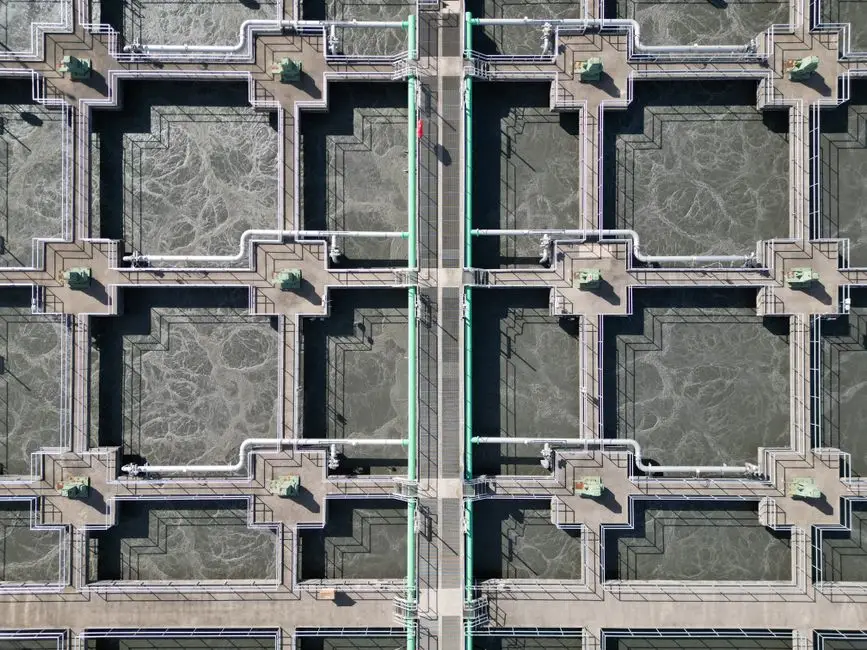
Eurofins Assurance structures its wastewater and ETP audits around four pillars: safe operation, regulatory compliance, environmental performance, and chemical management (per eurofins.com, Wastewater and Effluent Treatment Plant Audit). Translating each pillar into a brewery-specific testing protocol converts a generic auditor's checklist into one that catches the failures most often missed in brewery deals.
| Eurofins Pillar | Generic Industrial Test | Brewer-Specific Test Added |
|---|---|---|
| Safe operation | Confined-space entry records, H2S monitors on covered basins | Confirm H2S alarms on equalization and DAF scum wells; verify CIP acid/caustic handling SOPs and eyewash coverage within 10 m of dosing points |
| Regulatory compliance | Grab sampling for permit parameters | 24-hour composite sampling across at least one full production week, covering BOD, COD, TSS, pH, temperature, total nitrogen, and oil & grease — captures CIP spikes that grab samples miss |
| Environmental performance | Flow meter calibration check | Audit the treated-volume % calculation against Heineken's 97% methodology (treated ÷ total generated) so post-close reporting rolls up cleanly |
| Chemical management | CIP chemical inventory and storage segregation | Verify acid/caustic dosing system condition, bunding, and compatibility with downstream biological treatment; flag any drummed waste that bypasses the ETP |
Pillar 1 — Safe operation. The audit should verify that confined-space entry records exist for every basin, that H2S monitors in covered equalization basins are calibrated within the last 12 months, and that CIP acid and caustic handling SOPs include emergency shut-off at the dosing panel. Breweries are over-represented in H2S incidents because sulfate-reducing bacteria thrive in warm, high-BOD liquor, and a failing seal on a covered basin is a fatality waiting to happen.
Pillar 2 — Regulatory compliance. A single grab sample is not enough. A 24-hour composite sampler should be deployed for at least one full production week, ideally one that includes a CIP-heavy day, to characterize the variability envelope. Brewery influent can swing 2–3× in BOD and 4 pH units within a single shift, and the auditor needs to see the worst credible operating point, not the best.
Pillar 3 — Environmental performance. Flow meters are the most common silent failure in legacy plants. Each effluent flow meter should have a current calibration certificate, and the treated-volume % calculation should be reproducible from raw meter data using the same methodology Heineken applies to its 97% benchmark (per wateractionhub.org). Where the target cannot reproduce the number, Phase 3 capex must include metering upgrades.
Pillar 4 — Chemical management. CIP chemicals are usually the largest single class of substances on site by mass flow. The auditor should review the full CIP inventory — acid cleaner, caustic cleaner, sanitizers, rinse additives — and verify that storage segregation, bunding, and dosing system condition are intact. This is relevant to both worker safety and to the biological treatment stage downstream, where residual CIP can wipe out a nitrification population in hours.
Sludge handling is the most frequently flagged gap in brewery audits. A 2024 field installation in Belgium shows the kind of upgrade commonly recommended at this phase: a screw press retrofit on an existing brewery WTP that reduced sludge volume and improved downstream handling economics (per Teknofanghi Facebook post, 2024-08-02). Where a DAF unit for brewery FOG and CIP pre-treatment is already installed, the audit should confirm hydraulic residence time and polymer dose against current flow, not the original design basis.
Phase 3 — Quantifying Remediation Capex and Timeline
Phase 3 converts audit findings into a defensible capex reserve the deal team can park in the SPA. Findings should be grouped into three capex bands based on the unit process involved:
| Capex Band | Typical Scope | Indicative Trigger |
|---|---|---|
| < USD 200k (operational fixes) | Flow meter recalibration, aeration diffuser replacement, VFD on blowers, SCADA tag fixes | Audit found equipment functional but out of spec or undocumented |
| USD 200k – 1M (component upgrades) | DAF retrofit for FOG and colloidal COD, blower replacement, clarifier mechanism rebuild | Composite sampling showed organic shock or FOG breakthrough damaging downstream biology |
| > USD 1M (full rebuild or MBR retrofit) | MBR replacement, new biological tankage, full ETP rebuild, or addition of MBR retrofit for brewery wastewater reuse | Influent BOD consistently above 1,500 mg/L with poor removal, or permit limits tightening post-close |
The DAF retrofit band is the most common in brewery deals. A DAF unit is typically deployed upstream of biological treatment to strip free oil, emulsified FOG, and a portion of the colloidal COD generated by yeast and kettle trub, which would otherwise overload the aeration basin. This matches the chemical-management pillar of the Eurofins framework (per eurofins.com) and the kind of pre-treatment upgrade visible in the Teknofanghi Belgium case (per Teknofanghi Facebook, 2024-08-02). Where the target already runs a DAF but reports FOG breakthrough, the scope is usually a polymer system upgrade rather than a new tank.
The integration timeline should be staged in three gates: 6 months to close compliance gaps (NOV responses, monitoring plan updates, permit amendments); 12 months to complete capex; and 24 months to align treated-volume reporting and methodology with the acquirer's 97% benchmark (per wateractionhub.org). Capex figures should be presented as bands rather than point estimates, because influent characterization may shift once the target's production mix changes under new ownership, and because vendor quotes for brewery ETP work routinely move 15–25% between feasibility and EPC stage. Engineering references for unit-process sizing can be cross-checked against the DAF process flow engineering walkthrough and the industrial RO polishing for brewery water reuse technical pages when reuse is on the post-close roadmap.
Phase 4 — Post-Close Integration to the Acquirer's Water Standard
Phase 4 is where the target's ETP stops being a stranded asset and becomes a contributor to the buyer's reported water KPI portfolio. The Phase 3 deliverables should be mapped into Heineken's annual treated-volume reporting methodology so that, by month 24, the target's data rolls up cleanly into the 97% benchmark (per wateractionhub.org). That means the Phase 3 metering upgrades must be commissioned early enough to produce 12 months of auditable data before the first integration reporting cycle.
Four KPIs should be tracked monthly for the first 24 months: treated volume %, count of Notices of Violation, energy per m³ treated (kWh/m³), and sludge mass balance (dry kg per m³ treated). Sludge mass balance is the KPI most often neglected; an unbalanced sludge account is the first place an auditor finds an undocumented bypass. The Phase 3 capex line should also include a sludge dewatering press for brewery WTP upgrade where existing dewatering cannot keep pace with the new biological loading, matching the kind of mechanical upgrade visible in the Teknofanghi screw-press case (per Teknofanghi Facebook, 2024-08-02).
The integration handover package should contain: an updated O&M manual reflecting the commissioned equipment; a calibrated monitoring plan with QA/QC procedures for composite sampling; a trained local operations team with sign-off records; and a 24-month performance guarantee backed by liquidated damages from the EPC contractor. These four documents are required for the target's ETP to pass internal and external audits.
Frequently Asked Questions
How long does the four-phase ETP due diligence process take for a brewery acquisition?
Phase 1 desktop review typically runs 2–3 weeks; Phase 2 on-site audit and sampling 4–6 weeks including lab turnaround; Phase 3 capex scoping 2–4 weeks; and Phase 4 integration handover up to 24 months, with the first
Frequently Asked Questions
How long does ETP due diligence take for a brewery acquisition?
Comprehensive ETP due diligence typically requires 6 to 10 weeks to complete. This timeline includes a 2-week document review phase, 1 week for onsite physical inspections and sampling, and 3 to 5 weeks for technical analysis of historical discharge data against local environmental permit limits.
What documents should be requested before the Phase 2 site audit?
Request at least 36 months of discharge monitoring reports (DMRs), the facility's current wastewater discharge permit, and all correspondence with local environmental authorities regarding past non-compliance notices. Additionally, secure the original ETP design specifications, current maintenance logs, and chemical inventory usage records to establish a baseline for operational efficiency.
How is the 97% treated-effluent benchmark measured and verified?
The 97% benchmark refers to the removal efficiency of Biochemical Oxygen Demand (BOD) and Total Suspended Solids (TSS) from raw influent. Verification is performed by comparing 24-hour flow-proportional composite samples of raw brewery effluent against final discharge samples, analyzed via standard EPA-approved methods (such as Standard Method 5210B for BOD) over a continuous 30-day monitoring period.
When should an acquirer walk away because of ETP legacy risk?
An acquirer should consider walking away if the ETP requires structural upgrades exceeding 15% of the total acquisition price or if the facility exhibits persistent exceedances of heavy metals or chlorinated compounds that violate local municipal pretreatment ordinances. Furthermore, if historical soil or groundwater contamination is detected outside the containment area, the potential liability for environmental remediation often renders the acquisition financially non-viable.
Who typically pays for ETP remediation capex — buyer or seller?
Remediation costs are typically negotiated as a price adjustment or an escrow holdback. If the deficiency is identified during the due diligence period, the seller usually funds the necessary capex through a reduction in the final purchase price. If risks are identified post-closing, the buyer is responsible for remediation unless specific environmental indemnification clauses were included in the purchase and sale agreement.