What Makes Canned Food Wastewater Different?
Canned fruit and vegetable wastewater can be biologically treatable, but the treatment train depends on what enters the sewer. A plant may generate wastewater from washing, peeling, blanching, cutting, cooking, cooling, product rinsing, equipment cleaning and sanitation; however, those sources must be confirmed through a site survey and mass balance rather than assumed to occur at every facility. Seasonal production, product changes and clean-in-place operations can also change flow and organic loading. The US EPA identifies fruit and vegetable packing and canning operations within the scope of 40 CFR Part 407, but the NAICS listing is only a guide: precise coverage depends on the regulation’s applicability provisions, and effluent limitations vary by subcategory (US EPA, Canned and Preserved Fruits and Vegetables Effluent Guidelines).
The key distinction is between soluble biodegradable matter and material that can foul biological treatment. Suspended solids, colloidal material, FOG, oil and grease, pH excursions and temperature changes may require physical or chemical pretreatment. Conversely, the operation itself can reduce variability: source control, segregation of concentrated streams, production scheduling and water reuse should be evaluated before adding biological capacity.
| Data or operating condition | Why the designer needs it | Collection requirement |
|---|---|---|
| Flow | Defines equalization, biological and clarification capacity | Average, peak, production-day and washdown flows, including recycling |
| BOD5 and COD | Indicates biodegradable organic demand | Representative operating periods, not one laboratory snapshot |
| TSS, FOG and oil and grease | Identifies solids and fouling risk | Samples across product and campaign conditions |
| pH and temperature | Checks biological compatibility and treatment rate | Diurnal and seasonal variation |
| Nutrients and conductivity | Supports nutrient and process-control assessment | Influent and residual values |
| Production and recycling | Connects wastewater generation to operating causes | Campaign calendar, line rates, washdown and reuse records |
Where fibrous fragments or product debris could obstruct pumps, media retention screens or clarifiers, evaluate a GX Series fine-screening system. Screening is protection for downstream equipment, not biological treatment. The resulting source-data package should be reviewed before selecting IFAS for canned food wastewater.
Where IFAS Fits in the Treatment Train
Integrated Fixed-film Activated Sludge, or IFAS, combines suspended-growth activated sludge with fixed-film biofilm carriers in an aerated basin. The combined process is intended for BOD removal, nitrification and total nitrogen reduction, making biological nutrient removal relevant where the permit and influent data require it. It does not remove every contaminant or replace clarification, polishing or sludge handling.
- Control and characterize sources: establish production-driven flows, organic loads, reusable streams and permitted discharge points.
- Screen: remove rags, fragments and fibrous debris before pumps or biological equipment.
- Equalize: moderate production and cleaning peaks before downstream treatment.
- Correct pH where necessary: adjust only where characterization demonstrates a need.
- Remove solids or FOG where necessary: use a physically appropriate unit to protect the biological process.
- Apply biological treatment: evaluate IFAS against the required treatment objective and influent behavior.
- Clarify and polish: provide solids separation and any permit-required filtration, nutrient removal or disinfection.
- Handle sludge: thicken, dewater and dispose or reuse according to the selected residuals concept.
Equalization protects downstream biology from load peaks, while screening and solids removal protect pumps, carrier-retention devices and clarifiers. If the wastewater characterization supports removal of suspended solids, FOG, oil and grease or colloidal material, a DAF pretreatment for food-processing wastewater may be appropriate. DAF performs physical separation; it does not perform the biological function assigned to IFAS.
The academic Processes paper on SBR-GT reports that the system can treat municipal and selected industrial wastewater, including food-industry effluents, with stable sedimentation under fluctuating influent conditions. That finding supports the broader conclusion that biological process selection depends on operating conditions; it is not an IFAS performance claim or evidence of compliance for a canning plant. More detailed integration lessons are available in an IFAS design guide for food-processing wastewater.
How to Size and Configure an IFAS System

A defensible IFAS design requires simultaneous hydraulic, organic and solids data from representative production periods. Average daily flow is a planning input, not a sufficient sizing basis: bids should separately address average, peak, production-day and washdown flows, including recycled process water. Sampling should cover can-packing campaigns, product changes and cleaning cycles because a single laboratory day can conceal the loads that control equipment selection.
Require each bidder to show how its proposed configuration follows from the wastewater characterization and permit. At minimum, the proposal should identify the design-flow basis, hydraulic and organic loading calculations, carrier fill fraction, media type, aeration basis, tank configuration, sludge-retention arrangement, clarification assumptions and discharge guarantees. No universal loading rate is appropriate here because the supplied research does not provide a canned-food-specific design basis.
| Bid item | Information required for comparison | Buyer check |
|---|---|---|
| Design basis | Average, peak and production-day flows; recycling; representative loads | Does the calculation reproduce the stated basis? |
| IFAS configuration | Basin geometry, media type and fill fraction, mixing, retention screens | Are carrier movement, withdrawal and access addressed? |
| Aeration | Blower capacity, redundancy, diffuser arrangement, dissolved-oxygen control | Can the system maintain the stated biological conditions? |
| Solids handling | Sludge withdrawal, wasting, return and downstream dewatering | Is the residual stream sized and permitted? |
| Performance | Guaranteed flow, loads and effluent conditions | Are sampling and remedy terms explicit? |
Fine screening with a GX Series rotary mechanical bar screen may be required where fragments or fibrous material could affect downstream equipment. Chemical dosing should remain conditional. An automatic chemical-dosing system is justified only if influent data establish a need for pH adjustment or another characterized chemical pretreatment; IFAS does not inherently require chemical addition.
The market report identifies biofilm carrier media, media-retention screens and, in some configurations, blower upgrades as typical IFAS retrofit components (Dataintelo, IFAS Wastewater Systems for Food Industry Market, 2025-10-01). Blower capacity, dissolved-oxygen control, mixing energy, carrier retention and sludge removal determine whether theoretical capacity can be maintained in service, so they belong in the technical comparison rather than being treated as accessories.
IFAS, Activated Sludge or MBR?
IFAS is most relevant when the wastewater is biodegradable and variable, an aeration basin is available, and the objective is to increase biological capacity or add nitrification without relying solely on suspended biomass. Conventional activated sludge remains the comparison case when the objective is simpler suspended-growth capacity expansion. MBR becomes more credible when the project requires very high clarification quality, a compact footprint or filtration for water reuse.
| Criterion | IFAS | Conventional activated sludge | MBR |
|---|---|---|---|
| Configuration | Suspended sludge plus fixed-film carriers | Suspended-growth aeration and secondary clarification | Biological reactor coupled to membrane filtration |
| Retrofit condition | Existing aeration basin must be hydraulically and structurally suitable | Existing process can be expanded or reconfigured | Substantial piping, controls and treatment-process integration may be required |
| Solids behavior | Carriers add attached biomass; sludge management remains necessary | Sludge is managed through wasting and return | Membrane solids separation requires dedicated maintenance and replacement planning |
| Effluent quality | Requires clarification and any permit-required polishing | Requires clarification and any permit-required polishing | Evaluated where membrane filtration is required |
| Primary operating issue | Carrier retention, mixing, aeration and biomass control | Clarifier and biomass control | Membrane fouling, controls and membrane replacement |
Dataintelo reports that IFAS retrofits can provide 30-50% greater volumetric treatment capacity and 20-35% lower sludge production than conventional systems, and that optimized IFAS uses 15-25% less aeration energy per unit of BOD removed than MBR (2025-10-01). These are market-report comparisons, not guarantees for a canned-food facility, and they do not establish total installed cost or permit compliance.
For a project requiring submicrometer filtration, a small footprint or water-reuse polishing, evaluate an MBR membrane bioreactor wastewater-treatment system. The supplied specification states a capacity range of 10-2,000 m³/day and filtration below 1 μm. Broader process comparisons are covered in the supplied comparison of IFAS, MBR, A2O and MBBR and IFAS design considerations for food-processing plants.
The decision rule is straightforward: evaluate IFAS for variable biodegradable loads and usable basin capacity; evaluate MBR when extreme clarity or reuse drives the requirement; retain conventional activated sludge as the benchmark when straightforward suspended-growth expansion is sufficient. No option alone satisfies 40 CFR Part 407 or an NPDES permit without a permit-specific treatment train.
Retrofit or Greenfield Treatment Plant?
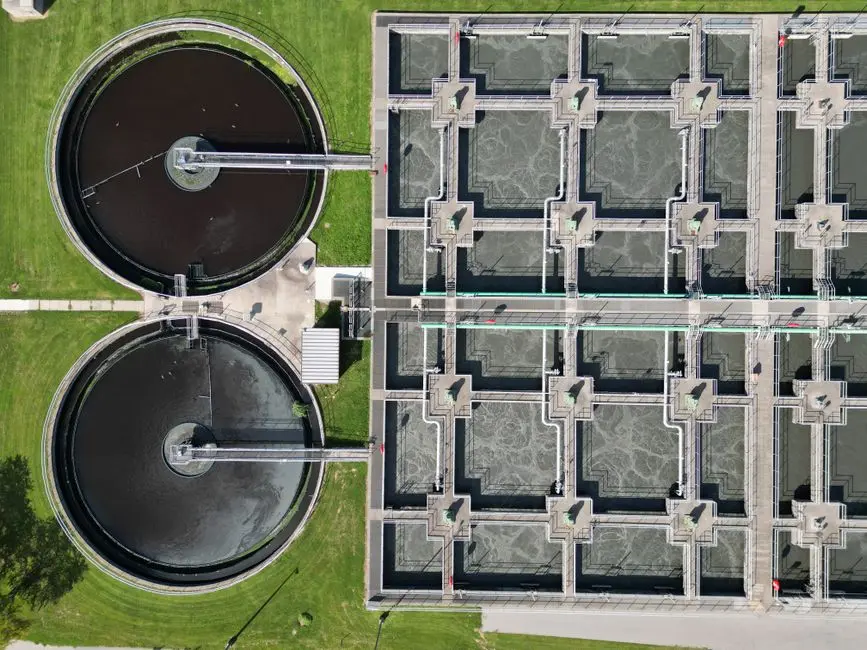
Dataintelo reports that IFAS retrofit capital cost is typically 40-65% lower than equivalent greenfield biological nutrient removal plant construction, with installation timelines measured in months rather than years (IFAS Wastewater Systems for Food Industry Market, 2025-10-01). These market-report estimates can frame an early business case, but they are not a canned-food project estimate. Capital cost, civil work, shutdown exposure and guarantees must be quoted for the actual site.
Start with an asset-condition review covering the aeration basin, diffusers, blowers, clarifiers, piping, controls, media-retention screens and sludge-handling train. A retrofit may be favored where usable basin volume exists, biological performance is the limiting factor, and the required retrofit can remain within the existing footprint.
- Retrofit triggers: production growth, inconsistent biomass settling, inadequate aeration, permit-driven nutrient removal, or insufficient suspended-growth capacity with suitable civil infrastructure.
- Greenfield triggers: inadequate basin geometry, major structural or piping deficiencies, incompatible sludge handling, site expansion, or staged capacity that cannot be achieved within the existing footprint.
Ask each bidder to price the same scope, including demolition, temporary bypass, controls, piping, media, retention screens, aeration, commissioning, downtime and disposal of contaminated sludge. Obtain vendor-specific pricing, construction schedule, schedule alternatives, performance warranties and remedy terms. Where the residuals concept requires mechanical dewatering, evaluate a plate-and-frame filter-press option, but confirm cake consistency, filtrate quality, wash-water demand, labor requirements and final disposal route before selecting it.
Compliance, Procurement and Acceptance Testing
The US EPA states that 40 CFR Part 407 effluent limitations vary by subcategory and are incorporated into NPDES permits; precise regulatory coverage must be determined from the applicability provisions (US EPA, Canned and Preserved Fruits and Vegetables Effluent Guidelines). Before finalizing equipment, confirm the facility’s applicable subcategory, discharge point, monitoring requirements and current permit conditions with the permitting authority.
Separate three questions in the RFP and acceptance plan: regulatory compliance, equipment performance and process assurance. Passing an acceptance test does not replace permit obligations, and holding a permit does not prove reliable treatment during every production peak. The RFP should identify the permit basis, wastewater characterization, guaranteed performance point, sampling protocol, test methods, duration, guarantees and remedy terms.
| Procurement area | Minimum requirement | Acceptance evidence |
|---|---|---|
| Performance guarantee | Defined flow, load and permit-based effluent conditions | Representative sampling over an agreed operating period |
| Controls and aeration | PLC control, DO monitoring, blower redundancy, alarms and aeration strategy | Functional tests, alarm response and trend review |
| IFAS hardware | Carrier-retention devices, access, sludge withdrawal and spare-parts plan | Installation inspection, retention check and operating demonstration |
| Pretreatment | Defined screening, solids/FOG removal and chemical-dosing basis | Performance test against characterized flow and loads |
| Sludge handling | Withdrawal, transport, dewatering and disposal route | Mass-balance check and agreed dewatering criteria |
| Operations | Odor control, access, maintenance, training and support | Training records, manuals and handover |
Use an automatic chemical-dosing system only where the characterized wastewater requires pH adjustment or chemical pretreatment. Use a plate-and-frame filter press for sludge dewatering where the selected sludge-handling concept supports mechanical dewatering, with final disposal route and acceptance criteria confirmed during design.
Frequently Asked Questions
Is IFAS suitable for canned fruit and vegetable wastewater?
It can be suitable when the wastewater is biodegradable and variable, required pretreatment can remove problematic solids, FOG or pH excursions, and the permit requires treatment that IFAS can help deliver. IFAS does not remove every pollutant or automatically establish permit compliance; the complete train must include equalization, clarification, polishing where required and sludge handling.
What data does a supplier need to size IFAS?
Request representative average, peak and production-day flows; BOD5, COD, TSS, FOG, oil and grease, pH, temperature, nutrient and conductivity data; production schedules; and recycling and washdown information. Require sampling across representative campaigns and cleaning cycles, not one snapshot, so bidders use the same design basis.
Is IFAS cheaper than MBR?
Do not make that decision from energy alone. Dataintelo reports that optimized IFAS uses 15-25% less aeration energy per unit of BOD removed than MBR (2025-10-01), but that does not establish total installed cost. Compare membrane replacement, fouling control, operations, footprint and effluent-quality requirements; request comparable supplier pricing for the same project scope.
Can IFAS be retrofitted into an existing plant?
Sometimes, but only after reviewing basin geometry, aeration, clarifiers, piping, controls, media retention and sludge handling. Dataintelo reports retrofit capital cost 40-65% below equivalent greenfield BNR construction and timelines in months rather than years (2025-10-01). Require a site-specific quote that states civil work, downtime assumptions, warranty and performance remedy.
Does IFAS alone guarantee compliance with EPA effluent limits?
No. The US EPA states that 40 CFR Part 407 limitations vary by subcategory and are incorporated into NPDES permits. Confirm the facility’s applicability provisions and permit conditions before selecting the biological process, clarification and any polishing steps; acceptance testing does not replace ongoing permit compliance.