What Domestic Sewage Treatment Must Achieve in Hai Phong
Domestic sewage treatment in Hai Phong requires selection based on wastewater flow and load, required effluent quality, available footprint, receiving environment, and sludge-handling routes. For smaller distributed sites, the WSZ underground package plant combines anoxic/aerobic biological contact oxidation, sedimentation, and disinfection in one unit and handles 1–80 m³/h, according to the HydropureWater product catalogue. Larger or reuse-focused projects may require an MBR system, available from 10–2,000 m³/day. Hai Phong’s coastal waters are influenced by tidal exchange and river-borne nutrients, so local discharge conditions and current Vietnamese regulations must be verified during design rather than inferred from generic treatment claims.
The treatment objective should be stated as collection and treatment of domestic or municipal wastewater, not as temporary sewage storage or septic-tank emptying. That distinction determines whether the scope requires sewers, a biological reactor, solids separation, disinfection, sludge treatment, and a lawful discharge route.
Receiving-water context matters because a discharge can affect more than the point where the pipe ends. A 2023 study in the Vietnam Journal of Marine Science and Technology, based on observations from October 14–17, 2022, found that rivers were the primary source of nutrient pollutants in the Hai Phong marine study area. It also reported that nutrient concentrations in the coastal waters were strongly influenced by interaction between tide and river flow. The implication is design discipline: identify the actual receiving water and discharge route, then confirm the current local requirements rather than relying on a generic national description of coastal waters.
Two cited regulatory documents are the starting point for compliance review: QCVN 14:2008/BTNMT for domestic wastewater and QCVN 10:2023/BTNMT for marine water quality. The project engineer should confirm the current applicable versions, the local environmental permit, discharge authorization, and any receiving-water assessment. A permit-compliant discharge target is different from a reuse-quality target. Where reuse or tighter solids separation is required, additional treatment stages or an MBR-based architecture may be justified, but no reuse claim should be accepted without a defined water endpoint and project-specific performance testing.
Build a Hai Phong Site and Receiving-Water Data Set
Equipment selection begins with a project data set rather than a catalogue flow rate. The same nominal capacity can represent different biological loads if wastewater strength, operating hours, redundancy, and effluent objectives differ. The following information is the minimum useful basis for a Hai Phong domestic wastewater treatment design.
| Design input | Information to obtain | Why it affects selection |
|---|---|---|
| Wastewater flow | Average and peak daily flow, diurnal profile, operating hours, catchment population or occupancy, and defensible seasonal factors | Defines hydraulic and biological loading, equalization needs and redundancy |
| Wastewater quality | COD, BOD5, total nitrogen, total phosphorus, suspended solids, fats and grease, plus any commercial or industrial inputs | Establishes whether conventional biological treatment is adequate and whether pretreatment or additional nutrient removal is needed |
| Receiving environment | Discharge point, sewer route, receiving water, flood exposure, land availability and access for maintenance | Links the treatment objective to site and environmental constraints |
| Site utilities | Power supply, standby-power provision, drainage, ventilation, odor-control requirements and lifting access | Determines civil works, installation method and operability |
| Residuals | Sludge and septage characteristics, dewatering needs, storage route and disposal destination | Prevents an incomplete treatment-train and cost estimate |
The 2023 Hai Phong field study provides a useful example of the analyte set: BOD5, COD, total nitrogen, total phosphorus, ammonium, nitrite, nitrate, and phosphate. Those observations were collected from October 14–17, 2022, at coastal and river sampling locations. They are evidence of what was examined, not a substitute for sampling the proposed project’s influent.
Map sewer condition and septage streams as well as the treatment plant. The World Bank’s 1998 Haiphong Component EIA treated sewer rehabilitation, septage treatment, sewage-sludge management, and flood-retention-lake rehabilitation as interconnected sanitation measures. A buyer can use the domestic sewage treatment equipment guide for Hanoi as a structuring reference, but the Hai Phong site survey must remain specific to its own sewers, receiving waters, and sludge route.
Match the Treatment Train to the Application
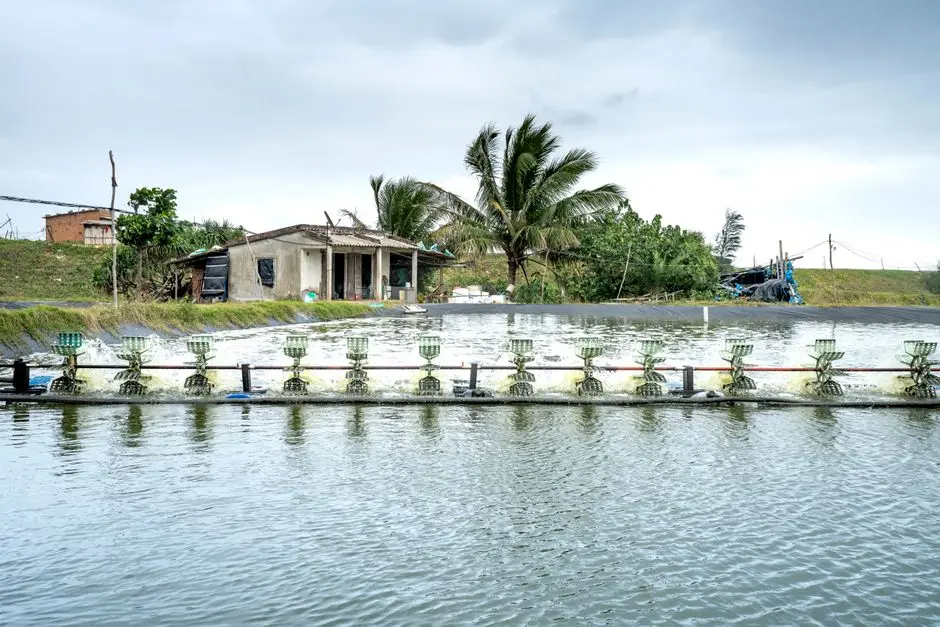
A complete treatment train follows a functional sequence: incoming sewage, pretreatment, equalization where required, biological treatment, solids separation, disinfection, effluent discharge, and residual-sludge handling. Proper system design ensures each stage is included regardless of the equipment's footprint.
- Pretreatment: remove rags, plastics, fibrous debris, and suspended solids before they overload pumps or downstream biological stages. The GX rotary mechanical bar screen is positioned at the headworks for this function.
- Equalization: attenuate peak flow and load variation where the influent profile, operating schedule, or downstream process requires it.
- Biological treatment: remove biodegradable organic matter and, where designed, nitrogen. The treatment objective must identify the required removal mechanisms rather than treating all contaminants as one task.
- Solids separation: separate biomass from treated liquid before disinfection.
- Disinfection: apply the process required by the permit or reuse specification.
- Sludge handling: collect, stabilize, store, and route residual solids to an authorized treatment or disposal destination.
The WSZ configuration combines anoxic/aerobic biological contact oxidation, sedimentation, and disinfection in a single underground package unit. The WSZ underground package sewage treatment plant is therefore relevant where a compact buried installation and an integrated treatment sequence suit the application.
The MBR sequence combines activated-sludge treatment with submerged PVDF membrane filtration, stated by the HydropureWater product catalogue as filtering below 1 μm. The MBR membrane bioreactor wastewater system should be assessed where finer solids separation, reuse potential, or a defined footprint advantage has engineering value. Membrane filtration does not remove the need to characterize sludge, control pretreatment, and define the final effluent specification.
Neither arrangement is universal. The 1998 World Bank Haiphong EIA described sewer rehabilitation, septage treatment, sewage-sludge management, and flood-retention-lake rehabilitation as connected sanitation measures rather than isolated plant installations. Today’s design preserves that systems view: the final train follows measured wastewater characteristics, the receiving environment, and the applicable discharge or reuse specification.
Compare WSZ, A/O and MBR for Hai Phong Projects
The WSZ series is a defined package arrangement; A/O is a biological process framework; MBR is a membrane-based treatment architecture. Comparing them requires the supplier to state the complete scope, because the process label alone does not establish effluent performance, civil requirements, or operating cost.
| Decision issue | WSZ package plant | A/O biological process | MBR system |
|---|---|---|---|
| Stated configuration | Anoxic/aerobic biological contact oxidation, sedimentation and disinfection in one buried package unit, according to the HydropureWater product catalogue | Anoxic and aerobic biological zones; the supplier must define reactor, solids separation, disinfection, sludge and controls | Activated sludge with submerged PVDF membrane filtration, stated as below 1 μm in the product catalogue |
| Stated flow range | 1–80 m³/h, according to the HydropureWater product catalogue | No supported range is provided in the research; require a design basis | 10–2,000 m³/day, according to the HydropureWater product catalogue |
| Installation | Underground installation is part of the package concept | May require more site-specific civil and process integration | Equipment is more complex than a basic biological package and should be evaluated against required effluent quality |
| Best fit to test | Application falls within the stated flow band and a compact buried installation is valuable | A flexible biological process is needed and the supplier has defined the complete treatment train | Finer solids separation, reuse potential or a larger daily treatment requirement justifies added complexity |
| Buyer checks | Effluent duty, excavation, access, ventilation, odor control, power, sludge route and commissioning | Reactor sizing, separation method, disinfection, sludge handling, automation and expansion plan | Membrane cleaning, replacement, power, chemicals, controls, spare parts and trained operation |
A/O should not be rejected simply because it is not presented as a single package. It can be implemented in larger civil or modular arrangements, but the quotation must define every stage needed to deliver the promised effluent. WSZ is a stronger candidate where its stated flow band fits and buried installation is valuable. MBR should be assessed where the project needs finer solids separation, reuse potential, or a larger daily treatment footprint.
Every proposal should state guaranteed process duty, effluent parameters, the test protocol, power and chemical requirements, warranty scope, spare parts, and local service support. The packaged sewage treatment plant selection for housing illustrates how site constraints and operating assumptions should be tested during package selection rather than after purchase.
Account for Sludge, Flooding and Site Integration
The 1998 World Bank Haiphong EIA described rehabilitation of 100 km of sewers and safe disposal or treatment of around 100,000 m³ of sediment from lakes and channels. Those figures describe the earlier sanitation project, not a current equipment requirement. Their planning relevance is that sewer condition, septage, retention-lake sludge, and stormwater interaction must be considered alongside any new treatment unit.
Where the selected process produces a dewaterable residual sludge stream, a plate and frame sludge filter press may support dewatering. The buyer must still confirm sludge characteristics, solids capture, dewatering route, storage capacity, and the responsible party for final disposal.
Flood exposure affects more than the reactor shell. A proposal should address flood levels, access roads, lifting points, wet-well or reactor access, ventilation, odor control, standby power, drainage, and high-ground or coastal exposure. Underground equipment may reduce the visible footprint, but access and safe maintenance must be resolved before installation.
Sludge and septage also affect the facility boundary. If septic-tank emptying or sewer cleaning is part of the operating model, the design should identify receiving points, receiving equipment, transfer storage, dewatering, and disposal. A biological reactor does not eliminate this residual stream, and a quotation that excludes it is not a complete lifecycle comparison.
Plan Commissioning, Monitoring and Lifecycle Cost
Compliance review should confirm the applicable current Vietnamese regulations, the local environmental permit, sewer or discharge authorization, and any receiving-water assessment required for the project. This article does not invent numerical discharge limits because the supplied evidence identifies the relevant regulations but does not establish the current project-specific limits.
Include factory testing, site acceptance testing, hydraulic start-up, biological culture establishment, performance testing, and operator training in the supplier scope. The acceptance plan should identify sampling points, test methods, operating conditions, acceptance criteria, and who resolves a failed test. Monitoring should cover process stability and the parameters required by the permit, including project-specific demonstrations of BOD5, COD, nitrogen, phosphorus, suspended solids, and disinfection performance where applicable.
The 1998 Haiphong EIA focused on monitoring sewage, treated sludge, pond leachate, groundwater, and hydrological conditions. That remains a useful planning principle: monitoring should follow the pathways through which contaminants and residuals move at the site.
Compare lifecycle costs on the same basis: equipment, civil works, installation, energy, chemicals, sludge handling, membrane or media replacement, inspections, operator time, and service support. Also evaluate reference site visits, spare-part availability, supplier response time, maintenance documentation, and warranty terms. A larger treatment claim does not demonstrate lower lifecycle cost if membrane cleaning, controls, sludge logistics, or specialist service are omitted.
Frequently Asked Questions
How much does a domestic sewage treatment package cost in Hai Phong?
A reliable price cannot be stated from the supplied evidence. Request a quotation using the same project inputs for every bidder: measured or defensibly estimated flow and load, effluent objective, site conditions, civil works, installation, power, sludge route, and commissioning scope. Ask for a transparent lifecycle-cost breakdown rather than a package price that excludes site works or residual handling.
Should I choose a WSZ package plant or an MBR system in Hai Phong?
Choose WSZ when the application fits its stated 1–80 m³/h band and a compact buried installation is valuable. Assess MBR when finer solids separation, reuse potential, or a larger daily requirement justifies added process complexity. This is a screening decision, not
Frequently Asked Questions
How much does a domestic sewage treatment package cost in Hai Phong?
For a standard domestic sewage treatment system in Hai Phong, costs typically range from 2,500,000 VND to 4,500,000 VND per cubic meter of daily capacity, depending on the technology and material used (e.g., carbon steel, FRP, or concrete). Small-scale residential packages (1-5 m³/day) often cost between 60,000,000 VND and 150,000,000 VND, while larger industrial or apartment complex installations require custom engineering quotes based on specific influent characteristics.
Should I choose a WSZ package plant or an MBR system for a project in Hai Phong?
The choice depends on your space availability and discharge requirements. WSZ (Water Sewage Zone) systems utilize traditional aerobic/anaerobic processes and are more cost-effective for sites with ample space, but they often struggle to meet stringent reuse standards. MBR (Membrane Bioreactor) systems are recommended for Hai Phong projects requiring high-quality effluent (BOD5 < 10 mg/L, TSS < 5 mg/L) or those with limited footprints, as they eliminate the need for secondary clarifiers and produce significantly higher quality treated water suitable for landscape irrigation.
How do I size domestic sewage treatment equipment for a residential or industrial site in Hai Phong?
Sizing is determined by the daily hydraulic load calculated using TCVN 10334:2014 standards. For residential sites, calculate based on 150-200 liters per person per day; for industrial sites, use the specific employee count multiplied by 40-60 liters per shift. Always include a 20% safety factor for peak flow fluctuations and ensure the system design accounts for the specific influent BOD/COD concentrations typical of the local Hai Phong area.
What permits and effluent tests are required for domestic sewage discharge in Hai Phong?
Discharge must comply with QCVN 14:2008/BTNMT (National Technical Regulation on Domestic Wastewater). Operators must obtain an Environmental License (Giấy phép môi trường) issued by the Hai Phong Department of Natural Resources and Environment (DONRE). Effluent monitoring requires quarterly testing for pH, BOD5, TSS, Total Nitrogen, Total Phosphorus, and Coliforms, with results submitted to local regulatory authorities to ensure compliance with the specific discharge zone classifications.
How do I compare sewage treatment equipment suppliers in Vietnam?
When evaluating suppliers, verify their capability to provide ISO 9001:2015 certification and their track record of completed projects within Hai Phong or similar coastal climates. Request detailed technical documentation including hydraulic retention time (HRT) calculations, power consumption ratings (kWh/m³), and the availability of local spare parts for critical components like blowers and submersible pumps. Prioritize suppliers who offer a minimum 12-month warranty and provide a clear O&M (Operation and Maintenance) training manual in Vietnamese.