Where IFAS Fits in a Seafood Wastewater Treatment Train
IFAS is a biological stage, not a complete seafood-processing wastewater plant. It combines suspended-growth activated sludge with biomass attached to media in an aerobic reactor, but it does not replace screening, DAF, aeration, sludge wasting, secondary clarification or final polishing. Design the train from the waste source forward: screen and equalize, recover floatable material, apply biological treatment, separate solids, and then add nutrient control, disinfection or reuse barriers required by the final specification.
The practical sequence is:
- Coarse screening and collection of fish residues
- Equalization for production and cleaning imbalance
- DAF pretreatment for recoverable FOG and solids
- IFAS biological treatment
- Secondary clarification and sludge handling
- Nutrient control or polishing where required
- Disinfection or reuse treatment
DAF establishes the biological influent boundary. Apply residual COD and BOD5 entering IFAS, not untreated plant COD, to the biological calculation. Food-processing DAF pretreatment should therefore be included in the upstream mass balance rather than treated as an accessory after IFAS has been sized.
The final route changes the treatment architecture. Direct environmental discharge may require more stringent nutrient control and polishing than partial reuse for cooling or cleaning. The reuse specification must identify the required barriers; an MBR alternative for stringent solids separation may complement or replace a conventional solids-separation stage, but catalog capacity and filtration specifications are not seafood-performance guarantees.
| Stage | Primary duty | Information required for IFAS design |
|---|---|---|
| Screening and equalization | Remove coarse material and moderate hydraulic or quality imbalance | Peak flow, production sequence, equalization volume and bypass provisions |
| DAF | Recover floatable FOG and solids before biological loading | Measured recovered float and residual COD, BOD5, TSS and FOG |
| IFAS | Perform aerobic biological reactions with suspended and attached biomass | Residual load, treatment objectives, temperature, pH, salinity and nutrient data |
| Secondary clarification and sludge handling | Separate biological solids and prepare residuals for disposal or reuse | Solids production, settleability, thickening or dewatering route |
| Polishing and final use | Meet the applicable discharge, sewer-authority or reuse specification | Final water-quality requirements and barriers for filtration, nutrients and disinfection |
Map the Wastewater by Source and Processing Stage
The 2025 review “Characterization of seafood processing wastewater” identified five stages: initial washings, filleting, cooking and canning, final washings, and combined discharge. It found that stage 3 wastewater contained the highest concentrations of BOD, COD, TN, TAN, TP and oils, followed by stage 2, while stages 1 and 4 carried lower pollutant loads (PubMed, 2025). This makes production-stage separation more informative than combining all plant flows into one average.
Build separate flow and analytical records for filleting, cooking or canning, final washdown, CIP, refrigeration-unit cleaning and transport-container cleaning. Attach the product mix, production method, campaign duration and CIP sequence to each record. Fresh, frozen, canned, smoked and fish-meal operations produce different wastewater volumes and pollutant loads, so a facility-wide daily average can conceal the campaign that controls reactor loading.
The inventory should establish average flow, peak hydraulic load, equalization duty, production-related imbalance and campaign-based flow records. Sampling must also characterize pH, temperature, salinity and cleaning chemicals. These variables affect biological activity, mixing, precipitation, chemical dosing and the decision to segregate or equalize cleaning streams. The five-stage wastewater characterization framework provides a useful starting structure, but it is not a substitute for plant-specific monitoring.
| Source to characterize | Critical load or condition | Design consequence |
|---|---|---|
| Filleting | Blood, tissue solids and processing water | Separate collection and FOG/solids removal assessment |
| Cooking and canning | Reported highest stage 3 concentrations of BOD, COD, TN, TAN, TP and oils | Campaign sampling and stronger biological-load control |
| Final washings | Lower reported pollutant loads, but flow may remain significant | Hydraulic balance and dilution assessment |
| CIP and equipment cleaning | Cleaning chemicals, sanitizers, pH changes and shock loads | Segregation, equalization and toxicity assessment |
| Combined discharge | Concentration and flow reflect the active production mix | Use only after constituent streams have been characterized |
Calculate the IFAS Load from the Post-DAF Wastewater
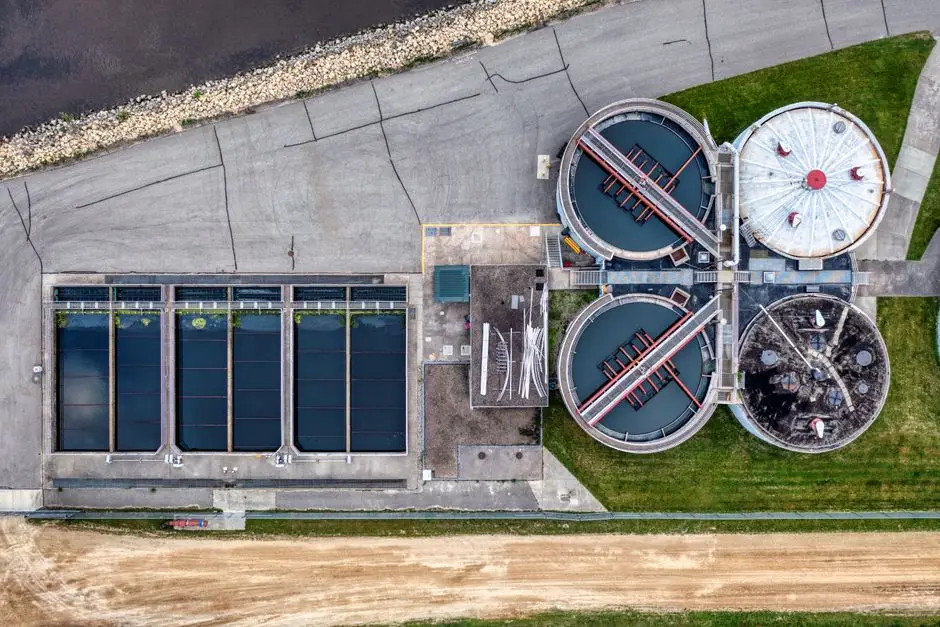
The IFAS design basis begins with the mass and water entering the biological stage after DAF. The Water Science & Technology industrial-effluent study used a total IFAS working volume of 560.7 L, but that installation established research scale only and is not a recommended fish-plant reactor size. No universal reactor size or loading rate for seafood-processing IFAS can be derived from the supplied evidence.
Request the following inputs before selecting reactor volume:
- Average, peak and campaign flows
- Equalization volume and bypass provisions
- Production and cleaning sequence
- Representative post-DAF COD, BOD5, TSS, FOG, ammonia, total nitrogen and phosphorus
- pH, temperature and salinity across production and cleaning cycles
Use the same sampling basis upstream and downstream of DAF. If the upstream analysis uses raw wastewater and the downstream value is represented only by an assumed removal efficiency, recoverable FOG or solids can be concealed inside the biological calculation. Confirm recovered float quantity, residual contaminant concentrations and the associated flow on the same basis.
| Mass-balance node | Required flow and concentration information | Design use |
|---|---|---|
| Raw wastewater | Flow; COD; BOD5; TSS; FOG; ammonia; TN; TP | Defines incoming pollutant mass and pretreatment duty |
| DAF recovered float and solids | Recovered volume; FOG; TSS; associated COD and BOD5 | Quantifies removal before biological loading |
| Residual wastewater entering IFAS | Representative flow and concentrations measured after DAF | Establishes the biological design basis |
| Biological reaction | Influent and effluent concentrations, reaction configuration and operating conditions | Confirms treatment performance and reaction-zone duties |
| Secondary solids | Separated solids quantity and characteristics | Determines clarification, return, wasting and sludge handling |
| Final effluent or sludge | Permitted or reuse-relevant quality; disposal or reuse route | Completes the mass balance and treatment train |
Confirm media loading and reactor volume through a wastewater-specific treatability assessment or representative pilot. Tie nutrient configuration to measured chemistry, temperature, redox zoning and the final-use specification; do not promise nitrification or denitrification before those conditions are tested.
Design the Attached-Growth System for Seafood Conditions
IFAS media, aeration, mixing, sludge management and solids separation must be designed as one operating system. The media changes biomass inventory and process resilience, but it does not remove the need for oxygen transfer, suspended-solids control, wasting or downstream separation. Generic media values should not be inserted into a procurement specification without supporting manufacturer documentation.
Require each bidder to provide surface area, specific fill characteristics, void fraction, density, mechanical strength and replacement procedure. Also require a reactor-specific calculation showing how the selected fill supports the intended biomass inventory and process objectives. These inputs must be reconciled with the hydraulic profile and aeration arrangement rather than treated as independent catalog items.
Define aerobic, anoxic and re-aeration duties around the required removal objectives. The dissolved-oxygen basis, airflow, distribution, mixing, biofilm shear, odor control and media-access arrangement should be explicit. Sludge return and wasting must be coordinated with the secondary solids route. A sedimentation tank for biological solids separation and a plate-and-frame press for sludge dewatering address different functions; neither is automatically correct without solids-characteristics and waste-route data.
| Design element | Supplier information required | Acceptance basis |
|---|---|---|
| Biofilm media | Surface area, fill characteristics, void fraction, density, strength and replacement method | Manufacturer data reconciled with reactor geometry and loading |
| Aeration and mixing | DO basis, airflow, distribution, mixing, shear and odor-control provisions | Hydraulic and process calculations plus operating envelope |
| Sludge handling | Return, wasting, separation, thickening, dewatering and downstream route | Pilot or operating solids balance |
| Maintenance and resilience | Inspection, replacement access, spares, redundancy and peak-cycle operation | Documented procedures, schedules and service scope |
Require inspection and media-replacement access, a spare-part strategy, the peak-cycle operating envelope, redundancy provisions and evidence that replacement media will remain available. Biological nitrogen removal remains conditional on the demonstrated configuration; an attached-growth carrier alone does not establish the required effluent quality.
Choose IFAS, MBR or Conventional Activated Sludge
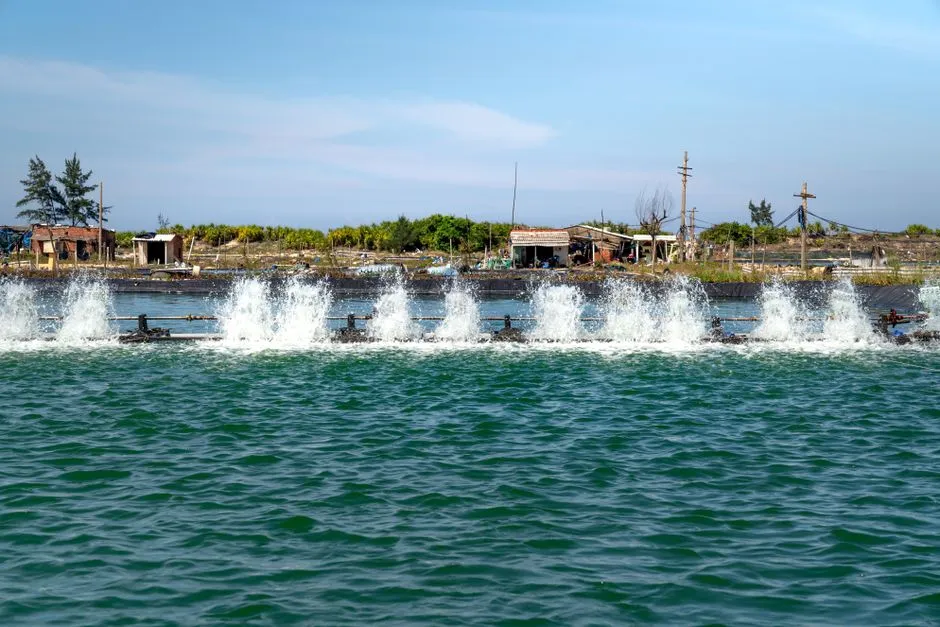
The correct process architecture follows from the treatment objective and site constraints, not from the lowest equipment price. IFAS is most relevant when hybrid biological capacity, attached-biomass retention and retrofit flexibility are priorities. MBR becomes more compelling when membrane solids separation or near-reuse-quality effluent is central. Conventional activated sludge remains credible where familiarity, media-free operation and established sludge-handling practice outweigh the potential benefit of attached-growth media.
An IFAS bid must address media selection, aeration, biofilm control, solids separation and replacement access. An MBR bid must address fouling, cleaning, integrity monitoring and reject handling. A conventional activated-sludge bid must address biomass inventory, settling, sludge return and wasting. All three should be compared against the same measured influent, final-use specification and site constraints.
The current MBR catalog range of 10–2,000 m³/day and filtration below 1 µm are useful only for preliminary equipment comparison. They are not guarantees of seafood-processing performance, reuse suitability or compliance with a discharge permit. Catalog context is not a substitute for representative wastewater testing.
| Decision factor | IFAS | MBR | Conventional activated sludge |
|---|---|---|---|
| Primary logic | Hybrid biological capacity and attached-biomass retention | Biological treatment with membrane solids separation | Established suspended-growth treatment |
| Key risks | Media selection, aeration, biofilm control and solids separation | Fouling, cleaning, integrity monitoring and reject handling | Biomass inventory, settling, sludge return and wasting |
| Retrofit consideration | Retained biomass and retrofit potential | Module arrangement, membrane access and plant integration | Compatibility with established basins and equipment |
| Commercial comparison | Media replacement, energy, downtime and service support | Energy, chemicals, cleaning, membrane life and reject disposal | Energy, chemicals, sludge handling and operator labor |
Include footprint, staffing, sludge capacity, reuse economics, retrofit constraints, energy, chemicals, media replacement, downtime and local service support. For broader process-specific review, see IFAS design guidance for fish-processing wastewater.
Validate Performance Before Making an Equipment Commitment
Supplier calculations should become testable acceptance criteria. Specify sampling points, frequency, analytical methods, startup sequence, loading progression, shock-load tests, media behavior, sludge production, effluent stability and acceptance limits. Identify each proposed value as calculated, drawn from an analogous installation or awaiting pilot confirmation.
The 2026 study “Nitrogen removal and microbial community restructuring in a hybrid membrane bioreactor treating seafood processing wastewater under sequential sponge and rice husk biochar addition” operated for 200 days. It reported ammonium-removal efficiencies of 91 ± 5% with sponge and 94 ± 2% with rice husk biochar (Case Studies in Chemical and Environmental Engineering, 2026). That system was a hybrid MBR with sequential carrier addition, not IFAS, so these results do not guarantee IFAS performance.
The same study reported biomass-normalized total nitrogen uptake rising from 3.23 ± 1.82 mgTN/gMLVSS·d under suspended growth to 18.21 ± 8.61 mgT in the supplied excerpt. The endpoint unit is truncated, so it should not be reconstructed or presented as a complete rate.
A 2026 municipal IFAS pilot found that the aerobic IFAS reactor was the main contributor to contaminant degradation and maintained performance after biomass loss greater than 90% (Bulletin of Environmental Contamination and Toxicology, 15 March 2026). Municipal wastewater does not establish resilience under seafood FOG or cleaning-chemical shocks.
The municipal pilot also reported xenoestrogen removal of 99.8 ± 0.1%, 97.7 ± 1.0% and an 83.2% decrease from 0.031 to 0.005 ng L−1 E2-EQ. These results are contaminant- and configuration-specific and cannot be transferred to seafood COD removal or nutrient performance.
Require pilot acceptance criteria linked to the actual post-DAF wastewater, operating campaign and final-use specification. A vendor that cannot identify representative test conditions or measurable outcomes has not supplied an engineering basis for performance. Related implementation issues are covered in the IFAS engineering guide for meat-processing wastewater.
Procurement Checklist for an IFAS Supplier
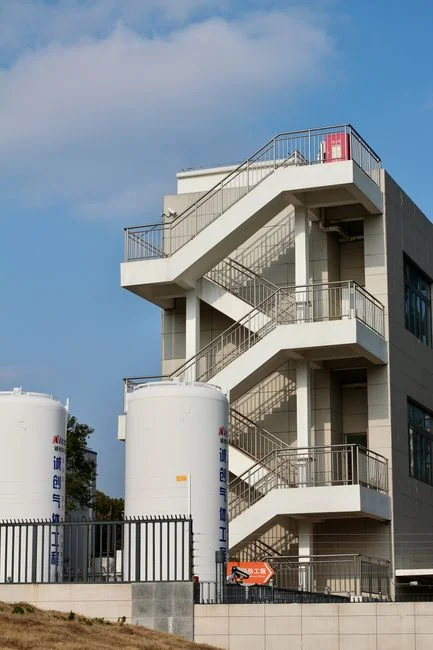
A defensible bid must expose the complete treatment-train assumptions. Request the proposed flow path, hydraulic profile, mass balance, media specification, aeration design, sludge-return arrangement, solids separation, control philosophy and operating envelope. The supplier should clearly distinguish calculated values, analogous-installation values and items requiring pilot confirmation.
Commercial exclusions must be explicit. Require media-replacement availability, spare-part strategy, PLC or SCADA scope, blower requirements, sludge-system interfaces, installation schedule and local service support. Compare whole-life costs for energy, chemicals, media replacement, sludge handling, operator labor, odor control and downtime exposure. Equipment price alone can conceal the operating burden of attached-growth and solids-management systems.
| Bid item | Information the buyer should require | Reason for review |
|---|---|---|
| Process design | Complete train, hydraulic profile and mass balance | Prevents hidden upstream or downstream duties |
| IFAS equipment | Media data, aeration, mixing, sludge return and solids separation | Confirms that the biological and solids systems work together |
| Controls and service | PLC/SCADA scope, spares, media availability, installation and local support | Identifies long-term operating and downtime exposure |
| Operating costs | Energy, chemicals, media, sludge, labor, odor control and downtime | Supports whole-life comparison rather than a purchase-price comparison |
| Compliance | Performance language tied to the permit, sewer authority or reuse specification | Prevents an unsupported stand-alone IFAS guarantee |
For U.S. seafood preserving and canning facilities, verify the applicable subcategory and requirements under 40 CFR Part 408 rather than assuming one facility-specific limit (U.S. EPA, current guidance page). A statement that IFAS alone guarantees an effluent is unacceptable when performance also depends on DAF, clarification, nutrient control and final polishing.
Frequently Asked Questions
Can IFAS be sized for a seafood-processing plant from a single COD value?
No. Request average, peak and campaign flows; post-DAF COD, BOD5, TSS, FOG, ammonia, total nitrogen and phosphorus; and pH, temperature and salinity data. The 560.7 L reactor in the Water Science & Technology industrial-effluent study was a research installation, not a commercial sizing template. Confirm the proposed reactor and media loading through wastewater-specific treatability testing or a representative pilot.
How should pretreatment mass balance affect the IFAS design?
Measure FOG, oil and grease, TSS and associated COD entering DAF, then confirm the recovered float and residual concentrations leaving DAF. Use the residual biological load entering IFAS. The DAF proposal should state the hydraulic flow, chemical demand, float or solids removal and bypass provisions. Use an equipment comparison framework for DAF and clarification only as a process-evaluation reference, not as seafood performance evidence.
Should a seafood processor choose IFAS, MBR or conventional activated sludge?
Choose IFAS when hybrid biological capacity, attached-biomass retention and retrofit flexibility are the main objectives. Prioritize MBR when membrane solids separation or near-reuse-quality effluent is central, including fouling, cleaning, integrity monitoring and reject handling. Choose conventional activated sludge where media-free operation, process familiarity and established sludge handling outweigh added fixed-film complexity. Compare each proposal using the same influent data, final-use requirements and site constraints.
What should be checked when selecting an IFAS supplier?
Request the complete mass balance, media data, aeration and mixing design, sludge interface, solids separation, operating envelope and control scope. Ask for representative pilot evidence with acceptance criteria tied to the actual wastewater. Check media replacement, maintenance, energy, chemicals, downtime and service support as well as purchase price. A supplier that offers only a reactor price or a stand-alone performance guarantee has not priced the treatment train.
How can procurement estimate the operating cost of IFAS?
Request a transparent whole-life estimate covering aeration energy, chemicals, media replacement, sludge handling, operator labor, odor control, inspections and downtime. No supported seafood-specific unit cost is available in the research, so require the bidder to show its calculation basis and distinguish equipment supply from site-specific balance-of-plant work. The estimate should also state which costs are calculated, analogous or subject to pilot confirmation.
What determines compliance for direct discharge or reuse?
The permit, sewer authority or reuse specification determines the required final quality. IFAS can form part of either route but does not establish the final water quality by itself. Confirm whether filtration, nutrient control, disinfection or other barriers are required. For U.S. seafood preserving and canning facilities, verify the applicable subcategory and requirements under 40 CFR Part 408 with the permitting authority (U.S. EPA, current guidance page).