Which Packaged Sewage Plant Is Right for a Riyadh Development?
The best packaged sewage treatment plant for a Riyadh housing development is typically an underground WSZ A/O unit for straightforward residential treatment and compact deployment, or an MBR system when the project requires finer solids separation or a reuse-oriented treatment train. The HydropureWater range includes WSZ units from 1–80 m³/h and MBR systems from 10–2,000 m³/day. Final selection must be based on measured flows, influent loading, required effluent limits, soil conditions, available footprint and discharge route—not housing-unit count alone.
Use the underground WSZ A/O sewage treatment package as the baseline for a conventional residential community where automatic operation, burial and limited surface land take are priorities. Consider the integrated MBR wastewater treatment system when the confirmed treatment specification or reuse plan requires stronger solids separation.
Neither the number of homes nor a generic daily-flow estimate is a defensible selection basis. Obtain average and peak wastewater flows, characterize the influent, and identify the receiving route before comparing equipment. Riyadh housing demand is documented: MDPI’s 2026 study, Affordability, Preferences, and Barriers to Multifamily Housing for Young Families in Riyadh, Saudi Arabia, surveyed 639 respondents between January and March 2024. That study establishes the development context, not the hydraulic capacity of any treatment plant.
The Sedra wastewater treatment plant’s documented capacity of 60,000 m³/day illustrates the scale of large civil infrastructure, according to AGCC’s Sedra project record. This is not an appropriate analogue for selecting a decentralized housing-development package without site-specific flow and loading data.
WSZ A/O Package or MBR: Compare the Treatment Choice
The WSZ A/O package combines anoxic/aerobic biological contact oxidation, sedimentation and disinfection in one treatment train, while the integrated MBR combines activated sludge with submerged PVDF membrane filtration.
| Selection factor | WSZ A/O package | Integrated MBR |
|---|---|---|
| Treatment principle | Anoxic/aerobic biological contact oxidation, sedimentation and disinfection in a single package | Activated sludge followed by submerged PVDF membrane filtration |
| Catalog capacity | 1–80 m³/h | 10–2,000 m³/day |
| Installation | Buried below grade with landscaping above, or mounted on a trailer for mobile deployment | Surface-oriented system; final arrangement must be confirmed against the project layout |
| Solids separation | Sedimentation within the integrated package | Membrane filtration below 1 μm |
| Footprint | Can preserve landscaped development above the buried package | Catalog specifies a 60% smaller footprint than conventional systems |
| Selection priority | Compact burial, automatic operation and a standard residential treatment train | Finer solids separation or a treatment train justified by the confirmed effluent and reuse requirements |
MBR is not automatically the superior residential choice. Its finer separation becomes important when the approved discharge specification or reuse strategy demands it. The catalog also describes the MBR DF flat-sheet module as using 0.1 μm membranes in 80–225 m² configurations, with module outputs of 32–135 m³/day. These are module-level configurations and must not be substituted for complete-system hydraulic or performance data.
Compare operation and maintenance as well as process diagrams. Ask each bidder to define membrane cleaning, replacement access, aeration and sludge handling, alarm response, operator controls and maintenance access. A technically capable package is not sufficient if routine service requires disruption of landscaping or public areas.
Turn the Housing Plan into a Valid Sewage Design Basis
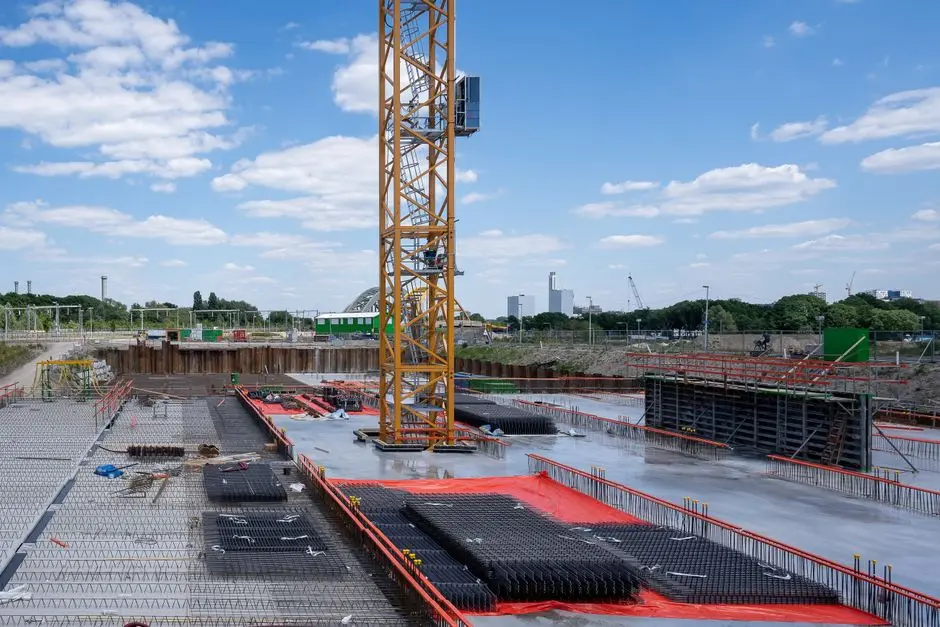
A valid domestic wastewater design flow must reconcile development demand, the sewer route and the treatment-equipment duty rather than convert housing units directly into plant capacity.
| Design-basis input | Evidence the bidder or designer must provide |
|---|---|
| Average wastewater flow | Calculated from the approved unit count or development area, occupancy assumptions and defensible generation factors |
| Peak flow | Peak-hour demand with occupancy pattern, diurnal variation and any documented peak factor |
| Influent characterization | Representative sampling or other defensible characterization covering the wastewater characteristics relevant to process and loading design |
| Contributions | Kitchen, laundry, commercial or mixed-use flows, infiltration and inflow |
| Receiving route | Sanctioned sewer connection, approved receiving system or defined reuse application, together with the applicable approval route and effluent specification |
| Treatment boundaries | Required screening, solids removal, disinfection, nutrient management, sludge handling and polishing |
Use wastewater sampling when the development’s occupancy, commercial use, groundwater infiltration or connected drainage cannot be represented credibly by domestic assumptions. The 2025 study Environmental Management of the Dairy Industry in the Riyadh Region, published in the American Journal of Biological and Environmental Statistics, illustrates a broader evidence-based approach: it combined questionnaires, interviews, observation, field studies, GIS and laboratory analysis of water, soil and air quality. This supports the principle of documented environmental evidence rather than providing housing wastewater parameters.
Designers should show both average daily flow and peak hourly flow. The rotary mechanical bar screen may be relevant where preliminary screening must be defined separately from the core biological package. Sludge treatment also needs an owner: review a plate-frame filter press where the project’s residual-solids handling route makes dewatering relevant. Neither device should be added to the package without a process need and responsibility boundary.
Obtain the required effluent specification from the project authority or consultant in writing. The supplied research does not establish a Riyadh discharge limit, reuse permission or guaranteed compliance; these cannot be filled with generic assumptions.
Match the Package to Riyadh Site and Construction Constraints
The WSZ A/O package preserves development land when it remains below grade, but excavation, lifting, access and groundwater conditions can make the buried option more expensive than the layout suggests.
For below-grade installation, establish excavation depth and structural loading, groundwater and buoyancy protection, lifting access, maintenance openings, odor control, drainage and the means to remove equipment without dismantling landscaping. For a surface or trailer-mounted arrangement, reserve an accessible operating area and verify weather protection, utilities and noise controls. Neither arrangement can be accepted from a catalog image alone.
The MBR catalog’s stated 60% smaller footprint than conventional systems is a useful screening claim, not the final site area. Add tank access, electrical controls, aeration equipment, odor control, sludge handling and space for membrane maintenance. The installed area must support service vehicles and safe withdrawal of wear parts.
Confirm whether the underground WSZ A/O sewage treatment package can operate beneath landscaping while retaining access, or whether surface-mounted integrated MBR wastewater treatment is preferable because the confirmed treatment specification makes the buried option unsuitable.
Before placing an order, coordinate electrical supply, control-system integration, structural loading, lifting routes, bypass arrangements and commissioning-water provision with the civil contractor and relevant authority. Saudi Arabia’s public infrastructure development includes PPP structures under Saudi Vision 2030, according to the 2025 UPM thesis Infrastructure Development in Saudi Arabia Through the Public-Private Partnership Scheme Within the Saudi Vision 2030. The project’s contracting structure must be assessed separately to determine if a private housing-development package plant will use a PPP delivery model.
Specify, Procure and Approve with Less Risk
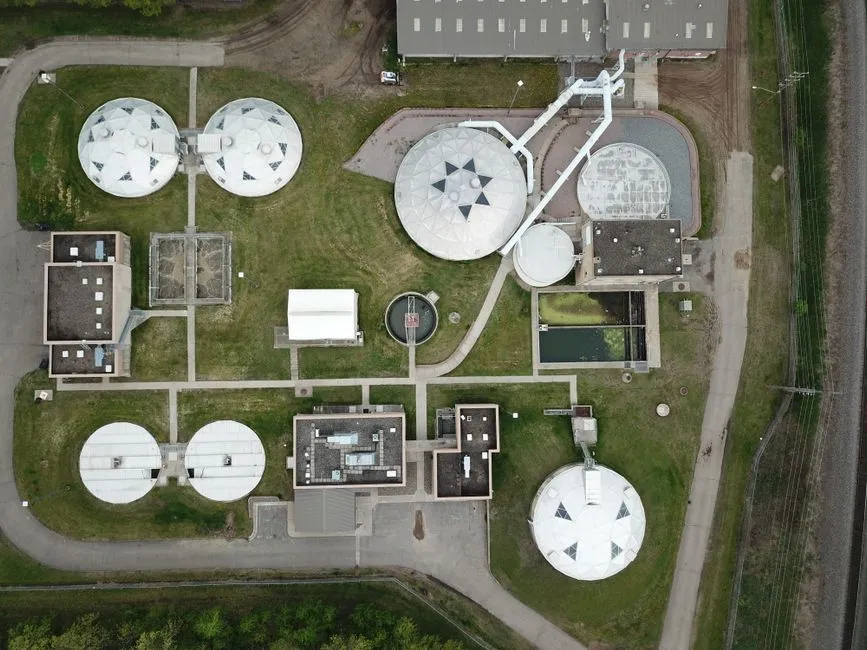
Procurement risk is controlled by defining the process, performance, civil interfaces and approval responsibilities before comparing commercial offers.
| Bid requirement | Information the supplier must provide |
|---|---|
| Design basis | Average and peak flow, influent assumptions, effluent specification and governing design conditions |
| Process design | Process flow diagram, hydraulic calculations, equipment data sheets and treatment-stage capacities |
| Controls and operation | Control philosophy, operator interface, alarms, local controls, duty/standby strategy and spare-parts availability |
| Civil and installation scope | Civil interface drawings, structural and lifting requirements, utilities, access, bypass provisions and installation responsibilities |
| Commissioning and transfer | Commissioning plan, testing methods, sampling points, acceptance criteria, training, documentation and performance demonstration |
| Compliance route | Named approving authority, required submissions, sewer-connection or discharge concept, and defined limits of responsibility |
Require bidders to state their design influent and effluent assumptions, guarantees, test methods, sampling points, acceptance criteria and exclusions. Do not allow a generic performance statement to substitute for the project-specific package plant effluent specification.
Identify the authority responsible for the proposed sewer connection, receiving system or reuse application early. Obtain the applicable standards and approval pathway in writing before finalizing the process. The 2025 American Journal of Biological and Environmental Statistics dairy study examined four dairy-production factories and documented environmental-management decisions; it did not establish sewage-plant effluent limits for a Riyadh housing development.
Use a packed-sewage treatment comparison for a housing development as a structural reference, and review the packaged comparison for a housing development or WSZ, MBR and septic options for housing projects only for procurement framing. Final acceptance should depend on the Riyadh-specific design basis, confirmed receiving route and witnessed performance.
Frequently Asked Questions
How much should a packaged sewage treatment plant cost for a Riyadh housing development?
The supplied evidence does not provide a defensible project price. Request quotations using the same design flow, treatment specification, civil works, installation, commissioning, training, performance testing and approval scope so that exclusions do not distort the comparison.
Which packaged sewage plant is easiest to approve for a Riyadh housing project?
Approval depends on the receiving route and the authority responsible for the sewer connection, discharge or reuse application. Confirm that pathway and the applicable effluent specification in writing before selecting equipment; no supplier should guarantee approval on an undefined basis.
How many housing units can one WSZ or MBR unit treat?
The supplied capacities are 1–80 m³/h for WSZ and 10–2,000 m³/day for MBR. Converting those rates into housing-unit capacity requires verified wastewater generation, occupancy, average flow, peak flow and influent-loading data.
Should a Riyadh housing development choose WSZ or MBR?
Choose WSZ as the baseline where compact burial and an integrated A/O treatment train meet the confirmed specification. Select MBR when the project requirement makes finer solids separation or a reuse-oriented treatment train necessary.
What should be included in a packaged sewage plant supplier RFQ?
Include flow and loading data, effluent requirements, site constraints, civil interfaces, controls, commissioning, testing, training, maintenance, spare parts, approval responsibilities and required documentation.