What Pretreatment Must Achieve Before Sewer Discharge
Fabricated-metals plants near Menomonee Falls meet pretreatment limits by controlling wastewater at its source, then treating it in a sequence matched to the contaminants. Metal-processing streams can contain heavy metals, oil, suspended solids, organics, and changing pH, temperature, and gas conditions. A practical train commonly includes source segregation, equalization, oil-water separation or DAF, chemical dosing for pH and precipitation, filtration or membrane polishing where required, and controlled sludge dewatering. Final compliance must be demonstrated through monitoring and sampling under the applicable sewer authority’s permit and pretreatment requirements; local numeric limits should not be assumed without confirmation.
Pretreatment should answer three separate questions: which contaminants enter the sewer, which discharge requirements apply, and what records demonstrate continuing compliance. The US EPA identifies fabricated-metals manufacturing waste management as a distinct regulatory subject, but the supplied research does not establish Menomonee Falls-specific numeric limits or determine which requirements apply to an individual plant.
Fabrication, forming, machining, coating, cleaning, and cooling can introduce heavy metals, oil, suspended solids, and organics into fabricated metals manufacturing wastewater. The applicable industrial user pretreatment permit and receiving sewer authority’s rules define the enforceable boundary for that discharge.
Before selecting equipment, obtain the industrial user pretreatment permit, sewer-use or pretreatment ordinance, prohibited-discharge list, applicable local numeric limits, monitoring frequency, sampling method, and reporting format. Confirm whether federal categorical pretreatment standards apply to the plant’s actual manufacturing category, process, and production scale; nearby fabricators should not be assumed to have identical obligations. The 2026 pretreatment compliance framework for metals plants provides a useful workflow for connecting process evidence to permit review.
Build a Source-Specific Wastewater Profile
Waste characterization must precede equipment selection because ProChem reports that fabricated-metals waste streams rarely remain consistent: fabrication, coating, cleaning, and cooling introduce mixed contaminants that can shift through the day, while changes in pH, temperature, and gas content complicate separation.
Start by drawing a process-to-drain map. It should show which operations generate wastewater, where each stream goes, whether it reaches the sewer, and what off-spec batches or dumped concentrates can enter the system. For each routed stream, document the parameters that will affect equipment selection and operating control. Site data should establish the values; generic wastewater profiles are not a substitute.
| Process or source | Wastewater characteristics to characterize | Variables that can change treatment demand |
|---|---|---|
| Forming and machining | pH, suspended solids, metals, oil and grease, flow, temperature | Production schedule, batch or continuous operation, lubricant use, off-spec material |
| Cleaning | pH, organics, suspended solids, metals, flow, gas content | Cleaning-cycle frequency, chemical change, dumped concentrates |
| Coating or finishing | pH, suspended solids, selected metals, organics, flow | Batch dump, coating changeover, chemical concentration |
| Cooling | pH, suspended solids, metals, oil and grease, flow, temperature | Season, production rate, blowdown practice |
| Wash water or stormwater routed to sewer | Source-specific contaminants, flow, pH, oil and grease, suspended solids | Rainfall, site housekeeping, wash frequency, drainage crossover |
Review the variables that define the operating envelope: production schedule, batch versus continuous discharge, cleaning cycles, chemical use, dumped concentrates, and off-spec wastewater. For metalworking process wastewater, those variables determine whether equalization and automatic controls are enough or whether separate treatment is needed.
Use the sampling periods and grab-versus-composite requirements specified by the receiving authority. The supplied research does not provide a Menomonee Falls sampling frequency. When streams are mixed, variable, or poorly characterized, request representative pilot data or treatability testing before final equipment selection. A comparison of MBR versus conventional activated sludge for metals wastewater illustrates why biological selection must follow characterization rather than precede it.
Route Each Stream Through a Pretreatment Train
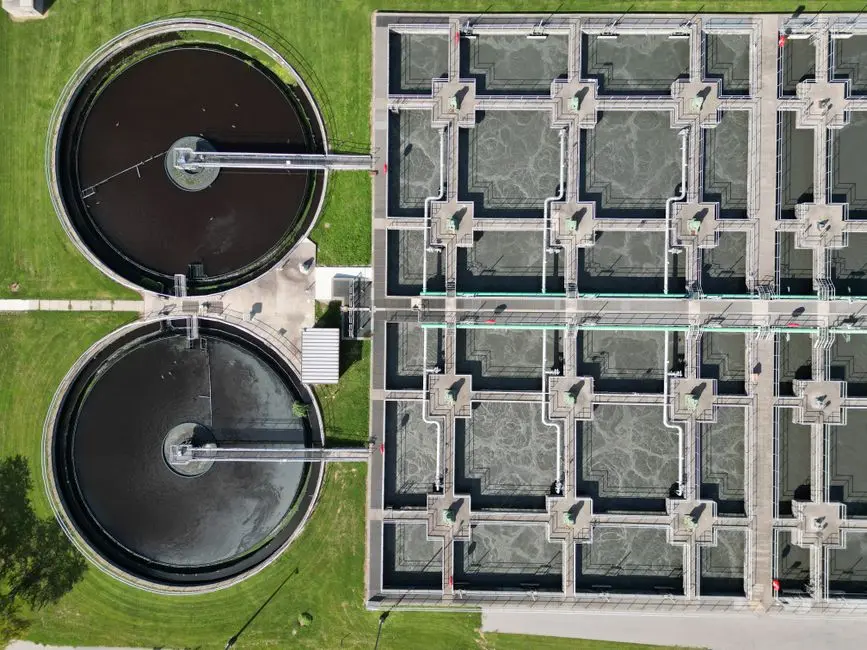
A compliant treatment train follows the contaminants: source control and segregation, equalization, oil or FOG removal, DAF or clarification, chemical dosing and mixing, filtration or polishing where required, monitoring, and controlled discharge.
| Treatment stage | Primary purpose | Selection condition | Key operating evidence |
|---|---|---|---|
| Source control and segregation | Prevent incompatible or concentrated wastes from destabilizing treatment | Apply when streams differ materially in chemistry, flow, temperature, or gas content | Stream identity, batch disposition, diversion and upset records |
| Equalization | Moderate flow and loading peaks before treatment | Use where batch discharges or variable production create peaks | Level, flow trend, treatment response |
| Oil-water separation, DAF, or clarification | Remove free oil, FOG, suspended solids, and colloidal material | Assign DAF where the waste contains suspended solids, FOG, oil and grease, or colloidal matter | Oil and grease indicators, solids capture, sludge withdrawal, residual chemistry |
| Chemical dosing and mixing | Adjust pH, support coagulation or flocculation, and enable defined precipitation | Select chemicals only after feed characterization and jar or pilot testing | Feed pH, dose rate, mixing condition, residual chemistry |
| Filtration or polishing | Remove remaining solids or dissolved contaminants where required | Use where solids removal or permit evidence requires another barrier | Suspended solids, pressure or flux trend, backwash or cleaning record |
| Controlled discharge | Prevent off-spec water from leaving the permitted discharge point | Provide diversion or interlocks for upset, bypass, and standby conditions | Final-sample result, authorization, discharge log |
For streams containing suspended solids, FOG, oil and grease, or colloidal matter, the DAF system for metalworking pretreatment is a relevant catalog reference. HydropureWater publishes a capacity range of 4–300 m³/h across 13 standard models; that range does not establish the required model for a Menomonee Falls plant.
Use an automatic chemical dosing system for pH and precipitation control when the waste profile establishes a repeatable chemical requirement. ProChem identifies chemical treatment as supporting precipitation and neutralization, while oil-water separation and filtration remove free oil and suspended solids. Feed chemistry, dose rate, mixing, and residual chemistry must be monitored as one control loop.
Filtration can protect downstream treatment or satisfy a solids-removal requirement. The published ultrafiltration configuration uses 0.03 micron PVDF membranes, accepts inlet turbidity up to 300 ppm, and provides automatic backwash and air scour. Ion exchange and membrane filtration may also be appropriate for complex streams, as ProChem notes, but characterization and pilot testing should determine their role. The ultrafiltration membrane selection and sizing guide provides additional design criteria.
Include bypass, standby, and upset-control provisions so an off-spec batch cannot destabilize the full train. The operating program should define when a batch is isolated, when flow stops, who authorizes discharge, and what evidence is retained.
Match Equipment Capacity and Controls to Changing Operations
Equipment should be selected against measured flow, contaminant loading, operating variability, and downstream integration—not nominal capacity alone.
Size the primary clarification or flotation duty against the most demanding measured flow and contaminant loading, then verify how equalization moderates batch peaks. HydropureWater’s published DAF range is 4–300 m³/h across 13 standard models. Treat this as a catalog reference rather than an automatic plant recommendation; site data and treatment objectives must support the selection.
| Procurement criterion | Evidence or deliverable to request | Decision question |
|---|---|---|
| Hydraulic and contaminant duty | Representative flow and loading data, batch schedule, equalization analysis | Does the selected unit handle the measured demand and operating sequence? |
| Controls | PLC-controlled chemical metering description, control narrative, alarms and interlocks | Can operators control pH and treatment chemistry repeatably? |
| Materials | Corrosion-resistance justification for the wastewater environment | Which metallurgy is appropriate for durability and maintenance access? |
| Integration | Footprint, utilities, sludge handling, bypass, standby and upset-control provisions | Will the unit work with the rest of the site, not only in isolation? |
| Acceptance | Factory testing, documentation, spare-parts availability, operator training | What evidence establishes readiness for site acceptance? |
GetChemReady identifies stainless steel, carbon steel, aluminum, and nickel alloys as common materials for wastewater applications and emphasizes corrosion resistance, durability, longevity, and versatility. Select materials against the actual chemistry rather than copying a generic material list.
The automatic dosing system uses PLC-controlled metering for coagulants, flocculants, pH adjusters, and specialty chemicals, as described by HydropureWater. The 2025 automatic dosing pump engineering comparison provides a separate reference for evaluating metering control and operating costs.
Catalog performance is not a permit guarantee. Final acceptance depends on site wastewater, installed performance, and the receiving authority’s requirements, so include those conditions explicitly in procurement and commissioning documents.
Treat and Dispose of Process Sludge Deliberately

Sludge is a treatment-system output that must be managed as a designed stream, not left as an unresolved disposal problem.
Chemical precipitation, coagulation, flocculation, flotation, and filtration can create sludge containing the contaminants removed from the water. Its handling should therefore be based on the captured metals, oil and grease, organics, and chemicals; storage method; transport arrangements; and the receiving waste handler’s requirements.
HydropureWater publishes plate-and-frame filter presses with filtration areas from 1 m² to 500 m² and manual, hydraulic, or fully automatic PLC-controlled operation. A plate and frame filter press for pretreatment sludge is therefore an available dewatering option whose final selection depends on sludge volume, solids characteristics, filtrate quality, and operating labor.
Evaluate sludge conditioning, storage, transport, and final disposal as linked steps. If filtrate is returned to the treatment process, confirm that its composition will not impair equalization, upset precipitation, or downstream filtration. The receiving waste handler should provide the waste profile, acceptance criteria, documentation, and chain-of-custody requirements before the system is released for operation.
Verify Menomonee Falls Sewer Discharge Compliance
Compliance verification begins with the site’s actual industrial user pretreatment permit and written requirements from the receiving sewer authority; where local rules or discharge characteristics are uncertain, obtain current written confirmation before commissioning.
| Verification element | Operating or submittal requirement | Record that demonstrates control |
|---|---|---|
| Control-point checks | Monitor flow, pH, oil and grease indicators, suspended solids, selected metal parameters, and chemistry needed for precipitation or flocculation | Calibration status, reading, operating limit, corrective action, and operator sign-off |
| Process readings versus compliance samples | Keep routine treatment-process readings separate from samples collected at the authority-defined compliance point | Sample location, flow condition, method, date and time, personnel, laboratory result |
| Trend review | Use continuous monitoring to identify changing loads and adjust treatment chemistry | Trend review, chemical adjustment, escalation and upset records |
| Upset and discharge control | Define isolation, diversion, authorization, and reporting procedures for off-spec conditions | Hold or diversion record, investigation, result, and disposition |
| Permit reporting | Follow the authority’s monitoring frequency, sampling method, and reporting format | Submitted report and correspondence with the receiving authority |
ProChem supports continuous monitoring as the basis for optimizing treatment and identifying changing waste loads. That operating evidence should drive chemical adjustments, process reviews, and early intervention. It does not replace the permit’s formal sampling method or compliance sample.
The ScrapMonster local directory identifies a diverse fabricated-metals manufacturing base in Menomonee Falls, including metal fabricators and finishers. It is evidence of local industrial activity only; it does not establish any plant’s permit status, discharge characteristics, or treatment obligations. The local pretreatment verification framework for metals plants illustrates how site-specific records should support authority review.
No Menomonee Falls-specific numeric pretreatment limit is established by the supplied research. The plant must therefore use the current authority requirements and its approved permit as the compliance criteria, with a treatment-verification guide for metal-removal applications providing supporting technical context rather than local limits.
Frequently Asked Questions
How should equipment capacity be selected for a fabricated-metals plant near Menomonee Falls?
Size from measured hydraulic and contaminant-loading data, including batch peaks and the role of equalization. HydropureWater’s DAF range of 4–300 m³/h across 13 standard models is a catalog reference, not a plant recommendation. Request representative flow, loading, and batch data, plus pilot results where the waste is variable or mixed, before selecting a model.
What should a buyer check when selecting a pretreatment supplier?
Require evidence based on the site wastewater profile, pilot performance, treatment controls, metallurgy, sludge integration, factory testing, documentation, spare-parts availability, and operator training. Ask how the supplier will define acceptance and what performance data will be used. A technology demonstration at an unrelated waste stream is not enough.
Can treatment equipment selection alone guarantee sewer compliance?
No. Equipment selection addresses physical treatment, but legal compliance depends on the applicable industrial user pretreatment permit, receiving sewer authority requirements, monitoring, sampling, reporting, and operating records. Begin authority coordination during design—not after installation—to identify prohibited discharges, local limits, and required monitoring methods.
When is automatic chemical dosing appropriate for metalworking wastewater?
Automatic dosing is appropriate when the waste profile supports a defined, repeatable chemistry for pH control, coagulation, flocculation, or precipitation. HydropureWater’s automatic dosing system provides PLC-controlled metering for coagulants, flocculants, pH adjusters, and specialty chemicals. Establish the required chemicals and residual chemistry through characterization and treatability testing before setting the control logic.
Related Equipment
- DAF system for metalworking pretreatment — specifications, capacity range, and technical data