
Choose DAF or a Full ETP Using the Wastewater Profile
A factory in Doha generally needs DAF when its wastewater contains oil and grease, suspended solids, or colloidal material that should be removed before biological treatment; it needs a full ETP when biological treatment, tertiary polishing, controlled discharge, or reuse is also required. DAF is a physico-chemical separation process: pressurized water releases fine bubbles, the bubbles attach to contaminants, and a skimmer removes the resulting froth. The correct scope depends on representative wastewater tests, peak flow, reuse objectives, available space, and Qatar permit conditions—not the factory sector alone.
For Doha factory wastewater, the first question is what the equipment must remove, not whether it is called a dissolved air flotation system or an industrial effluent treatment plant Qatar engineers describe as a complete package. A dissolved air flotation system is usually the front end when fats, oils and grease (FOG), suspended solids, oil, or colloidal material would overload downstream biological treatment. Alantech identifies suspended solids, oils, grease, and particulate matter as DAF targets and describes the process as fine-bubble attachment followed by skimming.
A complete ETP becomes appropriate when the wastewater needs biological treatment, tertiary polishing, controlled discharge, or reuse. In the refinery sequence described by OpenBlueprint on Quora, physical separation precedes DAF; coagulant addition breaks emulsions, DAF removes remaining emulsified oil and fine solids, and those pollutants are kept away from biological reactors where they could interfere with oxygen transfer and the microbial population.
| Wastewater condition | First equipment decision | Reason |
|---|---|---|
| FOG, free oil, suspended solids, or colloidal material | DAF as pretreatment | Removes floatable and flocculated contaminants before further treatment |
| Biodegradable dissolved organic load | DAF followed by biological treatment | DAF protects the biological stage; it does not replace it |
| Reuse, controlled discharge, or specified final water quality | Complete ETP with tertiary review | Additional biological and polishing stages may be required |
Use the 2026 DAF unit engineering specs and decision framework to structure that comparison before asking suppliers to price equipment.
Build a Representative Wastewater Profile Before Requesting Equipment
Representative sampling determines whether a DAF-only proposal is credible or whether the buyer needs a broader treatment train. Sample normal production, peak production, cleaning, batch-dumping, and shutdown periods; a single spot sample can conceal the flow and concentration peaks that determine equipment sizing.
The minimum dataset for supplier comparison is flow, pH, suspended solids, oil and grease, COD, and BOD. Record the sampling date, production condition, flow rate, and whether each result is a grab or composite sample. These data distinguish a physically separable stream from one with substantial biodegradable organic load. They also expose pH swings and batch discharges that may require equalisation and controlled chemical dosing.
Alantech, in its commercial DAF guidance, specifically identifies DAF flexibility for variations in influent flow rate and contaminant concentration. That flexibility still requires a defined operating envelope: the supplier should state which flow and loading conditions the duty calculation covers. Use the guide to choosing an industrial DAF manufacturer as a checklist for seeing whether the proposal addresses variable loading rather than only average daily flow.
| Information to provide | Procurement purpose | Decision affected |
|---|---|---|
| Representative flow record and operating periods | Define peak hydraulic demand and batch-dump conditions | DAF capacity and equalisation |
| pH, suspended solids, oil and grease, COD, and BOD | Characterise separation and biodegradability | DAF only or complete ETP |
| Discharge or reuse destination | Define the required final treatment level | Biological and tertiary stages |
| Plot area, utilities, staffing, and electrical constraints | Check physical and operating feasibility | Layout, controls, O&M |
Also define whether clarified water will enter a sewer, return to factory processes, or support a more demanding reuse application. Each route changes the required treatment and documentation.
UAE figures are regional context, not Qatar rules. Spans reports UAE sewer-discharge examples of BOD below 30 mg/L, COD below 250 mg/L, TSS below 100 mg/L, and oil and grease below 10 mg/L. A Doha buyer must obtain the applicable Qatar environmental, sewer, and reuse conditions from the relevant authority; UAE values should not be substituted for them.
How DAF Fits Within the Factory Treatment Train
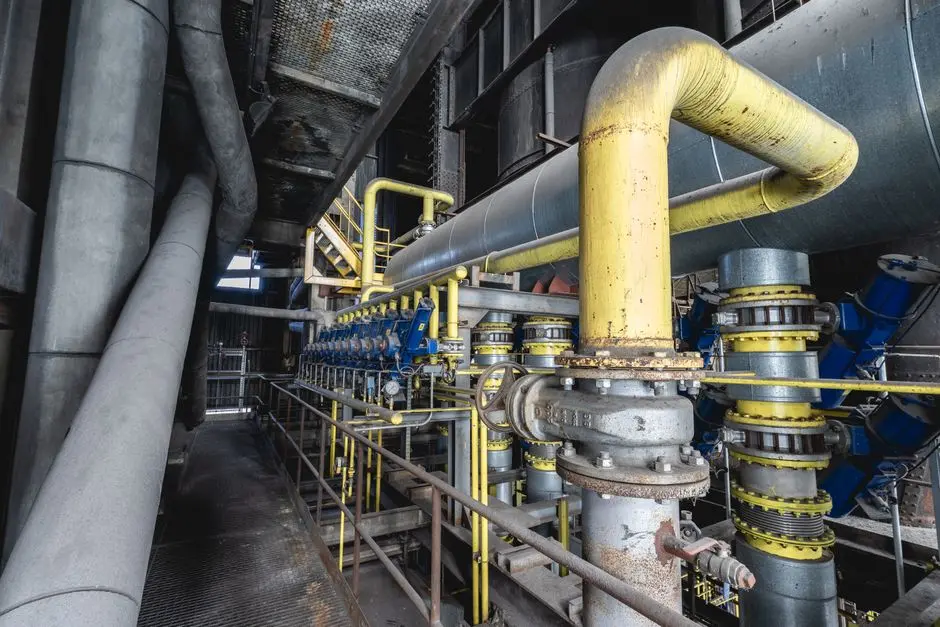
DAF belongs at the physico-chemical front end of a treatment train, not necessarily at the end of it. A portion of clarified effluent is pressurised and saturated with air, then recycled to the flotation tank. As the pressure falls, fine bubbles form, attach to particles, and lift them into a surface froth that is continuously removed. This arrangement is described by Transcend Cleantec and OpenBlueprint on Quora.
Chemical conditioning precedes flotation when the wastewater requires it. Transcend Cleantec states that DAF feed is often—but not always—dosed with a suitable coagulant, flocculant, or both. Coagulation destabilises colloidal material, while flocculation can form larger clusters that float more effectively. Where pH correction is also required, it belongs in the primary physico-chemical stage; Quora’s ETP sequence identifies pH control and flocculation as primary-treatment functions.
Equalisation should precede variable-load treatment. Spans identifies equalisation, DAF, biological treatment, and tertiary polishing as a relevant sequence for food-processing and FMCG wastewater characterised by variable BOD, FOG, and pH swings. Biological treatment then removes dissolved and biodegradable organic load under aerobic or anaerobic conditions. Tertiary treatment supplies further polishing for the intended discharge or reuse route.
- Collect and equalise variable factory wastewater.
- Correct pH and condition contaminants where required.
- Remove FOG, oil, suspended solids, and flocculated material by DAF.
- Apply biological treatment for biodegradable dissolved load.
- Add tertiary treatment where discharge or reuse quality requires further polishing.
For biological systems, the Gulf climate needs a project-specific review. Spans reports UAE ambient temperatures of 25–48°C and states that aeration design, dissolved-oxygen management, and membrane fouling control require particular attention in biological treatment. Use those reported UAE conditions only as regional context; confirm the actual Doha design conditions separately.
When chemical conditioning is required, define an automatic chemical dosing system for DAF pretreatment and verify its tank, metering, control, and safety scope against the selected process.
Match the Equipment to the Factory's Main Wastewater Risks
DAF suitability depends on the dominant contaminant and the required end use, not the factory label. For food processing, beverage, dairy, and catering wastewater, FOG and suspended solids justify evaluating DAF upstream of biological treatment. Transcend Cleantec lists food and beverage processing and dairy among its DAF applications and identifies fats, oils, greases, and suspended solids as separation targets.
For textile, chemical, paper, pulp, metalworking, and petrochemical wastewater, test the actual chemical composition before selecting general-purpose equipment. A process stream may contain contaminants that are not effectively removed by flotation, may react with proposed coagulants, or may require specialised biological and tertiary processes. The refinery sequence in OpenBlueprint’s Quora answer illustrates the special case: free oil may first be removed by gravity, while emulsified oil and fine solids require coagulation and DAF before biological treatment.
For oily wastewater, emulsion breaking and chemical conditioning must be considered before flotation. The Quora refinery answer describes DAF removing remaining emulsified oils after coagulant addition. This is not a reason to add chemical dosing automatically; it is a reason to test whether the oil is free, emulsified, or tightly stabilised and to identify the conditioning chemistry.
DAF can remove floatable and flocculated pollutants, but it does not by itself supply the biological and tertiary stages that may be needed for discharge or reuse. A clarified DAF effluent should not be presented as finished industrial wastewater reuse water unless its intended use and required quality have been established.
| Factory wastewater context | DAF consideration | Additional review |
|---|---|---|
| Food, beverage, dairy, or catering | Evaluate for FOG and suspended-solids separation | Biological load, peak variation, reuse or discharge target |
| Oily or emulsified process water | Assess emulsion breaking, conditioning, and oil properties | Upstream free-oil separation and downstream biological protection |
| Textile, chemical, paper, pulp, metalworking, or petrochemical | Do not select from the sector name alone | Process-specific contaminant testing and treatment compatibility |
Catalog ranges are only a market screen. HydropureWater publishes 13 DAF models from 4–300 m³/h, while Spans lists a broader commercial DAF range of 5–500+ m³/hr. Neither establishes suitability for a Doha site. Final sizing needs tested solids, FOG, oil, and loading data plus peak flow. See the DAF oil-water separation guide and the DAF versus API separator comparison before accepting a generic proposal.
Compare DAF and ETP Scope Against Project Constraints
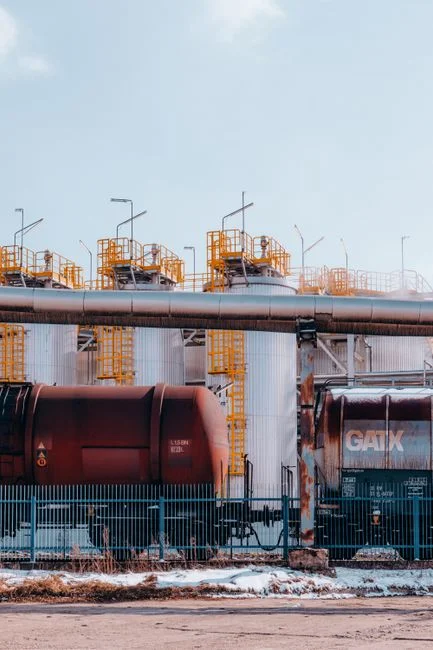
DAF optimises solids and floatable-contaminant separation; a complete ETP integrates treatment levels for broader effluent management. The practical comparison is therefore between a focused pretreatment skid and a broader plant scope, not simply between smaller and larger equipment.
| Procurement issue | DAF scope | Complete ETP scope |
|---|---|---|
| Primary objective | Separate suspended solids, FOG, oil, and floatable or flocculated material | Integrate physico-chemical, biological, clarification, and where required tertiary stages |
| Footprint | Alantech describes DAF as compact and suitable for limited-space facilities | Packaged ETP can reduce civil work, but biological and tertiary stages still require space |
| Variable loading | Can be adjusted for influent-flow and concentration changes, subject to the selected duty | Variable loads require equalisation and project-specific biological review |
| Reuse | Produces clarified water; suitability depends on the reuse application | Can include biological treatment and tertiary polishing for specified reuse quality |
| Typical package | DAF tank, saturation or recycle, air supply, skimming, sludge collection, controls, and dosing as specified | Broader treatment train with civil interfaces, utilities, controls, commissioning, and downstream sludge handling |
Space is often the first constraint. Alantech describes DAF as compact, while Spans presents packaged ETPs as a way to reduce on-site civil work and commissioning risk. Neither claim removes the need for a site layout: tank access, chemical delivery, sludge removal, lifting routes, utilities, and maintenance access must be drawn.
Flexibility also differs by stage. Alantech identifies DAF’s ability to handle changes in influent flow and contaminant concentration. Biological stages require separate review because biological performance depends on load, temperature, aeration, dissolved oxygen, and fouling conditions. Spans treats these as project-specific design issues, particularly under elevated regional temperatures.
Reuse must be defined by application. DAF clarified effluent is not interchangeable with biologically treated or tertiary-polished water. For cooling, boiler feed, irrigation, washing, or toilet flushing, identify the receiving process and its water-quality requirement before selecting the treatment train.
Spans identifies food processing, petrochemical, and industrial zones as relevant Qatar project sectors and offers turnkey ETP, STP, and ZLD delivery. That is market context, not a settled scope. The factory’s wastewater profile and Qatar permit conditions must govern the purchase. For cost structure, use the DAF and oil-water separator cost breakdown alongside the integrated wastewater treatment comparison.
Turn the Selection into a Supplier-Ready Purchase Package
A comparable quotation should define the process, duty, interfaces, and performance evidence—not just a unit price. A buyer needs a procurement package that lets suppliers size and price the same treatment scope.
- Request a process flow diagram, equipment list, design duty, materials of construction, control philosophy, utility demand, and battery limits.
- Provide representative wastewater results and ask each supplier to demonstrate sizing against peak flow and tested contaminant loading, not average daily flow alone.
- Confirm whether DAF recycle, saturation, compressed air, skimming, sludge collection, instrumentation, controls, and chemical dosing are included.
- State the operating mode for startup, unstable influent, chemical interruption, sludge removal, maintenance, spare parts, and operator training.
- Define the discharge or reuse route and require written confirmation of the applicable Qatar environmental, sewer, and reuse conditions.
- Require commissioning responsibilities, site acceptance tests, guarantees, operating documentation, and local support arrangements.
For a DAF bid, specifically confirm the selected flow basis, flotation loading basis, recycle arrangement, pressure and air requirements, materials exposed to wastewater, skimming and sludge-removal method, control interlocks, and chemical-dosing concept. These details expose omissions that a nominal capacity statement can conceal.
For a complete ETP, require the equalisation, primary, biological, clarification, tertiary, sludge, disinfection, and reuse stages to be identified individually or explicitly excluded. The battery limit should also define incoming power, compressed air, water, drainage, chemical supply, effluent sampling, and who owns the connection to the sewer or reuse network.
Use the industrial DAF maintenance protocol to define routine inspections, sludge handling, conditioning checks, and operator handover. Use the DAF decision framework to challenge equipment selection and omitted ancillaries.
Finally, do not allow UAE discharge limits or generic compliance claims to substitute for a permit review. The package should identify the authority, permit route, receiving sewer or reuse specification, and required monitoring. Without those inputs, neither a DAF skid nor a complete ETP can be treated as proven compliant for the Doha site.
Frequently Asked Questions
Does a Doha factory need DAF alone, a complete ETP, or both?
Use FOG, suspended solids, biodegradability, and the required final water quality. Choose DAF alone only when its clarified effluent meets the confirmed discharge or reuse requirement. Use DAF plus biological and tertiary treatment when biodegradable load or polishing remains. Use a full ETP where the treatment scope must integrate these stages.
What flow rate determines the size of a dissolved air flotation system?
Use peak hydraulic flow and the associated contaminant loading, not average daily flow alone. HydropureWater’s published range of 4–300 m³/h is a catalogue range, not an automatic selection. Require the supplier to identify its design flow, flow variability allowance, solids or FOG loading basis, and maximum operating condition.
How should buyers compare DAF and ETP suppliers?
Request tested sizing calculations, included ancillaries, control philosophy, materials of construction, commissioning support, O&M documentation, spare-parts arrangements, and local project references. Also require a clear battery limit. The supplier should show how its proposal handles unstable influent, chemical availability, sludge removal, and the selected Qatar compliance route.
What affects the total cost of a DAF or ETP package?
Ask for separate pricing for equipment scale, materials, chemical conditioning, civil work, biological or tertiary stages, sludge handling, utilities, installation, commissioning, and maintenance. A DAF-only quote and a complete-ETP quote are not directly comparable unless their battery limits and performance duties match. No defensible project price can be stated without representative wastewater data and the required flow and treatment scope.
Can UAE discharge standards be used for a factory in Qatar?
Use UAE information only as regional context. Obtain Qatar-specific environmental, sewer-discharge, and reuse requirements from the relevant authority and confirm them for the factory’s location and operating licence. A compliant design must reflect the confirmed Doha conditions rather than substituted UAE figures.