What Is a DAF System and How Does It Work?
A DAF system in Argentina delivers over 90% removal of suspended solids, oils, and COD from industrial wastewater, making it ideal for food processing, tanneries, and petrochemical plants. These systems use micro-bubble flotation to produce clarified effluent and concentrated sludge, meeting local discharge standards efficiently. Dissolved Air Flotation (DAF) technology separates suspended solids, fats, oils, and grease (FOG) by introducing microscopic air bubbles that attach to contaminants, reducing their effective density and causing them to float to the surface for mechanical removal.
The operational sequence of a high-efficiency DAF system follows a precise five-step mechanical and chemical process. First, coagulation destabilizes colloidal particles, followed by flocculation, where polymers aggregate these particles into larger "flocs." The core of the technology lies in the pressurized air dissolution phase, where a portion of clarified effluent is saturated with air at 4–6 bar. When this saturated water is released into the flotation tank at atmospheric pressure, it generates a "white water" effect of micro-bubbles ranging from 20 to 50 microns in diameter. These bubbles collide with and adhere to the flocs, leading to flotation. Finally, a skimming mechanism removes the floating sludge layer from the surface, while the clarified water is discharged from the bottom of the unit.
Engineers favor DAF systems over traditional sedimentation clarifiers for industrial streams containing low-density solids or emulsified oils that exhibit poor settling velocities. In Argentine industrial contexts, where wastewater often contains high concentrations of organic fats or light fibrous materials, DAF provides a more compact and faster separation solution. The resulting effluent typically requires significantly less downstream treatment, and the concentrated sludge (often 3% to 5% solids) reduces the costs associated with sludge dewatering and disposal.
Why Argentina’s Industries Need DAF Wastewater Treatment
Argentina’s industrial sector relies heavily on the processing of raw agricultural and chemical materials, generating high-strength wastewater that exceeds municipal sewer limits without robust pre-treatment. The food and beverage sector—specifically meatpacking (frigoríficos), dairy processing, and wineries—produces effluent characterized by high concentrations of FOG and Biological Oxygen Demand (BOD). For these facilities, a high-efficiency DAF system for Argentine industrial plants is a critical component for removing over 95% of fats before biological treatment, preventing the clogging of aerobic reactors and ensuring compliance with local standards.
In the leather-producing hubs of Buenos Aires and Córdoba, tanneries generate complex waste streams laden with chromium and high total suspended solids (TSS). DAF systems serve as a primary physical-chemical barrier, removing the bulk of the solids load and precipitated metals, which protects sensitive downstream biological systems from toxic shock. Similarly, petrochemical complexes in Bahía Blanca and Neuquén utilize DAF units as primary oil-water separators. These systems achieve greater than 90% free oil removal, outperforming standard API separators by capturing emulsified droplets that would otherwise remain in suspension (HydropureWater field data, 2025).
The regulatory environment in Argentina mandates the adoption of advanced clarification technology. National Law 25.675 (Ley General del Ambiente) and provincial regulations, such as Decree 530/04 in the Province of Buenos Aires, set strict limits on discharge parameters. For many industrial zones, facilities must meet TSS levels below 30 mg/L and COD levels below 100 mg/L for river discharge. Implementing DAF technology allows plants to achieve these benchmarks consistently, even when influent concentrations fluctuate due to seasonal production peaks in the harvest or slaughter cycles.
Key Performance Metrics for DAF Systems in Industrial Applications
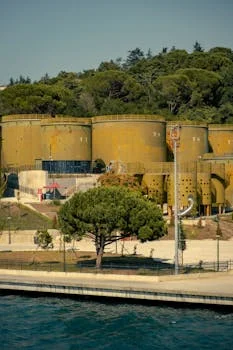
Performance data from active DAF installations indicates that the technology consistently achieves 92% to 97% removal of total suspended solids when paired with optimized chemical dosing. This efficiency is paramount for Argentine processors who face rising municipal surcharges for high-strength effluent. By reducing the organic load at the primary stage, DAF units lower the energy requirements of subsequent aerobic biological stages, as there is less carbonaceous matter to oxidize.
Hydraulic loading rates for DAF systems range from 5 to 20 m³/m²/h, which is significantly higher than the 1–2 m³/m²/h typical of conventional gravity clarifiers. This allows for a much smaller physical footprint, making DAF ideal for existing plants in dense industrial corridors like the Matanza-Riachuelo basin where space for expansion is limited. The air-to-solids (A/S) ratio, typically maintained between 0.01 and 0.05, ensures that even heavy flocs in meatpacking waste can be lifted to the surface for removal.
| Contaminant Type | Removal Efficiency (%) | Typical Influent (mg/L) | Typical Effluent (mg/L) |
|---|---|---|---|
| Total Suspended Solids (TSS) | 92% – 98% | 500 – 3,000 | < 50 |
| Fats, Oils, and Grease (FOG) | 90% – 95% | 200 – 1,500 | < 20 |
| Chemical Oxygen Demand (COD) | 70% – 90% | 1,000 – 5,000 | 300 – 800* |
| Total Phosphorus (TP) | 75% – 85% | 10 – 50 | 2 – 8 |
*Note: COD removal in DAF systems is primarily linked to the insoluble fraction of the organic load. Soluble COD requires secondary biological treatment.
Technical Specifications of High-Performance DAF Units
High-performance DAF units are engineered to handle flow capacities ranging from 4 m³/h to 300 m³/h, accommodating both small-scale artisanal dairies and massive industrial slaughterhouses. The residence time within the reaction and flotation zones is typically calibrated between 15 and 30 minutes. This duration is sufficient for the microscopic bubbles to achieve full contact with the flocculated particles without allowing the flocs to shear or break apart under hydraulic turbulence.
The materials of construction are a vital consideration for procurement officers in Argentina, where high-chloride water or acidic cleaning agents in food plants can cause rapid corrosion. Quality DAF systems utilize 304 or 316 stainless steel for all contact parts, ensuring a service life exceeding 15–20 years. Integration of PLC-based control systems allows for the automation of the saturation pump, air injection, and skimming frequency, which reduces manual labor and ensures the system reacts in real-time to changes in influent turbidity. For more context on international standards, engineers can review real-world DAF performance data from industrial case studies across different regulatory frameworks.
| Parameter | Specification Range | Application Relevance |
|---|---|---|
| Flow Capacity | 4 – 300 m³/h | Scalable for small to large plants |
| Bubble Size | 20 – 50 Microns | Optimizes surface area for adhesion |
| Recycle Ratio | 15% – 30% | Balances energy use vs. air volume |
| Saturation Pressure | 0.4 – 0.6 MPa | Ensures maximum air dissolution |
| Power Consumption | 1.5 – 22.0 kW | Varies by flow and pump head |
Integration with Other Treatment Processes in Argentine Facilities
DAF systems rarely operate in isolation; they are most effective when integrated into a comprehensive treatment train. In many Argentine facilities, the DAF unit serves as the primary treatment stage immediately following fine screening. By removing the bulk of the solids and FOG, the DAF protects downstream MBR integrated wastewater treatment systems or conventional activated sludge basins from "blinding" or foaming issues. This integration is essential for maintaining the health of the biological biomass, which can be easily smothered by excessive grease.
In the winemaking regions of Mendoza and San Juan, DAF units are increasingly used as a pre-treatment step before anaerobic digesters. By reducing the suspended solids by up to 90%, the DAF prevents the accumulation of inert sludge in the digester, thereby improving biogas yield and maintaining digester volume. When paired with an automatic chemical dosing system, the DAF can effectively remove phosphorus and colloidal matter, which is critical for meeting nutrient discharge limits in sensitive watersheds.
Water scarcity in regions like Mendoza has also driven interest in water reuse. Post-DAF effluent, once passed through multi-media or membrane filtration, can often be repurposed for non-potable applications such as industrial cooling or landscape irrigation. This circular approach ensures compliance and provides a hedge against water price volatility and drought-related supply restrictions. For broader perspectives on regional implementation, see industrial wastewater solutions for Latin American manufacturing.
Frequently Asked Questions
What is the efficiency of DAF COD removal?
DAF systems typically achieve 70–90% COD reduction. This efficiency is highly dependent on the ratio of particulate COD to soluble COD; while DAF is excellent at removing the particulate fraction, soluble organic matter generally requires subsequent biological treatment.
Can DAF systems handle variable flow in seasonal industries?
Yes. Modern DAF units are modular and equipped with variable frequency drives (VFDs) on pumps and automated skimmers. This allows the system to adjust to the fluctuating flow rates common in Argentina’s harvest-based food processing sectors without losing separation efficiency.
How much space does a DAF system require compared to clarifiers?
DAF systems require approximately 50–70% less surface area than conventional gravity clarifiers. This footprint efficiency is due to the high surface loading rates (up to 20 m³/m²/h) made possible by the rapid rising velocity of air-attached flocs.
Is DAF suitable for municipal wastewater in Argentine cities?
DAF is highly effective for municipal applications involving high-fat sewage or primary clarification in dense urban zones. It is also used for thickening waste activated sludge (WAS) to reduce the volume of sludge handled by digesters or dewatering equipment.
What maintenance does a DAF system require?
Standard maintenance involves monthly inspections of the air saturation tank, weekly cleaning of the pressure release nozzles to prevent clogging, and quarterly checks of the mechanical skimmer and pumps. For a detailed maintenance schedule, refer to this comprehensive DAF maintenance protocols for long-term uptime.