Why Rural Sewage Treatment Needs a Vietnam-Specific Design
Rural sewage treatment in Vietnam requires decentralized wastewater solutions adapted to local settlement patterns, receiving waters and available operations. The World Bank reports that 90 percent of households use septic tanks, yet only 4 percent of septage is treated, while much sewer-connected wastewater also reaches drainage systems without adequate treatment. For dispersed communities, resorts and small townships, an integrated A/O package plant or MBR may be more suitable than a conventional centralized sewer network. Final selection requires verified flow, wastewater characteristics, groundwater conditions, land availability, power reliability, sludge handling, discharge requirements and a funded maintenance plan.
The treatment gap is measurable rather than hypothetical. The World Bank’s Vietnam Urban Wastewater Review reports that 60 percent of households discharge wastewater through public sewerage systems, but only 10 percent of that wastewater is treated. It also reports that 90 percent of households use septic tanks while only 4 percent of the septage is treated. These figures describe different collection pathways: neither septic storage nor discharge to public drainage should be counted as treatment.
That distinction changes the procurement basis. A septic-tank installation may only store and empty waste, while a public drainage connection may convey untreated wastewater. A project therefore needs to establish whether it is buying collection, biological treatment, solids separation, disinfection, reuse preparation or a complete treatment train. The [domestic sewage treatment equipment selection guide](/blog/13625-domestic-sewage-treatment-in-medan-2026-equipment-selection-compliance.html) provides a useful comparison framework, but Vietnam’s receiving water and approval conditions remain site-specific.
Environmental exposure also matters. The Scientific World Journal study on the Vu Gia Thu Bon river basin states that wastewater in many rural Vietnamese cities and areas is discharged without treatment, contributing greenhouse-gas emissions, particularly methane. The project objective should therefore connect public-health risk reduction and receiving-water protection to responsible sludge handling; equipment installation alone does not establish either outcome.
Build the Design Basis Before Selecting Equipment
Measured and documented inputs must be established before asking a supplier to size a packaged sewage treatment plant for a Vietnam project. Build this basis from site-specific data rather than inferring a universal design flow.
- Establish flow. Record average and peak wastewater flow, seasonal variation, population or visitor equivalents, and the unit used for every estimate. Do not combine a seasonal daily average with an instantaneous peak without explaining the design basis.
- Characterize the influent. Test domestic sewage and any hotel, hospital, agricultural or industrial contribution. For healthcare facilities, include pharmaceutical inputs and antibiotic-resistant bacteria in the treatment objectives.
- Map the site. Record soil permeability, groundwater level, flood exposure, available land, underground utilities, vehicle access and whether below-grade installation is practical.
- Define operations. Confirm electrical supply, backup arrangements, operator availability, remote-monitoring needs, spare-parts access and the operating and maintenance budget.
- Confirm the discharge route. Identify the receiving water, seasonal flow, public exposure and applicable environmental approval process. The [Vietnam wastewater compliance due diligence](/blog/13606-what-wastewater-requirements-apply-when-catl-acquires-a-plant-in-vietnam.html) should be reviewed with the relevant authority or project consultant because the research supplies no universal site-specific limit.
- Plan residuals and failure modes. Define the sludge destination, removal route, maintenance access, odor and noise controls, emergency-bypass behavior and the consequences of a power interruption.
| Design input | Evidence the supplier needs | Decision affected |
|---|---|---|
| Wastewater flow | Average, peak and seasonal flow with stated units | Equipment capacity and collection arrangement |
| Influent quality | Sampling results and identified non-domestic contributions | Process selection and pretreatment |
| Site conditions | Groundwater, flood level, soils, utilities and access | Installation form and civil works |
| Power and staffing | Supply reliability, backup concept and available operators | Automation, controls and service model |
| Discharge and reuse | Receiving water, permit conditions and end-use requirements | Treatment scope and acceptance criteria |
| Residuals | Sludge volume, storage, dewatering and final destination | O&M access and lifecycle cost |
Compare A/O Package Plants and MBR for Rural Sites
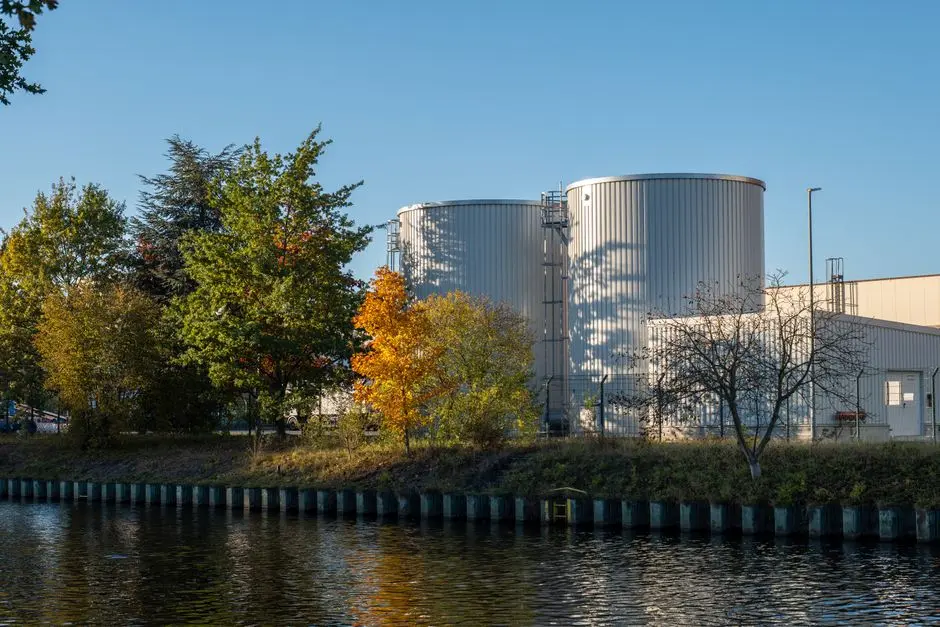
Process architecture and land availability should determine whether an integrated A/O package or membrane bioreactor is more credible. The two product configurations have different capacity bases and installation characteristics, but neither establishes compliance without a site-specific design basis.
| Comparison point | WSZ integrated package | MBR system |
|---|---|---|
| Process configuration | Anoxic/aerobic biological contact oxidation, sedimentation and disinfection in one unit | Activated sludge with submerged PVDF membrane filtration |
| Stated capacity | 1–80 m³/h | 10–2,000 m³/day |
| Separation performance described | Sedimentation within the package | Filtration below 1 μm |
| Installation | Below grade or trailer-mounted for mobile deployment | Footprint comparison is stated as 60 percent smaller than conventional systems |
| Operational proposition | Fully automated; product information states no operator is required | Membrane operation and maintenance must be addressed in the project controls and service plan |
| Selection driver | Dispersed sites requiring a bundled treatment train and simpler installation | Projects prioritizing stringent solids separation or reuse objectives that justify membrane considerations |
HydropureWater’s verified catalog describes the underground integrated sewage treatment plant as a fully automated package handling 1–80 m³/h. It can be buried below grade with landscaping above or mounted on a trailer for mobile deployment. For a dispersed rural settlement, resort or hospital, that bundled arrangement may simplify installation, provided groundwater, excavation, odor control and maintenance access are resolved.
The MBR wastewater treatment system combines activated sludge with submerged PVDF membrane filtration, is stated to filter below 1 μm, and is offered from 10–2,000 m³/day. The same product information claims a 60 percent smaller footprint than conventional systems. Membrane separation can be relevant where reuse quality or solids separation is a project objective, but the buyer must examine membrane cleaning, replacement, instrumentation and specialist support rather than comparing filtration specifications alone.
Use the [packaged sewage treatment plant comparison guide](/blog/13623-what-packaged-sewage-treatment-plant-fits-a-housing-development-in-cebu.html) to structure the comparison, but apply the result locally. The World Bank recommends centralized or decentralized wastewater systems according to local conditions. Scattered settlements may make sewer networks impractical, yet a decentralized plant still needs a collection system, trained responsibility, maintenance access and a compliant residual-management route.
Follow the Treatment Train from Collection to Disposal
Both technologies require a complete chain from collection to final disposal; the packaged unit normally addresses only part of that chain. The WSZ sequence combines anoxic and aerobic biological treatment with solids separation and disinfection. The MBR sequence combines activated-sludge biological treatment with submerged PVDF membrane filtration, after which the project must define any required disinfection and the reuse or discharge route.
Collection quality affects both processes. Rags, plastics and fibrous material may require removal before biological treatment, depending on the influent and equipment design. The GX rotary mechanical bar screen is described by HydropureWater’s catalog as equipment for municipal and industrial wastewater headworks and for protecting downstream biological equipment. Its inclusion should be justified by the incoming material and headworks design, not added by default.
Residual solids must also be followed. The plate and frame filter press provides sludge-dewatering options from 1 m² to 500 m² of filtration area. The appropriate arrangement depends on the generated solids, operating frequency, access and final disposal route.
Energy recovery is a separate strategic decision. The International Plasma Technology Center describes anaerobic-digester biogas and a plasma-assisted configuration combining primary sludge and high-organic local wastes to produce syngas and then power. Its modeled thermal efficiency for the most efficient configuration approaches 85 percent. That figure is a modeled efficiency, not demonstrated operating evidence in Vietnam. Resource recovery should therefore be considered only where dependable feedstock, specialist operation, gas handling and a viable use for the recovered energy exist; it is not a default rural treatment selection.
Plan Installation, Operation and Lifecycle Support
A purchase order should define the interfaces that determine whether the package can be installed, operated and maintained at the site. Require the supplier to provide civil-interface drawings, excavation and installation methods, groundwater and flood assumptions, lifting requirements, access covers, odor controls and connection points before comparing prices.
Request an operating concept that states the automatic control sequence, duty and standby arrangements, power-interruption response, alarm escalation, remote visibility, inspection access, sludge-removal procedure and emergency response. "Automated" does not remove the need for routine inspection, consumables, trained support and a defined response when a critical component fails.
The maintenance package should identify spare parts, recommended service intervals, consumables, training scope, local technician support and critical-failure response time. For mobile or phased deployment, ask whether trailer mounting is appropriate; the WSZ catalog supports mobile deployment, but transport, foundations, influent connection and the operating strategy remain project-specific questions.
Lifecycle affordability involves managing capital, operation and maintenance costs. The World Bank reports generally low cost recovery for wastewater infrastructure and limited utility autonomy to manage operations and system development. These findings support requiring a funded O&M plan rather than treating purchase price as the full cost of a decentralized wastewater treatment Vietnam project.
Related treatment-plant valves, media and ancillary parts should be checked against the proposed flow path and maintenance plan, including who supplies them, how they are stored and how long critical deliveries may take.
Use a Supplier and Compliance Verification Checklist
A credible proposal should connect every performance statement to the proposed influent, flow basis and acceptance criteria. Generic claims that a package can meet "standard requirements" are not sufficient evidence that the unit is appropriate for a particular receiving water or reuse application.
- Request a project-specific process basis, guaranteed flow basis, equipment schedule, electrical and control drawings, O&M manual, training plan and documented performance-test method.
- Require evidence that the proposed unit can treat the expected influent and meet the applicable site-specific discharge and reuse conditions.
- Check local service capability, spare-parts availability, installation contractors, commissioning responsibility, warranty exclusions and long-term consumable costs.
- Confirm environmental approvals, construction requirements and responsibility for sewer or septic collection connections with the relevant Vietnamese authority and project consultant.
- For hospitals and mixed rural sites, assess pharmaceutical inputs, antibiotic-resistant bacteria and treatment objectives rather than assuming ordinary domestic-sewage performance. The International Journal of Environmental Research and Public Health study of a rural hospital 60 km from Hanoi recorded antibiotic and resistant-bacteria issues in hospital effluent.
The study does not justify rejecting package treatment for healthcare sites; it justifies defining a separate risk and monitoring basis. Its title and scope identify antibiotics in rural and urban hospital wastewater before and after treatment and their relationship with antibiotic use, using a one-year rural-hospital study conducted in 2013. The [Vietnam acquisition wastewater requirements due-diligence guide](/blog/13629-danone-vietnam-acquisition-wastewater-requirements-due-diligence-2026.html) provides a broader compliance check, while site-specific approval remains the controlling requirement.
Frequently Asked Questions
How much does a rural sewage treatment plant in Vietnam cost?
The supplied research provides no universal price for a rural package plant. Request a site-specific quotation covering verified flow, treatment objectives, civil works, installation, controls, commissioning, operator training, O&M and sludge disposal. Compare the full funded scope rather than the equipment line alone.
Should a rural project in Vietnam choose WSZ or MBR?
WSZ is the relevant integrated A/O package at 1–80 m³/h, while MBR is stated at 10–2,000 m³/day and offers filtration below 1 μm. The choice depends on verified flow, available land, reuse objectives, installation conditions and local operating support. The WSZ underground package and MBR wastewater treatment system should therefore be tested against the same site basis.