What Wastewater Streams Does a Vinh Data Center Need to Treat?
A data center in Vinh generally needs separate treatment strategies for cooling-tower blowdown, once-through cooling thermal discharge, construction fill-and-flush water, domestic sewage, and any liquid-cooling wastewater. Blowdown requires control of concentrated salts, minerals, biocides, corrosion inhibitors, and possible metals before sewer discharge, controlled reuse, or another approved destination. Evaporative cooling avoids releasing heated water but consumes water, whereas once-through cooling can create thermal pollution. In coastal Vietnam, source-water salinity and the heat transferred to receiving waters must be assessed. A reliable design should therefore combine source control, treatment matched to each discharge route, continuous monitoring, and confirmation of local sewer, environmental, and water-reuse requirements.
The project boundary should follow five distinct streams and their final destinations rather than a single combined wastewater system. Cooling-tower or evaporative-cooling blowdown is concentrated cooling water; once-through cooling discharge is heated water returned to the environment; construction fill-and-flush water is generated while cleaning closed-loop piping; domestic sewage requires a sanitary route; and liquid-cooling or equipment-room wastewater may contain coolant-specific substances. The data center cooling blowdown treatment guide for Krakow presents the same stream-separation principle for a different location.
Cooling tower blowdown is the controlled purge used to prevent excessive dissolved-solids concentration. As water evaporates, minerals and chemicals remain in the recirculating loop, so blowdown contains concentrated constituents that are not present at the same concentration in makeup water. Commercial Water Lab’s June 2026 analysis identifies possible constituents as salts, minerals, biocides, corrosion inhibitors, and heavy metals; their presence and concentration must be confirmed by chemical monitoring.
| Stream | Primary concern | Destination to define |
|---|---|---|
| Cooling-tower blowdown | Concentrated salts, treatment chemicals, metals, suspended material | Approved sewer route, controlled reuse, or other permitted route |
| Once-through cooling discharge | Elevated temperature and possible chemical carryover | Receiving-water assessment or alternative cooling arrangement |
| Construction fill-and-flush water | Biocide residues, corrosion-control chemicals, suspended material, biological quality | Hold-and-release testing, approved treatment, or authorized disposal |
| Domestic sewage | Sanitary pollutants and hydraulic loading | Separate sanitary sewer or independently approved treatment |
| Liquid-cooling or equipment wastewater | Coolant additives and product-specific contaminants | Documented recovery, treatment, or disposal route |
Do not blend domestic sewage with industrial cooling streams without a defined treatment basis and receiving-system approval. Commercial Water Lab notes that municipal pretreatment programs may cover conventional pollutants while coverage of site-specific cooling additives can vary. Before sizing equipment, obtain the cooling configuration, water source, evaporation rate, expected blowdown volume, chemical program, receiving destination, reuse target, and applicable Vietnamese approvals.
Why Vinh's Coastal Context Changes the Treatment Strategy
Vinh Tan demonstrates that coastal cooling can transfer substantial heat into receiving seawater, but it is a thermal power precedent rather than a direct data-center proxy. The Medwin Publishers study reports that the Vinh Tan plant uses millions of gallons of seawater daily and returns it to the sea at 32–35°C. That evidence establishes the need to evaluate heat discharge; it does not establish the flow or temperature of a proposed Vinh data center.
Two environmental pathways must be kept separate. Evaporative cooling avoids a heated-water discharge but loses most of the withdrawn water through evaporation. Once-through cooling transfers heat to the receiving environment. For a coastal or near-coastal data center, request salinity, conductivity, chloride, temperature, and corrosion data for the intended source water. The supplied research provides no numerical Vinh site-water limits, so no local chemistry threshold should be assumed.
Seawater use or coastal discharge requires a site-specific hydraulic and environmental study. Confirm the receiving-water temperature effect, available dilution, sensitive habitats, and legally permissible route with the competent authority. Source-water chemistry also affects corrosion and scale in cooling equipment. Xylem’s 2026 Vietnam data-center water-solutions page identifies clarification, filtration, softening, and reverse osmosis as feedwater options for controlling scale, corrosion, and biological fouling; the industrial water softener system should therefore be evaluated against measured source water rather than selected by assumption.
Do not treat the Vinh Tan temperatures as a proposed discharge limit or as evidence of receiving-water sensitivity. They are an engineering warning: a coastal discharge route requires both hydraulic and thermal analysis before the cooling configuration is fixed.
Design a Source-Control-First Treatment Train
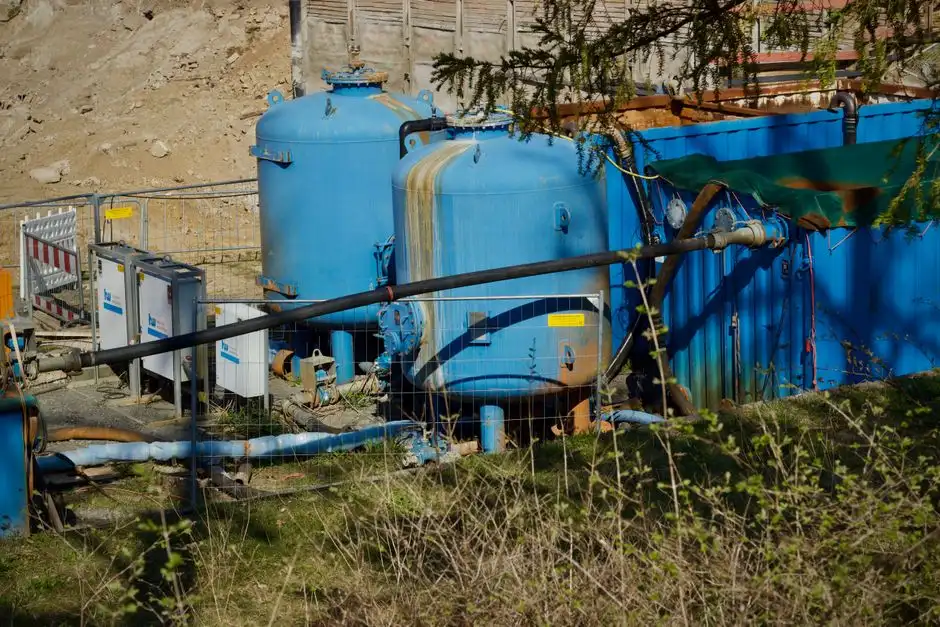
Source control should precede blowdown treatment because cooling-water chemistry determines contaminant loading and equipment condition. Xylem’s 2026 Vietnam guidance connects feedwater conditioning with control of scale, corrosion, and biological fouling. The project team should therefore test the actual Vinh source and define the cooling chemistry before sizing clarification, filtration, softening, reverse osmosis, or chemical dosing. A treatment unit cannot remove dissolved contaminants unless it has been designed for that chemistry.
The design sequence is:
- Characterize the makeup water and cooling-loop operating chemistry.
- Reduce scale, corrosion, and biological fouling at the source.
- Control the chemical program and residual concentrations entering blowdown.
- Segregate drains and identify the permitted destination of each stream.
- Size treatment and reuse equipment from the resulting flow and contaminant profile.
Automatic chemical dosing should operate against operator-controlled targets and be coordinated with the cooling-water specialist. This is one control point in the broader treatment train; the automatic chemical dosing system should not be treated as a substitute for source-water analysis or residual monitoring. Feedwater treatment options such as the reverse-osmosis water purification system must be selected only after salinity, hardness, biological risk, recovery requirements, concentrate disposal, and operating constraints are known.
| Control stage | Design question | Evidence required |
|---|---|---|
| Makeup-water control | Which feedwater contaminants threaten cooling equipment? | Source-water analysis, operating temperature, and cooling configuration |
| Cooling chemistry | Which additives are required, and what residual reaches blowdown? | Chemical program, dosing targets, residual testing, and blowdown chemistry |
| Volume reduction | Can source control reduce the controlled purge? | Evaporation rate, cycles of concentration, makeup flow, and blowdown calculation |
| Reuse assessment | Can treated water serve a defined application? | Reuse target, water-quality requirements, local rules, and treatment performance |
| Concentrate management | Where does rejected salt or treatment residue go? | Site-specific disposal route and receiving-system acceptance |
Segregate clean and contaminated drains so sanitary wastewater, cooling blowdown, wash water, and construction water are not blended automatically. Evaluate reuse in order: reduce blowdown through source control, reuse treated water where the application and local rules permit, and pursue zero-liquid-discharge only where the operating and environmental case supports it. Xylem describes wastewater treatment and reuse as a way to reduce water consumption, increase recycling, and support zero-liquid-discharge objectives; it does not state that zero liquid discharge is required for a Vinh facility.
Match Treatment to the Wastewater Stream and Final Destination
Treatment selection must follow the destination because the same wastewater can require different performance depending on whether it enters a sewer, supports reuse, enters a receiving environment, or is concentrated for disposal. For cooling-tower blowdown, a typical train may include screening and equalization, clarification or flotation, filtration, and chemical control. The final stage depends on confirmed acceptance criteria; generic “data center wastewater” claims are not a substitute for a contaminant profile and discharge basis.
For blowdown containing oil, grease, suspended solids, or colloidal material, assess a DAF system for suspended solids and oil removal. Commercial Water Lab’s June 2026 analysis identifies suspended solids, FOG, oil and grease, and colloidal matter as contaminants relevant to DAF assessment. For bacteria, colloid, or suspended-solid control ahead of reuse or sensitive downstream treatment, assess an ultrafiltration system for low-turbidity wastewater and reuse pretreatment. The supplied system handles 2,000–40,000 L/h, uses 0.03 μm PVDF membranes, accepts up to 300 ppm turbidity, and provides automatic backwash and air scour without chemicals.
Assess MBR only when biological treatment and membrane separation are justified by the wastewater characteristics and reuse objective. The supplied MBR system produces effluent with filtration below 1 μm, occupies 60% less footprint than conventional systems, and is offered from 10 to 2,000 m³/day. These specifications describe the offered system, not a required Vinh capacity or a universal performance guarantee.
| Decision condition | Treatment question | Required basis |
|---|---|---|
| Cooling blowdown to sewer | Will screening, equalization, clarification, flotation, filtration, or chemical control meet sewer criteria? | Measured flow, water chemistry, local pretreatment requirements, and chemical program |
| Cooling blowdown for reuse | Does the selected process meet the receiving application’s water-quality requirement? | Reuse specification, reuse demand, treatment validation, and operational monitoring |
| Once-through cooling discharge | Can heat load be reduced or an alternative cooling system adopted? | Thermal model, receiving-water data, dilution analysis, and authority consultation |
| Construction fill-and-flush water | Can the stream be tested, held, treated, or diverted? | Construction chemical records, biological and chemical testing, and utility acceptance |
| Concentrated residue | Where will the concentrate or sludge be managed? | Volume, composition, destination, transport method, and written acceptance |
Do not direct construction fill-and-flush water to the sewer without characterization and utility acceptance. E&E News reports that Loudoun Water requires developers to test fill-and-flush water and sometimes directs unsuitable wastewater to an appropriate disposal facility. That is a U.S. control example, not a Vietnamese rule.
For once-through cooling, prioritize heat-load reduction or an alternative cooling arrangement when the receiving environment is sensitive. Chemical treatment cannot remove the environmental effect of heat. Every numerical discharge limit or sewer threshold must come from the confirmed Vietnamese permit and receiving utility; the U.S. Clean Water Act examples in the supplied research provide risk-management context only.
Build Monitoring, Sampling, and Operating Safeguards
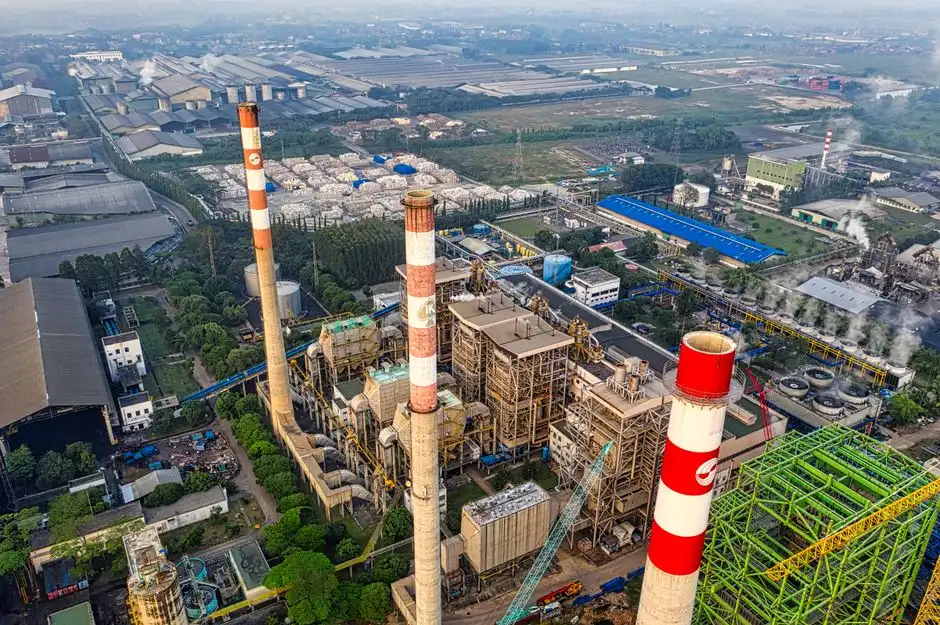
Monitoring must connect the cooling loop, treatment process, and final destination. Conductivity and total dissolved solids are operational indicators of concentration in recirculating cooling water; site-confirmed monitoring should then address pH, suspended solids, metals, residual biocides, corrosion inhibitors, and temperature as applicable. The parameter list must follow the confirmed chemical program and acceptance route rather than include every possible analyte by default.
Automatic divert, hold, or alarm logic should operate when a required parameter exceeds the approved reuse or receiving-system criterion. The trigger values must come from the approved site criteria. Commissioning should test this sequence: normal flow, high conductivity, abnormal chemistry, instrument failure, storage capacity, and diversion to the approved holding route.
| Control point | Recorded information | Operational response |
|---|---|---|
| Cooling loop | Makeup flow, blowdown flow, conductivity, temperature, chemistry dosage | Adjust purge or chemical control within approved operating limits |
| Treatment train | Inlet and outlet quality, differential pressure, chemical use, flow | Confirm performance or isolate the affected unit |
| Final destination | Discharge or reuse flow, diversion status, sample results | Hold or divert when approved criteria are exceeded |
| Construction water | Source of water, chemicals used, fill-and-flush records, test results | Hold and release only after acceptance |
| Reporting | Water balance, alarm history, exceptions, corrective actions | Support compliance evidence, troubleshooting, and water-use reporting |
Sample each stream separately during commissioning and after changes to chemistry, source water, cooling configuration, or treatment equipment. Construction fill-and-flush water should remain a hold-and-release stream until its chemistry and biological quality are accepted, consistent with the utility controls described by E&E News. Asset protection remains part of the design: corrosion and scale control in the cooling loop protects equipment even when the blowdown route is compliant. Suitable monitoring hardware, valves, and filter-media provisions can be incorporated through water-treatment parts, valves, and filter media without changing the stream-by-stream design basis.
Procurement and Compliance Checklist for the Vinh Project
The procurement package should convert an unresolved concept into a measurable supplier proposal. Require a stream-by-stream water and mass balance covering evaporation, blowdown, drainage, reuse, discharge, and construction commissioning. The same package should identify the cooling configuration, source-water assumptions, expected water balance, receiving route, reuse target, and applicable approvals. A bidder should not fill missing data with generic industry assumptions.
Ask each supplier to state the design flow, treated-water target, receiving-route basis, chemical consumption, sludge or concentrate destination, redundancy, controls, monitoring, commissioning tests, and O&M responsibilities. Require proof that proposed equipment matches the identified contaminant profile, with sample data or validation appropriate to the application. Unsupported capacity, “data-center grade,” or generic reuse claims should not pass technical review.
Make the status of permits, sewer acceptance, water source, and receiving environment explicit design-basis items. Any numerical discharge limit must be traceable to the confirmed Vietnamese approval or receiving utility. Xylem’s 2026 lifecycle framing is useful for comparing capital equipment with operation, maintenance, monitoring, compliance reporting, and future scale-up responsibilities. For the Vietnam regulatory pathway, see wastewater requirements for a plant acquisition in Vietnam, while recognizing that a data center requires a project-specific review rather than an inherited permit basis.
Frequently Asked Questions
Should cooling blowdown and domestic sewage be treated together?
Do not combine them without a documented treatment basis and receiving-system approval. Cooling blowdown contains concentrated treatment chemicals and possible metals, while domestic sewage has a sanitary pollutant profile and hydraulic duty. Segregate them for monitoring, treatment selection, and discharge control, then determine whether shared infrastructure is technically and legally justified.
How should a Vinh data-center treatment system be sized?
Size from measured and project-specific inputs, including the cooling configuration, source-water quality, evaporation rate, makeup flow, blowdown flow, chemical program, reuse target, and discharge route. Calculate the water balance before selecting equipment, then verify contaminant loads with analysis. The absence of a defined cooling configuration or approved receiving route is a design-basis gap, not a reason to apply a generic capacity.
What should be checked before comparing treatment suppliers?
Require each supplier to demonstrate the proposed process against the same wastewater analysis and acceptance criteria. Check design flow, treated-water target, chemical use, concentrate destination, controls, monitoring, redundancy, commissioning tests, O&M scope, and supporting performance evidence. Do not accept unsupported capacity or performance claims, and make the receiving route and Vietnamese approval status explicit in the comparison.
How should construction fill-and-flush water be managed?
Keep it segregated and on hold until its chemistry and biological quality are characterized and accepted by the relevant receiving party. Construction records should identify cleaning chemicals and pipe conditions so the sampling plan reflects actual materials used. If acceptance cannot be obtained, use an approved treatment or disposal route rather than discharging the water to the sewer by default.