Determine Which Rules Apply to the Plant
EV and auto plants near Independence, Missouri, meet pretreatment limits by controlling industrial wastewater before it enters the municipal sanitary sewer, with compliance evaluated at the end-of-pipe connection to the POTW collection system. The City regulates permitted industrial users through its EPA- and Missouri-approved pretreatment program, while applicable federal categorical standards and the plant’s permit may also apply. A compliant design starts with source control, characterizes flow and pollutants, prevents prohibited discharges, treats relevant oils, solids, emulsions, metals, or pH excursions, and verifies performance through monitoring, sampling, inspection, and records. Exact numeric limits and monitoring requirements come from the facility’s applicable permit and local limits.
Independence’s Industrial Pretreatment Program was approved by the Missouri Department of Natural Resources and the U.S. EPA. It regulates industrial and non-domestic discharges to the sanitary sewer and requires regulated users to control their discharges within pollutant limits allowed by the program. Treatment is necessary when source controls alone cannot protect the City’s collection system or wastewater treatment plant. The City identifies industries, issues permits, samples and inspects users, evaluates compliance, and takes enforcement action as warranted.
The City identifies six significant industrial users, or SIUs. Its published SIU definition covers categorical industries, users discharging at least 25,000 gallons per day of industrial process wastewater, and facilities designated because they have a reasonable potential to cause adverse impacts. Categorical industries and SIUs require permits. A plant should not infer its status merely from the label “EV” or “automotive”; the applicable production activities, wastewater flow, and potential for adverse impact must be established in coordination with Independence Municipal Services.
| Requirement | What it governs | Action for the plant |
|---|---|---|
| Federal categorical standards | Pollutant limitations applicable to a designated industrial category | Confirm whether the plant’s regulated production activity falls within a category. |
| 40 CFR Part 403.5 prohibited discharges | Discharges that may cause pass-through, interfere with POTW operations, damage collection systems or sludge, or create worker-safety hazards | Review waste streams and control measures before designing treatment. |
| POTW local limits | Site-specific numeric or narrative limits protecting the POTW, sludge, and receiving waters | Obtain the controlling requirements applicable to the discharge. |
| Permit-specific conditions | Monitoring, reporting, recordkeeping, BMPs, and other procedural obligations | Design the sampling and reporting system around the issued permit. |
POTWs impose local limits at the industrial user’s point of connection to the collection system. To begin the regulatory determination, request the Industrial Wastewater Permit Application, Commercial and Industrial Wastewater Survey, and any plant-specific permit from Independence Municipal Services. The City publishes (816) 325-7711 for application questions and Industrial Pretreatment Program inquiries.
Map EV and Automotive Waste Streams to Pollutants
EPA’s pretreatment methodology involves determining pollutants of concern, collecting and analyzing data, and calculating maximum allowable loadings as the basis for implementing local limits. For an EV or automotive plant, that framework should be applied source by source rather than to one blended sample representing every production condition. The plant’s process inventory determines whether a discharge is industrial process wastewater, regulated categorical wastewater, or another non-domestic flow.
Start with source control: identify where wastewater is generated, what enters it, where it can be segregated, and whether the discharge should be prohibited, reused, treated, or managed by another approved route. Cover body-shop and paint wash water, parts and vehicle washing, floor and equipment cleaning, stormwater-derived process water, battery or power-electronics operations, compressed-air or cooling blowdown, and maintenance wastewater. These are plant-specific inputs to verify, not automatic categories of regulated waste.
For each candidate stream, request flow characterization, production or batch information, a chemical inventory, pH, suspended solids, oil and grease, and applicable metals or other categorical pollutants. Where a process changes by shift, campaign, cleaning cycle, or production stage, document those operating states. Battery operations deserve separate review because chemistry and production changes can alter wastewater constituents; the battery manufacturing wastewater compliance requirements provide a separate applied reference for that verification step.
| Plant source | Potential characteristics to verify | Source-control and sampling focus |
|---|---|---|
| Body-shop and paint wash water | Suspended solids, pH, coating-related constituents, and wash chemistry | Segregate by operation, characterize cleaners and coating carryover, sample representative production conditions. |
| Parts and vehicle washing | Oil and grease, suspended solids, detergents, and variable washdown flow | Capture vehicle-generated oils and solids before dilution; record wash frequency and batch conditions. |
| Floor and equipment cleaning | pH, surfactants, metals, oils, and cleaning residues | Inventory cleaning chemicals and inspect floor drains for unauthorized discharge points. |
| Stormwater-derived process water | Suspended solids, oil and grease, metals, and contaminants from outside drainage areas | Determine whether the flow enters sanitary sewer and distinguish it from regulated stormwater. |
| Battery or power-electronics operations | Applicable metals, acidity or alkalinity, process chemicals, and production-dependent flow | Identify categorical applicability and characterize each change in chemistry or product. |
| Compressed-air or cooling blowdown | Heat-transfer chemicals, corrosion products, suspended solids, and flow variability | Confirm discharge destination, chemical identity, blowdown frequency, and segregation opportunities. |
| Maintenance wastewater | Oil and grease, suspended solids, dissolved metals, and cleaning compounds | Control at the work area and prohibit uncontrolled discharge pending characterization. |
EPA’s Local Limits Development Guidance addresses sampling at POTWs, collection-system points, and industrial users, together with sampling frequency, methods, analytical methods, and flow data. Use that structure to define representative sampling locations and methods before proceeding, while reviewing 40 CFR Part 403.5 for pass-through, treatment-plant interference, collection-system and sludge protection, and worker-safety risks.
Build a Source-Control-First Pretreatment Train
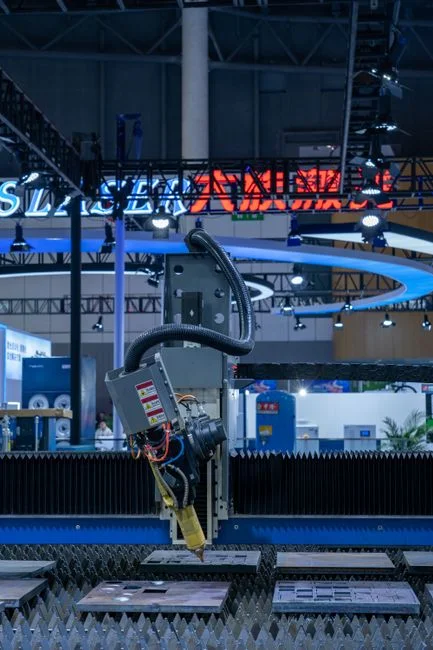
A pretreatment train follows the pollutant pathway from generation to sewer connection rather than placing one machine at the end of every possible mixture. Pretreatment means controlling industrial discharges so they meet the pollutant limits allowed for sewer discharge; treatment is necessary only where source control cannot achieve those conditions.
The engineering sequence is:
- Segregate clean water. Prevent dilution and exclude clean stormwater or cooling streams from the regulated industrial stream where practicable.
- Intercept unwanted materials. Remove solids, rags, packaging, and debris before they enter the treatment train.
- Equalize variable flow and load. Use a properly engineered equalization stage where production washdowns or batch discharges would otherwise create hydraulic or pollutant surges.
- Remove free and emulsified oil where applicable. The City requires a grease/oil interceptor for non-domestic users with the potential to discharge excessive fats, oils, and grease. Its published list expressly includes automotive garages and car washes, and it requires regular cleaning and maintenance.
- Address suspended solids and colloids. Select the separation mechanism after measuring the oil, solids, and colloid behavior.
- Adjust chemistry when required. Apply validated coagulant, flocculant, pH-adjustment, or specialty-chemical steps only after process testing.
- Sample final pretreat effluent. Verify performance at the designated compliance point before municipal sewer discharge.
Dissolved air flotation is a candidate technology for industrial wastewater containing suspended solids, FOG, oil and grease, and colloidal matter. An industrial oily wastewater process-selection guide is useful for understanding the decision, but final selection requires characterization and pilot or vendor validation. The industrial DAF equipment selection guide provides another framework for testing technology against the actual treatment objective.
| Process stage | Primary purpose | Design input required |
|---|---|---|
| Source segregation and interception | Prevent pollutants from entering or diluting the industrial stream | Drainage map, process inventory, chemical inventory, and observed discharge points |
| Equalization | Stabilize flow and pollutant loading | Measured flow and load variation, plus storage and redundancy requirements |
| Grease or oil interception | Remove separated free oil and FOG | Oil characteristics, flow, cleaning requirements, and City requirements |
| DAF or clarification | Separate suspended solids, colloids, and applicable oils | Wastewater analysis, target pollutants, pilot performance, and sludge handling |
| Chemical adjustment | Support separation or correct pH | Jar or pilot testing, reagent compatibility, and dose-control strategy |
| Final monitoring | Demonstrate performance at the compliance point | Permit conditions, sampling protocol, analytical methods, and flow records |
Automatic dosing can provide controlled coagulant, flocculant, pH adjustment, or specialty-chemical application, but the reagent and dose should come from validated process testing rather than generic assumptions.
Match Equipment to the Permit and Wastewater Profile
Equipment selection is tied to the required pollutant removal, process role, measured flow, wastewater characteristics, permit conditions, and reliability needs. No single technology guarantees sewer compliance; performance must be demonstrated on representative wastewater at final-pretreat conditions.
| Equipment | Potential process role | Supplied catalog scope | Selection caution |
|---|---|---|---|
| DAF | Removal of suspended solids, FOG, oil and grease, and colloidal matter | 4–300 m³/h across 13 standard models | Catalog scope is not a plant performance guarantee; validate feed characteristics and loading. |
| Ultrafiltration | Barrier against bacteria, colloids, and suspended solids where appropriate | 2,000–40,000 L/h; 0.03 micron PVDF membranes; automatic backwash and air scour | Consider pretreatment, membrane compatibility, fouling, recovery, waste, and required cleaning. |
| MBR system | Combined biological treatment and membrane filtration | 10–2,000 m³/day | Do not select as the default for every automotive wastewater; establish biodegradability and process objectives. |
| Lamella clarification | Clarification following suitable conditioning | 20–40 m/h surface loading; chemical consumption reduction stated as up to 30% | These are catalog figures, not permit guarantees; verify feed, hydraulic loading, and chemical conditions. |
| Automatic chemical dosing | Precision reagent application for validated treatment steps | PLC-controlled injection | Reagent selection and dose require a validated process basis. |
DAF is the broad first comparison for oil, grease, FOG, and solids, but a plant with dissolved metals, soluble organics, or a pH-sensitive discharge may need additional controls. UF can act as a solids or colloid barrier after appropriate upstream treatment; it does not by itself establish that dissolved pollutants are removed. These catalog figures should be checked against the plant’s measured conditions and the industrial DAF system for EV and auto wastewater or ultrafiltration pretreatment system considered for the project.
Prove Compliance Through Monitoring and Records
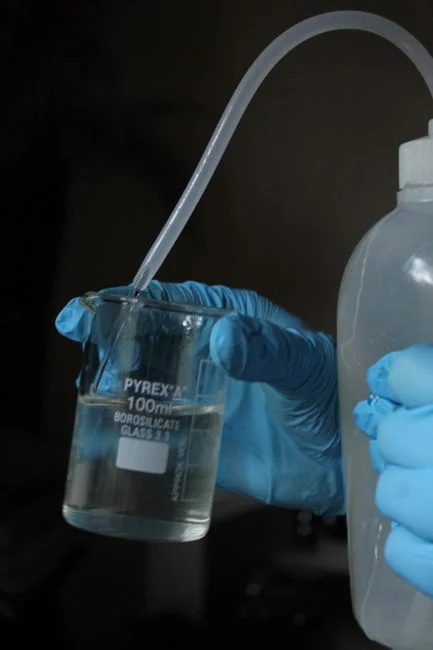
POTWs impose local limits at the industrial user’s point of connection to the collection system, so the final-pretreat discharge—not an upstream treatment vessel—is the relevant compliance point. Independence samples and inspects industrial and non-domestic users, evaluates their compliance with pretreatment requirements, and takes enforcement action as warranted.
The evidence package includes the permit-specific monitoring program, representative samples, flow records, chain-of-custody documentation, analytical results, equipment operating logs, corrective-action records, and proof that required BMPs are maintained. Sampling methods and analytical methods must support the permit and the pollutants actually identified for the facility.
EPA’s Local Limits Development Guidance addresses analytical methods, sampling techniques, flow data, local-limit implementation, best management practices, and control mechanisms. The plant should document why each monitoring point represents the regulated discharge, how samples are collected, how flow is measured, and how exceedances trigger investigation and corrective action.
Do not insert generic concentration values into an EV or automotive permit package. Numeric local limits must be read from the plant’s permit or other controlling local requirements. Review the monitoring and treatment basis annually and periodically reevaluate assumptions when production, chemicals, flow, or treatment performance change.
Frequently Asked Questions
What will an EV or automotive pretreatment system cost near Independence?
A defensible budget cannot be
Frequently Asked Questions
Do EV and auto assembly plants in Independence, Missouri need a pretreatment permit?
Yes, any industrial facility discharging process wastewater into the Independence municipal sewer system must comply with the city’s Industrial Pretreatment Program and the federal General Pretreatment Regulations under 40 CFR Part 403. Facilities are typically required to obtain a Wastewater Discharge Permit if they exceed specific pollutant thresholds or contribute pollutants that interfere with the operation of the municipal Publicly Owned Treatment Works (POTW).
Compliance often involves adhering to Categorical Pretreatment Standards, specifically 40 CFR Part 433 for Metal Finishing or 40 CFR Part 469 for Electrical and Electronic Components. These standards mandate strict limits on heavy metals, total suspended solids (TSS), oil and grease (O&G), and pH levels before effluent reaches the municipal collection system.
What treatment system is best for EV plant wastewater containing oil, suspended solids, and variable wash flow?
A multi-stage treatment train is the industry standard for EV and auto assembly plants. The process typically begins with an equalization tank to buffer variable flow rates and concentrations, followed by oil-water separation using an API separator or coalescing plate interceptor to remove free-floating hydrocarbons.
For the removal of emulsified oils and suspended solids, Dissolved Air Flotation (DAF) is the preferred technology. When coupled with chemical coagulation and flocculation, DAF systems can consistently remove 90% to 99% of fats, oils, and grease (FOG) and a significant portion of TSS. If the plant must meet ultra-low discharge limits for metals or secondary pollutants, an integrated ultrafiltration (UF) membrane system following the DAF unit provides the necessary barrier to achieve high-clarity effluent.
How much does an industrial pretreatment system for an EV or automotive plant cost?
Capital expenditures for a robust, code-compliant pretreatment system for an auto assembly plant typically range from $500,000 to over $3,000,000, depending on flow volume, contaminant concentration, and the complexity of the treatment train. Small-scale modular systems may start at lower price points, while high-capacity, automated systems with sludge dewatering and remote monitoring command the higher end of the spectrum.
Ongoing operational costs, including chemical usage (coagulants, polymers, pH adjusters), power consumption, sludge disposal fees, and technician labor, should be factored into the total cost of ownership. These operational expenses often range from $2 to $10 per 1,000 gallons treated, depending on the specific wastewater matrix and local disposal regulations.
What flow and wastewater data should I provide when sizing a DAF or ultrafiltration system?
To ensure proper sizing and performance, you must provide the average daily flow rate (GPD) and the peak instantaneous flow rate (GPM) to account for production surges. Comprehensive water quality data is equally critical, including the range of pH, total suspended solids (mg/L), oil and grease concentrations, chemical oxygen demand (COD), and specific heavy metal concentrations (e.g., zinc, nickel, chromium).
Additionally, it is necessary to provide information on the temperature of the influent, the presence of surfactants or cleaning detergents that might cause foaming, and the desired discharge limits set by the Independence wastewater authority. Providing a laboratory-certified treatability study or jar test report is highly recommended to determine the optimal chemical dosage for your specific waste stream.
How do I choose a pretreatment supplier who can support Independence permit compliance?
Select a supplier who demonstrates a proven track record with the specific categorical standards (40 CFR 433/469) applicable to EV manufacturing. Prioritize vendors who offer comprehensive support, including assistance with the permit application process, site-specific engineering design, and equipment commissioning.
A qualified partner should provide detailed performance guarantees, clearly stating the effluent quality the system will achieve. Furthermore, ensure the supplier offers long-term service agreements, local access to spare parts, and remote monitoring capabilities to alert operators of potential permit exceedances before they result in municipal fines or violations.