When MABR Fits Paper Mill Wastewater
MABR can suit kraft and recycled paper mill wastewater when variable biological loading, chronic activated-sludge foaming or overload, limited expansion space, or expensive sludge disposal justify a retrofit. It should be evaluated as one stage in a complete treatment train, not as a stand-alone COD guarantee. Veolia Water Technologies characterizes paper mill effluent as generally warm, high in COD and BOD, solids-rich, variable in pH, and often nutrient-poor.
HydropureWater’s 2026 preliminary guidance gives MABR an HRT of 6–12 h for secondary treatment and an OLR of 1.5–4 kg COD/m³·d, with reported COD removal of 70–90%. A moving bed biofilm bioreactor combines suspended carrier media with an attached biofilm, so the reactor retains biomass without relying only on suspended-solids concentration. The commercial case depends on local sludge economics: HydropureWater’s 2026 guide associates a 3–6-year simple payback against CAS expansion with sludge-disposal cost exceeding $60/ton. Before design or pricing, request a site-specific mass balance, peak-hour data, toxicity results, and pilot or historical operating evidence. This MABR design and technology assessment provides a broader framework, but mill-specific data must govern selection.
Map the Mill Wastewater Before Selecting the Reactor
Paper mill streams must be characterized separately because hydraulic load, solids, toxicity, temperature, and biodegradability impose different treatment requirements. Veolia Water Technologies identifies screening and primary clarification or dissolved air flotation as typical primary treatment, followed by cooling and conditioning before secondary biological treatment; demanding applications may also require tertiary treatment. HydropureWater’s 2026 paper-mill guide describes paper machine backwater as the largest stream, representing 60–80% of total flow, with COD of 800–2,000 mg/L and suspended solids of 500–2,000 mg/L. Bleach-plant effluent is comparatively low-volume but carries colour of 1,500–4,000 Pt-Co units, residual chlorine, and resin acids. Pulp-mill condensate is reported at 50–70°C and contains volatile fatty acids and methanol; during digester upset, BOD₅ can rise to 10,000 mg/L. These values are source-specific screening data, not a basis for blending all streams into one nominal feed.
Build the source data around peak-hour behavior rather than daily averages. The RFQ data request should include flow duration, temperature profiles, pH and ORP trends, toxicity results, nutrient balances, COD fractions, suspended solids, colour, and identified operating upsets. For a kraft mill, kraft mill wastewater treatment may also involve bleach-plant segregation and stringent biological toxicity control. For a recycled fibre operation, recycled paper mill effluent can introduce surfactant-rich de-inking loads that affect foam control.
| Stream | Reported condition | Procurement implication |
|---|---|---|
| Paper machine backwater | 60–80% of total flow; COD 800–2,000 mg/L; suspended solids 500–2,000 mg/L, according to HydropureWater’s 2026 guide | Characterize peak solids and fiber loss; assess primary solids removal |
| Bleach-plant effluent | Colour 1,500–4,000 Pt-Co units, residual chlorine, and resin acids, according to HydropureWater’s 2026 guide | Provide toxicity, ORP, and bleed-off data for segregation and feed control |
| Pulp-mill condensate | 50–70°C; volatile fatty acids and methanol; BOD₅ spikes up to 10,000 mg/L during digester upset, according to HydropureWater’s 2026 guide | Document temperature and upset duration; evaluate cooling and equalization |
Use the stream map to decide where pretreatment is necessary. Evaluate DAF pretreatment for paper mill wastewater where fibres, fillers, or other settleable solids would otherwise enter the biological reactor. Chemical addition should follow identification of the mechanism, using the automatic dosing system evaluation to define pH correction, nutrients, and toxicity controls.
Build the Pretreatment and Equalization Envelope
The MABR should receive a controlled feed because suspended solids, temperature changes, and toxic bleach-sequence discharges can disrupt carrier movement, oxygen transfer, and attached biomass. Veolia Water Technologies places screening and primary clarification or DAF before biological treatment and identifies cooling and conditioning as necessary upstream steps. HydropureWater’s 2026 field guidance recommends 8–12 h of equalization for bleach-sequence toxicity spikes, together with online toxicity monitoring and automated feed cut-back above the specified ORP threshold. Its preliminary operating ranges are 28–35°C for kraft applications and 20–30°C for recycled applications. These are screening assumptions, not universal setpoints; the supplier should calculate them from actual stream temperatures and biological loading.
The equalization and pretreatment review should address four separate controls:
- Remove fibres, fillers, and suspended solids before the reactor when they could foul screens, settle in the basin, or interfere with carrier movement.
- Cool or segregate hot condensate where necessary to prevent a sustained temperature excursion or thermal toxicity.
- Monitor bleach-sequence toxicity and define the feed cut-back response before a shock reaches the biofilm.
- Balance pH, nutrients, and treatment chemicals from measured demand rather than applying a fixed dose without a mass balance.
| Design item | Screening requirement | Information required from supplier |
|---|---|---|
| Equalization | 8–12 h for bleach-sequence toxicity spikes, per HydropureWater’s 2026 field guidance | Dynamic model, mixing assessment, toxicity cut-back logic, and tank operating envelope |
| Temperature | 28–35°C for kraft; 20–30°C for recycled, per HydropureWater’s 2026 preliminary guidance | Design temperature, cooling scope, seasonal profile, and biological response basis |
| Carrier retention | Dual screens with automatic cleaning, sized for 1.5× peak instantaneous flow, per HydropureWater’s 2026 recurring failure-mode guidance | Screen geometry, materials, drive details, differential-pressure cleaning, and carrier-loss protocol |
| Primary solids removal | Assess clarification or DAF where suspended solids could enter the reactor, consistent with Veolia Water Technologies’ treatment sequence | Hydraulic loading, removal objective, bypass arrangement, and downstream solids handling |
Mechanical screening should also be specified with the carrier system in mind. HydropureWater’s 2026 guidance identifies carrier washout during hydraulic peaks as a recurring failure mode, so screen redundancy and automatic cleaning belong in the supply specification rather than in commissioning assumptions. The rotary mechanical bar screen configuration may form part of upstream solids control, subject to actual fibrous-load data.
Set Preliminary MABR Design Parameters
HydropureWater’s 2026 preliminary guidance gives paper-mill MABR an HRT of 6–12 h for secondary treatment or 4–8 h for high-rate roughing ahead of an existing CAS train. Its OLR screening range is 1.5–4 kg COD/m³·d, with 2.5 kg COD/m³·d identified as the typical design point. The same source documents spike tolerance of 5–6 kg COD/m³·d for 24 hours during upset recovery. These values are useful for reactor-volume and equipment-budget screening, but they do not establish contractual performance. The final calculation must use site wastewater characterization, selected carrier properties, oxygen-transfer duty, hydraulic behavior, and verified supplier design inputs.
Carrier fill also requires reactor-specific justification. HydropureWater’s 2026 reported cases used 30% carrier fill, so that value can serve as a preliminary biological assumption only where it matches the proposed reactor concept. Preliminary temperature assumptions are 20–30°C for recycled-mill applications and 28–35°C for kraft applications, while dissolved oxygen is screened at 20–30% for recycled applications in the 2026 source. These ranges are not a substitute for identifying the applicable mass-transfer architecture or site temperature profile.
| Parameter | Preliminary screening value | Source and qualification |
|---|---|---|
| HRT: secondary treatment | 6–12 h | HydropureWater’s 2026 preliminary guidance |
| HRT: roughing ahead of CAS | 4–8 h | HydropureWater’s 2026 preliminary guidance |
| OLR | 1.5–4 kg COD/m³·d; 2.5 kg COD/m³·d typical screening point | HydropureWater’s 2026 preliminary guidance |
| Documented upset spike | 5–6 kg COD/m³·d for 24 h | HydropureWater’s 2026 preliminary guidance; requires site-specific validation |
| Carrier fill | 30% preliminary biological assumption | Used in HydropureWater’s 2026 reported cases; reactor-concept dependent |
| Temperature | 20–30°C recycled; 28–35°C kraft | HydropureWater’s 2026 preliminary design block |
| Dissolved oxygen | 20–30% recycled-mill assumption | HydropureWater’s 2026 preliminary design block |
Require the supplier to show the calculation behind every design value: reactor volume from the selected HRT and flow regime; oxygen demand from the agreed COD load; blower and diffuser duty from the stated oxygen-transfer basis; carrier inventory and retention from the selected screen; and controls from peak-load and upset scenarios. If the supplier cannot connect a preliminary parameter to site data or a design calculation, it is a screening assumption rather than a bid commitment.
Validate Performance Against Paper Mill Evidence
HydropureWater’s 2026 guide reports 70–90% COD removal on combined kraft or recycled paper mill effluent, with post-MABR effluent typically at 150–350 mg/L COD and 20–50 mg/L BOD₅. The underlying paper-mill evidence is limited and partly vendor-derived, so these results should frame hypotheses rather than become universal guarantees. HydropureWater itself describes published pulp-mill MABR case data as thin. Distinguish general design guidance, a vendor case file, and HydropureWater field data during technical review.
Three reported installations illustrate different operating concepts:
- A European recycled fibre mill case file from 2024-11 used 9 h HRT, 2.3 kg COD/m³·d OLR, and 30% carrier fill. Average COD removal was 82%, with effluent COD at 230–280 mg/L while influent swung between 1,800 and 4,500 mg/L.
- A North American kraft mill case in late 2024 used membrane-aerated MABR for hot-effluent polishing at influent temperatures of 55–62°C and COD of 1,200–1,800 mg/L. Reported COD removal was 75% at 6 h HRT, with no thermophilic inhibition observed.
- An Indian agro-based paper mill case reported by HydropureWater as 2025-06 field data operated at COD of 3,500–5,500 mg/L and BOD/COD of 0.25, with 30% carrier fill and 11 h HRT. COD removal was 70%, nitrification remained stable, and recovery from a 6,200 mg/L COD spike occurred within 18 h.
| Evidence item | Reported operating basis | Reported outcome | Evidence limitation |
|---|---|---|---|
| European recycled fibre mill, 2024-11 vendor case file | HRT 9 h; OLR 2.3 kg COD/m³·d; 30% carrier fill; influent COD 1,800–4,500 mg/L | 82% average COD removal; effluent COD 230–280 mg/L | Vendor case file; site-specific transferability is unproven |
| North American kraft mill, late 2024 case | Membrane-aerated MABR; 55–62°C influent; COD 1,200–1,800 mg/L; HRT 6 h | 75% COD removal; no thermophilic inhibition observed | Polishing duty differs from primary secondary treatment |
| Indian agro-based paper mill, 2025-06 field data reported by HydropureWater | COD 3,500–5,500 mg/L; BOD/COD 0.25; 30% carrier fill; HRT 11 h | 70% COD removal; stable nitrification; recovery from 6,200 mg/L COD spike within 18 h | Agro-based fibre and field-reported evidence limit direct comparison |
The procurement implication is to convert these observations into site tests. A pilot should use actual mill wastewater, reproduce the selected reactor concept, and challenge the agreed peak-load and toxicity conditions. Ask the supplier to identify which parameters were measured, how steady state was defined, whether the reported COD removal was paired with BOD₅ and TSS data, and whether carrier loss was recorded.
Choose the Position in the Final Treatment Train
MABR position follows the required treatment duty and the final effluent use. If MABR will carry the main biological COD-removal load, place it after effective primary solids removal and equalization. If it is intended to relieve an overloaded CAS train, evaluate high-rate roughing ahead of existing clarification and biological polishing. If it is polishing a hot, high-COD stream, require a supplier-specific oxygen-transfer comparison because HydropureWater’s 2026 source distinguishes carrier-side oxygen transfer in membrane-aerated designs from conventional MBBR aeration.
For an industrial wastewater reuse objective, the reactor cannot be assessed separately from the reuse specification. HydropureWater’s 2026 source reports typical MABR effluent at 150–350 mg/L COD, so MABR alone does not establish a below-100 mg/L COD reuse target. The source identifies MBR polishing after MABR or DAF pretreatment followed by filtration as possible routes. Compare MBR polishing after MABR against filtration and other site-compatible routes using the actual reuse endpoint, including water chemistry and process compatibility.
| Proposed position | Preconditions | Downstream requirement |
|---|---|---|
| Primary secondary biological treatment | Primary solids removal, equalization, controlled temperature and toxicity | Solids separation and polishing according to discharge or reuse criteria |
| High-rate roughing ahead of CAS | Defined load split and hydraulic compatibility with the existing train | Existing biological and solids-handling stages |
| Hot-effluent polishing | Supplier-specific membrane or other oxygen-transfer design | Verification of thermal response and residual COD |
| MABR followed by reuse treatment | Reuse target defined before reactor selection | Evaluate MBR or DAF plus filtration; select by site chemistry and end use |
Include sludge handling in the train because biological COD removal creates solids that still require thickening and dewatering. HydropureWater’s 2026 MABR sludge-yield estimate is 0.15–0.25 kg TSS/kg COD removed, compared with its stated CAS range of 0.35–0.45 kg/kg. These figures support a lower-disposal screening case, not a guaranteed site yield. The plate and frame filter press selection should reflect measured MABR sludge characteristics and the final disposal route.
Compare MABR, MBBR, and Activated Sludge for Investment
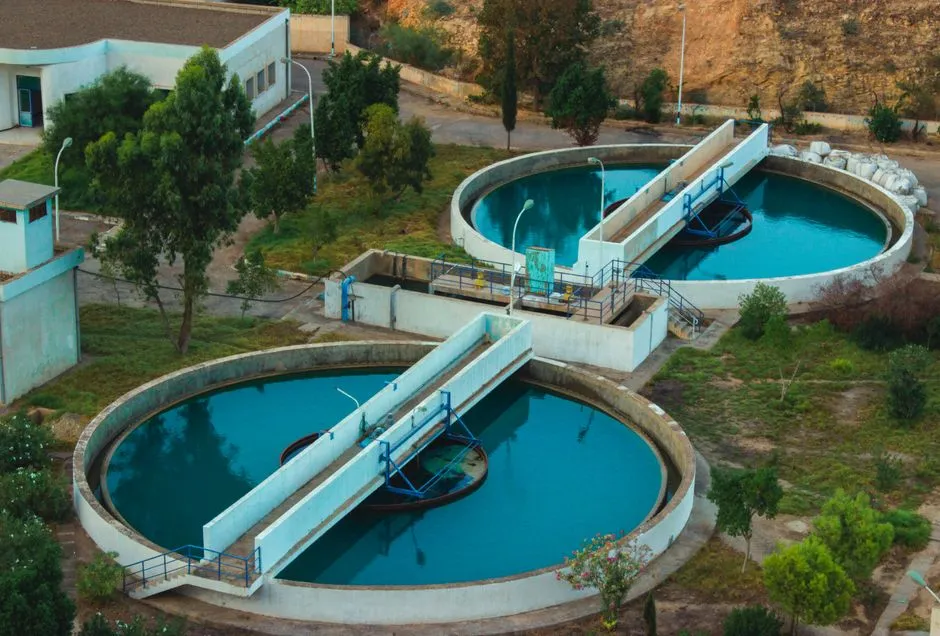
MABR, MBBR, and CAS should be compared by reactor duty and architecture, not by product label. Both moving-bed systems retain attached biomass on carriers, while conventional MBBR combines mixing and oxygen delivery through aeration and exposes the carrier exterior to bulk-liquid oxygen. In membrane-aerated MABR, HydropureWater’s 2026 source describes oxygen supplied from the carrier side, creating a different mass-transfer geometry that must be evaluated against the mill’s temperature, COD, and oxygen requirement. Carrier retention, mixing, screen maintenance, aeration energy, sludge separation, and the site’s expansion constraints should appear in the comparison.
| Decision indicator | MABR | MBBR | CAS |
|---|---|---|---|
| Biomass architecture | Moving carriers with attached biofilm; oxygen-transfer arrangement depends on design | Moving carriers with attached biofilm; conventional aeration serves mixing and oxygen delivery | Suspended biomass flocs |
| HydropureWater 2026 footprint screen | 40–50% smaller than CAS at equivalent load | Not quantified in the supplied evidence | Reference footprint |
| HydropureWater 2026 sludge-yield screen | 0.15–0.25 kg TSS/kg COD removed | Not quantified in the supplied evidence | 0.35–0.45 kg/kg |
| HydropureWater 2026 OPEX screen | $0.18–0.35/m³ | Not quantified in the supplied evidence | $0.30–0.45/m³ |
| Supply focus | Carrier retention, selected oxygen-transfer architecture, equalization, and sludge handling | Carrier retention, mixing, aeration, and downstream solids separation | Basin hydraulics, aeration, sludge recycling, clarification, and expansion |
HydropureWater’s 2026 cost screen estimates $1.2–2.5M USD CAPEX for a 5,000 m³/day MABR retrofit and states that MABR OPEX is 15–25% below CAS. The estimate includes carriers, aeration upgrades or a membrane blower skid, retention screens with automatic cleaning, and instrumentation and controls, with existing basins, blowers, and much of the civil work reused. These figures are commercial screening values from a vendor source, not a quotation for every mill. The quotation scope must also address civil modifications, utilities, sludge handling, controls, installation, commissioning, taxes, and performance guarantees.
A practical comparison also needs site constraints. A recycled fibre mill without a bleach-plant stream may present a different MABR business case from a kraft mill with hot, variable, or toxic discharges. Do not accept a comparison based solely on HRT or nominal COD. Resolve ETP and DAF treatment-train selection considerations through the same mill-specific mass balance used for MABR sizing.
Convert the Selection into an RFQ and Acceptance Test
The RFQ should force the selected concept, site conditions, and acceptance basis into the same document. Include minimum and maximum flow; hydrograph and peak-hour data; temperature; COD and BOD₅; TSS; pH; toxicity; colour; nutrients; COD fractions; and documented upset events. Identify each contributing stream, its sampling point, and whether the mill can segregate it. The buyer should also state the required effluent endpoint: discharge, reuse, or downstream process compatibility.
Require each supplier to state reactor volume, HRT, OLR, carrier type, carrier fill, retention-screen design, aeration method, oxygen-transfer basis, blower capacity, mixing arrangement, and control philosophy. Hydrodynamic testing should address carrier retention, short-circuiting, mixing, biofilm-thickness control, and media wear. Carrier washout during hydraulic peaks is identified in HydropureWater’s 2026 field guidance as a recurring failure mode, so the acceptance plan must include a carrier-loss measurement method.
| RFQ or test item | Minimum evidence required |
|---|---|
| Wastewater basis | Flow duration, peak-hour loads, stream segregation, temperature, COD, BOD₅, TSS, pH, toxicity, colour, nutrients, and upset history |
| Reactor design | Volume, HRT, OLR, carrier type and fill, oxygen-transfer basis, aeration and blower duty, mixing, hydraulic analysis, and solids separation |
| Operating safeguards | Dual automatically cleaned carrier screens sized for 1.5× peak instantaneous flow, toxicity cut-back, equalization strategy, and foam-control provisions, as applicable |
| Site acceptance test | Agreed influent basis, average and peak COD performance, effluent COD and BOD₅, carrier-loss limit, noise, control response, and demonstration of guarantee conditions |
| Foam control | For recycled mills, anti-foam provision at 5–15 ppm and a surface skimmer, per HydropureWater’s 2026 guidance |
Make the guarantee conditional and measurable. Define which influent range applies, how a sustained test is established, how the effluent sample is analyzed, and who owns the cost of makeup chemicals or pretreated feed. Avoid accepting a performance claim that depends on a feed more dilute or less toxic than the mill’s normal operation. Where uncertainty remains, use pilot testing with actual wastewater and make the commercial award conditional on verified design inputs and agreed acceptance results.
Frequently Asked Questions
What HRT and OLR should be used for preliminary MABR design for paper mill wastewater?
HydropureWater’s 2026 preliminary guidance uses 6–12 h HRT for secondary treatment and 4–8 h for high-rate roughing ahead of CAS, with an OLR of 1.5–4 kg COD/m³·d. It identifies 2.5 kg COD/m³·d as the typical screening point. These are preliminary values; final sizing must use site wastewater data and the supplier’s reactor calculations.
What does an MABR system cost for a paper mill retrofit?
HydropureWater’s 2026 screening estimate is $1.2–2.5M USD for a 5,000 m³/day retrofit. Treat this as a commercial screen rather than a quotation. Request a scoped price covering carriers, aeration, retention screens, blowers, controls, civil work, sludge handling, utilities, installation, commissioning, and performance guarantees.
Can MABR meet a 100 mg/L COD limit for mill reuse?
No performance claim should assume MABR alone can meet that target. HydropureWater’s 2026 guide reports typical post-MABR COD of 150–350 mg/L and identifies MBR polishing after MABR, or DAF pretreatment followed by filtration, as possible routes. Select the final route against the specific reuse application and water chemistry.
Which paper mill wastewater streams need the most upstream control?
Backwater requires solids control because HydropureWater’s 2026 source reports suspended solids of 500–2,000 mg/L. Bleach-plant effluent requires toxicity monitoring and feed cut-back, while hot pulp-mill condensate and digester-upset BOD₅ spikes require temperature management and equalization. The appropriate envelope follows from measured peak conditions, not from a single average feed analysis.
How should MABR be compared with CAS and MBBR during supplier selection?
Match the reactor to the duty, then compare oxygen-transfer architecture, carrier retention, mixing, footprint, sludge yield, shock response, maintenance, site constraints, and the contractual test. Require HydropureWater’s 2026 screening claims—40–50% smaller footprint than CAS, 0.15–0.25 kg TSS/kg COD removed for MABR, and $0.18–0.35/m³ OPEX—to be reproduced for the proposed site rather than accepted without scope and basis.