What the Küçükçekmece Site Must Establish Before Equipment Is Selected
A data center in Küçükçekmece generally needs a treatment train designed around the quality and quantity of makeup water, cooling-tower cycles of concentration, the intended reuse or discharge route, and verified Istanbul-area permit conditions. Typical blowdown can contain 1,200–6,000 mg/L TDS, suspended solids, scaling minerals and residual treatment chemicals, according to Genesis Water Technologies. A practical train starts with side-stream filtration, followed by UF where solids and biological control are the main concerns, and NF or RO when hardness, silica or dissolved-solids reduction is required. Supplying Kuecuekcekmece-specific design values without site sampling and local permit confirmation would be speculative.
The first equipment decision is therefore not a membrane selection. It is a decision about what the recovered water must accomplish. Genesis Water Technologies identifies cooling-tower makeup reuse, discharge compliance and zero liquid discharge as separate objectives requiring different treatment trains.
Before preparing an RFP, obtain representative makeup-water and blowdown data across normal and seasonal operating conditions. The supplied research does not contain a verified Küçükçekmece water analysis or project flow. The design package should identify the following:
| Design-basis input | Information required before technology selection | Why it changes the decision |
|---|---|---|
| Primary objective | Return to cooling tower, identified non-potable reuse, discharge compliance or ZLD | Each objective has a different required water quality and residual route |
| Water and flow data | Representative makeup and blowdown analyses, daily and seasonal flows, operating hours | Determines pretreatment, membrane loading and treatment capacity |
| Cooling-system balance | Evaporation, drift, blowdown, makeup, cycles of concentration and recovered-water return | Prevents equipment sizing from relying on a nominal blowdown rate |
| Discharge route | Sewer or surface-water destination, receiving utility, connection restrictions and approving authority | Defines the applicable discharge basis and permit pathway |
| Residual destination | Expected concentrate destination, disposal assumptions and responsible operator | Higher recovery remains incomplete without a concentrate route |
Genesis Water Technologies reports typical blowdown TDS of 1,200–6,000 mg/L and suspended solids of 10–50 mg/L. These are general ranges, not measurements for Küçükçekmece. Record the source, sampling date and operating condition for every local result, then construct the blowdown mass balance from the actual cooling-system data.
How the Blowdown Stream Must Be Characterized
Filtration can remove suspended material, but it cannot remove dissolved hardness or silica; this distinction determines whether UF alone is adequate or whether NF, RO or thermal treatment is needed. Genesis Water Technologies reports common blowdown suspended-solids levels of 10–50 mg/L, comprising corrosion products, biofilm fragments and airborne particulates.
Request more than TDS. Measure calcium, magnesium, silica, alkalinity and calcium hardness separately, because each can control precipitation risk as cycles of concentration increase. TDS alone cannot show whether calcium carbonate or silica will constrain recovery. Document biocide, scale-inhibitor, corrosion-inhibitor and dispersant residuals as well: chemistry that is acceptable in the cooling loop may interfere with membranes or trigger discharge conditions.
Temperature is also an operating input because it affects viscosity, biological growth and membrane behavior. Establish how much of the blowdown is continuously available and how much storage or equalization would be required before treatment.
| Characterization item | Primary process relevance | Treatment implication |
|---|---|---|
| Suspended solids, turbidity and corrosion products | Filter loading and membrane fouling | Filtration and solids-retention design |
| Calcium, magnesium and alkalinity | Carbonate-scale potential | Antiscalant control; NF or RO where hardness limits recovery |
| Silica | Precipitation and membrane-scaling risk | Silica-specific pretreatment and recovery calculation |
| TDS and conductivity | Osmotic loading and overall concentration | RO energy and concentrate projection |
| Treatment-chemical residuals | Compatibility and discharge acceptance | Coordination of cooling chemistry with recovery pretreatment |
| Temperature | Seasonal hydraulic and biological effects | Design envelope and cleaning assumptions |
Keep permeate and concentrate as separate streams in every balance. A membrane recovery percentage states how much feed water becomes permeate; it does not identify where the remaining water and dissolved solids will go. The multi-media filtration configuration for solids removal can protect downstream equipment, but it does not replace dissolved-species treatment.
Choose the Treatment Objective Before the Technology
Cooling-water reuse, compliant discharge and zero liquid discharge impose different quality targets, energy requirements and residual-management obligations, so the selected objective must precede equipment selection.
For cooling-tower makeup reuse, the objective is to reduce suspended solids, scaling potential and biological content while remaining compatible with the existing chemical program. Genesis Water Technologies identifies reuse, discharge compliance and ZLD as distinct strategies. A membrane-based RO treatment train may be justified when broad dissolved-solids and silica control is required, but a lower-pressure alternative may fit a more limited objective.
For discharge compliance, obtain the receiving utility’s actual discharge parameters before selecting softening, membrane treatment, chemical neutralization or another route. The research does not provide verified Küçükçekmece limits, so jurisdiction-wide figures or assumptions from another city should not be used in the permit basis.
For ZLD, the research describes membrane concentration, evaporative concentration and crystallization. A higher overall recovery does not eliminate the need for an approved concentrate or salt-disposal route. The project should compare recovery, water savings and residual handling rather than treating ZLD as a single equipment purchase.
Open Engineering Inc’s 2026 preprint found that improved cycles of concentration reduced blowdown and chemical consumption, but its wastewater-reuse scenario had about twice the global warming potential of the freshwater case; treatment energy accounted for roughly 80% of that difference. The comparison also depends on grid conditions, and a fully decarbonized-grid sensitivity analysis shifted the main carbon contributor toward chemical production.
Evaluate the complete lifecycle: water saved, electrical and thermal energy, chemicals, carbon, maintenance, operator labor and residual disposal. Permeate quality alone is not a sufficient selection metric.
Build a Pretreatment Train That Protects the Cooling System
Side-stream filtration reduces the solids burden that would otherwise foul downstream membranes, but its sizing and controls must follow verified feed conditions and the selected recovery process. Genesis Water Technologies describes side-stream filtration at 10–25 µm, with installed capacity equivalent to 1–5% of total circulation flow, depending on system conditions and treatment objectives.
Use automatic backwash and air scour where required by the selected filtration technology. Control the system against measured turbidity and suspended solids rather than fixed filter-run assumptions. Check whether the filtration duty is on the cooling loop, the blowdown-treatment inlet or both, because those arrangements serve different objectives.
| Pretreatment stage | Design requirement | Evidence or project input |
|---|---|---|
| Side-stream solids removal | Remove suspended solids and reduce biological loading | Genesis Water Technologies: 10–25 µm filtration and 1–5% of total circulation flow |
| UF before NF or RO | Remove colloids and protect downstream membranes | Verified turbidity, solids and biological load |
| Antiscalant and pH control | Limit precipitation and maintain membrane-compatible conditions | Source-water chemistry and selected membrane design |
| Cooling-chemical coordination | Prevent treatment residuals from impairing the recovery train | Complete biocide, inhibitor and dispersant program |
For an RO or NF train, Genesis Water Technologies states that feed water should be filtered to less than 10–15 µm, chemically conditioned against scaling and pH-adjusted for membrane performance. These are design inputs for the selected process, not evidence of Küçükçekmece feed quality.
Coordinate biocide, antiscalant and pH-control decisions with the recovery train. A program that is acceptable in the cooling loop may require different controls at the treatment inlet. A multi-media filter can provide practical solids removal, while a 0.03 µm UF system for blowdown pretreatment can remove colloids and biological material ahead of NF or RO. Dosing-system requirements should follow from that process decision, including the automatic chemical dosing arrangement used for controlled antiscalant or pH conditioning.
Compare UF, NF and RO for Blowdown Recovery
UF, NF and RO separate contaminants at different levels: UF controls particulates and biology, NF partially removes multivalent dissolved species, and RO provides broad dissolved-solids and silica control.
| Technology | Genesis Water Technologies reference performance | Best-supported role | Main constraint |
|---|---|---|---|
| UF | 0.01–0.1 µm; 10–30 psi; 90–95% recovery | Suspended-solids, bacteria and colloid removal; pretreatment for NF or RO | Dissolved salts remain in the permeate stream |
| NF | 75–150 psi; 70–85% recovery; permeate TDS at 30–50% of feed concentration | Partial hardness and sulfate removal where softening is the principal constraint | Does not provide complete dissolved-solids or silica removal |
| RO | 150–400 psi; 50–85% recovery; permeate TDS of 10–50 mg/L | Broad dissolved-solids, hardness and silica control | Higher energy demand and greater concentrate-management burden |
UF’s dissolved-salt passage is decisive. It can remove particulates at lower pressure, but it cannot substitute for NF or RO when hardness, silica or total TDS limits the reuse or discharge outcome.
The UF comparison should also include the available PVDF ultrafiltration system configuration: 0.03 µm nominal pore size, capacity from 2,000–40,000 L/h, automatic backwash and air scour, and stated feed tolerance up to 300 ppm turbidity. These are stated equipment characteristics, not a guarantee of performance on Küçükçekmece blowdown. The bidder must confirm them against the contracted feed-water envelope.
For a membrane recovery train, use the industrial RO system for cooling-water reuse as a technical reference point, and require the membrane and filter-element package to be sized consistently with the feed, recovery target and cleaning strategy. Do not infer a universal winner from recovery percentage. Compare permeate quality, concentrate volume, energy demand, chemical consumption, cleaning frequency and residual disposal under the same duty.
Decide What Happens to the Concentrate
Every recovery case must include a mass-balanced concentrate route because the residual stream determines whether a high-recovery design is technically executable. Calculate concentrate flow, projected TDS and chemical demand before equipment specification.
Genesis Water Technologies reports that mechanical vapor compression can recover 95–98% of water from concentrate streams and produce distillate below 10 mg/L TDS. The same source reports energy consumption of 15–25 kWh per 1,000 US gallons of distillate. MVC therefore remains an energy-intensive option whose value depends on the recovery case and available heat integration.
The research describes partial ZLD as concentrating blowdown to reduce discharge volume by 80–90%. That remaining brine still requires an approved destination. A receiving sewer, surface water, industrial hazardous-waste facility or another route must be verified locally; an assumed hauling route is not a design basis.
| Recovery case | Permeate route | Residual stream to resolve | Information required from bidders |
|---|---|---|---|
| Filtration plus UF | Cooling-tower makeup | UF backwash and residual solids | Backwash volume, solids concentration and handling route |
| NF or RO | Cooling-tower makeup or blending | Concentrate | Flow, projected TDS, chemistry and disposal assumptions |
| Partial ZLD | Recovered water with reduced discharge | Concentrated brine | Permitted destination, transport and operating schedule |
| Full ZLD | Distillate and recovered water | Solid salt residue | Residue characterization and approved disposal route |
The 2026 Open Engineering Inc preprint reports an approximately 0.93 L/m³ indirect water penalty from higher upstream electricity and chemical inputs in the reuse train. The authors state that this was less than 0.1% of the direct displacement benefit. Include that upstream effect in the lifecycle assessment, while keeping local permit and disposal requirements as separate constraints rather than treating them as monetized assumptions.
Plan Permitting, Utilities and Ongoing Operations
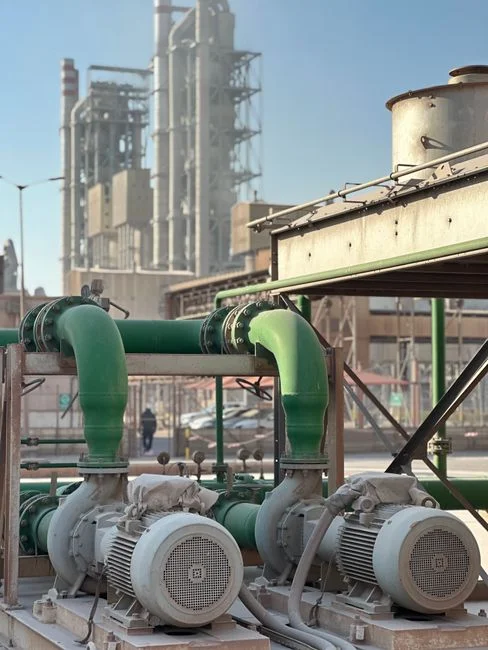
The permit basis must be verified with Istanbul’s competent environmental authorities and the receiving sewer or water utility because the supplied research contains no confirmed Küçükçekmece discharge limits or approval timetable.
Prepare a cooling-water management plan covering cycles of concentration, blowdown quantity, chemical programs, treatment steps, reuse assumptions and concentrate fate. Include the complete water balance, sampling plan, treatment envelopes, operating-control philosophy and proposed residual-management route.
Confirm the permit route before final equipment selection. A technology train should not be presented as compliant merely because its nominal permeate quality meets an unverified generic target. Local constraints may affect discharge composition, connection capacity, monitoring, chemical residuals and concentrate handling.
Specify PLC control, conductivity and flow instrumentation, differential-pressure monitoring, permeate-quality alarms, chemical interlocks, redundancy and automatic backwash where appropriate. Define the control response for each alarm, including makeup-water isolation, cleaning initiation and safe shutdown.
Compare membrane cleaning, cartridge or media replacement, chemical deliveries, solids handling, energy demand and operator workload over the operating envelope. Required treatment parts and valves should be scoped with the water-treatment parts and filtration-media package, including compatible materials and spares.
Require vendor guarantees for permeate quality, stated recovery, normalized energy consumption, availability and concentrate characteristics at the contractual feed-water envelope. A guarantee valid only for clean feed water is not useful for blowdown recovery.
A Site-Specific Procurement Checklist
An auditable RFQ should give every bidder the same feed, objective, residual route and utility assumptions so that proposals can be compared on technical performance and lifecycle cost.
- Include daily and seasonal blowdown flow, representative makeup-water and blowdown analyses, cycles of concentration, operating hours, intended recovery target and chemical program.
- Describe the discharge and reuse routes, receiving utility, permit constraints, concentrate destination and required operating redundancy.
- Ask bidders to provide a complete mass balance, membrane sizing calculations, projected permeate and concentrate quality, utility consumption, cleaning strategy and start-up sequence.
- Request evidence covering membrane pressure, recovery, cleaning frequency, solids-retention capacity, feed-water envelope and compatibility with the proposed cooling-water chemistry.
- Request Turkey-delivered execution information: scope boundaries, installation requirements, electrical supply, controls integration, operator training, commissioning, warranty support and local service access.
| RFQ package | Required bidder response | Evaluation check |
|---|---|---|
| Feed-water envelope | Analyses, seasonal data, flow and chemical information | Every proposal uses the same verified inputs |
| Process design | Mass balance, sizing calculation, pretreatment and control philosophy | Capacity and recovery calculations are auditable |
| Performance | Permeate and concentrate guarantees at the contractual envelope | Conditions and exclusions are explicit |
| Residuals | Backwash, solids and concentrate handling plan | Each residual has a proposed destination |
| Commercial | Delivered and installed cost with local civil, electrical, import and commissioning items separated | No reliance on generic international price benchmarks |
Do not use general international equipment-price benchmarks as the site budget. Request a Turkey-delivered installed proposal and identify excluded civil work, electrical supply, import duties, taxes, commissioning, training, warranties and residual-disposal costs separately.
Frequently Asked Questions
What is the cheapest compliant treatment option for a Küçükçekmece data center?
The lowest-cost compliant option cannot be identified from location alone. Compare filtration-only reuse, UF-assisted reuse and NF or RO against the verified discharge route, permeate requirements and concentrate constraints. The cheapest equipment purchase may not be the lowest lifecycle cost once energy, chemicals, cleaning, water savings and residual disposal are included.
Should the project use UF, NF or RO?
Use UF when particulate and biological control are the primary requirements, especially as pretreatment. Consider NF when partial hardness and sulfate removal would improve reuse, and RO when broad dissolved-solids or silica control is required. Compare pressure, recovery, permeate quality and concentrate volume against the stated objective and feed-water envelope.
What site data should a Turkish supplier request before quoting?
Request representative makeup-water and blowdown analyses, daily and seasonal flow data, cycles of concentration, operating hours, the complete chemical program, the intended discharge or reuse route, utility requirements and the concentrate destination. Without these inputs, equipment capacity and compliance claims remain provisional.
Is zero liquid discharge required for a data center in Küçükçekmece?
No supplied source verifies a Küçükçekmece-specific zero-discharge mandate. The project must confirm the applicable requirement with the competent environmental authority and receiving utility. ZLD may remain an option for water recovery, but its salt and concentrated-residue disposal route must also be permitted.
How much should the treatment system cost?
A reliable local price requires blowdown flow, feed chemistry, selected technology, recovery target, installation scope, utility connections, controls, concentrate handling and the Turkey-delivered commercial boundary. The supplied research contains general equipment and cost benchmarks, not a Küçükçekmece project quotation, so bidders should provide separately priced capital, operating, installation and residual-management items.