What treatment does a Cankaya data center actually need?
A data center in Cankaya needs source-separated wastewater treatment, with the treatment train defined by the cooling configuration and final destination of each stream. Cooling tower or evaporative-cooler blowdown requires characterization for conductivity, suspended solids, pH, temperature, treatment chemicals and cycles of concentration; the target may be compliant discharge, reuse for cooling makeup or lower-demand process water. Sanitary wastewater and any process wastewater require separate design. At 4 CoC, theoretical blowdown is 25% of makeup water, falling to 20% at 6 CoC. Final Turkish requirements and reuse permissions must be confirmed for the Cankaya site.
Start with six separate streams: cooling or evaporative-cooler blowdown, domestic sewage, equipment washwater, process wastewater, stormwater and construction-derived wastewater. Combining them before treatment creates unnecessary treatment duties and obscures the water-quality barrier required by each destination.
Next, define the final use: direct or indirect discharge, sewer connection, irrigation, equipment washing, toilet flushing or cooling-makeup reuse. That decision determines whether filtration, biological treatment, membranes and disinfection are necessary.
Cooling selection is part of this decision. Dry or closed-loop cooling can reduce direct water demand, while evaporative systems create the blowdown stream that must be managed. Open Engineering Inc’s 2026 life-cycle study notes that reclaimed-water infrastructure adds treatment energy, chemical use, blowdown and potentially a dual-pipe distribution system; these interfaces belong in the project scope. A comparable methodology is presented in this data-center cooling blowdown treatment guide for a water-stressed location and this European data-center wastewater and blowdown assessment.
Map the water balance and characterize every stream
Actual blowdown can exceed theoretical calculations by 15–30% because of unmeasured losses and emergency dumps, so the cycles-of-concentration equation should screen the design rather than size the plant by itself, according to Genesis Water Technologies in its 2026 assessment.
Install a temporary or permanent measurement baseline for makeup water, evaporation, blowdown, blowdown concentration, final discharge, reuse and emergency dumping. This must be a reconciled water balance, not a collection of disconnected meter readings. Include seasonal operation and cooling-vendor assumptions.
For blowdown, analyze pH, conductivity, total dissolved solids, suspended solids, turbidity, temperature, hardness, alkalinity and residual treatment chemicals. North Carolina State University’s 2026 account explains that evaporation concentrates salts and residual cooling chemicals, while warm discharge can create thermal pollution and lower oxygen levels in receiving waters.
Request the cooling vendor’s water-balance method, chemical program, expected CoC range, seasonal operating conditions and upset-control philosophy before calculating treatment flow. Also determine whether dry, closed-loop or hybrid cooling remains feasible, because that choice may reduce the stream requiring treatment.
| Measurement | Required record | Design use |
|---|---|---|
| Makeup and evaporation | Continuous flow, reconciled calculation and operating period | Establish actual consumption and validate CoC |
| Blowdown | Normal flow plus emergency-dump record | Determine treatment and equalization duty |
| Water quality | pH, conductivity, TDS, suspended solids, turbidity, temperature, hardness, alkalinity and residual chemicals | Select the discharge or reuse barrier |
| Destinations | Discharge, reuse, emergency and bypass routes | Define controls, storage and residual handling |
The EU cooling blowdown reuse and compliance approach illustrates how stream characterization and final-use requirements should precede equipment selection.
Choose the treatment objective before choosing the process
Cooling blowdown treatment is justified only when the selected objective specifies the receiving route or reuse application and the resulting water-quality barrier. Open Engineering Inc (2026) found that the UF+RO wastewater scenario used more than five times the freshwater case’s energy, but improved CoC reduced blowdown and chemical consumption; advanced treatment therefore requires an explicit reuse or discharge benefit.
For compliant discharge, obtain the applicable Cankaya discharge or sewer conditions before fixing pH, temperature, solids or dissolved-solids targets. For toilet flushing, equipment washing or another non-cooling application, document the receiving equipment’s water-quality and public-health requirements. For cooling-makeup reuse, assess conductivity, hardness, scaling risk, biological control, corrosion and the CoC the upgraded loop can sustain safely.
Open Engineering Inc (2026) also reported an indirect water penalty of approximately 0.93 L/m³ for its analyzed reuse train, less than 0.1% of the direct freshwater-displacement benefit. The business case must still combine energy, chemicals, infrastructure, residuals and avoided water rather than using reclaimed volume alone.
| Discharge or reuse objective | Required water-quality barrier | Candidate treatment train | Unresolved site input |
|---|---|---|---|
| Compliant discharge | Confirmed limits for pH, temperature, solids, dissolved salts and residual chemicals | Filtration plus targeted chemical control; disinfection where required | Receiving route and written Turkish conditions |
| Cooling-makeup reuse | Conductivity, hardness, scaling, corrosion and biological-control limits | Filtration, chemical control and advanced treatment where justified | Safe CoC range and cooling-vendor limits |
| Toilet flushing or washing | Destination-specific quality and public-health requirements | Filtration and disinfection as required by the reuse route | Confirmation of the permitted reuse application |
| Sanitary or process wastewater | Separate biological, pretreatment or process-quality requirements | Site-specific sanitary or industrial wastewater pretreatment | Stream inventory, analysis and responsible authority |
Compare the practical treatment routes
Physical separation, membrane treatment and biological treatment perform different functions, so a data-center wastewater package should be assembled around the governing pollutant rather than a generic sequence of all available technologies.
Filtration or dissolved air flotation is relevant where suspended solids, colloids, oil and grease or floating material are the principal constraints. An ultrafiltration system for cooling-water pretreatment is appropriate where a low-turbidity, low-suspended-solids barrier is needed before sensitive equipment or downstream membranes. HydropureWater’s UF systems use 0.03-micron PVDF membranes, accept turbidity up to 300 ppm, and include automatic backwash and air scour.
Reverse osmosis should be considered for high-purity reuse or reliable dissolved-salts removal. Its comparison must include feed characterization, pretreatment, energy, membrane replacement and concentrate management.
MBR is most relevant to wastewater requiring biological treatment and a high-quality effluent barrier; it does not replace targeted cooling-blowdown polishing. Disinfection and chemical dosing are final decisions based on identified microbiological and chemical risks. A PLC-controlled chemical dosing system may be required, but dosing should not be included merely because it appears in a generic train.
| Route | Primary function | Limit to resolve | Appropriate project use |
|---|---|---|---|
| Filtration or DAF | Remove suspended solids, colloids, oil and grease or floating material | Residual solids and sludge destination | Pre-treatment or physical recovery route |
| Ultrafiltration | Provide a low-turbidity and low-suspended-solids barrier | Feed chemistry, backwash and waste handling | Cooling pretreatment or downstream membrane protection |
| Reverse osmosis | Remove dissolved salts for high-purity reuse | Concentrate management and pretreatment | Justified cooling-makeup or high-quality reuse |
| MBR | Combine biological treatment and membrane solids separation | Organic loading, aeration and sludge handling | Sanitary or qualifying process wastewater |
| Disinfection and dosing | Control microbiological or chemical risk | Contact performance and residual limits | Final barriers identified by monitoring |
The MBR and conventional activated-sludge comparison is relevant only where biological treatment is part of the duty.
Size the system from verified operating data
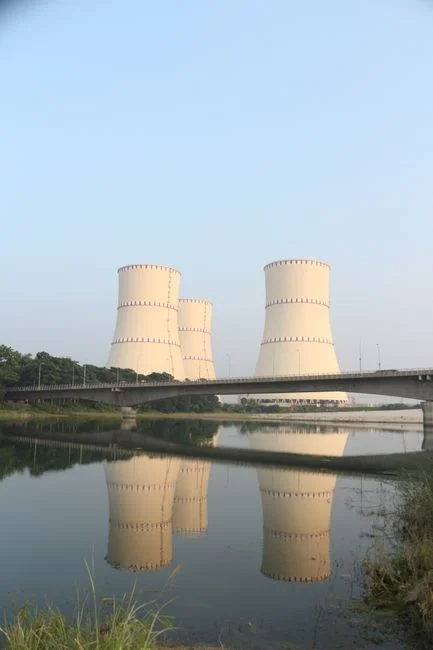
At 4 CoC, theoretical blowdown equals 25% of makeup-water volume; at 6 CoC it equals 20%, according to Genesis Water Technologies (2026). That reduction is five percentage points, or 20% of the theoretical blowdown volume, rather than 50%.
Size the normal treatment train from measured or cooling-vendor-supported blowdown, then evaluate peaks and upsets separately. Do not size every stream against an unverified extreme condition. Because Genesis Water Technologies reports actual blowdown diverging from theoretical calculations by 15–30%, field measurement should determine the final duty.
Provide equalization for variable discharge, maintenance drains and emergency releases. Confirm the residence time required by the selected process and applicable Turkish design standards rather than applying an unverified generic detention time.
Genesis Water Technologies describes modular 100–300 GPM systems as a practical scale for many enterprise and colocation facilities, but the appropriate scale for Cankaya must come from measured flow, operating envelope and reuse demand.
Link storage to the intended reuse. Include seasonal variation, backup requirements, laboratory or truck turnaround time and the consequences of a reuse-system outage. For cooling-makeup reuse, the water balance must also show how improved CoC changes blowdown, chemical demand and return flow.
Build monitoring, commissioning and compliance controls
Operational acceptance requires continuous flow, conductivity, pH, temperature and turbidity trending, with automatic controls for backwash, chemical adjustment and diversion to the approved waste route. The industrial wastewater monitoring and control guide illustrates how treatment performance should be tied to defined operating states.
Define commissioning tests around membrane integrity or filtrate quality, solids removal, disinfection performance, automatic controls, alarms, power loss and chemical-out-of-service scenarios. Every acceptance test should state its sampling point, operating condition, acceptance basis and required record.
Record the baseline water balance and verify reuse against the stated objective. Distinguish water returned to a source from water permanently consumed; both matter, but they represent different project outcomes.
Confirm Turkish environmental, water-abstraction, sewer-discharge and reuse requirements with the responsible authorities. Do not present US or EU permit values as Turkish limits, and do not infer a Cankaya discharge route from a generic international example.
| Control phase | Verification required | Evidence retained |
|---|---|---|
| Factory and site readiness | Equipment condition, utilities, instruments and drain routes | Inspection records and punch-list closeout |
| Process acceptance | Flow, quality, controls, alarms and power-loss response | Signed acceptance tests and calibrated records |
| Water-balance validation | Measured blowdown, consumption, discharge and reuse | Reconciled baseline and operating-period report |
| Compliance readiness | Applicable Turkish conditions and sampling requirements | Authority correspondence, permits and monitoring records |
| Handover | Operator training, spares, remote monitoring and maintenance | O&M manuals, training records and warranty documents |
Use this procurement checklist to compare supplier scopes
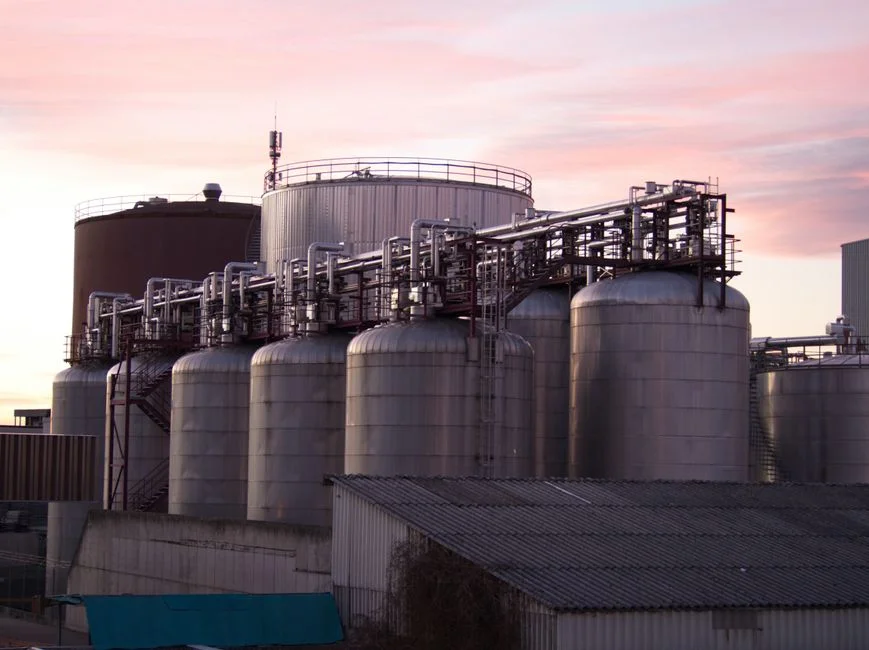
Comparable proposals must identify the source streams, measured flow basis, design duty, final use, bypass route, utility demand and residual-waste destination. Equipment names alone are not a scope.
Ask bidders to guarantee process performance and identify instrument ranges, materials of construction, automatic controls, local service support, commissioning deliverables, operator training, warranty and replacement-parts pricing.
Compare total cost of ownership, including energy, chemicals, filter media, membrane replacement, sludge or concentrate handling, monitoring and downtime—not only acquisition price. References should cover the proposed flow, water chemistry, operating envelope and reuse duty, rather than only generic data-center experience.
| Supplier deliverable | Required information | Reason for review |
|---|---|---|
| Process basis | Streams, flow, analysis, objective and operating envelope | Confirms that the proposal matches site conditions |
| Equipment and controls | Materials, instruments, duty, redundancy, bypass and utilities | Exposes omissions and unsupported assumptions |
| Residuals and reuse | Waste destination, concentrate handling and reuse interface | Prevents an incomplete treatment scope |
| Commercial offer | Itemized CAPEX and OPEX, spares, warranty and local support | Allows like-for-like lifecycle comparison |
| Commissioning evidence | Tests, acceptance criteria, training, documentation and references | Defines deliverable quality before award |
The industrial treatment procurement scope comparison provides a useful structure for separating quoted equipment from the complete operating package.
Frequently Asked Questions
How should treatment capacity be sized for a data center in Cankaya?
Size it from measured cooling blowdown and verified reuse demand, not facility megawattage alone. Use the cooling vendor’s water balance, reconcile it with field flow measurements, and test peak and upset conditions separately. Genesis Water Technologies reports that actual blowdown can exceed theoretical calculations by 15–30%.
How much will wastewater and cooling blowdown treatment cost?
No defensible Cankaya price can be stated without the measured flow, selected treatment objective, water chemistry and local utility tariffs. Request itemized capital cost, energy, chemicals, media and membrane replacement, sludge or concentrate disposal, monitoring, maintenance and the commercial value of reuse.
Which treatment supplier should be selected for the project?
Select against the complete scope, not an isolated membrane or skid price. Require the proposed flow and water chemistry, end use, bypass route, utilities, controls, residual management, commissioning tests, operator training, local support and relevant references. Reject any bid that leaves one of those interfaces undefined.
What Turkish approvals are needed for discharge and reuse?
The required confirmations depend on the selected discharge route and reuse application. Obtain written requirements from the relevant Turkish authorities and receiving utility for environmental discharge, sewer connection, water abstraction and reuse. Keep confirmed conditions separate from design assumptions until the responsible authority approves the basis.