What EV and Auto Wastewater Changes About Equipment Selection
For an EV or auto factory in Carol Stream, choose dissolved air flotation (DAF) when oily wash water, free oil, FOG, colloids, or solids that float or remain suspended dominate the treatment problem. Choose a conventional clarifier when the principal load is dense, readily settleable grit and solids with limited floating contaminants. The defensible 2026 design usually starts with source separation, then applies clarification or DAF where the contaminant behavior supports it. Biological treatment or other polishing belongs only where the required reuse or discharge quality demands it. Equipment selection should begin with stream-specific sampling and proceed through jar and pilot testing. This article’s EV and auto wastewater DAF-versus-clarifier guide extends the decision logic to factory applications.
A plant-wide average TSS cannot support this decision because automotive and EV manufacturing wastewater is not one uniform stream. Oily floor washdown may contain free oil and settleable dirt. Process rinse water may change with the production step. Paint-related wastewater can carry suspended solids, coatings, or poorly soluble compounds. Stormwater introduces variable grit, sediment, and incidental contamination, while sanitary wastewater has a different treatment objective and should not be mixed into an industrial balance without justification.
Build the selection around three axes: dominant contaminant behavior, required downstream water quality, and utility and sludge burden. For each stream, determine whether treatment is for reuse, sewer pretreatment, process recovery, or another destination. The North Carolina State University review of pulp and paper practices summarizes this as “water-fit-for-use”: treat water only to the quality required for its intended use, while ensuring final effluent satisfies discharge limits. That principle transfers to industrial wastewater pretreatment, but it does not justify treating sanitary, stormwater, and process streams to the same standard.
Representative sampling should span production, cleaning, shutdown, and upset conditions. Test free oil and oil and grease, FOG, suspended solids, grit, settleable solids, floating material, pH, and colloid behavior. Flow variability also matters: an average daily flow can conceal the peak hydraulic event that determines whether the proposed unit can perform consistently.
How DAF and Conventional Clarifiers Separate Wastewater
DAF removes contaminants by flotation, while a conventional clarifier removes them by gravity settling; the contaminant behavior must match the separation mechanism. Clearwater Industries describes DAF as a clarification process that uses microbubbles of 30–50 microns to remove impurities and solids. Compressed air dissolves in pressurized water, and the released bubbles attach to impurities and flocculated particles. The resulting float rises to the surface for removal by a skimmer. Clarified water is recovered below the floating blanket and above the settled-solids zone.
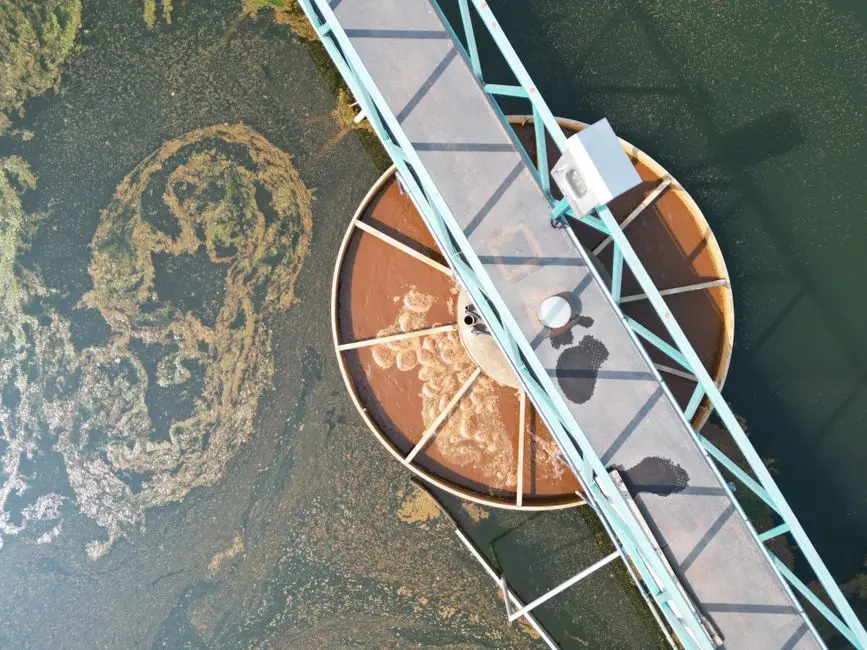
A conventional sedimentation clarifier instead captures material that settles under quiescent or slowly flowing conditions. It is the more direct option for dense grit and readily settleable solids, but its capture mechanism is less favorable for low-density oil, FOG, colloids, and particles that remain suspended. Komline-Sanderson states that DAF is best applied to material that settles slowly, persists in suspension, or tends to float. Chemical conditioning can improve DAF performance by aggregating particles so they contact the bubbles more effectively.
DAF does not necessarily exclude sedimentation. Clearwater Industries notes that most DAF systems account for settled sludge, and Komline-Sanderson states that bottom collectors remove influent solids that settle rather than float. This makes a DAF a potential clarification platform for mixed particulate loads, but it does not turn it into a substitute for biological treatment of biodegradable organic matter.
The equipment scope follows the mechanism. A typical DAF installation includes a recycle pump, air-dissolving system, chemical-conditioning equipment, float skimming, and sludge withdrawal. An industrial dissolved-air flotation system therefore must be evaluated as an integrated process train, not as a tank with a stated flow rating.
Choose by Wastewater Condition Rather Than by Equipment Name

A conventional clarifier is the defensible choice when dense, readily settleable solids dominate and free oil, FOG, colloids, and persistent suspended material are secondary concerns. DAF is the stronger candidate when buoyant or persistent contaminants control the treatment objective. Neither technology can be selected responsibly from flow or TSS alone; the decisive information comes from representative stream characterization and testing.
| Wastewater condition | Preferred clarification approach | Design basis to verify |
|---|---|---|
| Dense grit and readily settleable solids; little free oil or FOG | Conventional sedimentation clarifier | Settling behavior, solids inventory, withdrawal method, and required clarified-water quality |
| Free oil, FOG, light solids, colloids, or slow-settling particles | DAF with tested chemical conditioning | Oil capture, float stability, chemical program, recycle requirements, and clarified-water quality |
| Both heavy settleable material and buoyant contaminants | Hybrid train; consider dense-solids removal before DAF | Mass balance across each unit, including solids transfer and downstream sludge loading |
| Biodegradable organic load requiring biological removal | Clarification upstream of biological treatment, or DAF as an upstream load-reduction option | Organic loading, biological objectives, and final effluent requirements |
Source separation is the first branch of the decision tree. Where streams differ materially, pretreatment can reduce the pollutant load and volume sent to downstream treatment. The NC State review identifies upstream DAF and other process changes as ways to reduce pollutant load and effluent volume reaching end-of-pipe treatment. For an auto plant, that logic supports isolating oily floor washdown rather than diluting it with clean process water. A lamella sedimentation clarifier remains appropriate where tested settling performance and the downstream quality objective support gravity separation.
DAF is not the appropriate answer merely because the wastewater is “industrial.” If biodegradable organic removal is the objective, clarification can precede activated-sludge treatment, while DAF can serve upstream as a load-reduction option. The academic review describes conventional clarification commonly preceding activated-sludge processes and identifies DAF as an upstream treatment capable of reducing downstream load. A hybrid train may therefore be the most defensible arrangement: remove buoyant material in DAF, settle dense solids, then route the clarified stream to biological or polishing treatment where required.
Compare DAF and Clarifiers Across Factory Buying Criteria
DAF and clarifiers differ most clearly in target contaminants, utilities, chemical demand, and sludge handling—not simply in purchase price. Komline-Sanderson identifies chemical pretreatment, power, water, air, operator attention, cleaning, and maintenance as clarification-selection factors. It also states that electric power runs the skimmer drive and recycle pump, while compressed air serves the air-dissolving system.
| Buying criterion | DAF | Conventional clarifier |
|---|---|---|
| Primary contaminant emphasis | Suspended solids, FOG, oil and grease, colloidal material, and buoyant contaminants | Dense, readily settleable solids |
| Core utilities and ancillaries | Electric power, compressed air, recycle pumping, saturated-water supply, chemical conditioning, float skimming, and solids withdrawal | Hydraulic feed, settling basin, solids collection and withdrawal, sludge handling, and associated pumping |
| Chemical implications | Coagulation and flocculation may improve solids removal and produce thicker sludge | Chemical use depends on the selected process, settling performance, and required clarification |
| Configuration considerations | Available configurations include low-profile cross-flow, high-profile, lamella-assisted, and modular turnkey systems | Configuration depends on required settling performance, footprint, solids inventory, withdrawal arrangement, and installation constraints |
| Lifecycle maintenance | Inspect source conditions, pumps, air system, skimmer, controls, chemical system, and sludge route | Inspect inlet and outlet devices, collection zones, sludge withdrawal, controls, structural condition, and downstream handling |
The available DAF designs are not directly comparable from their physical form alone. Clearwater Industries describes a low-profile cross-flow unit for small-to-medium flows with high contaminant loads, a high-profile system with lamella pack for lower-overflow separation, a combined-flow design for large flows, and a modular turnkey system. A clarifier should likewise be compared by process duty, not only footprint.
Chemical and sludge consequences belong in the lifecycle model. Clearwater Industries states that coagulation and flocculation can increase DAF solids removal and create thicker sludge that may need little or no further dewatering. That is not a plant-specific guarantee. Reagent demand, float stability, sludge moisture, dewatering behavior, and disposal route must be established through testing and supplier guarantees. An automatic chemical dosing system should be evaluated as part of the DAF scope because chemical preparation, metering, mixers, and controls determine whether the tested conditioning program can be reproduced in operation.
Size the Equipment From Project-Specific Inputs
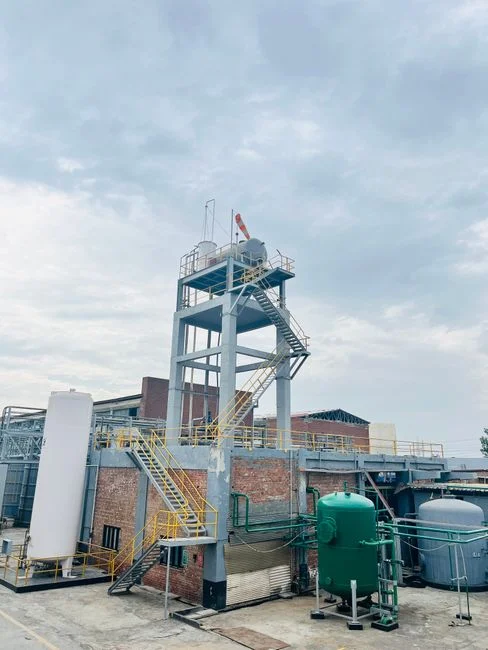
Equipment sizing begins with the flow and contaminant dataset for each separated stream, not a catalog maximum. Collect design flow, peak flow, flow-duration profile, operating hours, wastewater temperature, pH, and current and future production projections. These inputs define hydraulic demand and operating conditions; they do not by themselves establish clarification performance.
| Required input | Clarifier application | DAF application |
|---|---|---|
| Hydraulic profile | Design flow, peak flow, duration, operating hours, and production projections | Same hydraulic inputs, including recycle and saturated-water requirements |
| Wastewater characterization | TSS, grit, oil and grease, FOG, settleable solids, floating material, and colloid behavior | Same constituents, with emphasis on free oil, buoyant material, slow-settling solids, and float behavior |
| Process definition | Required settling or surface-loading condition, solids inventory, withdrawal method, and clarified-water objective | Separation objective, recycle flow, compressed-air demand, chemical sequence, float removal, and bottom-solids withdrawal |
| Supplier catalog context | HydropureWater states 20–40 m/h surface loading for its lamella clarifier | HydropureWater states a 4–300 m³/h range across 13 models |
HydropureWater also states that its lamella clarifier can use up to 30% less chemical than its comparison baseline. Neither that comparison nor the catalog flow range establishes suitability for a Carol Stream plant. They are manufacturer-stated parameters, not application guarantees. The selected configuration must be tied to stream testing, hydraulic data, and a stated effluent objective.
For the clarifier, request the design settling or surface-loading basis, expected solids inventory, and sludge-withdrawal arrangement. For DAF, require the tested separation objective to define recycle flow, saturated-water supply, air demand, chemical-conditioning sequence, float collection, and bottom-solids withdrawal. Comparable technical proposals should show the same wastewater inputs, performance targets, test methods, and boundary conditions.
Test Before Buying and Build a Complete Treatment Train
Laboratory and pilot testing reduces the risk of specifying clarification from plant-wide averages. Komline-Sanderson states that a simple laboratory test generally determines DAF feasibility and that lab or pilot testing is often the best way to determine separation characteristics. For a factory decision, the test should reproduce representative stream chemistry, temperature, flow conditions, and operating variability.
- Sample each separated stream during representative production, cleaning, shutdown, and upset conditions.
- Use jar testing to compare chemical conditions and establish mixing, pH adjustment, and flocculation behavior.
- Measure solids capture, oil and grease removal, float stability, clarified-water quality, and resulting sludge characteristics.
- Run pilot testing where the result will determine DAF feasibility, hydraulic loading, or hybrid sequencing.
- Translate the verified result into the equipment scope, utility demand, controls, and downstream sludge plan.
DAF startup requirements must also enter the design. Clearwater Industries states that the unit should initially be filled with clean water because starting with wastewater can produce prolonged dirty discharge and risk damage to the recirculation pump and air-saturation system. The facility therefore needs a clean-water source and an engineered startup procedure.
Provide access for chemical preparation and dosing, recycle pumping, compressed air, float collection, bottom-solids removal, controls, drainage, and maintenance. Evaluate the float and settled-solids destinations before ordering the clarification unit. HydropureWater’s plate and frame filter press catalog covers filtration areas from 1–500 m² for industrial sludge dewatering, but the selected press must be matched to the tested sludge properties and disposal route.
Verify Carol Stream Compliance and Total-Cost Requirements
Local acceptance requirements must be resolved before equipment selection because neither clarification technology establishes a discharge limit by itself. Identify the receiving authority, applicable sewer or discharge permit, local limits, sampling requirements, and whether an existing industrial user permit or wastewater treatment agreement applies to the facility or transfers with a change in ownership or use.
Confirm the actual requirements for oil and grease, suspended solids, pH, toxicity, and other constituents against the applicable permit. Do not assume that clarified water is acceptable for discharge or reuse because a manufacturer states a generic removal objective. For reuse, compare the clarified-water specification with the receiving process requirement; for sewer discharge, compare the permit and local sewer acceptance criteria with the complete treatment train.
Compare capital cost with chemical consumption, compressed air, electric power, operator labor, cleaning, maintenance, sludge dewatering, and replacement parts. Ask each supplier for a project-specific mass balance, guaranteed operating objective, utilities estimate, controls scope, guarantees, and the pilot or laboratory basis for the proposed configuration. The transportation-equipment wastewater buyer’s guide provides a broader procurement comparison, while the EV and auto plant pretreatment compliance guide outlines the type of local review that must precede a capital request.
The 2026 recommendation rule is therefore conditional: specify DAF for buoyant or persistent contaminants, specify clarification for dense settleable solids, and consider a hybrid train when both are present. Make local pretreatment and discharge review the final design gate rather than an administrative task after award.
Frequently Asked Questions
Is DAF cheaper than a clarifier for an EV or auto plant?
Not necessarily. Purchase price is only one component of total cost. Compare chemical demand, compressed air, electric power, operator labor, cleaning, maintenance, sludge handling, and dewatering using the same wastewater basis. Ask each supplier for a project-specific utilities and operating-cost estimate; no defensible plant price can be produced without stream flows, tested chemistry, selected chemicals, and expected operating hours.
How should a Carol Stream factory size a DAF or clarifier?
Size from separated-stream flow profiles, contaminant characterization, required effluent quality, and tested separation performance. Provide design and peak flows, operating hours, pH, temperature, TSS, oil and grease, FOG, grit, settleable solids, floating material, and colloid behavior. Do not adopt a catalog flow range or loading value without confirming that the supplier’s basis matches the plant’s wastewater and performance objective.
What should a supplier provide before the equipment is ordered?
Request the process basis, stream-by-stream mass balance, separation objective, utilities estimate, equipment and controls scope, chemical program, sludge strategy, maintenance requirements, startup procedure, and applicable warranty. Also require the pilot or laboratory results supporting the proposed configuration and identify what performance is guaranteed rather than merely expected.
Can EV battery manufacturing wastewater be clarified directly?
Do not assume it can. Battery, production-rinse, cleaning, and washdown streams must be characterized separately because their contaminants and intended destinations may differ. Evaluate each stream for free oil, FOG, solids, colloids, pH, flow variability, and reuse or pretreatment objectives before selecting DAF, clarification, biological treatment, or a combined train.
Which option creates the greater compliance risk?
Either option creates risk if selected without local review. Obtain the applicable permit and sewer-acceptance requirements, then verify the complete train against limits for oil and grease, suspended solids, pH, toxicity, and other specified constituents. Equipment selection should close only after the proposed treatment and sampling plan satisfy those local requirements.