
What Transportation Equipment Wastewater Changes
Wastewater character—not the equipment label—should drive the choice for transportation-equipment factories near Frankfort. Separate transportation equipment wash water, coating or paint-related wastewater, machining and metalworking fluids, floor and equipment washing, and stormwater entering the plant building before comparing DAF with a lamella clarifier. The decision changes with floatable oils, FOG, particle behavior, flow variability, chemical needs, available space, sludge handling, and the required discharge or reuse outcome.
Do not assume that oily wastewater automatically dictates DAF. Characterize each stream for TSS, FOG or oil, settleable and floatable fractions, particle-size distribution, pH, temperature, flow, and production-cycle variation. The same analysis must identify whether the factory is pursuing water reuse, pretreatment at a publicly owned treatment works, direct discharge, or sludge recovery.
Source control deserves priority. Separate cleaning agents, paint-containing rinses, lubricants, and floor washings where practical; doing so can reduce the clarification load and chemical demand. Obtain representative samples during normal production, intensive cleaning, shutdown, and washdown events, because short campaigns can hide peak loads. A mechanical preliminary barrier may also be needed before equalization or clarification; compare the rotary mechanical bar screen against the collected debris and screen-loading demands.
| Factory stream | Selection variables to establish | Primary design questions |
|---|---|---|
| Transportation equipment wash water | Flow cycle, oil and FOG, detergents, TSS, temperature | Can the stream be segregated? Is flotation or settling the primary separation duty? |
| Coating or paint-related wastewater | Paint chemistry, dispersed solids, floatable fraction, batch variation | Can concentrated rinses be excluded? What pretreatment or source control is required? |
| Machining and metalworking fluids | Emulsified oil, suspended solids, pH, chemical conditioning demand | Is the stream suitable for flotation, or does it require a different upstream treatment process? |
| Floor and equipment washing | Combined oil, settleable solids, wash chemistry, rainfall contribution | What flow and load peaks govern equalization and equipment duty? |
| Plant-building stormwater | Contamination pathway, flow variability, sediment character | Is it segregated, diverted, or included in the selected treatment train? |
How DAF and Lamella Clarification Work
DAF separates material by flotation, while a lamella clarifier separates conditioned solids by sedimentation; this mechanism difference determines which contaminant fraction each unit removes most effectively. In DAF, pressurized recycle water releases 30-50-micron microbubbles that attach to suspended solids, oil, grease, and flocculated particles. A skimmer removes the floating material, while heavier material can settle into a separate collection zone (Clearwater Industries, April 2026).
Chemical conditioning is part of the DAF train. Clearwater Industries states that coagulation and flocculation should be paired with DAF because conditioning enlarges particles and improves their attachment to microbubbles. The upstream automatic chemical dosing system must be matched to the wastewater and verified chemistry, not selected independently of the flotation unit.
A lamella sedimentation tank uses inclined plates to increase effective settling area. HydropureWater describes this equipment as combining sludge recirculation, flocculation, and inclined-plate separation in a compact structure. The lamella clarifier for wastewater is generally more appropriate when conditioned solids are predominantly settleable rather than buoyant.
Both mechanisms produce sludge. Neither removes every contaminant or replaces biological treatment, polishing, or filtration when those steps are required. If selected solids must be dewatered before disposal or reuse, evaluate the industrial sludge dewatering filter press alongside the clarifier rather than treating it as an accessory added after purchase.
| Feature | DAF | Lamella clarifier |
|---|---|---|
| Separation mechanism | Microbubble flotation followed by skimming | Flocculation followed by inclined-plate settling |
| Best contaminant fit | Floatable oils, FOG, and light solids | Dense, flocculable settleable solids |
| Conditioning | Coagulation and flocculation normally used to improve bubble attachment | Flocculation required to produce settleable flocs |
| Solids removal | Floating sludge plus settled sludge | Settled sludge, with configuration-dependent solids handling |
| Downstream treatment | Additional biological, polishing, filtration, or dewatering steps may be needed | Additional biological, polishing, filtration, or dewatering steps may be needed |
Side-by-Side Equipment Comparison

DAF has the stronger contaminant fit when floatable oils, FOG, and light solids dominate; lamella clarification has the stronger fit when flocculable solids settle readily; a mixed wastewater may justify both mechanisms in sequence. Selection should follow measured contaminant fractions and the required effluent quality rather than a general claim that one clarifier handles more flow.
The following comparison details how these distinct technologies align with specific operational requirements.
Both processes can benefit from industrial wastewater coagulation, but neither its chemical demand nor its mixing requirements can be assumed from equipment geometry. Clearwater Industries states that DAF should be paired with chemical coagulation and flocculation, while its DAF guide also says chemical dose and mixing time should be established through jar testing. A lamella unit similarly requires flocs dense and stable enough to separate on inclined plates.
Hydraulic design changes the footprint comparison. FRC Systems says plate packs in high-rate DAF designs improve separation efficiency, reduce energy use, and shrink system footprint. Its available configurations include high-rate, compact, and open-tank designs, with a displayed flow range up to 2,000+ GPM (FRC Systems, undated research supplied for this article). That range is not a sizing conclusion; the selected unit must be checked against the factory’s actual flow and load profile.
Configuration and materials also need review. Clearwater Industries identifies the low-profile FPAC for small-to-medium flow rates with high TSS and FOG loads, the high-profile FPBC for low-to-medium loads, and the high-flow FPHF for high wastewater flows. It states that standard DAF clarifiers use 304SS and can be supplied in 316SS, polypropylene, and other materials (Clearwater Industries, April 2026). FRC Systems lists 304, 316, duplex, and custom-alloy stainless steel. These are configuration and material choices, not evidence that one equipment type is automatically cheaper.
Total installed cost cannot be selected from flow alone. Compare chemical consumption, recycle pumping, available footprint, sludge volume, maintenance access, controls, utilities, foundations or installation, and downstream biological or polishing requirements together. For a direct equipment reference, see the industrial DAF system and the lamella clarifier for wastewater.
| Procurement variable | DAF | Lamella clarification |
|---|---|---|
| Primary fit | Floatable oils, FOG, light solids | Flocculated settleable solids |
| Chemical sensitivity | Particle attachment depends on successful conditioning | Floc density and settleability affect performance |
| Footprint consideration | High-rate plate-pack designs may reduce footprint | Inclined plates provide compact effective settling area |
| Flow variation | Evaluate recycle, skimming, and equalization response | Evaluate hydraulic distribution and solids loading |
| Materials | Options reported include 304SS, 316SS, polypropylene, duplex, and custom alloys | Confirm vessel, plate, and corrosion-protection materials in the purchase specification |
| Sludge | Floating and settled fractions require a handling route | Concentrated settled sludge requires a handling route |
Match the Equipment to Plant Operating Conditions
The plant’s dominant wastewater fraction should determine the primary mechanism, while production variability determines how much equalization and operating control the system needs. For wash-water streams dominated by oil, FOG, and light solids, favor DAF after screening and equalization, with chemical conditioning and automatic skimming. For streams dominated by dense, flocculable solids, evaluate a lamella clarifier after conditioning when hydraulic conditions and available footprint support sedimentation.
Engineers must ensure the chosen equipment aligns with the specific mass balance of the facility.
Mixed streams should not be forced into one device. DAF can recover the floatable fraction while lamella clarification handles the settleable fraction, or the order can change depending on chemistry and treatment objectives. Each stage then needs its own solids route.
For high or variable flow, evaluate equalization, open-tank or high-flow configurations, and duty-cycle controls. FRC Systems displays a DAF range up to 2,000+ GPM, but the factory’s measured average, peak, and batch flows must control model selection. Do not use a published maximum as the design flow.
Where building space or installation time is constrained, evaluate compact or skid-mounted treatment. Clearwater Industries reports that its COMPACT DAF uses a single skid for flows of 66 GPM or less and a modular two-skid arrangement above that flow (Clearwater Industries, April 2026). The industrial DAF system should be evaluated against those operating conditions, not selected by skid designation alone.
For wastewater reuse pretreatment or protection of downstream membrane or RO equipment, define the required solids, turbidity, oil, and colloidal-removal targets before selecting clarification equipment. Clarification is one barrier in the treatment train, not proof that reuse quality has been achieved.
Select Through Testing, Not Equipment Names
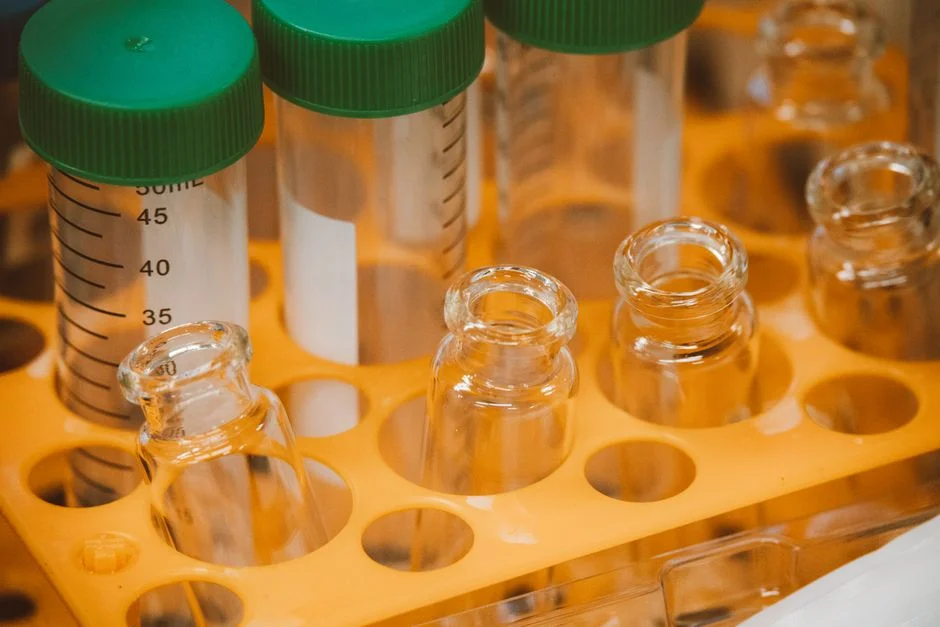
A defensible selection converts factory wastewater into a measured design basis before equipment is specified. Begin with a sampling program covering TSS, FOG or oil, settleable and floatable fractions, pH, temperature, flow, and batch-to-batch variability. Include normal production, cleaning campaigns, shutdowns, and washdown periods so short, high-load events are not hidden by routine samples.
- Characterize each segregated stream and identify source-control opportunities.
- Run chemical jar tests to establish pH adjustment, coagulation and flocculation doses, and mixing conditions. Clearwater Industries states that jar testing should determine the required mixing time.
- Pilot-test when floatable and settleable fractions materially affect the choice, reuse targets are stringent, or full-scale underperformance would carry substantial risk.
- Prepare a hydraulic and mass balance for average and peak flow, recycle flow, chemical demand, sludge generation, skimmer or solids-removal duty, utilities, controls, and maintenance access.
- Issue a project-specific supplier package and compare responses using the same basis.
The supplier request should state required effluent performance, the proposed wastewater basis, materials of construction, electrical and control scope, drawings, startup support, spare parts, and the test basis for any guarantee. Include the automatic chemical dosing system and sludge-handling equipment in that scope. If dewatering is required, specify the industrial sludge dewatering filter press interface rather than leaving cake production and handling undefined.
Confirm discharge, sewer-discharge, pretreatment, or reuse requirements with the responsible Frankfort-area authority. The supplied research contains no site-specific Frankfort permit limits, so no numeric compliance claim should be assumed. The procurement file should distinguish measured project requirements, supplier guarantees, and regulatory obligations.
| Stage | Required output | Decision supported |
|---|---|---|
| Stream segregation and sampling | Representative characterization and flow profile | Whether source control can reduce treatment load |
| Jar testing | Chemical program and mixing basis | Whether particles can be conditioned for flotation or settling |
| Pilot verification | Observed separation with actual wastewater | DAF, lamella, or combined treatment |
| Mass and hydraulic balance | Sized equipment, pumps, controls, chemicals, and sludge route | Configuration and operating envelope |
| Supplier and authority review | Comparable technical proposals and applicable requirements | Final purchase specification and compliance responsibility |
Frequently Asked Questions
Is DAF or a lamella clarifier better for a transportation equipment factory?
DAF is generally better suited to floatable oils, FOG, and light solids; a lamella clarifier is generally better suited to predominantly flocculable settleable solids. Mixed streams may justify DAF followed by lamella clarification. The final choice should follow representative wastewater testing and the specified treatment objective.
How much does DAF versus a clar
Frequently Asked Questions
Is DAF or a clarifier better for transportation equipment manufacturing wastewater?
Dissolved Air Flotation (DAF) is generally superior for transportation equipment wastewater because it effectively removes emulsified oils, greases, and suspended solids common in machining fluids and wash-rack runoff. While a traditional gravity clarifier relies on Stokes' Law and is limited to particles with a specific gravity significantly higher than water, DAF systems use micro-bubbles to float low-density contaminants, achieving removal efficiencies of 85-95% for oil and grease.
A lamella clarifier is typically only preferred if the wastewater stream contains high concentrations of heavy, inorganic solids that settle rapidly. For most transportation manufacturing applications where hydrocarbon loading is the primary concern, DAF systems provide a smaller footprint and significantly better effluent quality for discharge or reuse.
How much does a DAF system cost compared with a lamella clarifier in 2026?
In 2026, a skid-mounted DAF system for a medium-sized facility typically ranges from $85,000 to $160,000, depending on flow capacity and materials of construction. In contrast, a lamella clarifier of equivalent hydraulic capacity is generally cheaper, ranging from $45,000 to $90,000, due to its simpler mechanical design and lack of complex pressure-saturation components.
However, total cost of ownership must account for chemical consumption. DAF systems require specific coagulants and flocculants to induce flotation, often resulting in higher monthly operating expenditures (OPEX) compared to gravity-based clarifiers. Facilities must weigh these higher chemical costs against the need for more frequent or expensive downstream filtration required if a clarifier fails to meet stringent oil-in-water discharge limits.
How do I size a DAF or clarifier for a factory in Frankfort?
Sizing for a Frankfort facility requires a hydraulic load analysis based on peak flow rates (gallons per minute) and mass loading of total suspended solids (TSS). For a DAF, sizing is determined by the hydraulic loading rate, typically ranging from 1.5 to 3.0 gallons per minute per square foot (gpm/ft²) of surface area. You must also calculate the air-to-solids ratio, which should ideally fall between 0.01 and 0.05 mg of air per mg of solids to ensure effective bubble attachment.
For a lamella clarifier, sizing is dictated by the projected settling area rather than the footprint. You must calculate the surface overflow rate (SOR), generally targeted at 0.25 to 0.5 gpm/ft² of projected settling area. Always incorporate a 20% safety factor for peak flow fluctuations and seasonal temperature variations, which influence the viscosity of the water and the settling velocity of particles.
Should we pilot-test a DAF system before purchasing industrial wastewater equipment?
Yes, pilot-testing is highly recommended for transportation manufacturing wastewater because the chemical composition of wash-waters—specifically surfactants and proprietary cleaning agents—can significantly inhibit floatability. A pilot study allows you to determine the optimal coagulant dosage, pH adjustment range, and air-to-solids ratio required to achieve compliance with local municipal discharge permits.
A 24-hour to 72-hour pilot test provides critical data on sludge volume index and dewaterability, which directly impacts your long-term waste disposal costs. Relying solely on theoretical calculations for complex chemical streams often leads to undersized systems or ineffective separation, which can result in non-compliance fines or the need for costly equipment retrofits.
Can a DAF unit replace biological wastewater treatment?
A DAF unit can replace biological treatment only if the primary goal is the removal of physical contaminants such as free oils, emulsified hydrocarbons, and inorganic suspended solids. DAF systems are highly effective at reducing Chemical Oxygen Demand (COD) associated with particulate matter, but they do not remove dissolved organic compounds or nutrients like nitrogen and phosphorus, which typically require biological oxidation.
If your facility must meet strict BOD (Biochemical Oxygen Demand) or specific dissolved organic carbon limits, a DAF is best used as a pretreatment step. By removing the bulk of the oil and grease, the DAF protects downstream biological processes from toxicity and overload, allowing the subsequent aerobic or anaerobic reactors to operate more efficiently.