Which Data Center Wastewater Streams Need Separate Treatment?
Cooling-tower blowdown is water deliberately drained from a recirculating cooling system to remove the buildup of dissolved materials caused by evaporation; it is replaced with fresh make-up water. It is not the same stream as sanitary sewage, RO reject, softener waste or temporary closed-loop fill-and-flush discharge. Treating them as one flow can conceal incompatible chemistry, obscure the water balance and produce a discharge that does not match the receiving utility’s requirements.
Sanitary sewage from restrooms and kitchen areas requires a biological treatment and disinfection solution. Cooling blowdown, RO reject, softener brine, maintenance drain-downs and construction flushing require process-water evaluation because each has a different contaminant profile, flow pattern and disposal objective. The data-center wastewater treatment planning guide provides the broader route from stream separation to treatment selection.
| Wastewater stream | Primary contaminants or characteristics | Engineering decision |
|---|---|---|
| Cooling-tower blowdown | Concentrated dissolved minerals, residual biocides, scale and corrosion inhibitors, heat | Characterize for cooling make-up reuse or a controlled discharge route |
| Sanitary sewage | Organic matter, nutrients and pathogens | Route to sanitary treatment or a dedicated biological treatment train |
| RO reject | Concentrated dissolved salts and treatment residuals | Assess separately for controlled reuse, further treatment or permitted discharge |
| Softener waste | Ion-exchange regenerant and dissolved mineral salts | Identify regenerant chemistry and determine a valid recovery or disposal route |
| Construction fill-and-flush water | Possible corrosion-control chemicals, pipe-cleaning residues, bacteria and sediments | Test before sewer acceptance; authorize treatment or off-site disposal |
Routine blowdown characterization should cover conductivity or dissolved solids, temperature, pH, hardness, silica, alkalinity, residual biocides, and scale and corrosion inhibitors. Blowdown volume depends on the cooling design, climate and make-up-water quality, so the mechanical engineer should provide the design flows rather than applying a generic rule of thumb, as noted by Black Forge Data Centers’ cooling-water discharge guide.
How Should Kampung Baru Subang Makeup and Blowdown Water Be Characterized?
Characterization must establish average and peak hourly and daily flows and the actual water chemistry before equipment is sized. Request operating data for cooling blowdown, sanitary sewage, RO reject, softener waste, maintenance drain-downs and construction flushing. If the facility is still being designed, obtain design flows from the cooling designer and identify which values remain provisional.
Representative samples should be tested for temperature, pH, conductivity or total dissolved solids, silica, calcium, magnesium, hardness, alkalinity, iron and residual treatment chemicals. Record the make-up-water source, chemicals added, cooling operating temperature and cooling cycles of concentration. Tropical ambient conditions can alter the operating profile, but the design basis still requires site measurements rather than assumptions about local water quality.
| Design input | Information required | Why it affects treatment |
|---|---|---|
| Flow profile | Average and peak daily and hourly flows by stream | Sets hydraulic capacity, storage and equalization requirements |
| Blowdown chemistry | Conductivity or TDS, temperature, pH, hardness, silica, alkalinity, iron and treatment residuals | Defines pretreatment, membrane, chemical dosing and monitoring requirements |
| Cooling design | Make-up source, cycles of concentration, operating temperature and evaporation rate | Controls the available reuse flow and concentrate generation |
| Authority conditions | Written sewer capacity, connection conditions, permit pathway and discharge requirements | Confirms whether a proposed treatment train can legally serve the discharge route |
Two overseas figures can serve only as screening precedents. Black Forge Data Centers cites an average process-wastewater threshold of 25,000 gallons per day, a process-flow threshold of 5% or more of plant capacity, and authority designation for users that could harm the plant; the guide excludes sanitary, non-contact cooling and boiler blowdown from the volume count and leaves equivalent status to the local authority. IDE states that a 100-megawatt facility may use up to 2 million liters per day, but that is an industry-scale example, not a sizing rule for a Kampung Baru Subang data center.
Before finalizing the treatment train, obtain written confirmation from the relevant Malaysian sewer or other authority covering receiving-water options, sewer capacity, connection conditions, applicable requirements and the approval pathway. The Malaysia wastewater due-diligence requirements is useful for building that authority-facing information request.
Which Treatment Route Fits Each Wastewater Objective?
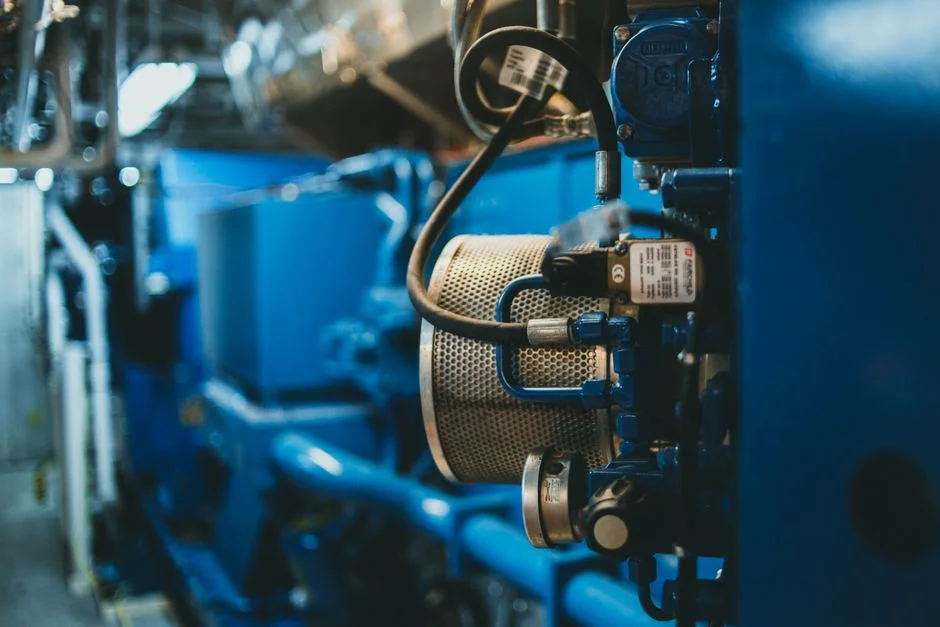
Treatment selection should follow the required water destination and the feed chemistry, not a preferred equipment category. For cooling make-up reuse, the train must first address suspended solids, colloids, hardness, scaling species and residual treatment chemicals. Where particles and colloids require removal, evaluate ultrafiltration pretreatment for data-center blowdown before the final membrane or polishing stage.
Cooling-tower blowdown is a practical reuse target because treatment can replace part of the freshwater intake, reduce discharge volume and support a higher cooling cycles of concentration. Conventional brackish-water reverse osmosis is the baseline membrane route. IDE reports that conventional BWRO is commonly limited to 75–80% recovery and identifies silica, calcium carbonate and calcium sulfate as the principal scaling constraints. These figures are process context, not a guarantee for a project whose feed chemistry has not yet been tested.
An advanced configuration is controlled salt precipitation, in which sparingly soluble salts are removed as dense solids. IDE reports an industrial application at around 95% recovery with permeate silica of about 1 mg/L. That configuration includes a process-specific salt-precipitation step and concentrate handling; it should not be inferred from the conventional recovery range alone.
| Objective | Preferred route | Design gate |
|---|---|---|
| Reuse blowdown as cooling make-up | Chemistry-specific pretreatment followed by membrane treatment and controlled blending | Permeate and blend meet the cooling-system chemistry, corrosion and temperature requirements |
| Controlled municipal discharge | Characterization, pretreatment where required, flow control and monitoring | Written authority acceptance and compliance with applicable discharge conditions |
| Sanitary wastewater | Biological treatment and disinfection | Hydraulic and organic loading are established from actual operating data |
| Construction fill-and-flush water | Characterization followed by an authority-approved treatment or off-site disposal route | Utility accepts the tested discharge, or an alternative disposal route is authorized |
| RO reject, softener brine and concentrated blowdown | Separate assessment before recombination or reuse | Validated mass balance demonstrates that the combined stream is suitable for its destination |
RO reject, softener brine and concentrated blowdown should remain separate until a validated water balance establishes where they can be recombined or reused. An industrial reverse osmosis system for cooling-water reuse may be appropriate for the permeate path, but it does not by itself solve concentrate disposal or sanitize sewage.
How Can the Facility Reuse Treated Blowdown Without Creating a New Discharge Problem?
A reuse project must close the data-center water balance rather than shift the wastewater stream. The calculation should include evaporation, cooling blowdown, fresh make-up supply, treated permeate, RO reject, precipitation solids, softening waste and any change in cooling cycles of concentration. The resulting flow diagram should show where every concentrate leaves the system and who accepts it.
Reuse should begin only after confirming permeate chemistry, residual treatment chemicals, temperature, corrosion compatibility and blending requirements against the cooling-system specification. A laboratory-confirmed permeate result is necessary, but the operating strategy must also detect changes in feed chemistry, membrane performance and cooling conditions. Automatic chemical dosing may support controlled pretreatment or pH adjustment, but chemical compatibility remains a project-specific requirement.
Conductivity and critical scaling indices are useful online or at-line controls. Laboratory testing should confirm the design basis during commissioning and at the frequency required by the operating strategy. The cooling blowdown reuse decision framework also emphasizes the need to align reuse with the facility’s complete water balance.
Concentrated RO reject should not be sent directly to sewer unless the sewer authority confirms acceptance and the mass balance demonstrates no pass-through or interference concern. If reuse cannot be achieved safely or economically, specify pretreatment, flow control and monitoring for a permitted discharge route. Uncontrolled dilution is not a treatment strategy and should not appear in the performance guarantees.
What Should a Data Center Wastewater Treatment Supplier Prove?
A supplier should demonstrate that its proposed system is based on the site’s flow and chemistry, not a generic package drawing. Require the guaranteed design flow range, process flow diagram, hydraulic profile, equipment list, controls narrative, utility demand and the site-specific performance basis. For membrane systems, request the recovery calculation, scaling and fouling assessment, cleaning strategy, redundancy arrangement and concentrate-management assumptions.
Quoted performance must refer to the proposed feed composition. IDE’s 75–80% conventional BWRO recovery and its reported industrial high-recovery application at around 95% have different process contexts; neither can be represented as a guaranteed Kampung Baru Subang value before the site design basis is established.
| Procurement proof point | Information the buyer should require |
|---|---|
| Design basis | Assumed average and peak flows, feed chemistry, cooling configuration, reuse target and authority conditions |
| Process performance | Guaranteed flow, product-water quality, recovery, chemical consumption and concentrate route |
| Reliability | Standby arrangement, critical spares, fail-safe controls, cleaning access and impact on cooling availability |
| Lifecycle comparison | Purchase price, membrane replacement, energy, chemicals, operator attention, solids handling and downtime |
| Commissioning | Installation boundary, utilities, test protocol, training, documentation and contractual acceptance criteria |
Compare lifecycle factors rather than purchase price alone. Membrane replacement, chemical consumption, energy, operator attention, reject management and downtime can outweigh the capital difference. For sanitary flow, the referenced packaged A/O wastewater treatment unit handles 1–80 m³/h, while the integrated MBR treatment system spans 10–2,000 m³/day and provides near-reuse-quality effluent with filtration below 1 μm.
UF should be evaluated as pretreatment, not a complete salt-removal solution. The specified UF range is 2,000–40,000 L/h, with 0.03-micron PVDF membranes, turbidity up to 300 ppm, automatic backwash and air scour. Confirm that the quoted envelope covers the actual blowdown conditions and does not imply that dissolved salts are removed.
What Implementation Sequence Minimizes Cost and Compliance Risk?
The sequence should move from authority and drainage review to sampling, then to comparative process design, before equipment procurement. First, complete a desktop review of drainage routes, sewer capacity, lift-station constraints, existing utility commitments and the authority’s discharge requirements. Sewer capacity must include the connecting infrastructure, not only the receiving plant’s stated headroom.
- Complete the desktop review and identify the responsible sewer or receiving-water authority.
- Perform representative site sampling and a temporary data-center water-balance study.
- Develop and cost a reuse case and a compliant-discharge case.
- Compare both cases with freshwater, sewer-treatment, disposal and infrastructure-extension implications.
- Complete process selection, utility consultation, detailed design, equipment review and installation planning.
- Commission, perform performance testing and train operators against the agreed operating strategy.
Two U.S. agreements show why infrastructure obligations belong in the feasibility cost. Black Forge reports that a Shreveport draft agreement set a sewer charge at 35% of metered water use. It also reports that a Goodyear agreement involved a $36 million contribution toward an approximately $90 million plant expansion securing 1.2 million gallons per day of capacity. These are due-diligence precedents, not Malaysian tariffs or project estimates.
Request a feasibility quotation that states exclusions, assumed flows and chemistry, treatment objectives, discharge assumptions, testing obligations and items requiring local authority confirmation. The data-center wastewater treatment planning guide and cooling-tower water-treatment engineering guide can support the technical scope, but the quotation must remain site-specific.
Frequently Asked Questions
Can one packaged unit treat all wastewater from a data center?
Not until the facility has demonstrated a valid water balance. Sanitary sewage, cooling blowdown, RO reject, softener waste and construction fill-and-flush water have different contaminant profiles and treatment objectives. A combined system may be technically possible only after a validated flow and mass balance confirms that the mixed stream can meet the reuse or discharge specification.
How should the wastewater treatment system be sized?
Require average and peak hourly and daily flows, actual blowdown chemistry, cooling configuration, reuse target and written authority conditions. IDE’s figure of up to 2 million liters per day for a 100-megawatt facility is an industry example, not a sizing rule. Equipment selection should follow measured or design flows and a site-specific chemistry review.
What should the supplier quote for treatment cost?
Ask for a complete cost structure covering treatment capacity, feed chemistry, pretreatment, membrane area, pumping energy, chemicals, concentrate or solids handling, redundancy and any sewer-extension obligation. No responsible project price can be stated without the design flow, chemistry, treatment objective and authority conditions. Request both capital and lifecycle operating assumptions.
How should a supplier and delivery schedule be selected?
Ask for the guaranteed design envelope, equipment submittals, controls narrative, utility requirements, commissioning protocol, spare-parts list, local service capability and contractual performance test. The delivery schedule should include any long-lead equipment, authority approvals, site preparation and wet commissioning dependencies. Locus Water in Cheyenne required tests before construction fill-and-flush water could enter the sewer, while Loudoun Water independently verified results, illustrating why characterization and utility coordination belong in the supplier’s delivery obligations. Require written confirmation of the discharge route and applicable Malaysian approvals before accepting a performance guarantee.