
Start With the Wastewater Sources and the Required Discharge Route
A data center in São Bernardo do Campo generally needs two treatment strategies: sanitary wastewater treatment and treatment or controlled management of cooling-tower blowdown. Blowdown is concentrated water removed to control dissolved solids; it may carry elevated salts, pH changes, residual biocides, scale and corrosion inhibitors, and metals. The appropriate route depends on measured flows, cooling design, makeup-water chemistry, receiving sewer capacity, local pretreatment limits, and intended reuse. Begin with monitoring of makeup, blowdown, evaporation, conductivity, pH, and suspended solids. Then develop separate concepts for sewer discharge and on-site reuse, confirming requirements with the local utility and environmental authority before selecting equipment.
Cooling-tower blowdown is the minimum discharge of recirculating water required to remove the buildup of dissolved materials. As water evaporates, dissolved minerals and treatment chemicals remain in the circulating loop, so operators replace the discharged water with makeup water. Black & Veatch’s 2026 guide, Data Center Wastewater and Cooling Water Discharge, distinguishes this process stream from sanitary flow, reverse-osmosis reject, softening reject, and maintenance drain-downs.
Do not combine these streams by default. Sanitary wastewater requires a biological or established packaged treatment path. Cooling blowdown requires a dissolved-solids and chemical-control basis. RO and softening rejects need a defined concentrate route. The design should first establish discharge compliance, then evaluate recovery for toilet flushing, washing, irrigation, process use, or cooling makeup where technically and legally feasible. A 2026 data center wastewater treatment planning guide provides a broader route-setting framework, but local São Bernardo do Campo requirements must be confirmed directly.
| Decision point | Information required | Engineering consequence |
|---|---|---|
| Sanitary wastewater | Fixture flow, occupancy assumptions, floor drainage, sewer connection | Separate collection and treatment basis |
| Cooling blowdown | Cooling configuration, makeup, evaporation, blowdown, temperature and chemistry | Blowdown segregation, balancing and treatment |
| RO or softening reject | Reject flow, conductivity, chemicals and concentrate disposal point | Concentrate treatment or authorized disposal route |
| Maintenance drain-down | Event frequency, residual chemicals, contamination risk | Segregated collection and inspection before reuse |
| Receiving authority | Current local limits, sewer capacity, sampling and monitoring duties | Do not fix equipment capacity or treatment objective without confirmation |
No universal São Bernardo do Campo discharge limit or sewer-capacity conclusion is supported by the supplied research. Obtain current requirements from the responsible local sanitation utility and competent environmental authority before treating the discharge route as settled.
Build a Water Balance Before Selecting Equipment
The cooling-water balance must be reconciled from measured flows because theoretical blowdown does not capture drain-downs, leaks, or emergency discharges. Genesis Water Technologies’ commercial guidance, Why Cooling Tower Blowdown Is Your Hidden Opportunity, recommends metering makeup water, blowdown, evaporation, and water quality, including conductivity, pH, and suspended solids. It reports that actual blowdown can exceed theoretical calculations by 15–30% because of unmeasured losses and emergency dumps.
Cycles of concentration, or CoC, compare dissolved solids in circulating water with those in makeup water. The same Genesis source gives the theoretical blowdown ratio as 1 divided by CoC minus one: at 4 CoC, blowdown is 25% of makeup-water volume; at 6 CoC, it is 20%. Moving from 4 to 6 CoC therefore reduces blowdown by 5 percentage points, or 20% relative to the 4-CoC flow—not by 50%. The operating decision must also account for the scale, corrosion, and biological risks of increasing CoC, which Genesis identifies as reasons that facilities may not sustain higher concentrations without additional control measures.
| Balance input | Measurement or document | Use in sizing |
|---|---|---|
| Makeup water | Metered flow and source-water analysis | Establishes the incoming dissolved-solids load and baseline water demand |
| Evaporation | Calculated and reconciled against makeup and blowdown | Separates consumptive loss from recoverable discharge |
| Average blowdown | Metered operating data | Sets the preliminary continuous treatment rate |
| Peak blowdown | Time-series data, heat events, drain-downs and emergency events | Determines equalization, storage and discharge-rate requirements |
| Quality | Conductivity, pH and suspended solids; temperature and chemicals as required | Defines pretreatment, separation and monitoring requirements |
For reuse evaluation, include treatment energy and chemical consumption in the balance. The 2026 Open Engineering preprint, Reclaiming Cooling: Wastewater Reuse as a Strategic Resource for Data Center Water Management, reports an approximately 0.93 L/m³ indirect water penalty from upstream electricity and chemical inputs in the reuse train. It describes this as less than 0.1% of the direct freshwater-displacement benefit, but the penalty still belongs in the site’s lifecycle assessment.
Use the cooling blowdown treatment guide for a regional data center to structure the balance, then replace generic assumptions with São Bernardo site measurements.
Characterize the Wastewater Before Choosing a Treatment Train

Cooling-blowdown quality is a measured property of the source water, chemical program and CoC, not a generic industrial-wastewater specification. The February 2026 Water Utility Report article, Cooling-Tower Blowdown Explained: The Hidden Water-Quality Challenge, identifies elevated salts, heavy metals, biocides, corrosion inhibitors and altered pH as possible constituents, depending on source water and treatment chemistry. The same source lists concentrated total dissolved solids, residual treatment chemicals, scaling, corrosion and microbial-control requirements as the relevant design concerns.
Build a wastewater quality characterization program before selecting equipment. Analyze conductivity and source-water chemistry to establish dissolved-solids loading; test suspended solids, pH and temperature; and document the cooling chemical program. Then add constituents required by the selected route, such as residual biocides, scale inhibitors, corrosion inhibitors or relevant metals. Sampling actual blowdown is decisive because treatment needs can change with seasonal makeup quality and operating chemistry.
| Quality parameter | What it controls | Route-specific action |
|---|---|---|
| Conductivity and dissolved solids | Solute concentration and recovery potential | Compare with sewer acceptance criteria or cooling-makeup chemistry |
| Suspended solids | Filter loading and solids separation | Define filtration, clarification or flotation needs |
| pH | Corrosion, precipitation and biological compatibility | Confirm whether adjustment is required |
| Temperature | Sewer or receiving-water compatibility | Include cooling and equalization in the route decision |
| Residual biocides and inhibitors | Reuse suitability, biological effects and treatment loading | Document chemical program and test actual stream |
| Metals | Precipitation and effluent quality | Identify source-dependent risk through sampling |
For sewer discharge, test against the receiving utility’s current local limits, pass-through and interference requirements, and any obligations applicable to an industrial user. For reuse, define the receiving application and its required quality: clarified or disinfected water is not automatically suitable for cooling makeup. Brazil-specific criteria should be requested from the local sanitation authority and competent environmental authority for the proposed discharge point; the supplied research does not support invented local limits.
Compare Sewer Discharge, Partial Reuse, and Cooling-Makeup Reuse
Sewer discharge, partial reuse and cooling-makeup reuse should be compared against the same site inputs: flow, chemistry, infrastructure, discharge limits, reuse demand and operating capability. Sewer discharge depends on utility acceptance, pretreatment, monitoring and sewer capacity. Partial reuse can direct treated blowdown to less demanding uses such as toilet flushing, outdoor washing or irrigation where local rules and site demand permit. Cooling-makeup reuse demands tighter control of dissolved solids, hardness, scaling tendency, corrosion and microbiological risk.
Black & Veatch’s 2026 guide discusses a U.S. regulatory screen in which a significant industrial user may include a user discharging an average of 25,000 gallons per day or more of process wastewater, a user whose process flow is at least 5% of the plant’s average dry-weather hydraulic or organic capacity, or a user designated by the POTW because it could harm the plant. These are U.S. National Pretreatment Program concepts, not Brazilian legal criteria. Use them as a diligence framework for asking whether classification, sampling or local capacity commitments apply, while obtaining the actual São Bernardo requirements.
| Route | Primary quality objective | Main infrastructure requirement | Key risk |
|---|---|---|---|
| Sewer discharge | Meet local acceptance, pretreatment and monitoring requirements | Approved sewer connection, capacity and discharge agreement | Utility refusal, local limits or cumulative loading |
| Partial reuse | Meet the receiving use’s water-quality and public-health requirements | Distribution piping, storage and matching demand | Quality mismatch or insufficient reuse demand |
| Cooling-makeup reuse | Control dissolved solids, hardness, scaling, corrosion and microbiological risk | Advanced treatment, controls and concentrate management | Higher energy, chemical demand and operating burden |
Reuse is not automatically the lower-impact option. The 2026 Open Engineering study found that its wastewater-reuse scenario had about twice the global warming potential of the freshwater case, with treatment energy accounting for roughly 80% of the difference. Compare total water cost, sewer charges, water and energy use, chemicals, maintenance and avoided disposal. Request current São Bernardo tariffs and vendor quotations; the research provides no local cost figures. An alternative-route assessment for a regional data center can help structure that comparison.
Match Treatment Technologies to the Contaminant and Reuse Objective
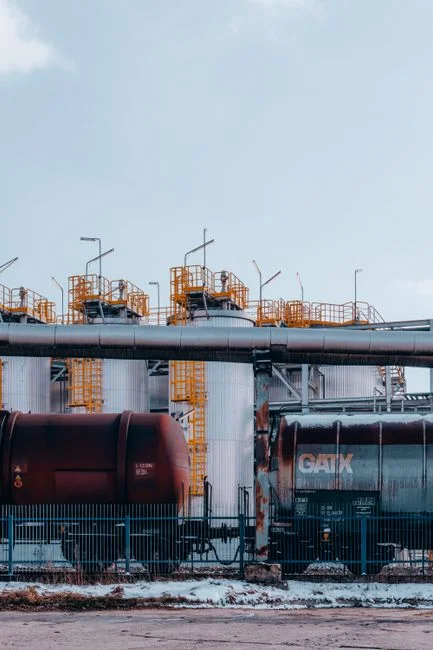
Treatment should follow the contaminant and end use: physical separation for solids, biological treatment for sanitary wastewater, membranes where dissolved-solids removal is required, and disinfection only when the reuse application or residual requirement justifies it. The industrial DAF system sizing and selection guide provides a useful process-screening framework, but final selection requires site chemistry.
| Technology | Appropriate role | Cited specification | Selection caution |
|---|---|---|---|
| Filtration | Suspended solids and colloids | Cited UF specification: 0.03-micron PVDF membranes, up to 300 ppm turbidity, automatic backwash and air scour | Confirm feed chemistry and required filtrate quality |
| DAF | Suspended solids, oil and grease or colloidal material requiring physical separation | Cited range: 4–300 m³/h across 13 standard models | Match to measured peak flow and contaminant loading |
| MBR | Sanitary wastewater or high-quality reuse requiring biological treatment with membrane separation | Cited system: effluent below 1-micron filtration; 10–2,000 m³/day | Check sludge handling and operating labor |
| RO | Dissolved-solids removal for a defined high-grade reuse application | Cited industrial system: recovery rates up to 95% | Requires feed characterization, pretreatment and concentrate management |
| Disinfection | Control of microbial risk tied to a specified reuse application | No universal specification supported by the research | Define target application and residual requirement |
A DAF system for cooling-blowdown solids removal is relevant where solids or floatable contaminants justify physical separation. An UF pretreatment for data center wastewater reuse is relevant when the required reuse quality calls for membrane pretreatment, not because it solves every blowdown problem.
Modular, right-sized equipment may be more practical than hyperscale treatment for smaller or mid-sized facilities. Genesis identifies operational complexity as a risk when RO, ion exchange and multi-stage filtration are deployed beyond available staff capability. The 2026 Open Engineering preprint also reports that its UF+RO scenario used more than five times the freshwater-case energy. Evaluate the full train, not only clean-water output.
Size the System for Variability and Operating Simplicity
Equipment capacity must cover average and peak hourly blowdown, sanitary flow, storage retention and the maximum allowable discharge rate agreed with the receiving system. Use measured chemistry and flow data, not the theoretical CoC calculation alone. The reported 15–30% exceedance of theoretical blowdown from Genesis is a documented reason to examine operating variability, but it is not a universal design multiplier for every São Bernardo facility.
| Equipment-request parameter | Information the vendor must receive | Required guarantee or detail |
|---|---|---|
| Design flow | Average and peak blowdown, sanitary flow, drain-down events | Capacity basis and operating envelope |
| Equalization and discharge | Storage requirement and utility discharge limit | Level controls, pump duty and peak-rate confirmation |
| Feed quality | Conductivity, solids, pH, temperature, chemical program and metals | Performance guarantee at defined feed conditions |
| Recovery and concentrate | Intended reuse yield and fate of reject streams | Water recovery and concentrate-handling basis |
| Operation | Staffing model and required automation | Backwash, sludge removal, monitoring points and interfaces |
| Commercial performance | Local utility, power and chemical conditions | Power, chemicals, cleaning cycles, maintenance intervals and local-service support |
No facility IT load, cooling configuration, source-water chemistry, reuse target, discharge agreement or measured flow was supplied. Equipment flow therefore cannot be selected responsibly from the research alone. Use the modular treatment design guide to structure the vendor data request, then populate it with site-specific inputs.
Procure With a Compliance and Performance Checklist
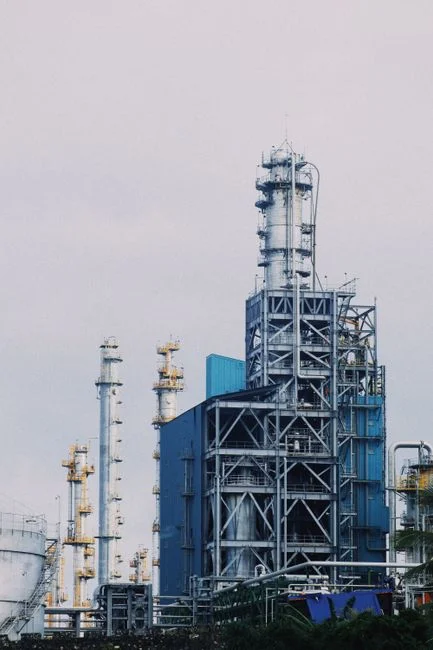
A defensible bid must identify the process basis, treatment train and operating burden, not just a clean-water rate. Require each bidder to work from documented flows, source-water analysis, CoC, blowdown composition, reuse target and discharge point. The bid should state pretreatment, redundancy, chemical consumption, sludge or concentrate handling, monitoring and operating labor.
| Procurement check | Evidence required from bidder | Buyer decision |
|---|---|---|
| Process basis | Measured or documented flow, chemistry, CoC and reuse target | Accept only bids tied to the same site basis |
| Performance | Guaranteed treated-water quality, recovery, power and chemical consumption | Define measurable acceptance tests |
| Waste streams | RO reject, spent media, backwash water, sludge and chemical concentrates | Require a documented final disposition |
| Operations | Controls, monitoring, cleaning, maintenance and staffing plan | Confirm the plan matches site capability |
| Compliance | Utility and authority interface, permits and approval assumptions | Do not close the procurement before acceptance |
| Lifecycle cost | Water, sewer, power, chemicals, sludge handling, monitoring and service | Compare total cost, not equipment price alone |
The research provides no São Bernardo capital or operating cost figures, so quotations must be developed for the actual site. The packaged-plant procurement checklist is useful for checking bid completeness, while utility and environmental acceptance should remain a design milestone before the final equipment order.
Frequently Asked Questions
Can equipment capacity be selected from the data center’s IT load alone?
No. Equipment selection requires the cooling configuration, measured average and peak blowdown, makeup-water chemistry, operating CoC, wastewater quality, reuse target, discharge route and permitted discharge rate. A separate sanitary-flow basis is also required. Without these inputs, a vendor’s nominal capacity is not a defensible site design.
Why should a vendor present the complete treatment train?
A filter’s clean-water output does not disclose the full balance of water, chemicals, sludge, backwash water or membrane concentrate. The bidder should identify every residual stream, its quantity and chemistry, and its final treatment or disposal route. This also exposes whether the proposed system can be operated by the site’s available staff.
What should a buyer request when pricing the wastewater treatment system?
Request a site-specific quotation covering equipment, installation, civil works, power, water, chemicals, sludge and concentrate handling, monitoring, commissioning, maintenance, spare parts and local service. Ask for separate treatment-energy and chemical-consumption estimates because reuse may add operating cost. No Sao Bernardo equipment price is available in the supplied research.
Can U.S. wastewater-permit criteria be used for Brazilian approval?
No. The U.S. POTW, significant-industrial-user and NPDES concepts in Black & Veatch’s 2026 guide are reference frameworks for diligence, not Brazilian legal requirements. Confirm the current discharge point, local limits, sewer capacity, pretreatment duties and monitoring obligations with the responsible São Bernardo sanitation utility and competent environmental authority. For further location-specific data, see the packaged wastewater treatment procurement guide.
Related equipment and engineering reading
- What Wastewater and Cooling Blowdown Treatment Does a Sao Luis Data Center Need?
- Data Center Wastewater & Cooling Blowdown Treatment in Belo Horizonte: 2026 Engineering Guide
- Data Center Wastewater & Cooling Blowdown Treatment in Brasília, Brazil (2026 Guide)
- Data Center Wastewater & Cooling Blowdown Treatment in São Paulo, Brazil (2026 Guide)