What the Sao Luis data center must resolve first
A data center in Sao Luis needs a site-specific treatment train for domestic sewage, cooling-tower blowdown, and any contaminated process wastewater, because no single unit can be selected before the cooling architecture and water balance are known. Blowdown treatment must address dissolved solids, hardness, chlorides, suspended solids, oil where present, pH, and microbiological growth, with automatic monitoring and controlled cycles of concentration. The package may combine clarification or DAF for data-center wastewater pretreatment, filtration, chemical dosing, biological treatment where organic loading requires it, and disinfection. Exact flows and limits must come from a Sao Luis water balance, seasonal source-water analysis, cooling-design data, and confirmation from the sewer utility and Brazilian environmental authorities.
The first decision gate is the cooling architecture. Evaporative cooling, hybrid systems, and closed-loop cooling produce fundamentally different wastewater flows and compositions. An evaporative system exports blowdown enriched by evaporation; a closed-loop system retains most circulating water and produces purge from leaks, maintenance, and other controlled losses. A hybrid facility may have both.
Prepare a site water balance covering evaporation, drift, blowdown, domestic sewage, process wastewater, firewater, and future expansion. ASCE recommends evaluating all potential water sources and considering treatment or reuse of effluent or discharge water in a data-center water balance study (Civil Engineering, March/April 2024). This is the engineering approach described in the framework for data-center cooling blowdown treatment.
Request seasonal source-water analysis for pH, conductivity, total dissolved solids, chlorides, silicon, hardness, alkalinity, turbidity, and microbiological counts. ASCE identifies these variables as capable of changing treatment and equipment-selection decisions. Municipal potable water, public supply, groundwater, and reclaimed water are separate design bases: Valicor states that source-water chemistry directly affects treatment chemistry, cycles of concentration, and blowdown management.
Before fixing the process train, confirm whether the receiving route is sanitary sewer, environmental discharge, or controlled reuse with the relevant Sao Luis utility and Brazilian authorities. The supplied research does not establish a universal numerical discharge limit for Sao Luis, so request the applicable permit and sewer-acceptance requirements in writing.
Map the wastewater streams before selecting equipment
Data-center wastewater should be segregated by composition and destination, not collected into one generic stream. ASCE identifies two principal effluent types—domestic wastewater and cooling effluent—and notes that the latter can concentrate total dissolved solids and chloride beyond what municipal treatment normally targets (Civil Engineering, March/April 2024).
Start with a physical flow diagram showing makeup water, domestic sewage, cooling-tower blowdown, drift and evaporation, drain water, firewater, laboratory wastewater, tenant process discharge, treatment, reuse, and final disposal. Add exceptional streams only where site equipment or tenant operations create them.
Cooling-tower blowdown is a variable-composition stream controlled by cycles of concentration, defined as the ratio of dissolved minerals in circulating water to those in makeup water. Evaporation concentrates minerals, so periodic blowdown is used to control scale and corrosion, according to Valicor. A timed dump is not an adequate control strategy: conductivity and site chemistry should govern the operation.
Keep oily, chemically contaminated, and high-suspended-solids drains separate from sanitary sewage and ordinary cooling blowdown. This permits source control, chemical treatment, or flotation without adding those loads to the biological wastewater stream. A DAF system for data-center wastewater pretreatment is justified only when measured oil, floatable material, or removable suspended solids support that process choice.
| Stream | Primary design question | Default treatment approach before detailed design |
|---|---|---|
| Domestic sewage | What are the peak and average sanitary flows, and is a sewer connection permitted? | Characterize, then compare sewer discharge with a site biological treatment train |
| Cooling-tower blowdown | What flow, conductivity, hardness, chloride, suspended-solids, and oil concentrations result from the selected cycles of concentration? | Controlled blowdown followed by the minimum filtration, clarification, dosing, or disinfection required for reuse or discharge |
| Contaminated process or tenant drains | What substances and flow regimes are present, and can they be eliminated at source? | Segregate for targeted chemical treatment, flotation, or collection |
| Firewater and emergency drains | What accidental discharges can reach the collection system? | Contain, divert, and assess under the firewater and spill-response plan |
Size wastewater pipework for the design flow, then verify actual flow with meters. ASCE describes one data-center cooling-effluent system initially designed for roughly 20–30% of total supplied water, followed by flowmeter-based verification (Civil Engineering, March/April 2024). That project value is not a Sao Luis design factor.
Do not treat blowdown reuse as automatic. KETOS explains that blowdown is returned as wastewater and can be treated and reused rather than automatically treated as lost water. Whether that reuse is credible depends on the target application and the quality achieved after treatment.
Characterize the water that determines the treatment train

The treatment train should be derived from measured source-water and blowdown chemistry, not from a generic “data-center wastewater” specification. The same treatment may be necessary for one source and excessive for another.
Use the site’s seasonal data to establish a design basis, identify seasonal peaks, and determine whether one source or a blend will feed the cooling system. ASCE recommends seasonal sampling for pH, conductivity, total dissolved solids, chlorides, silicon, hardness, alkalinity, turbidity, and microbial counts (Civil Engineering, March/April 2024).
| Parameter | What it controls | Engineering implication |
|---|---|---|
| Conductivity and total dissolved solids | Overall dissolved-solids concentration | Set cycles-of-concentration control, blowdown triggers, reuse targets, and desalination or dilution needs |
| Hardness and alkalinity | Scale-forming potential | Determine whether softening or other chemistry control is needed before concentration becomes excessive |
| Chloride | Corrosion and salinity | Set cooling-system control limits and assess reuse suitability |
| pH | Corrosion, scaling, and treatment compatibility | Confirm chemical-dose control and whether neutralization is required |
| Suspended solids and turbidity | Filter loading and solids carryover | Select clarification or filtration based on measured load and required clarity |
| Oil and grease | Floatable contamination and biological-system inhibition | Determine whether source control, DAF, or another pretreatment process is justified |
| Temperature | Reaction rates, biological activity, and equipment limits | Check treatment performance at the actual discharge temperature |
| Microbiological indicators | Biofilm and pathogen risk | Define cooling-water control, disinfection, and reuse verification |
Hardness, alkalinity, and calcium-related scaling behavior must be assessed together. No Sao Luis concentration limit should be assumed without source data and the selected cooling design. Softening may be necessary for one source and not another; adding it merely because a treatment train includes it would be unsupported.
Conductivity, chloride, and total dissolved solids answer a different question: can blowdown be reused, and at what quality? They do not directly specify a reverse-osmosis or other desalination design. The required outcome must be tied to the intended reuse—such as makeup, cooling, or another process—and confirmed through mass balance and pilot work.
Oil and grease, suspended solids, and biological oxygen demand are not interchangeable. Oil and floatables may justify DAF; suspended solids may justify clarification or filtration; organic loading may justify biological treatment. Testing and equipment selection must follow those distinct functions.
Apply a conservative material assessment to reclaimed water. ASCE reports that reclaimed water can cause more corrosion, scaling, and microbiological growth than potable water (Civil Engineering, March/April 2024). Pilot testing should therefore use the actual source-water blend, not only vendor or laboratory water.
Valicor presents an illustrative 80% evaporation and 20% blowdown split for an evaporative system. Treat that as a benchmark, not a Sao Luis design factor. The site water balance, climate, cooling load, makeup-water chemistry, and selected cycles of concentration determine the actual flow.
Choose a treatment train for each cooling scenario
The cooling scenario determines the treatment objective: control and discharge in an evaporative system, manage segregated losses in a closed-loop system, or reconcile different streams at a hybrid campus.
For evaporative cooling, begin with controlled cooling-water management rather than immediate end-of-pipe treatment. The route is conductivity-controlled blowdown, side-stream clarification or DAF where solids or oil justify it, filtration, chemical dosing, optional disinfection, and then discharge or reuse. Equipment selection should follow measured suspended solids, oil, turbidity, flow, and required effluent quality.
For a hybrid facility, evaporation and closed-loop equipment can coexist, but their water balances must remain distinguishable. A common monitoring interface can record makeup, evaporation, blowdown, purge, reuse, and discharge, while unit capacities reflect each cooling subsystem rather than a blended average.
For a predominantly closed-loop facility, emphasize leak detection, segregated purge treatment, and controlled reuse. Valicor reports that a 100 MW closed-loop facility may consume only 8,000 gallons daily, essentially limited to domestic and sanitary uses rather than cooling. That figure is an illustrative project case, not a Sao Luis capacity estimate.
Where domestic sewage is substantial, compare a packaged biological treatment train with direct sewer connection. A DAF unit is a physical separation process, not a substitute for biological treatment of sanitary sewage. A modular integrated wastewater-treatment system should be assessed against the measured organic load, treatment objective, footprint, controls, and future expansion.
For zero-liquid-discharge or high-reuse objectives, evaluate staged concentration and polishing through a full process simulation. These are project-specific routes, not defaults; the balance must include residual disposal, energy, chemical recovery, and maintainability.
| Cooling scenario | Dominant wastewater issue | Indicative treatment train | Key sizing basis |
|---|---|---|---|
| Evaporative | Mineral-concentrated cooling-tower blowdown | Controlled blowdown; side-stream clarification or DAF if justified; filtration; chemical dosing; optional disinfection; discharge or reuse | Measured blowdown flow, conductivity, suspended solids, oil, turbidity, and target water quality |
| Hybrid | Different water-balance and quality characteristics within one campus | Substream-specific collection, common metering, treatment sized by each source, coordinated reuse header | Subsystem flows and chemistry, not a single blended wastewater average |
| Predominantly closed-loop | Leaks, maintenance purges, and segregated process drains | Leak detection, segregated collection, targeted treatment, and reuse; biological treatment for sanitary sewage if required | Measured purge rate, effluent objectives, and domestic-sewage load |
Energy must be evaluated alongside water. Valicor cites an industry estimate that evaporative cooling consumes roughly 10% less energy than air-cooled alternatives, while closed-loop systems reduce water consumption but generally increase electricity demand. Compare the selected architecture, treatment energy, pumping, and chemical use rather than optimizing one metric in isolation. PLC-controlled chemical dosing for cooling-water treatment should be specified from the chemistry and control strategy, not as a generic package.
Protect reuse quality and discharge compliance with monitoring
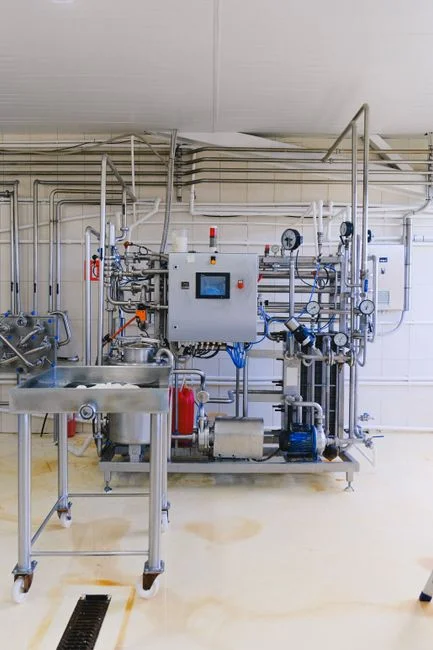
Compliance and reuse quality depend on a documented mass balance, automatic controls, and an acceptance-test plan—not on a discharge sampler alone.
Install flow, level, temperature, pressure, pH, conductivity, and turbidity instruments where they support water accounting, cycles-of-concentration control, chemical dosing, and reuse verification. The minimum monitoring plan should include makeup water, evaporation where calculated, blowdown, each segregated drain, treated effluent, reuse, sewer discharge, and any environmental discharge.
Control blowdown from measured conductivity and site chemistry rather than fixed timed dumps. KETOS identifies minimizing or controlling blowdown as a central water-efficiency lever, while KETOS also notes that blowdown can be treated and reused. An operating target must balance water recovery against scaling, corrosion, and downstream treatment load.
Prepare a permit-compliance sample plan covering the analytes required by the confirmed Sao Luis discharge or sewer route. The supplied research does not establish a universal Brazilian numerical limit, so no discharge value should be invented. Obtain the applicable legal limits, sampling frequency, averaging period, reporting format, and sewer-acceptance criteria from the responsible authorities.
| Control point | Required evidence | Decision or control action |
|---|---|---|
| Makeup-water intake | Seasonal chemistry and utility reliability data | Confirm source basis, blending strategy, and treatment requirements |
| Cooling-water loop | Conductivity, temperature, pH, and cycles-of-concentration calculation | Adjust blowdown, chemistry dosing, and operating limits |
| Pretreatment | Flow, turbidity, suspended solids, oil where applicable, and differential pressure | Trigger filtration, backwash, DAF operation, or source-control response |
| Reuse header | Flow, pressure, pH, conductivity, turbidity, and microbiology where required | Permit reuse only when the defined water-quality acceptance criteria are met |
| Final discharge | Permit-defined analytes, flow records, and sample results | Demonstrate compliance and maintain auditable water-use reporting |
Document evaporation, blowdown, reuse, and sewer flows. ASCE reports that only 51% of operators track water use and only 10% track it across all facilities, citing a 2021 Uptime Institute survey (Civil Engineering, March/April 2024). For Sao Luis, this gap should be closed before expansion changes the flow pattern.
Pilot the actual source-water blend, especially for reclaimed or blended supplies. The objective is to verify filtration loading, chemical demand, biological response, disinfection, corrosion behavior, and reuse quality under site-relevant conditions.
Build a procurement-ready implementation plan
A defensible package requires a common design basis, sequential design steps, and acceptance criteria that bidders can answer consistently.
- Characterize the source: conduct seasonal sampling and obtain utility records for the proposed supply.
- Confirm the cooling design: establish evaporative, hybrid, or closed-loop architecture and the design growth scenario.
- Complete the water balance: calculate makeup, evaporation, drift, blowdown, purge, domestic sewage, firewater, reuse, and discharge.
- Complete the receiving-route review: obtain sewer-acceptance and Brazilian environmental requirements in writing.
- Pilot where risk warrants it: test the actual source-water blend and proposed reuse conditions.
- Issue the procurement package: complete detailed process design, controls, civil interfaces, utility requirements, and commissioning criteria.
Include in the request for information the design flow and expected operating range, source-water and effluent design basis, materials, controls, chemical consumption, redundancy, utility requirements, sludge handling, monitoring, spare parts, maintenance access, and operator-training obligations. Require bidders to demonstrate performance against the same water balance and confirmed discharge or reuse criteria; otherwise their proposals are not comparable.
Sequence delivery as source sampling, cooling-design confirmation, water-balance calculation, bench or pilot work, detailed design, fabrication, installation, commissioning, performance testing, and operator training. Do not prescribe exact redundancy or bypass arrangements without flow and risk data, but assess redundant critical components and continuity requirements as part of the architecture review.
Keep biological and advanced-treatment capacity modular. ASCE notes that data-center loads, layouts, and systems can expand over time (Civil Engineering, March/April 2024). The package should therefore preserve expansion space without requiring the initial installation to carry unverified future loads.
Frequently Asked Questions
What treatment capacity should a Sao Luis data center specify?
Base capacity on the selected cooling scenario, measured water quality, peak and average flows from the water balance, and the permitted reuse or discharge flow—not on cooling tonnage alone. Require the cooling engineer to issue the design evaporation, blowdown, and purge assumptions, then reconcile them with domestic sewage and future expansion before vendors size equipment.
What should buyers request when comparing treatment suppliers?
Ask each bidder to demonstrate performance against the same source-water analysis, site water balance, receiving-route criteria, and proposed reuse-water quality. Also request chemical consumption, utility demand, sludge generation, controls, redundancy, maintenance, and commissioning evidence. A supplier that cannot state these inputs has not provided a comparable offer.
Is a DAF system required for every data center in Sao Luis?
No. DAF is principally appropriate where measured oil, floatable material, or removable suspended solids justify flotation. If the cooling blowdown is mainly mineral-laden and the discharge objective is controlled conductivity and solids, a different filtration and chemical-control route may be more appropriate. The deciding evidence is measured wastewater composition.
What is the cost difference between discharge and reuse options?
The research does not provide Sao Luis quotations, so a defensible price comparison cannot be calculated yet. Request itemized capital and operating costs for sewer discharge, reuse, and any zero-liquid-discharge option, including water loss, energy, chemicals, sludge, monitoring, maintenance, and the value of avoided potable-water demand. Use the confirmed water balance and local utility tariffs as the calculation basis.