Start with the Wellington site and consent constraints
The best packaged sewage treatment plant for a Wellington housing development depends on measured water demand, average and peak wastewater flows, land availability, receiving-water conditions, future expansion and consent requirements. An underground A/O package may suit domestic sewage where footprint is constrained, while an MBR becomes relevant when tighter solids separation or reuse is required. Extended aeration may suit stable flows; SBR offers flexible sequencing; and field-erected construction can overcome unsuitable factory dimensions. The Wellington Master Servicing Plan evaluated decentralized treatment for new developments, but that planning evidence does not prescribe a process or approve a particular site.
Begin with measured or metered water demand rather than dwelling count alone, as advised in HydropureWater’s 2026 US package-plant engineering guide. The guide notes that undersizing can cause permit exceedances, while oversizing adds aeration energy and fixed operating cost.
Collect average and peak flow, the diurnal profile, water consumption per dwelling, expected occupancy, infiltration and inflow estimates, any commercial or industrial contributions, and the staging of future lots. Do this before asking suppliers to size equipment. The capacity band of 3,000–250,000 gpd, equivalent to about 50–5,000 population equivalents in the same HydropureWater guide, is screening context rather than a Wellington design standard.
Identify the receiving environment, discharge point, reuse intentions and the Wellington authority responsible for subdivision and discharge approvals. The supplied Wellington Master Servicing Plan relates to Wellington Urban Area in Prince Edward County, Ontario—not Wellington, New Zealand—so it should not be used as local authority evidence. Local consent, building, electrical, access, residual handling and environmental requirements must be confirmed directly with the relevant New Zealand authorities because no Wellington-specific numerical thresholds are supplied in the research.
| Project input | Evidence needed before process selection | Why it affects the decision |
|---|---|---|
| Water and wastewater demand | Metered water use, average flow, peak flow, diurnal profile and planned stages | Sets hydraulic and biological design cases |
| Influent characteristics | Domestic wastewater data plus infiltration, inflow and non-residential contributions | Determines biological loading and pretreatment needs |
| Discharge and reuse | Receiving environment, proposed outlet, authority limits and reuse requirements | Defines treatment and monitoring objectives |
| Site and consent | Land, access, power, groundwater, discharge consent and residual-handling requirements | Establishes whether the selected package is buildable |
For a structured comparison of packaged sewage treatment options for housing developments, use the same input schedule for every candidate rather than treating another city’s example as a Wellington approval.
Compare the package-plant process options
The four biological technologies identified in HydropureWater’s 2026 US guide are extended aeration, activated sludge, MBR and SBR, and each should be matched to confirmed influent, permit and operating conditions. A field-erected arrangement is a construction option rather than a biological process, allowing steel or concrete plant components to be assembled on site when factory-built dimensions are unsuitable.
| Option | Relevant scope from the supplied research | Selection implication |
|---|---|---|
| A/O biological contact oxidation | HydropureWater’s WSZ Series combines anoxic/aerobic biological contact oxidation, sedimentation and disinfection in a buried unit handling 1–80 m³/h, with fully automated operation and no full-time on-site operator. | A candidate for predominantly domestic sewage and constrained sites, subject to Wellington loading and access checks. |
| Integrated MBR | HydropureWater’s system combines activated sludge with submerged PVDF membrane filtration, handles 10–2,000 m³/day and is stated to use 60% less footprint than conventional systems. | Consider where low suspended solids, reuse or tight effluent limits justify added mechanical complexity; verify the footprint claim against project drawings. |
| Extended aeration | HydropureWater’s 2026 guide identifies it as a dominant package-plant technology; it is comparatively simple and can suit relatively stable domestic flows. | Confirm the complete train, including tankage, settling, disinfection and controls. |
| SBR | HydropureWater’s 2026 guide lists SBR among the four dominant technologies, while its wider guidance identifies flexible sequencing and timed phases as relevant to fluctuating flows and nutrient-sensitive sites. | Investigate where equalization or flexible phase control adds value; do not assume every SBR package includes equalization. |
| Field-erected construction | Smith & Loveless identifies factory-built and field-erected steel and concrete configurations, including MBR, fixed-bed biological reactor and extended-aeration systems. | Use when modular transport dimensions or factory geometry do not suit the development. |
Review the underground A/O package sewage treatment plant and integrated MBR wastewater treatment system as product configurations, not as substitutes for engineering design. Tankage, process capacity and performance claims must be checked against the development’s measured demand.
For a preliminary shortlist, apply this sequence: first exclude processes that cannot meet confirmed treatment objectives; then check footprint and constructability; then compare operating complexity; and finally test whether the available budget supports the full installed system. An A/O and MBR package plant comparison can support this structure, but its overseas context does not supply Wellington consent requirements.
Test each option against the land and receiving environment
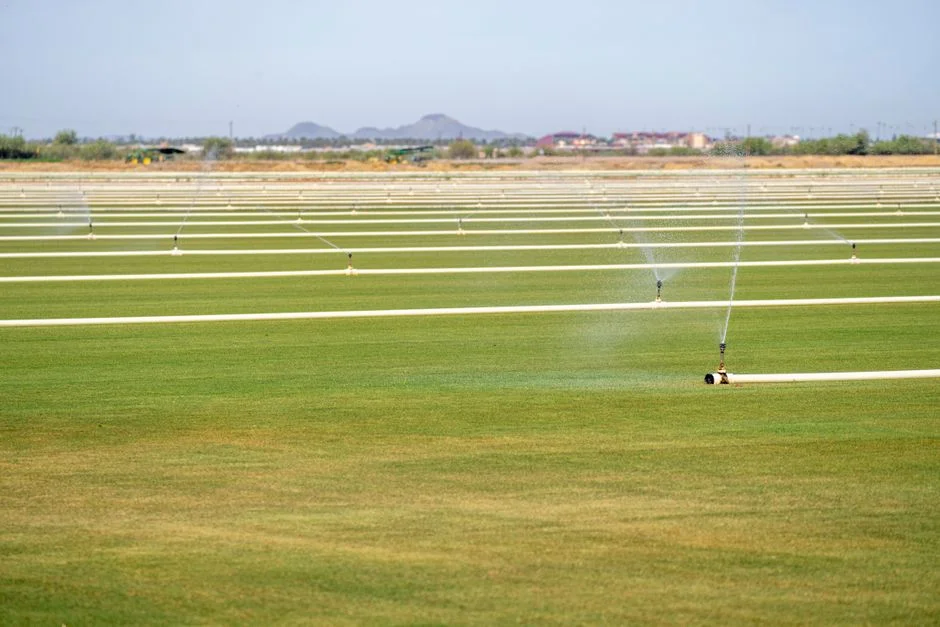
A technically adequate package can still fail the site test if access, excavation, groundwater, overflow protection or future expansion cannot be demonstrated. For an underground unit, evaluate excavation depth, safe access after backfilling, buoyancy control, vehicle loading, hatch arrangement, odour control, drainage, landscaping and service access. Confirm that operators can remove equipment and residuals without dismantling finished structures.
For an above-ground system, reserve space not only for process tankage but also for electrical equipment, sludge removal, chemical delivery and maintenance. Keep permanent vehicle and service routes available; do not rely on moving completed landscaping during an equipment fault. Also reserve room for future modules without relocating the first installation.
Compare footprint claims using verified general arrangement drawings and the proposed civil works. HydropureWater states that its MBR system has a 60% smaller footprint than conventional systems, and its WSZ unit can be installed below grade. Neither statement establishes the area, depth or access arrangement for this site. A containerized MBR sizing guide illustrates why package dimensions, flow conditions and project interfaces must be checked together.
Treat Wellington’s terrain, rainfall potential, groundwater conditions and flow variability as site-specific design inputs requiring verification. The supplied research provides no quantitative terrain, rainfall or groundwater data for a particular Wellington development, so no defensible excavation depth, flood level or storage allowance can be stated here.
Resilience should be assessed against overflow, power interruption, wet-weather peaks, equipment isolation and loss of control-system communications. Where required, specify fail-safe operation, standby power and emergency disposal in the consent and operating plans. These requirements must be coordinated with the discharge location and authority conditions rather than added after supplier selection.
Build the capital and operating-cost comparison
The correct cost comparison is the complete installed and five-year operating outcome, not the package tank or skid price. HydropureWater’s 2026 US guide reports that MBR equipment capital typically costs 20–30% more than extended-aeration or A/O activated-sludge packages; this is a general US equipment comparison, not a Wellington price estimate.
| Cost component | Items to request from suppliers | Evaluation point |
|---|---|---|
| Equipment capital | Process equipment, membranes or diffusers, pumps, blowers, controls and disinfection | Compare like-for-like process scope and capacity |
| Installed works | Excavation, civil works, access roads, power, drainage, landscaping and connections | Do not treat the equipment quotation as the installed cost |
| Approvals and commissioning | Design, discharge consent, commissioning, testing and training | Assign responsibility and exclusions clearly |
| Recurring operating cost | Electricity, aeration, membrane cleaning, chemicals, monitoring, inspections, sampling, sludge handling, maintenance and remote supervision | Model recurring costs over the assessment period |
| Future provision | Expansion, replacement, spares and reserved footprint | Compare staged growth rather than installing unused capacity |
The same HydropureWater 2026 US guide states that MBR packages commonly achieve turbidity below 1 NTU and BOD below 10 mg/L. Use those figures only to frame the potential value of advanced treatment or non-potable reuse; they are not guaranteed Wellington performance and do not establish discharge-consent limits.
Test whether reuse, avoided network infrastructure or released land value justifies additional treatment and operating cost. Model staged expansion so early stages remain operable while later housing phases are built. The effluent treatment plant buyer’s guide provides a useful structure for separating process equipment, civil works and recurring costs, subject to local quotation.
Turn the shortlist into a consent-ready design
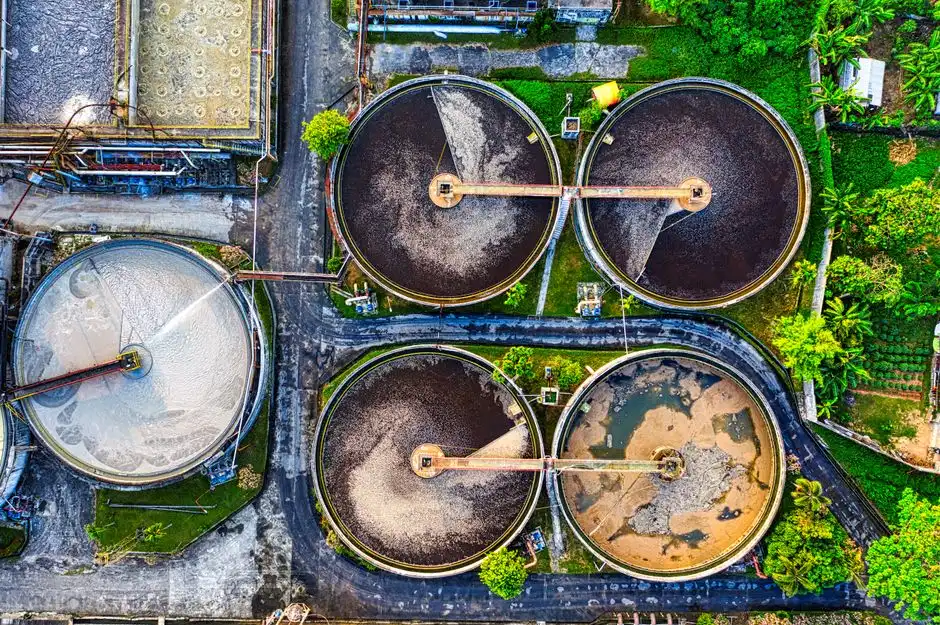
Define the treatment objective and complete process flow before accepting a package configuration. The auditable flow should run from inlet works and flow measurement through biological treatment, solids separation, disinfection and effluent monitoring. Add equalization or pretreatment only where influent data demonstrates a need, rather than because it is included as an optional supplier feature.
Specify the duty, standby and future-flow scenarios, including hydraulic and organic loading, detention-time requirements, sludge production, odour control, access and controls. State proposed guarantees for BOD, TSS, nutrients, disinfection and reuse parameters only after the receiving environment, reuse intentions and Wellington consent requirements have been confirmed. Generic statements that a package meets “secondary treatment” standards do not resolve a local discharge condition.
Use a commissioning sequence of clean-water tests, introduction of seed sludge, a performance run and signed acceptance against the applicable discharge requirements and control-system alarms. HydropureWater’s 2026 US guide specifically identifies sample results and SCADA alarm tests as acceptance gates. The commissioning protocol should also define sampling points, analytical methods, test duration, retesting and remedies for non-performance.
Require the handover package to include as-built drawings, PLC setpoints, operating manual, test certificates, spare-parts list and a defined local service pathway. Where disinfection or residual handling remains in the design scope, assess specialist items such as the chlorine dioxide generator and plate-and-frame filter press only against the confirmed process and residual-management route.
Use a weighted selection and supplier checklist
Set the evaluation weights before opening technical bids, or suppliers can shape the apparent winner through narrative emphasis. Consent compatibility, verified capacity, effluent performance, footprint, operating complexity, capital cost, five-year operating cost, expansion, delivery and local support should all be visible in the comparison. Weights should reflect the development’s confirmed constraints rather than a generic package-plant template.
| Bid item | Required supplier response | Acceptance check |
|---|---|---|
| Design basis | Design flow, stages, influent assumptions and process description | Matches the client’s measured-demand basis |
| Performance | Effluent guarantees, test method, operating envelope and exclusions | Conditional on consent and verified performance testing |
| Physical interface | Tankage, drawings, civil interface, access, power demand and footprint | Verified against the surveyed site |
| Operations | Sludge output, controls, alarms, chemicals, maintenance and training | Residual and service routes are physically achievable |
| Commercial | Scope boundaries, exclusions, schedule, payment milestones and guarantees | Like-for-like total-cost comparison |
| Support | New Zealand spare-parts access and field-service pathway | Local response arrangements are contractually defined |
Request evidence from comparable housing developments and ask what happens if influent flow, organic strength, discharge criteria or future phases differ from the proposal. Confirm spare-parts availability and field-service access in New Zealand rather than assuming overseas shipping timelines or readily available components. The range of treatment parts, valves and filter media illustrates the kinds of consumables and service items that must be included in maintenance planning.
Make award conditional on design verification, consent approval, performance testing and written guarantees—not a generic capacity statement. A compliant bid should identify every boundary between supplier, contractor and consent-holder responsibility.
Frequently Asked Questions
Which packaged sewage treatment plant should be sized for a Wellington housing development?
Size it from measured or metered water demand and confirmed average, peak and diurnal wastewater flows, not from dwelling count or a supplier’s broad capacity band. The 3,000–250,000 gpd range, representing about 50–5,000 population equivalents in HydropureWater’s 2026 US guide, is only screening context. The selected process must then be checked against Wellington site conditions, receiving-water objectives and future stages.
Will an MBR cost more than an A/O or extended-aeration package?
MBR equipment capital commonly runs 20–30% above extended-aeration or A/O activated-sludge packages in HydropureWater’s 2026 US guide, but that is not a Wellington quotation. Request installed prices covering civil works, excavation, power, controls, commissioning, approvals and residuals, then compare five-year electricity, chemicals, membrane cleaning, monitoring, sludge handling and maintenance. The more expensive option may still be appropriate if it avoids infrastructure or delivers required reuse value.
Which information should be requested before choosing a supplier?
Request verified effluent performance, general arrangement and civil drawings, duty and standby assumptions, electrical demand, sludge output, controls, commissioning tests, written guarantees, spare-parts access and a New Zealand service pathway. Require evidence from comparable housing developments and define how non-compliance will be remedied. Do not accept brochure capacity as proof of either treatment performance or buildability.
What is required for discharge consent in Wellington?
Prepare a project-specific consent strategy with the relevant Wellington authority. The supplied package-plant guide and Master Servicing Plan do not establish site-specific Wellington discharge limits, and the Master Servicing Plan supplied for Wellington Urban Area in Ontario is not a New Zealand approval. Confirm the receiving environment, discharge point, treatment objectives, monitoring, residuals and resilience requirements before freezing the process train or making a performance guarantee.