
Which Treatment Fits Petroleum Wastewater in Calera?
For petroleum wastewater in Calera, choose an MBR when the facility needs low suspended solids, reliable biological solids separation, compact equipment, or treatment for industrial wastewater reuse; retain conventional activated sludge when discharge-only service is sufficient, the clarifier is reliable, and capital cost governs the decision. Neither system should receive oily wastewater without upstream oil-water separation and equalization. Calera compliance depends on the facility’s current NPDES permit, any pretreatment authorization for discharge to a POTW, the intended reuse endpoint, and representative wastewater data.
The key distinction is where biological solids are separated. CAS retains activated-sludge biology in an aerated basin and then depends on gravity clarification. An MBR retains the same basic biology but replaces final settling with submerged membranes that physically retain biomass and suspended material. The selection therefore centers on separation reliability, reuse requirements, available plot, operating complexity, and lifecycle cost—not on biology versus chemistry.
For a constrained plot or planned cooling-water reuse, the integrated submerged-PVDF MBR system merits evaluation. For discharge-only service with an effective existing clarifier, available land, and a capital-constrained project, CAS may remain appropriate. The current permit or POTW authorization should be obtained before comparing effluent claims; conflicting references to 40 CFR Part 418 and Part 419 are not a defensible basis for sizing.
How Petroleum Wastewater Should Flow Through Treatment
Petroleum wastewater should pass through a controlled sequence before either biological system can perform reliably: source control and segregation; bulk oil-water separation; equalization; biological treatment; solids separation; optional polishing; and discharge or reuse.
Source control limits the chance that concentrated tank-bottom, desalter, or process streams will overwhelm the biological train. Bulk separation then removes free oil and material that would interfere with aeration, settleability, or membranes. Equalization buffers slug loads before they reach the biology. Its residence time must be established from the site’s flow and upset profile rather than selected from a generic rule.
The specified DAF oil-water separation pretreatment system has a stated capacity range of 4–300 m³/h. Its process role is to remove suspended solids, FOG, oil and grease, and colloidal material before biological treatment. Equipment selection still has to follow the oil-water design basis, including peak flow, free versus emulsified oil, and upset conditions.
Routine oil, grease, and surfactant spikes threaten biological performance and membrane fouling. A membrane barrier can prevent biomass washout, but it does not make the upstream stream harmless to the organisms or membranes. Emulsified oil can foul membrane surfaces, while surfactants can disrupt settling and biological activity. After MBR filtration, reverse osmosis or nanofiltration may still be required where reuse specifications include conductivity, silica, hardness, or other dissolved-quality constraints.
| Process step | Engineering purpose | Buyer information required |
|---|---|---|
| Source control and segregation | Excludes or isolates concentrated, variable waste streams. | Stream inventory, origins, controls, and diversion rules. |
| Bulk oil-water separation | Removes free oil, FOG, suspended solids, and colloidal material before biology. | Peak flow, oil character, API gravity, and required removal. |
| Equalization | Buffers slugs before biological treatment. | Flow series, upset duration, and required buffer volume. |
| Biological treatment | Reduces biodegradable organics and may support nitrification. | COD, BOD, ammonia, phenols, sulfide, temperature, and toxicity. |
| MBR membrane or CAS clarifier | Separates biological solids from treated water. | Separation objective, redundancy, fouling controls, and solids handling. |
| Optional polishing and reuse | Meets dissolved-quality or end-use requirements. | Reuse specification, water chemistry, treatment endpoint, and operating hours. |
MBR and Activated Sludge: Where They Diverge

CAS separates activated sludge by gravity after biological treatment, while an MBR separates biomass with submerged ultrafiltration or microfiltration membranes. That physical barrier gives an MBR direct control over solids inventory, but it introduces membrane fouling, scour-air demand, transmembrane-pressure monitoring, and clean-in-place requirements.
The London comparison cites literature ranges for solids retention time of 5–15 days in CAS and 20–60 days in MBR, compared with hydraulic retention times of 6–12 hours and 4–8 hours, respectively. These are literature ranges, not design guarantees; actual SRT and HRT must follow the site biology, temperature, loading, and regulatory objective.
The London comparison also reports directional MBR effluent values below 5 mg/L TSS, below 50 mg/L COD, and below 2 mg/L oil and grease. These require pilot confirmation and are not promises of regulatory compliance. The San Pedro comparison reports energy use of 0.5–1.2 kWh/m³ for submerged flat-sheet MBR and 0.3–0.6 kWh/m³ for CAS. Actual consumption depends on configuration, loading, temperature, and pretreatment.
The specified 0.1 μm PVDF flat-sheet MBR module has integrated aeration scouring, configurations of 80–225 m², and stated output of 32–135 m³/day. These are vendor specifications, not evidence of performance on Calera petroleum wastewater. The bidder must define design flux, scour-air demand, normalized permeability, cleaning strategy, redundancy, and replacement terms.
Fouling control is an operating system, not an accessory. The San Pedro comparison reports CIP with NaOCl and citric acid at 2–4 times per year per train. Actual frequency must be established from the pilot because emulsified oil, temperature, loading, and membrane condition will govern demand.
| Parameter | Conventional activated sludge | MBR | Procurement significance |
|---|---|---|---|
| Biological separation | Activated-sludge biology followed by gravity clarification. | Activated-sludge biology combined with submerged membranes. | The selection is primarily a solids-separation and control decision. |
| Literature SRT range | 5–15 days | 20–60 days | Confirm with site-specific biomass and loading data. |
| Literature HRT range | 6–12 hours | 4–8 hours | Do not treat either range as a design guarantee. |
| Energy comparison | 0.3–0.6 kWh/m³ | 0.5–1.2 kWh/m³ | Configuration, temperature, loading, and pretreatment affect actual demand. |
| Directional MBR effluent | Not the cited MBR values | TSS below 5 mg/L; COD below 50 mg/L; oil and grease below 2 mg/L | Require pilot confirmation under defined influent conditions. |
| Principal operating exposure | Clarifier performance, scum, sludge wasting, and floc condition. | Fouling, scour air, transmembrane pressure, and CIP. | Compare control burden and failure modes, not just equipment cost. |
Cost, Energy, and Lifecycle Trade-Offs
The London comparison provides illustrative 2026 capital ranges of $2.0 million–$8.5 million for MBR and $1.2 million–$4.5 million for new CAS serving 50–500 m³/day. These are planning ranges, not quotations. Capacity, pretreatment, site works, controls, and reuse scope can materially change the result.
The same comparison gives CAS operating cost at $0.40–$0.75/m³ and MBR energy consumption at 0.7–1.4 kWh/m³. The CAS operating figure should not be relabeled as MBR total operating cost: membrane energy, CIP chemicals, membrane replacement, and additional controls must be added to the MBR budget. It also estimates membrane replacement every 5–8 years at approximately 15–25% of initial MBR capital cost.
A defensible cash-flow comparison should include the electrical tariff, blower loading, chemical consumption, CIP frequency, membrane life, sludge hauling, labor, disposal, planned downtime, and reuse-water value. Freshwater savings alone should not support a payback claim. The buyer should confirm reuse volume, discharge fees, and operating assumptions before comparing a 10–20 year cash flow.
EPA 832-R-12-011, issued in March 2013, cautions that some emerging-technology cost savings and performance data were not supported by full-scale case studies and calls for current cost verification. It is technology background—not evidence of current Calera performance or 2026 pricing. The 2026 MBR cost per m3 guide can support preliminary screening, but bidders should provide itemized, site-specific pricing.
| Cost or performance item | Illustrative 2026 value | Scope and buyer action |
|---|---|---|
| MBR capital cost | $2.0M–$8.5M | London comparison for 50–500 m³/day; request a capacity-specific quotation. |
| New CAS capital cost | $1.2M–$4.5M | Same illustrative scope; retrofit cost requires existing-asset inspection. |
| CAS operating cost | $0.40–$0.75/m³ | Not interchangeable with MBR operating cost. |
| MBR energy | 0.7–1.4 kWh/m³ | Add tariff, blower load, and site-specific operating profile. |
| MBR membrane replacement | Every 5–8 years; approximately 15–25% of initial MBR capital cost | London comparison estimate; request the contractual replacement basis and warranty. |
Calera Decision Matrix for Common Project Scenarios
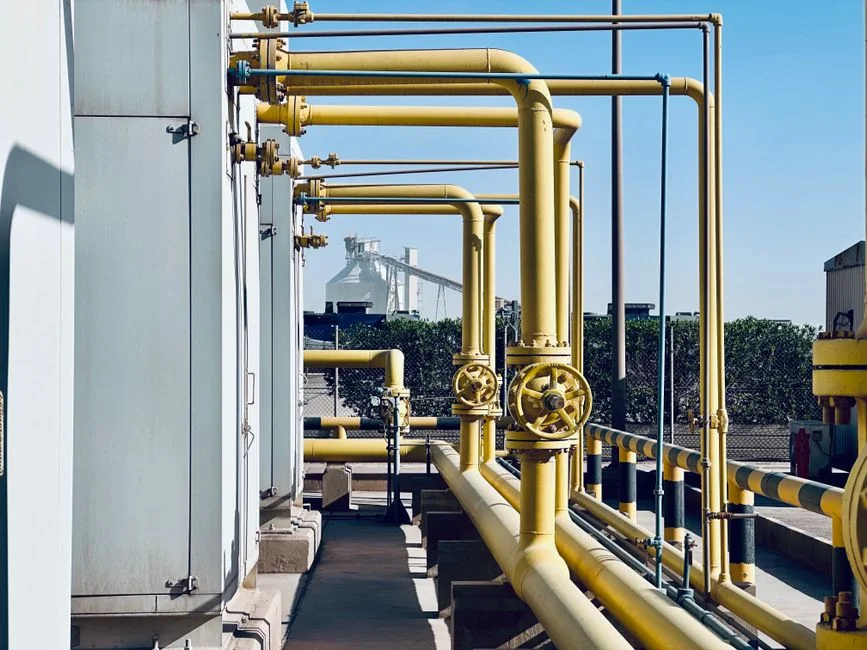
A Calera project should be selected from its endpoint and existing assets: MBR for compact or reuse-sensitive service, CAS for reliable discharge-only service, and a hybrid where existing biological treatment has value but solids separation needs upgrading.
For a greenfield project with a constrained plot, planned cooling-tower or boiler-feed reuse, or recurrent oil and grease upsets, evaluate full MBR after confirming that membrane pretreatment and aeration capacity are adequate. For discharge-only service with a reliable existing clarifier, acceptable effluent quality, available plot, and a capital-constrained project, CAS or a focused clarifier refurbishment may be sufficient.
In a brownfield with useful aeration and clarifier assets, consider retaining CAS for bulk biological treatment and adding terminal or side-stream MBR polishing. This requires an engineered full-flow and solids balance; it is not simply a smaller membrane package added to an unlimited clarifier overflow.
Defer final selection until a 90–120 day pilot using actual petroleum wastewater resolves emulsified oil, temperature, toxicity, SRT, membrane flux, and CIP-frequency questions. The design basis should state the permit route, discharge or reuse endpoint, design flow, constituent ranges, oil-water pretreatment, equalization, redundancy, operator labor, and contingency requirements.
| Scenario | Recommended screening decision | Conditions to confirm |
|---|---|---|
| Constrained plot or planned reuse | Full MBR | Pretreatment performance, reuse chemistry, polishing, aeration redundancy, and plot access. |
| Discharge-only service with reliable clarifier | CAS or CAS refurbishment | Current permit, clarifier condition, effluent quality, solids handling, and available plot. |
| Brownfield with useful biological assets | Hybrid CAS plus MBR polishing | Full hydraulic flow, solids balance, polishing objective, and recovery-system requirements. |
| Uncertain refinery wastewater | Pilot before commitment | Real wastewater over 90–120 days, including upset and fouling observations. |
How to Verify the Calera Design Before Purchasing
Calera compliance must be established from the current permit or POTW authorization, not from a generic federal-category citation. The procurement file should record the responsible authority, exact source category, applicable subpart, effluent limits, monitoring conditions, and reuse restrictions. Because existing pages conflict on 40 CFR Part 418 versus Part 419, require written applicability review for the facility’s actual discharge route.
Obtain at least one year of representative wastewater data covering oil and grease, COD, BOD, TSS, phenols, sulfide, ammonia, pH, temperature, toxicity, flow, and upset events. Ask bidders to define membrane type and pore size, module geometry, design flux, scour-air demand, normalized permeability, CIP chemistry, membrane life, redundancy, and replacement strategy.
Require a mass balance covering oil-water pretreatment, biological solids production, sludge concentration, storage, dewatering, and disposal. EPA 832-R-12-011 can provide technology background, but a March 2013 summary does not establish current Calera performance or cost.
Make acceptance contingent on site pilot data, factory and site acceptance criteria, treated-effluent guarantees tied to defined influent and operating conditions, and a complete O&M manual. The guarantees should cover the same variables that can invalidate performance: flow, oil and grease, temperature, toxicity, membrane flux, scour-air availability, and pretreatment operation.
Frequently Asked Questions
What does an MBR cost compared with conventional activated sludge for a 50–500 m³/day Calera project?
The illustrative 2026 ranges are $2.0M–$8.5M for MBR and $1.2M–$4.5M for new CAS, according to the London comparison. Request itemized quotations because pretreatment, flow profile, site works, and reuse scope can materially change the result. Compare lifecycle cash flow rather than using capital cost alone.
How should MBR capacity be sized for petroleum wastewater in Calera?
Size from flow and constituent data plus demonstrated pretreatment performance. Do not size from the DF Series stated range of 32–135 m³/day alone. The bidder must reconcile average and peak flow, oil characteristics, biological loading, membrane design flux, equalization, redundancy, and treatment objectives.
What should buyers check when selecting an MBR supplier?
Evaluate proposed flux, aeration redundancy, CIP plan, controls, replacement terms, local service capability, and acceptance testing rather than brochure claims. Require defined operating conditions for performance guarantees and contractual responsibility for membrane life and system availability.
Which Calera discharge requirement applies to a petroleum facility using MBR or CAS?
This article cannot establish a Calera effluent limit without the current NPDES permit or POTW authorization. Obtain the exact source category, subpart, limits, monitoring conditions, and reuse restrictions from the responsible authority; do not resolve the issue by assuming either 40 CFR Part 418 or Part 419 applies.
How long should the pilot run before MBR or CAS is purchased?
Use the supplied 90–120 day pilot recommendation with actual petroleum wastewater. During the pilot, measure flow, oil and grease, COD, BOD, TSS, phenols, sulfide, ammonia, temperature, pH, toxicity, membrane flux, transmembrane pressure, scour-air demand, and CIP frequency before accepting either process.
Related Equipment
- DAF oil-water separation pretreatment — specifications, capacity range, and technical data