
What the Effluent Treatment Decision Must Solve
An industrial effluent treatment plant in Cameroon should be selected around four decisions: which pollutants enter the plant, where the treated water goes, what reuse quality is required, and which authority reviews the discharge or authorization. The plant’s process train must then match those conditions rather than a generic package size. An industrial effluent treatment plant may need to remove oil, color, toxins or high organic loads that a domestic sewage package is not designed to handle. At the Limbé refinery, SUEZ reported a €22 million contract to modernize and extend SO.NA.RA’s treatment plant. The final design should therefore rest on site wastewater characterization, not on sector labels alone. A regional effluent treatment planning guide for Yamoussoukro provides a useful comparison framework.
Build the Design Basis Before Choosing Equipment
A defensible wastewater treatment plant sizing basis begins with the complete flow and pollution profile, not the average daily effluent volume. Obtain production-shift flows, clean-up discharges, storm runoff, peak discharge and minimum flow. The wastewater matrix should cover BOD, COD, TSS, oil and grease, pH, color, salinity, temperature, toxicity and contaminants specific to the process industry.
| Design input | Evidence or information required | Procurement consequence |
|---|---|---|
| Hydraulic profile | Shift, peak, clean-up, storm and minimum flows | Defines equalization, pretreatment and biological hydraulic loading |
| Wastewater matrix | BOD, COD, TSS, oil and grease, pH, color, salinity, temperature, toxicity and sector-specific contaminants | Determines pretreatment, biological treatment and polishing |
| Discharge or reuse route | Receiving point, reuse application, sampling frequency and required documentation | Sets the effluent specification and permit evidence |
| Performance guarantee | Design flow, analysis suite, loading conditions, test frequency and remedy for nonconformance | Prevents an unenforceable supplier promise |
HydropureWater’s 2025 field-data article reports rural TSS of 500–3,000 mg/L, municipal wastewater TSS of 200–800 mg/L, and industrial BOD of 200–1,500 mg/L with pH between 5 and 9. Those ranges indicate why pretreatment and biological resilience may be necessary, but project-specific sampling must confirm the conditions at the buyer’s site. Do not accept a guaranteed effluent result until the supplier has reviewed representative influent data and stated the conditions attached to that guarantee. For mining or remote industrial sites, the design basis for water-constrained industrial operations illustrates why receiving capacity must be checked rather than assumed.
Route the Wastewater Through the Right Treatment Train
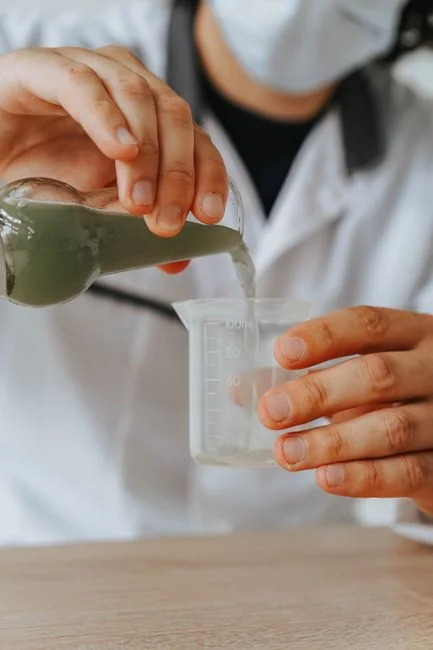
A complete treatment train follows a defined sequence: characterization, equalization, screening, pretreatment, biological treatment, solids separation, disinfection, discharge or reuse, and sludge handling. Each stage has a specific function, and omitting one can transfer the contaminant burden to the next unit.
- Equalization and screening: stabilize flow and loading and remove coarse material.
- Pretreatment: remove contaminants that would inhibit biological treatment or damage downstream equipment.
- Biological treatment: reduce biodegradable organic load where the wastewater is biologically amenable.
- Solids separation: use clarification or membranes to remove biomass and suspended solids.
- Disinfection and reuse treatment: apply the pathogen and quality barriers required by the receiving point or reuse application.
- Sludge handling: define collection, storage, stabilization and disposal before commissioning.
| Technology | Primary application | Documented specification or evidence | Main design caution |
|---|---|---|---|
| DAF flotation pretreatment | Oil, grease and floatable solids | SO.NA.RA uses POSEIDON flotation before refinery-effluent and contaminated-rainwater treatment, according to SUEZ | Not a substitute for biological treatment of biodegradable organics |
| A/O biological package | Domestic wastewater and suitable industrial organic loads | HydropureWater WSZ catalogue: 1–80 m³/h, automatic operation, below-grade or trailer deployment | Biodegradability, equalization and process compatibility must be demonstrated |
| MBR | Compact separation with low suspended solids and reuse potential | HydropureWater catalogue: activated sludge with submerged PVDF membranes below 1 μm; 10–2,000 m³/day | Membrane fouling, aeration, cleaning and replacement exposure |
| UF | RO pretreatment and solids removal | HydropureWater catalogue: 0.03 μm PVDF membranes, 2,000–40,000 L/h, automatic backwash and air scour | Requires suitable upstream water and defined cleaning strategy |
| Nanofiltration | Advanced effluent polishing | University of Twente doctoral research investigated polishing WWTP effluent for agricultural or indirect potable use | Research stage does not establish site-specific reuse suitability |
| Constructed wetlands | Micropollutant polishing option | Wageningen University doctoral research, September 2022 | Cameroon-specific performance was not established by the cited study |
For oil-bearing runoff, review a DAF versus oil water separator comparison before specifying a DAF system for industrial wastewater pretreatment. For low-solid reuse applications, evaluate an MBR membrane bioreactor for high-quality effluent. Disinfection remains a separate design decision: HydropureWater reports that MINSANTE Decree 2024-042 specifies additional disinfection for hospital and food-processing effluent. Nanofiltration and constructed wetlands are polishing stages, not substitutes for primary and biological treatment.
Compare Technologies by Application and Risk
DAF, A/O, MBR, UF and nanofiltration perform different functions, so their quotations should be compared at the same process boundary. DAF is principally a pretreatment and solids-removal method; it should not be priced or presented as a complete biological treatment system for biodegradable organics.
| Option | Suitable wastewater role | Space and operation | Reuse potential | Principal risk |
|---|---|---|---|---|
| A/O package | General domestic or suitable industrial organic loads | Package deployment; automatic WSZ configuration; 1–80 m³/h catalogue range | Possible with downstream polishing where required | Inadequate process suitability or variable loading |
| MBR | Compact biological treatment with membrane solids separation | 10–2,000 m³/day catalogue range; submerged PVDF membranes below 1 μm | Stronger fit for low-solids reuse-oriented treatment | Fouling, cleaning and membrane replacement |
| DAF-assisted train | Oil, grease and floatable solids before biological treatment | Adds a solids-separation stage | Supports downstream reuse treatment | Emulsified oil and solids carryover |
| UF | RO pretreatment and solids or bacteria barrier | 2,000–40,000 L/h catalogue range with automatic backwash and air scour | Relevant where UF is a defined reuse-train stage | Upstream loading and membrane cleaning |
| Nanofiltration | Selected advanced polishing scenarios | Additional pressure-driven treatment | Researched for agricultural or indirect potable-use scenarios | Site-specific solute removal, rejection and concentrate management |
A/O generally separates biomass through its clarification stage, while MBR combines activated sludge with membrane separation and therefore warrants a different footprint and operating comparison. Neither is universally superior: the correct choice depends on loading, reuse target, operator capability and residual solids requirements. The capacities above are catalogue specifications reported by HydropureWater, not guaranteed project outputs. SUEZ’s documented SO.NA.RA benchmark is 9,600 m³/day for industrial water and rainwater, supported by an 18,500 m³ storm basin; it illustrates project scale, not the output of a generic modular plant. Further application guidance is available in the DAF-versus-clarifier assessment for plastics wastewater.
Verify Cameroon Compliance and Permit Evidence
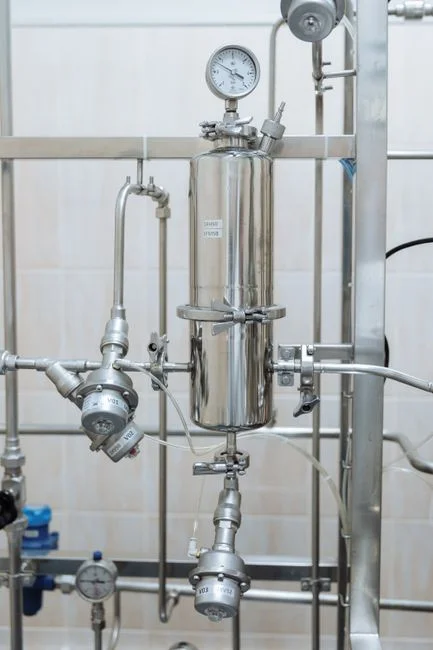
Regulatory compliance in Cameroon must be verified against the current authority route, applicable decree and sector-specific conditions. HydropureWater reports that MINEE handles industrial discharge matters, while MINSANTE handles hospital and food-processing effluents. Buyers should confirm this routing with the relevant authority rather than treating the published division as a substitute for a permit decision.
HydropureWater attributes the following environmental-discharge limits to MINEE Decree 2023-001: BOD below 30 mg/L, COD below 50 mg/L, TSS below 30 mg/L and pH from 6 to 9. These values require confirmation of applicability, amendment status and any sector-specific conditions before they are incorporated into an equipment guarantee.
| Permit or evidence item | Minimum content to request | Buyer check |
|---|---|---|
| System schematics | Process flow, hydraulic profile, sampling points and treatment boundaries | Do the drawings match the quoted equipment? |
| Laboratory reports | Recent influent and effluent results from an ISO 17025-accredited laboratory | Are methods, parameters and sampling dates suitable? |
| Maintenance plan | Routine tasks, membrane or media cleaning, spare parts and service responsibilities | Are access, frequency and responsibility assigned? |
| Operator competence | Certificates demonstrating training and competence | Do they cover the supplied process and controls? |
| Performance protocol | Design flow, analysis suite, loading conditions, test frequency, sample retention and nonconformance remedy | Is the guarantee measurable and enforceable? |
HydropureWater describes the submission package as system schematics, recent influent and effluent test reports from an ISO 17025-accredited laboratory, a maintenance plan and operator-training certificates. Require the supplier to identify sampling points, test methods, frequency, sample retention and the party responsible for demonstrating compliance. A supplier’s pretreatment compliance method can help structure that review, but the Cameroon authority remains the decision-maker.
Compare Quotes Using Cost, Schedule and Lifecycle Risk
A low package price can conceal civil, installation, utility, consumable and compliance costs. HydropureWater reports indicative CAPEX of $15,000–$30,000 for 5–10 m³/day package systems and a typical 4–8 week lead time for standard 5–50 m³/day systems. These are published indicative figures, not project quotations; the buyer must request a site-specific price and delivery schedule.
| Quotation component | Items to price separately | Commercial question |
|---|---|---|
| Capital scope | Civil works, equipment, installation, electrical supply, pretreatment, biological process, membranes, disinfection, sludge handling, commissioning and training | Is every required item included, excluded or listed as an allowance? |
| Operating scope | Energy, chemicals, membrane replacement or cleaning, spare pumps, laboratory testing, operator attendance and local service | Which costs recur, and how are quantities calculated? |
| Commercial terms | Warranty, extended support, payment milestones, customs responsibility and power resilience | Does the warranty cover parts, labor and guaranteed effluent performance? |
| Funding and schedule | Grant eligibility, approval timing, delivery, installation and commissioning | Can the procurement schedule depend on an unconfirmed grant? |
HydropureWater states that MINEE grants can cover up to 50% of project costs for rural wastewater initiatives. Verify eligibility, timing and the exact scope before including grant income in an affordability case. Require the supplier to state whether extended 3–5 year support is available and which items it covers. Power resilience also belongs in the quotation: the same source identifies frequent power outages as a project condition, so backup power, control restart and safe shutdown requirements must be priced rather than assumed. The wastewater-plant operating-cost breakdown provides a useful structure for comparing lifecycle line items.
Questions to Ask Before Awarding the Contract
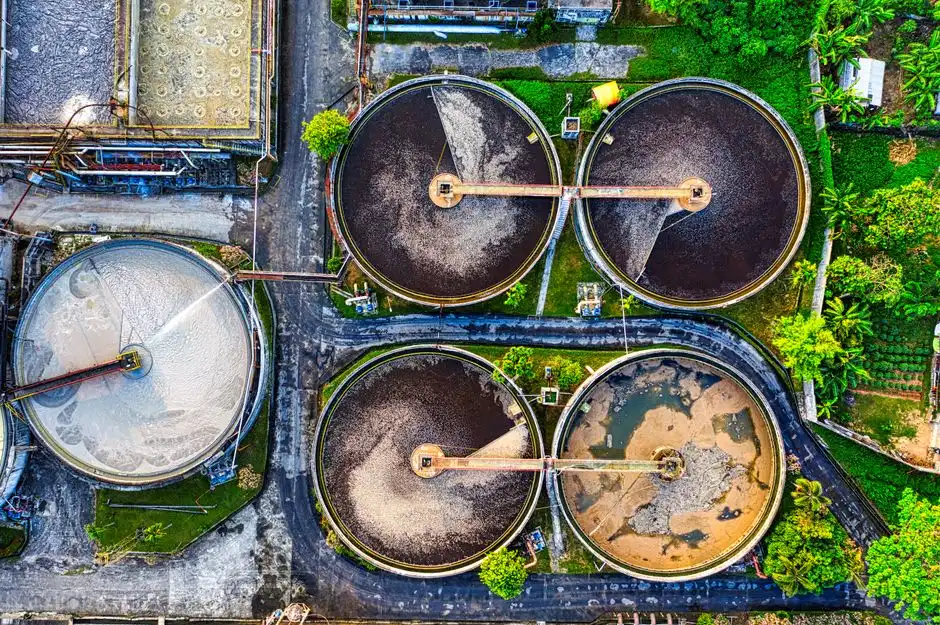
A technically credible bid should expose its design assumptions before commercial evaluation. Ask for the proposed process flow, equipment datasheets, hydraulic calculations, membrane or biological design assumptions and a named treatment-capacity basis. Capacity must be tied to the identified wastewater and loading conditions, not merely to a product label.
- Request references for comparable wastewater characteristics, operating conditions and installation dates, plus the supplier’s local spare-parts and response arrangements.
- Confirm who will manage construction waste, electrical interfaces, commissioning water, operator training and permit-document support.
- Check spare-parts availability, membrane or media compatibility, control-system documentation and every warranty exclusion.
- Require the treatment-capacity basis and performance guarantee to use the same influent, flow and analytical limits used in the quotation.
Use the Cameroon package wastewater plant supplier checklist to structure the follow-up review and compare responses consistently.
Frequently Asked Questions
How much does an industrial effluent treatment plant in Cameroon cost?
HydropureWater reports indicative CAPEX of $15,000–$30,000 for package plants serving 5–10 m³/day, but this is not a site-specific quotation. Ask suppliers to separate equipment, civil works, installation, pretreatment, biological treatment, membranes, disinfection, sludge handling, commissioning, training and utility connections. Also request recurring energy, chemical, laboratory, membrane and service costs. Obtain a written price against the same design flow, wastewater matrix and compliance basis.
How long does delivery and installation take?
HydropureWater reports a typical 4–8 week lead time from order confirmation to delivery for standard package systems serving 5–50 m³/day. That schedule does not automatically include permitting, civil works, electrical installation or commissioning. Require the supplier to identify the order prerequisites, transport assumptions, delivery date, installation duration, commissioning milestones and causes of delay in writing.
How do you size an industrial wastewater treatment plant?
Size the plant from peak and minimum flows, production and clean-up cycles, storm runoff, and representative concentrations of BOD, COD, TSS, oil and grease, pH and process-specific contaminants. Include the receiving point or reuse application, because it changes the solids-removal, disinfection and polishing requirements. Do not select a capacity until representative samples and the proposed process assumptions have been reviewed.
How should I select a wastewater treatment supplier in Cameroon?
Evaluate suppliers on technical fit, evidence and local execution rather than price alone. Request comparable references, hydraulic and process calculations, named capacity assumptions, local spare-parts arrangements, control documentation, training and permit support. Also ask each supplier to state the design inputs, analytical methods, loading conditions and remedy for nonconformance attached to its performance guarantee.
Who is responsible for permit compliance and demonstrating the final effluent quality?
The project owner must confirm the current permit route with the competent authority; HydropureWater reports MINEE for industrial discharges and MINSANTE for hospital and food-processing effluents. The supplier should support the submission with schematics, recent influent and effluent reports from an ISO 17025-accredited laboratory, a maintenance plan and operator-training certificates. The contract should also assign sampling, testing, sample retention, reporting and nonconformance responsibilities rather than leaving compliance implied.