In Bilbao, wastewater treatment plant (WWTP) costs for 2025 range from €1.2M for a 50 m³/h package plant to €70M+ for large municipal systems like the Galindo upgrade. Key drivers include technology choice (e.g., MBR vs. DAF), Basque Water Agency (URA) compliance, and port-specific requirements. For example, the ACCIONA sanitation contract (€12.4M) covers 3–5 years of OPEX, while a Reddit estimate pegs equipment CAPEX at €13M for a 50,000 PE plant. Use this guide to model costs, compare technologies, and calculate ROI for your project.
Why Bilbao’s Wastewater Treatment Costs Are Unique: 3 Local Factors You Can’t Ignore
The Basque Water Agency (URA) discharge limits in the Basque Country require a 90% COD removal efficiency, exceeding the standard EU Urban Wastewater Treatment Directive (91/271/EEC) minimum of 75%. This stricter regulatory environment necessitates advanced secondary and tertiary treatment stages, which typically inflates CAPEX by 15-20% compared to plants in other Spanish regions. For engineers, this means that a standard activated sludge process may no longer suffice for industrial discharge into the Nervión river, often requiring the integration of a high-efficiency DAF system for Bilbao’s industrial pretreatment needs to handle fats, oils, and grease (FOG) before biological processing.
Geographic consolidation is another major cost driver. The Port of Bilbao’s centralized sanitation system, a project involving the Port Authority, URA, and the Bilbao Bizkaia Water Consortium, aims to replace 12+ smaller, inefficient plants with a unified network feeding into the Galindo treatment plant. According to a 2023 Port Authority report, this consolidation reduces regional OPEX by 22% through economies of scale in sludge management and chemical procurement. However, the initial investment for the necessary collector network and pumping stations represents a significant upfront cost for businesses connecting to this infrastructure.
Finally, the industrial-heavy nature of the Bilbao metropolitan area dictates specialized treatment requirements. Approximately 60% of the region's WWTP capacity serves industrial users, including food processing, metal finishing, and shipbuilding. These sectors produce high-strength wastewater that demands specialized pretreatment. For instance, food processing facilities near the port often require dissolved air flotation to meet URA’s stringent discharge standards. To see how these requirements influence pricing on a global scale, you can see how Bilbao’s costs compare to other port cities like Durban to understand the impact of localized environmental standards on B2B investments.
Wastewater Treatment Plant Cost Breakdown: CAPEX vs. OPEX for Bilbao Projects
Total investment for a 50,000 Population Equivalent (PE) wastewater treatment plant in the Bilbao metropolitan area typically requires a €13 million equipment CAPEX, with civil engineering and permitting accounting for an additional 40% of the total project budget. For smaller industrial operations, a compact underground WWTP for Bilbao’s space-constrained sites can offer a more manageable entry point, though the per-cubic-meter cost remains higher for lower-volume systems. Permitting alone, involving URA approvals and environmental impact assessments, can range from €50,000 to €200,000 depending on the proximity to protected water bodies.
Operational expenditure (OPEX) in Bilbao is dominated by energy consumption and labor. Energy intensity typically ranges from 0.3 to 0.5 kWh/m³ for conventional plants, but can rise significantly for high-pressure membrane systems. Labor costs are estimated at one full-time equivalent (FTE) technician per 5,000 PE. Chemical dosing for phosphorus removal and pH neutralization adds another €0.10–€0.25/m³. The ACCIONA sanitation contract, valued at €12.4 million for a 3-to-5-year period, highlights the significant ongoing investment required to maintain system integrity and compliance in the Basque region.
Hidden costs often derail WWTP budgets in Bilbao. Odor control is a critical requirement for plants located near residential or commercial port areas, with biofilter systems costing between €200,000 and €1,000,000 (AccessWater survey data). Sludge disposal also presents a variable cost; while landfilling costs approximately €150–€300 per ton, incineration—though more expensive in CAPEX—can reduce long-term disposal fees to €80–€120 per ton. For smaller sites, you might explore package plant options for Bilbao’s smaller industrial sites to minimize these civil and odor-related overheads.
| Cost Component | Small Plant (50 m³/h) | Medium Plant (500 m³/h) | Large Plant (5,000 m³/h) |
|---|---|---|---|
| Equipment CAPEX | €1.2M - €1.8M | €8M - €12M | €45M - €60M |
| Civil Works & Land | €400K - €700K | €3M - €5M | €15M - €25M |
| Annual Energy (OPEX) | €45K - €70K | €350K - €500K | €2.5M - €4M |
| Annual Chemicals | €15K - €30K | €120K - €200K | €1M - €1.8M |
| URA Permitting | €50K | €120K | €250K+ |
Technology Comparison: MBR vs. DAF vs. Conventional Systems for Bilbao’s Wastewater
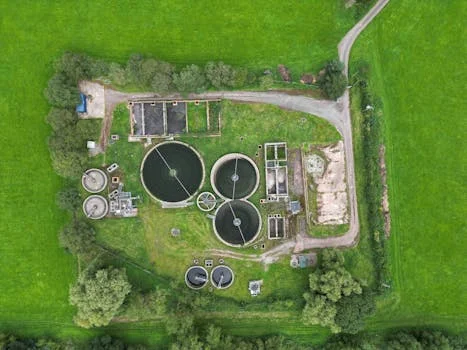
Membrane Bioreactor (MBR) systems in Bilbao’s industrial zones achieve 99% Total Suspended Solids (TSS) removal while occupying 60% less land area than conventional secondary clarifiers. This makes an MBR system for Bilbao’s high-efficiency, small-footprint requirements the preferred choice for port-side factories where land value is at a premium. While the CAPEX for MBR is roughly 25% higher than conventional activated sludge, the ability to reuse treated water for industrial cooling or irrigation can offset the higher energy demand (0.6–0.8 kWh/m³).
Dissolved Air Flotation (DAF) remains the standard for industrial pretreatment in Bilbao, particularly for the shipbuilding and food processing sectors. DAF systems provide 90–95% FOG removal and have a 30% lower CAPEX compared to MBR. However, they require consistent chemical dosing, which increases OPEX. According to a 2023 URA audit, approximately 70% of industrial facilities in Bilbao utilize DAF for primary treatment to protect downstream biological processes from shock loads. For a deeper dive into these mechanics, you can compare DAF and sedimentation for Bilbao’s industrial wastewater to determine which primary treatment fits your effluent profile.
Conventional activated sludge (CAS) is the backbone of municipal treatment, such as the Galindo plant. It offers the lowest CAPEX at approximately €1,500/m³ and the lowest energy requirement. However, the footprint is 2 to 3 times larger than an MBR system, and it often struggles to meet the strictest URA limits for nitrogen and phosphorus without additional tertiary filtration. For many Bilbao-based engineers, the decision rests on the trade-off between land availability and long-term energy costs. High-performance components, such as a MBR membrane bioreactor module, can sometimes be retrofitted into CAS plants to increase capacity without expanding the physical footprint.
| Metric | MBR System | DAF System | Conventional (CAS) |
|---|---|---|---|
| TSS Removal | >99% | 85-90% | 85-95% |
| Footprint | Very Small | Small | Large |
| Energy Use | High (0.7 kWh/m³) | Low (0.2 kWh/m³) | Medium (0.4 kWh/m³) |
| CAPEX Index | 1.4x | 0.8x | 1.0x (Baseline) |
| URA Compliance | Exceeds Limits | Pretreatment Only | Meets Basic Limits |
Bilbao WWTP Cost Calculator: Estimate Your Project’s Budget in 5 Steps
Establishing a precise budget for a Bilbao-based WWTP requires a multi-variable calculation that balances URA-mandated effluent quality against the specific energy tariffs of the Basque electricity grid. Use the following five-step framework to build your preliminary investment model:
- Define Design Capacity: Determine your daily flow in m³/day or Population Equivalent (PE). A standard industrial facility discharging 500 m³/day is roughly equivalent to 3,300 PE.
- Select Primary Technology: Choose between MBR, DAF, or CAS based on your site constraints. If land is limited (common in Bilbao Port), apply a 1.3x multiplier to equipment CAPEX for MBR.
- Factor in Local Geography: Projects within the Bilbao Port authority jurisdiction often require corrosion-resistant materials (SS316) for all exposed components, adding 10-15% to equipment costs.
- Calculate Compliance Overhead: For discharge into the Nervión or sensitive Basque water bodies, add €150,000 for advanced tertiary phosphorus and nitrogen removal stages.
- Apply the CAPEX/OPEX Formula:
- CAPEX: €2,000/m³ × Daily Capacity (Adjusted for technology).
- OPEX: €0.55/m³ × Daily Capacity × 365 days.
For example, a 500 m³/day plant using MBR technology in Bilbao would have an estimated CAPEX of €1.3M (€2,000 × 500 × 1.3) and an annual OPEX of approximately €100,000. These figures provide a baseline for internal procurement discussions before engaging with specialized engineering firms.
ROI Analysis: How Bilbao’s WWTP Costs Pay Off in 3–7 Years
Industrial wastewater investments in the Nervión river basin yield an average payback period of 3 to 7 years by mitigating URA non-compliance penalties that range from €10,000 to €500,000 per annum. Beyond avoiding fines, modern WWTPs provide significant value through operational efficiencies. Water reuse is a major factor in Bilbao; by treating effluent to a standard suitable for cooling towers or process wash-down, industrial users can reduce their fresh water intake by up to 30%, leading to direct OPEX savings of €50,000–€150,000 annually for medium-sized plants.
Energy recovery is becoming a viable ROI driver for larger municipal and industrial installations. Anaerobic digestion of sludge can generate biogas, which, according to 2024 URA pilot data, can offset up to 40% of a plant’s total energy requirements. a case study of a Bilbao-based food processor demonstrated that switching from an aging DAF system to a high-efficiency MBR setup reduced chemical costs and sludge volume so significantly that the €2.2M investment reached break-even in just 4.2 years.
| Savings Category | Estimated Annual Value (500 m³/day plant) | Impact on ROI |
|---|---|---|
| Fine Avoidance (URA) | €25,000 - €100,000 | High (Risk Mitigation) |
| Water Reuse Credits | €40,000 - €80,000 | Medium (Direct Savings) |
| Sludge Reduction | €15,000 - €35,000 | Medium (Process Efficiency) |
| Energy Recovery | €20,000 - €50,000 | Low (Scale Dependent) |
Frequently Asked Questions
What is the cost of a 1 KLD ETP plant in Bilbao?
A 1 KLD (kiloliter per day) package plant, such as the WSZ series, typically costs between €1,200 and €2,500 for the equipment alone. In Bilbao, additional costs for URA permitting and civil installation can add €2,000 to €5,000. For industrial applications involving oils or chemicals, add €500–€1,000 for a small-scale DAF pretreatment unit.
How much does it cost to install a sewage treatment plant in Bilbao?
Installation typically adds 20–30% to the equipment CAPEX. For a 500 m³/day plant, installation labor, piping, and electrical integration would cost between €300,000 and €600,000. Sites within the Port of Bilbao may face higher costs due to specialized safety protocols and the need for corrosion-resistant materials.
What is the life expectancy of a sewage treatment plant in Bilbao?
Civil works (concrete tanks and structures) are designed for 20–25 years. Mechanical and electrical components, such as pumps and blowers, typically last 10–15 years with proper maintenance. In MBR systems, the membranes generally require replacement every 5–8 years, with costs ranging from €50 to €80 per square meter of membrane surface.
Who regulates wastewater treatment in Bilbao?
The Basque Water Agency (URA) is the primary regulatory body responsible for setting discharge limits and issuing permits. The Bilbao Bizkaia Water Consortium (Consorcio de Aguas Bilbao Bizkaia) manages the municipal network and the Galindo plant. Industrial users must secure specific discharge authorizations from URA to ensure compliance with regional environmental standards.
Related Equipment
The following HydropureWater products are engineered for the wastewater challenges discussed above:
- compact underground WWTP for Bilbao’s space-constrained sites — view specifications, capacity range, and technical data
- high-efficiency DAF system for Bilbao’s industrial pretreatment needs — view specifications, capacity range, and technical data
- MBR system for Bilbao’s high-efficiency, small-footprint requirements — view specifications, capacity range, and technical data
Need a customized solution? Request a free quote with your specific flow rate and pollutant parameters.