What Does a Wastewater Treatment Plant Cost in Durban?
Wastewater treatment plant cost in Durban spans about R500,000 for a 10 m³/day package unit to R250 million+ for a 50,000 m³/day municipal works. Industrial trains typically budget R8,000–R15,000 per m³/day. MBR packages run 30–40% above conventional activated sludge, while tighter discharge targets often add 15–20% to capital cost. Operating spend averages R2.50–R5.00/m³ treated.
Installed cost is driven first by design flow, then by technology train and compliance depth. Most plants we size for KwaZulu-Natal industry run toward the lower end of the industrial range when influent COD and FOG are moderate and discharge is to sewer after pre-treatment. Coastal sites still need corrosion-resistant metallurgy on wet equipment, which alone can add 10–15% to mechanical CAPEX when 316L stainless steel replaces carbon steel.
eThekwini project teams still work to TSS < 25 mg/L, COD < 75 mg/L, and ammonia < 5 mg/L on many industrial and municipal briefs. Those targets push tertiary filtration or advanced biological stages. Soft costs matter: Environmental Impact Assessment (EIA), Water Use Licence (WUL), and municipal discharge permits together commonly run R50,000–R200,000 and take 6–12 months. Underestimating that path is a frequent budget miss on private plants in Pinetown, Phoenix, and Isipingo.
Infrastructure slippage has real cash cost. Reporting around the Hammarsdale wastewater treatment works delays put ratepayer exposure near R60 million, which is why industrial parks now favour private, modular trains they can schedule themselves. Drought pressure in KwaZulu-Natal also reframed effluent as a product. According to GRID-Arendal (2020), treated-wastewater sales cover almost all O&M on the Durban Water Recycling plant. Local models still use an 80–95% O&M offset band when reuse contracts are firm.
Plant Types and Capital Drivers in Durban
Plant selection balances influent strength, required removal, and available footprint. Durban’s market splits into large municipal works, sector-specific industrial plants, and modular package systems. Each class carries different civil scope and procurement lead time, so unit rates alone mislead buyers who skip the build-time column.
Municipal plants at 5,000–50,000 m³/day typically need R200 million to R500 million and 24–36 months of construction. Based on 2024 eThekwini Municipality tenders cited in project briefs, these works are often specified for 90%+ nitrogen and phosphorus removal to protect rivers and coastal waters. Industrial plants at 50–2,000 m³/day usually sit between R5 million and R20 million, with 6–12 month programmes when civil interfaces are clean.
Package plants at 1–200 m³/day span R500,000 to R10 million and install in 3–6 months. They suit decentralised housing or temporary industrial sites. Engineering benchmarks from Micon Water suggest that compact WSZ series package plants for Durban’s decentralized projects are favoured where footprint and relocation matter. Textile mills in Pinetown need colour removal; food plants in Prospecton lean on high-rate Dissolved Air Flotation (DAF) for fat, oil, and grease (FOG).
| Plant Type | Capacity (m³/day) | Capital Cost (ZAR) | Build Time | Target Removal Efficiency |
|---|---|---|---|---|
| Municipal (Custom) | 5,000 – 50,000 | R200M – R500M+ | 24–36 Months | 95% TSS / 90% Nutrients |
| Industrial (Custom) | 50 – 2,000 | R5M – R20M | 6–12 Months | 98% COD / 99% FOG |
| Package Plant | 1 – 200 | R500k – R10M | 3–6 Months | 90% TSS / 85% COD |
| MBR Integrated | 10 – 500 | R2M – R15M | 4–8 Months | 99.9% Pathogens / 98% TSS |
Flow rate sets the envelope: industrial systems average R8,000–R15,000 per m³/day. Technology choice moves the needle next. MBR systems for Durban’s strict ammonia and TSS limits raise effluent quality but carry higher membrane and aeration CAPEX than conventional activated sludge. Coastal salt air and humid conditions still push alloy upgrades on pumps, screens, and tank fittings.
What Is a Water Treatment Plant Cost Breakdown?
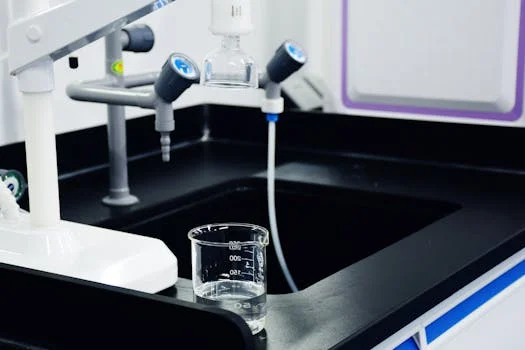
A practical wastewater treatment plant cost breakdown for Durban separates CAPEX per m³/day from OPEX per m³ treated, then splits OPEX into energy, sludge, chemicals, and labour. Conventional activated sludge CAPEX runs about R12,000–R18,000 per m³/day. MBR CAPEX runs about R18,000–R25,000 per m³/day because of membrane modules and finer aeration control. Modular package plants often land at R8,000–R12,000 per m³/day when civil works stay light.
OPEX in Durban is currently calculated at R2.50 to R5.00 per m³ of treated water. Energy is often the largest line, about 40% of O&M on mixed trains, with sludge disposal near 25%. Local power tariffs used in many industrial models sit near R1.80/kWh, above the R1.20/kWh figures still quoted for some inland provinces. Sludge tip fees at Buffelsdraai Landfill have risen to R1,200–R1,800 per ton, so dewatering investment pays back quickly on high-solids plants.
| Cost Component | Conventional System (CAS) | MBR System | Package Plant (Modular) |
|---|---|---|---|
| CAPEX per m³/day | R12,000 – R18,000 | R18,000 – R25,000 | R8,000 – R12,000 |
| Energy (OPEX %) | 30% | 50% | 35% |
| Sludge Handling (OPEX %) | 35% | 15% | 25% |
| Maintenance Frequency | Moderate | High (Membranes) | Low |
MBR trains often show about 30% lower long-run O&M versus older CAS layouts when sludge volume falls and secondary clarifiers disappear. High organic loads in food and textile streams still benefit from primary DAF systems for Durban’s food processing and textile wastewater pre-treatment, which cut downstream biological load and aeration demand. Final disinfection for pathogen control commonly uses ClO₂ generators for Durban’s wastewater disinfection compliance where byproduct limits matter.
Reuse revenue closes the OPEX gap. Selling treated effluent for industrial cooling or irrigation at R1.50–R3.00 per m³, plus avoided discharge fees, can offset 80–95% of O&M when offtake contracts hold. A World Bank case study on Durban Water Recycling reported recycled industrial water at R2.8/m³ versus potable water at R5.4/m³. That historical pair sits inside the reuse-pricing band used in current industrial models.
Compliance and Permitting Costs in Durban
Discharge compliance in eThekwini is enforced with fines and, in serious cases, facility shutdown risk. Meeting TSS < 25 mg/L and COD < 75 mg/L on industrial discharges usually needs tertiary polishing—MBR, sand filtration, or chemical precipitation—beyond basic secondary treatment. Ammonia limits near < 5 mg/L further favour longer sludge ages or membrane bioreactors on many site briefs.
Permitting is a 6–12 month path costing R50,000–R200,000 for EIA, WUL, and municipal discharge paperwork. Those soft costs rarely appear in equipment quotes, yet they gate legal operation. Large industrial plants are increasingly required to install continuous online monitoring for flow, pH, TSS, and COD. Hardware for such a package costs R300,000–R800,000, with calibration and maintenance at R5,000–R15,000 per month.
Penalties for missing data or limit breaches have been reported in the R10,000–R50,000 per violation range in recent eThekwini enforcement examples. Pre-treatment reduces surcharge exposure. Primary DAF for FOG can cut “strength-of-waste” municipal surcharges by 20–30% when sewer discharge remains the destination. That step also protects any on-site biological stage from shock loads.
ROI and Cost-Benefit Analysis for Durban Projects
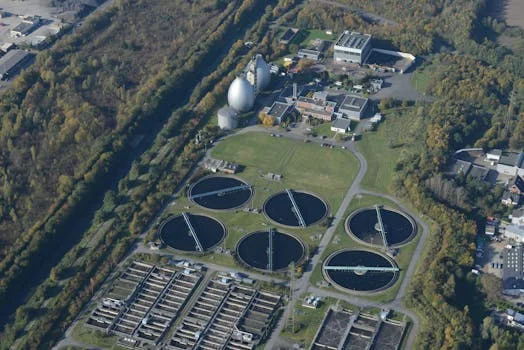
Industrial wastewater plants in Durban typically show 3–7 year payback when reuse or surcharge avoidance is material. Municipal works often sit on 10–20 year payback, justified by fine avoidance and system resilience rather than tariff profit. Package plants at factory scale commonly land in a 4–6 year band when energy and sludge lines are controlled.
Revenue lines matter as much as CAPEX. Treated wastewater for industrial reuse is valued at R1.50–R3.00/m³ in local models. Stabilised sludge can sell for R500–R1,000 per ton as a soil conditioner where markets exist. Medium factories that switch process water to recycled effluent often cut municipal water bills by 30–50%, which hedges tariff escalation.
| Financial Metric | Industrial (500 m³/day) | Municipal (10,000 m³/day) | Package Plant (50 m³/day) |
|---|---|---|---|
| Est. Payback Period | 3 – 5 Years | 12 – 18 Years | 4 – 6 Years |
| Annual Water Savings | R1.2M – R1.8M | N/A (Utility Scale) | R150k – R250k |
| Avoided Fines (Potential) | R500k – R1M / year | R5M+ / year | R50k – R100k / year |
| Energy Offset (Solar) | 40 – 60% | 20 – 30% | Up to 100% |
Solar integration on package plants can cut energy spend by 40–60% under South African renewable incentive programmes still used in 2024 project models. Combined with reuse sales, net OPEX can approach zero on well-contracted sites, as illustrated by the Durban Water Recycling project operated with Veolia. According to GRID-Arendal (2020), treated-wastewater sales cover almost all O&M on that facility.
What Does an IPA Level 0 Cost Breakdown Include?
An IPA Level 0 cost breakdown is an order-of-magnitude estimate used before detailed design, typically with wide accuracy bands suitable for screening options rather than awarding contracts. For a Durban wastewater plant it should list capacity (m³/day), process train (CAS, MBR, package), CAPEX per m³/day, OPEX per m³, permitting soft costs, and a reuse or surcharge offset line. Most early budgets we see fail because they price equipment only and omit EIA/WUL fees, online monitors, and sludge haulage.
At Level 0, use the CAPEX bands above: R8,000–R12,000/m³/day for modular package, R12,000–R18,000/m³/day for CAS, and R18,000–R25,000/m³/day for MBR, then add 20–30% for installation and civil works. Hold a contingency for coastal metallurgy (10–15% of mechanical CAPEX) and for continuous monitoring hardware (R300,000–R800,000) if the discharge permit will demand it. Refine to Class 3/4 estimates only after 7-day composite sampling and a site layout freeze.
Top 5 Wastewater Treatment Plant Suppliers in Durban (2025)
Supplier choice in Durban turns on local service response, turnkey scope, and lifecycle cost—not only the first quote. The following firms are active across KwaZulu-Natal municipal and industrial work, with distinct capacity bands.
- Micon Water: Specializes in package plants ranging from R500,000 to R10 million. They have a strong local presence with over 20 installations in the Durban area, focusing on capacities between 71 and 130 m³/day.
- Veolia (Durban Water Recycling): The primary player for large-scale municipal and industrial projects (R50M – R250M). They are pioneers in revenue-sharing models and high-efficiency MBR systems.
- BIOROCK: Focuses on domestic and small-scale commercial package plants (R80,000 – R500,000). Their unique selling point is non-electric sewage treatment for systems up to 30 people.
- HydropureWater: Provides specialized industrial solutions (R5M – R20M) using compact WSZ series package plants for Durban’s decentralized projects and high-efficiency DAF systems for Durban’s food processing and textile wastewater pre-treatment. They offer turnkey compliance guarantees.
- Stefanutti Stocks: A major civil engineering contractor for municipal plants (R200M – R500M), handling large-scale infrastructure and 24-36 month construction projects.
| Supplier | Primary Focus | Typical Cost Range | Key Differentiator |
|---|---|---|---|
| Micon Water | Small/Medium Package | R500k – R10M | Rapid Deployment |
| Veolia | Large Municipal/Industrial | R50M – R250M+ | Recycling Revenue Models |
| HydropureWater | Industrial Turnkey | R5M – R20M | Compliance Guarantees |
| BIOROCK | Domestic/Small Scale | R80k – R500k | Non-Electric Systems |
Request a 10-year lifecycle comparison, not a CAPEX shoot-out. A quote that is R1 million cheaper upfront but R500,000 higher each year in energy and sludge haulage loses over a decade. Confirm spare-parts lead times for membranes, blowers, and DAF scrapers before award.
How to Choose the Right Wastewater Treatment Plant for Your Durban Project
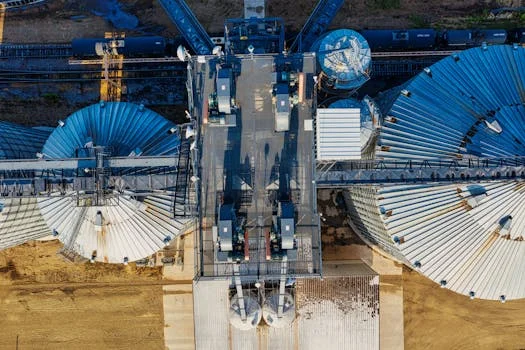
Selection is a data exercise. The checklist below keeps CAPEX, OPEX, and compliance in one frame so procurement and engineering argue from the same numbers.
- Define Flow Rate and Influent Quality: Conduct a 7-day composite sampling of your wastewater. A textile factory’s effluent is vastly different from a residential development’s sewage.
- Match Technology to Compliance: If you face strict ammonia limits (< 5 mg/L), MBR is likely necessary. For high FOG content, primary DAF is essential. You can see when to use DAF vs. clarifiers for Durban’s industrial wastewater to determine the best fit for your pre-treatment stage.
- Evaluate Site Constraints: Consider the available footprint. Package plants are ideal for tight spaces, while municipal-scale CAS systems require significant acreage.
- Compare Capital vs. Operational Costs: Use a 10-year Net Present Value (NPV) calculation. Factor in Durban’s R1.80/kWh energy cost and landfill fees. You might also find it helpful to research how Durban’s package plant costs compare to other coastal cities or how Durban’s costs stack up against other emerging markets to benchmark your budget.
- Shortlist Based on Local Support: Ensure the supplier has technicians in KwaZulu-Natal who can respond to a pump failure or membrane issue within 24 hours.
- Price Soft Costs Explicitly: Hold R50,000–R200,000 and 6–12 months for permits, plus online monitoring if required.
- Pilot Complex Streams: A pilot study at R100,000–R300,000 is cheaper than resizing a failed train later.
Common mistakes in the Durban market include underestimating sludge disposal costs, ignoring energy’s share of payback, and skipping pilots on dyehouse or food wastewaters. Fix those three items before you lock CAPEX.
Who This Is For / Next Step
This breakdown suits plant engineers, EPC estimators, and procurement managers budgeting industrial or municipal works in eThekwini. Pure domestic septic replacements under 10 m³/day, or buyers seeking only civil-contractor quotes without process guarantees, should look elsewhere. If you need a Level 0 budget from your flow and COD data, request a Durban plant cost estimate with process selection notes. We will map CAPEX, OPEX, and compliance options to your discharge target.
Frequently Asked Questions
How much does a sewage treatment plant cost in Durban?
Costs run from about R500,000 for a 10 m³/day package plant to R250 million+ for a 50,000 m³/day municipal facility. Industrial plants typically average R8,000–R15,000 per m³/day depending on wastewater complexity. MBR packages often sit 30–40% above conventional activated sludge for the same flow. Always add 20–30% for installation and civil works beyond equipment list prices.
Do wastewater treatment plants in Durban generate revenue?
Yes, when reuse offtake is contracted. Sale of treated wastewater for industrial use at R1.50–R3.00/m³ can offset 80–95% of O&M costs on well-designed plants. According to GRID-Arendal (2020), Durban Water Recycling covers almost all O&M from treated-water sales. Stabilised sludge can add R500–R1,000 per ton where agricultural markets exist.
How much should I budget for installation beyond equipment?
Installation and site preparation typically add 20–30% to equipment capital cost. For a R5 million plant, expect roughly R1.2 million to R3 million more for excavation, civil works, and power connectivity. Coastal alloy upgrades can add another 10–15% on mechanical items. Continuous online monitors, if required, add R300,000–R800,000 as a separate line.
What discharge limits apply to wastewater plants in Durban?
Project briefs commonly target TSS < 25 mg/L, COD < 75 mg/L, and ammonia < 5 mg/L for Durban industrial and municipal discharges. Permits for these operations cost between R50,000 and R200,000 and require 6–12 months for approval. Online monitoring and monthly calibration fees of R5,000–R15,000 are increasingly written into large-site permits.
Can a package plant serve a Durban factory?
Yes, if daily flow stays below about 200 m³/day. Package plants cost between R500,000 and R10 million and can be operational in 3–6 months, versus 12+ months for many custom builds. They fit decentralised sites in Pinetown, Phoenix, and Isipingo where sewer capacity or timing is uncertain. Confirm FOG and colour removal needs before you freeze the process train.