
What Domestic Sewage Treatment Means for Bandung Projects
Domestic sewage treatment in Bandung commonly means choosing between connection to an available public sewer and an on-site treatment system for developments or facilities without sewer access. For decentralized projects, an underground A/O package plant is compact and automated, while MBR offers finer filtration where water reuse or tight site constraints justify added complexity. A 2023 Bojongsoang WTTP study reported 73% BOD5 reduction during January–June 2023, but this is site-specific evidence rather than a universal Bandung performance guarantee. Final selection requires verified influent flows, peak loading, effluent objectives, land availability and applicable permit conditions.
Domestic sewage is distinct from industrial wastewater because its treatment objectives follow the composition of the discharge, its receiving destination and any intended reuse. A hotel kitchen drain, hospital clinical wastewater or housing estate sewage may each require separate characterization before a treatment route is selected. The treatment train cannot be defined from the label “domestic” alone.
The procurement sequence should begin with sewer feasibility. Confirm whether a public sewer is physically accessible, whether connection is permitted, what capacity is available and whether connection charges or pumping arrangements make the route impractical. If a sewer connection is unavailable or unsuitable, evaluate decentralized treatment. The domestic sewage treatment planning guide sets out the broader infrastructure decision, while the packaged sewage treatment plant selection for housing developments illustrates how project conditions affect package selection.
Before evaluating equipment, confirm planned occupancy, operating hours, effluent destination, reuse requirements, available land and the responsible approving authority. A Bandung City and Kawasaki government study of domestic wastewater management demonstrates municipal attention to this issue, but the supplied evidence does not establish approval for any particular site or technology.
Local Evidence and Project Design Boundaries
The Bojongsoang WTTP study is useful as local operating evidence, but its scope must remain explicit. The Asian Journal of Fisheries and Aquatic Research investigated the facility in Bandung during January–June 2023 and reported a 73% reduction in BOD5 for the plant and period examined.
The study used purposive sampling at five research stations with two replicates. That design supports an account of conditions at the investigated facility; it does not establish the performance of every decentralized system in Bandung, nor does it supply a current universal effluent-limit table, treatment price or approval timeline.
| Source | Location and date | Reported finding | Correct use | Limitation |
|---|---|---|---|---|
| Asian Journal of Fisheries and Aquatic Research | Bojongsoang WTTP, Bandung; January–June 2023 | 73% BOD5 reduction | Site-specific operating evidence and due-diligence context | Not a universal Bandung performance guarantee or substitute for acceptance testing |
| InTechOpen | Published study on vermifiltration; date not stated in supplied excerpt | Describes filtration combined with earthworms as a viable decentralized approach requiring less expertise | Initial screening of an academic treatment route | Site acceptance and performance verification remain necessary |
| West Java provincial government | Bandung City and Kawasaki; date not stated in supplied excerpt | Reports joint study of domestic wastewater management | Evidence of municipal attention to wastewater governance | Does not establish site-level approval or equipment suitability |
Request the applicable national, West Java and Bandung effluent and discharge conditions directly from the relevant authority and project designer. Also request site-specific discharge, reuse and construction approvals. The supplied research does not justify converting the Bojongsoang result into an assumed performance basis for an underground A/O package plant or MBR.
Build the Design Basis Before Choosing Equipment
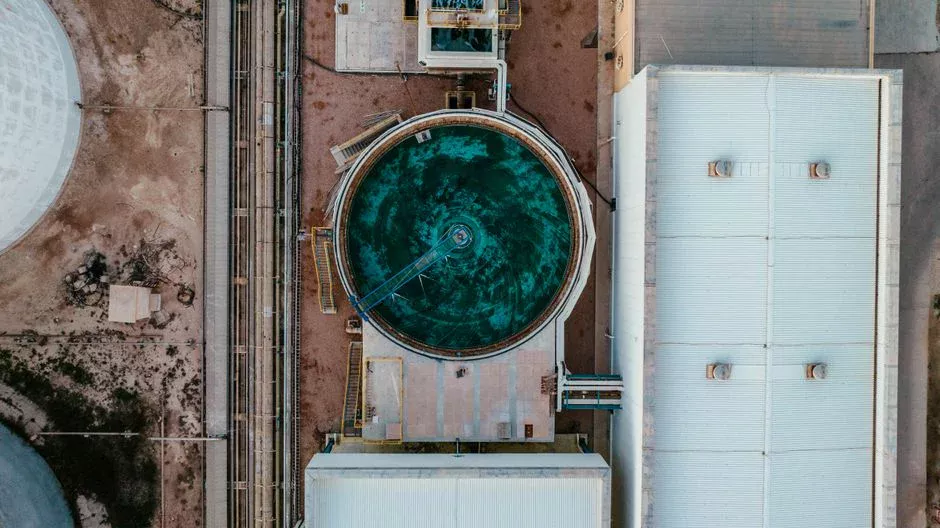
A treatment system should be selected from a verified flow-and-load basis, not from occupancy alone. Establish average daily flow and peak design flow using occupancy, operating hours, fixture counts or a measured wastewater balance. Then characterize wastewater strength, solids, grease and relevant site inputs. A peak hydraulic check is necessary because treatment equipment may be selected by daily capacity but still have to handle short-duration loading and start-up conditions.
Document the intended discharge route, receiving-water sensitivity, reuse application and applicable requirements. For an underground package plant, also record excavation depth, groundwater conditions, maintenance access, lifting requirements, traffic loading and surface-landscape constraints. These are design inputs, not installation details to resolve after equipment procurement.
| Design input | Information the buyer must establish | Why it affects selection |
|---|---|---|
| Hydraulic duty | Average daily flow, peak design flow and operating profile | Determines hydraulic capacity, unit arrangement and peak-load checks |
| Wastewater characteristics | Strength, solids, grease, fibrous material and site-specific inflows | Defines biological loading, pretreatment and solids handling |
| Effluent objective | Discharge destination, receiving-water conditions and reuse application | Sets the required treatment and filtration performance |
| Regulatory basis | Applicable national, West Java, Bandung and site conditions | Defines design, permitting, monitoring and acceptance obligations |
| Site conditions | Groundwater, excavation, access, lifting, loading and landscaping constraints | Influences installation method, maintainability and civil scope |
| Sludge pathway | Expected solids generation, removal method and destination | Prevents an incomplete treatment and maintenance scope |
Published equipment ranges are screening limits, not substitutes for design calculations. The WSZ catalog covers 1–80 m³/h; use that range only after the design flow and peak-load checks are complete. The MBR catalog covers 10–2,000 m³/day; compare that daily range against wastewater loading and peak hydraulic conditions before selecting a configuration. The MBBR domestic sewage design and buying guide provides a separate route for evaluating moving-bed biofilm systems rather than assuming they fit the same equipment envelope.
Compare Underground A/O, MBR and Decentralized Alternatives
The appropriate route follows the required effluent quality first and the installation and operating constraints second. The verified WSZ catalog describes an underground A/O package combining anoxic and aerobic biological contact oxidation, sedimentation and disinfection in one buried unit. It is described as fully automated, requiring no operator, with a published capacity of 1–80 m³/h. It can be installed below grade with landscaping above or mounted on a trailer for mobile deployment.
The verified MBR product evidence describes an integrated membrane bioreactor with near-reuse-quality effluent, filtration below 1 μm, a reported 60% smaller footprint than conventional systems and a published range of 10–2,000 m³/day. These attributes make MBR relevant where the specified filtration level or reuse objective justifies added system complexity. They do not remove the need to verify actual site loading, membrane maintenance and acceptance criteria.
| Selection criterion | Underground A/O package | MBR | Academic decentralized alternative |
|---|---|---|---|
| Treatment process | Anoxic/aerobic contact oxidation, sedimentation and disinfection | Biological treatment with membrane filtration | Vermifiltration combines filtration with earthworms |
| Footprint and installation | Buried package preserves surface land; excavation, groundwater and access require engineering. Trailer mounting supports mobile deployment | Product evidence reports a 60% smaller footprint than conventional systems | Must be assessed for site acceptance and verified performance |
| Published scale | 1–80 m³/h | 10–2,000 m³/day | No site-relevant capacity range is provided in the supplied excerpt |
| Automation and operation | Catalog describes full automation and no operator required | Requires membrane cleaning strategy and related operating controls | InTechOpen states the approach requires less expertise |
| Reuse potential | Depends on the specified treatment and discharge objective | Product evidence states near-reuse-quality effluent and filtration below 1 μm | Must be demonstrated for the intended application |
| Key procurement evidence | Duty selection, site installation basis, automation scope and acceptance results | Loading basis, membrane cleaning, replacement provisions and process guarantee | Site acceptance basis, verified performance and operating requirements |
Use the underground A/O package sewage treatment plant when compact deployment, automation and a conventional biological package are priorities. Consider the integrated MBR wastewater treatment system when the specified filtration level or reuse objective requires tighter solids separation. Vermifiltration remains an academic screening option: InTechOpen describes it as efficient, viable, less expertise-intensive and decentralisable, but a procurement decision still needs site acceptance and performance verification.
- Define the discharge or reuse objective.
- Check whether the verified duty falls within the selected route’s published capacity.
- Assess soil, groundwater, access, traffic and installation constraints.
- Confirm pretreatment and sludge-handling arrangements.
- Compare complete delivery scope and acceptance evidence rather than equipment price alone.
Select a Supplier by Verifiable Performance and Delivery Scope
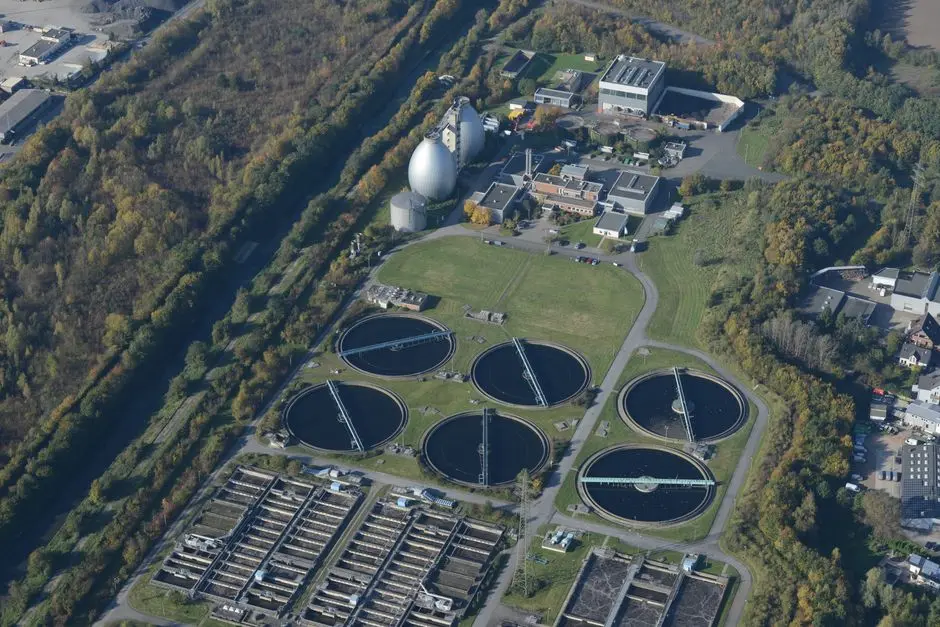
A supplier should be selected through a duty-based design and verifiable evidence, not through an uncited claim such as “Bandung-proven.” Request a selection memorandum showing the selected flow, treatment process, unit count, redundancy approach, controls and expected performance envelope. The memorandum should explain how the proposed configuration meets the project’s peak hydraulic and organic loading conditions.
Ask for source data, commissioning records and third-party or reference-site evidence. For the WSZ, clarify how the catalog’s automated, no-operator claim applies to the customer’s site, including monitoring, alarm response and maintenance obligations. For the MBR, require the membrane-cleaning strategy, replacement provisions and process guarantees around the specified filtration performance.
| Supplier check | Evidence or contract item to request | Risk addressed |
|---|---|---|
| Technical fit | Duty-based selection memorandum and verified load calculations | Equipment outside the actual design duty |
| Performance evidence | Source data, commissioning records, test results and reference-site evidence | Unverifiable performance claims |
| Delivery scope | Civil works, installation, commissioning, training, controls, maintenance, consumables, sludge removal and warranty | Scope gaps and handover disputes |
| Automation | Control narrative, alarm list, monitoring duties and response responsibilities | Overestimation of unattended operation |
| MBR-specific obligations | Cleaning method, replacement provisions and performance guarantee | Unplanned membrane and lifecycle costs |
| Local capability | Installation resources, commissioning support, spare parts and service arrangements | Delivery and maintenance delays |
| Commercial clarity | Itemized quotation, exclusions, payment milestones and warranty boundaries | Unclear comparison between suppliers |
Use weighted supplier evaluation rather than accepting the lowest headline price. Weight technical fit, evidence quality, local delivery capability, commissioning support, spare-parts availability, lifecycle support and commercial clarity according to the project’s risks. The packaged sewage treatment plant selection for housing developments provides a comparable screening reference, but Bandung approval conditions and site data must still control the final selection.
Plan Commissioning, Monitoring and Maintenance
Commissioning converts a delivered unit into a demonstrably operating installation. The plan should cover installation checks, water-tightness, power and control validation, biological start-up, sampling and performance verification. It should identify who performs each activity, what records are required and who authorizes acceptance.
The supplied research does not provide a universal Bandung acceptance schedule. The parties must therefore agree the parameters to be demonstrated, sampling arrangements, result documentation, non-conformance procedures and acceptance thresholds before installation. This is also where site-specific regulatory and reuse conditions should be incorporated.
| Phase | Required activity | Auditable record |
|---|---|---|
| Installation | Check excavation, pipework, lifting, access, power, controls and water-tightness | Inspection checklist, test records and installation photographs |
| Start-up | Validate biological start-up and operational controls | Start-up record, control tests and alarm-response confirmation |
| Performance verification | Sample and test the agreed acceptance parameters | Signed test results and non-conformance close-out |
| Routine operation | Inspect screening, biological process, solids removal and disinfection; clean membranes where applicable | Operating log, laboratory records and maintenance history |
| Sludge management | Remove, contain, transport and dispose of sludge through an agreed route | Sludge volume and disposal record |
| Support | Maintain access, monitor alarms, hold spares and activate remote or emergency support | Named operator, inspection schedule, spare stock and alarm log |
Automatic equipment control does not remove the site’s duty to inspect, test, remove sludge, maintain access and respond to alarms. Assign a responsible operator, inspection frequency, spare-parts stock, remote-support process and emergency response plan. Where influent contains rags, plastics or fibrous debris, consider a mechanical bar screen for wastewater pretreatment before the downstream biological process.
Sludge handling must be included in the treatment train and operating plan. The supplied evidence does not establish a universal Bandung sludge acceptance route or disposal price, so the project designer and relevant authority should confirm the required disposal pathway before the commercial scope is finalized.
Frequently Asked Questions
How much does domestic sewage treatment cost in Bandung?
The supplied research contains no Bandung price range, so a defensible quotation requires the design flow, wastewater characteristics, selected treatment route, civil works, installation conditions, controls, commissioning, training, sludge handling and maintenance scope. Ask each supplier for an itemized offer with exclusions stated. Compare offers only after the same design basis and delivery scope have been applied.
Should a Bandung property choose an underground package plant or MBR?
Choose an underground A/O package where compact deployment, automation and conventional biological treatment are the main priorities, subject to site-specific loading and effluent requirements. Consider MBR where the specified filtration level or reuse objective justifies the added membrane-cleaning and process complexity. Confirm the choice against verified flows, site constraints and acceptance criteria rather than footprint alone.
How do I size a sewage treatment system in Bandung?
Establish average and peak flow, wastewater strength, operating profile, pretreatment needs, discharge conditions and reuse requirements before matching equipment. Use the WSZ catalog range of 1–80 m³/h only after the hydraulic and peak-load checks are complete; use the MBR catalog range of 10–2,000 m³/day only after comparing daily loading and peak hydraulic conditions. These published ranges are screening boundaries, not design calculations.
How do I reduce supplier-selection and compliance risk?
Verify the applicable site-specific permits, require a duty-based selection memorandum and performance test evidence, define acceptance parameters in the contract, and assign maintenance, alarm response, spare-parts and sludge responsibilities explicitly. This separates demonstrated equipment performance from local operating evidence and prevents approval assumptions from entering the commercial plan.
Can the Bojongsoang WTTP’s 73% BOD5 reduction be used as a performance guarantee?
No. The Asian Journal of Fisheries and Aquatic Research reported that result for Bojongsoang WTTP during January–June 2023. It is study-specific evidence from a particular plant and period, not a universal Bandung result. It can inform due diligence, but the proposed system still needs site-specific design, acceptance testing and enforceable contractual guarantees.