What makes seafood processing wastewater difficult to treat?
Seafood processing wastewater is difficult to treat because its composition changes with the production stage: a 2025 review classifies it as wastewater rich in organic matter, nutrients, and salts that may exceed legal discharge limits. The review identifies five stages: initial washings, filleting, cooking and canning, final washings, and combined discharge. Stage 3 wastewater had the highest concentrations of BOD, COD, TN, TAN, TP, and oils, followed by Stage 2; Stages 1 and 4 carried lower pollutant loads. That makes source segregation, blending, and equalization central design decisions rather than administrative details. The SBR must be designed for the load it actually receives, including the salt, oil, solids, and nutrients entering from each process stream.
The 2025 review supports stage-specific treatment strategies because the same biological process cannot be assumed to handle every process area equally. A facility that combines high-strength cooking wastewater with dilute wash water presents a different load from one that diverts those streams for separate treatment. This is where an engineered SBR design for seafood processing wastewater becomes credible: it starts with a process-source profile and uses the permit requirements to determine the biological sequence.
Before selecting an SBR basin, aeration system, or decanter, obtain the following site information:
- Average and maximum daily flow, including the production schedule and batch discharges
- Flow allocation by initial washing, filleting, cooking and canning, final washing, and combined discharge
- BOD, COD, TSS, pH, alkalinity, temperature, TKN, ammonia-nitrogen, total phosphorus, TDS or salinity, and oils and grease
- The applicable discharge permit or reuse specification, including limits for organic matter, nutrients, solids, and pathogen or reuse requirements
Use these inputs with a BOD removal methods for industrial wastewater to assess the biological load, but do not use a generic BOD removal ratio as a substitute for source characterization.
| Process source | Characterization finding from the 2025 review | Design implication |
|---|---|---|
| Stage 1: Initial washings | Lower pollutant load | Include in flow and salt balance; avoid assuming it is identical to final washings |
| Stage 2: Filleting | Second-highest concentrations among the identified BOD, COD, TN, TAN, TP, and oil parameters | Measure separately where segregation or equalization is practical |
| Stage 3: Cooking and canning | Highest concentrations of BOD, COD, TN, TAN, TP, and oils | Control the biological load and upstream oil removal |
| Stage 4: Final washings | Lower pollutant load | Account for its flow and salt contribution when blending |
| Stage 5: Combined discharge | Overall discharge stream defined by the five-stage framework | Design against the measured influent envelope and permit basis |
Where SBR fits in the seafood wastewater treatment train
An SBR is most defensible as the biological core of a treatment train that has already controlled the materials most likely to disrupt biomass and settling. The recommended process sequence is source segregation and flow balancing, screening, DAF or equivalent FOG and solids removal, balancing, biological SBR treatment, settling and decanting, sludge handling, and optional filtration or disinfection when discharge or reuse requirements justify them.
Commercial fish-processing wastewater guidance from ClearFox identifies screening as the first unit operation for coarse material such as bones, scales, heads, and fins, followed by DAF for suspended solids, fats, oils, and blood components. That role should be treated as pretreatment, not as a substitute for biological treatment. In a seafood facility, the DAF unit may also need to handle a rapidly changing oil load from the cooking and canning operation identified as the highest-oil stage in the 2025 review.
The EPA describes an SBR as a fill-and-draw activated-sludge system in which equalization, biological treatment, and clarification can occur in one tank. Industrial systems generally use two or more batch reactors operating in a predetermined sequence. That configuration provides useful flexibility for variable production batches, but it does not remove the need to protect the biology from excessive solids or oil. Excessive oil and solids can interfere with settling, increase sludge-handling demand, and make the biological sequence less predictable.
The decision is conditional: an SBR is more defensible after the wastewater has been characterized and protected from shock loads. For saline, high-strength, or highly variable industrial influent, a pilot or treatability study may be necessary before equipment specifications are finalized. The DAF pretreatment for fish processing wastewater should therefore be evaluated as a possible upstream unit, not automatically included or omitted without FOG and solids data.
| Treatment stage | Primary function | Information required before sizing |
|---|---|---|
| Source segregation and balancing | Mixes or stores process streams to manage flow and load variation | Source-by-source flow, production schedule, and pollutant profile |
| Screening | Removes coarse fish-processing solids | Screen type, solids inventory, and waste handling route |
| DAF or equivalent | Removes suspended solids, fats, oils, and blood components | FOG, TSS, flow variability, and solids-handling basis |
| SBR | Provides equalization, biological treatment, and clarification in timed phases | Influent envelope, permit targets, salinity range, and treatability results |
| Polishing and disinfection | Addresses reuse, discharge, or pathogen requirements | Final quality specification and receiving-water or reuse criteria |
How salinity changes SBR biological treatment
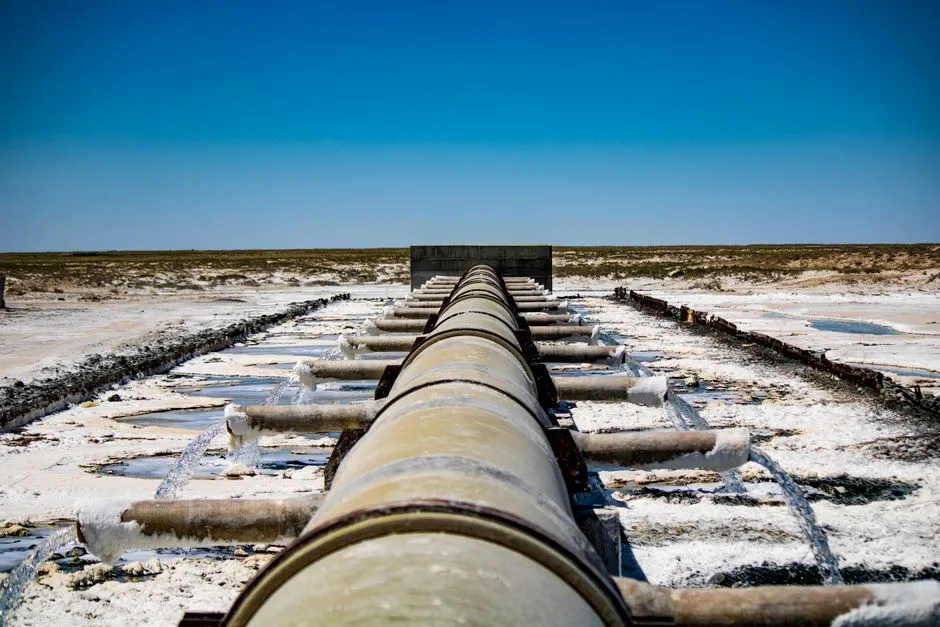
Salinity is a design variable for an SBR because seafood wastewater contains salts, and salt concentration can affect biological conditions, floc characteristics, and pollutant-removal performance. The Water Science & Technology study Effects of salt concentration on floc characteristics and pollutants removal efficiencies in treatment of seafood wastewater by SBR specifically examined these relationships in seafood wastewater treated by SBR. The study’s reported problem was not simply biological removal: solid-liquid separation was among the principal difficulties faced in treating wastewater affected by changes in salt concentration, pollutant loadings, and raw materials.
A separate Water Science & Technology study examined nitrogen and phosphorus removal using lab-scale SBRs with highly saline artificial seafood-processing wastewater. The reactors were initially operated at low salt levels and then at increasing salt levels. This provides a useful test structure, but it does not establish a universal salt tolerance or a guaranteed removal efficiency for every seafood-processing SBR.
The design variables remain site-specific: salinity level and variation, temperature, pH, alkalinity, nutrient balance, organic load, biomass acclimation, and operating sequence. The final sequence should be based on a treatability study that evaluates settling and the selected Fill, React, Settle, and Draw operations across the expected salinity range. For a saline wastewater SBR, the study should examine both treatment performance and the physical separation step; good biological removal does not establish that sludge will settle or decant reliably.
| Salinity design input | Why it matters | Evidence or test requested |
|---|---|---|
| Absolute salinity | Defines the operating envelope for biological and settling conditions | Measured TDS or salinity across production conditions |
| Salinity variation | Changes biological conditions and floc behavior during batch operation | Low-to-high salt test sequence using representative wastewater |
| Temperature and pH | Affect biological reactions and the conditions during settling | Site data plus controlled study conditions |
| Alkalinity and nutrient balance | Influence treatment objectives and the usable operating sequence | Influent measurements tied to permit targets |
| Biomass acclimation | Determines how quickly the selected biomass adapts to the salinity range | Acclimation history and performance during trial operation |
| Settling and decanting | Tests whether flocs remain separable under the expected salt conditions | Settle and Draw observations with measured solids carryover |
SBR operating sequence for variable seafood batches
The operating sequence should be assigned only after the permit, source profile, and salinity range are known. The EPA defines the SBR sequence as Idle, Fill, React, Settle, and Draw. For industrial wastewater, the EPA states that treatability studies are typically required to determine the optimum operating sequence; industrial applications generally use two or more reactors in a predetermined operating sequence.
During Fill, the EPA identifies static, mixed, and aerated options. Static fill adds influent without mixing or aeration, maintaining a high substrate concentration when mixing begins. The EPA notes that this condition favors floc-forming organisms over filamentous organisms and can support biological phosphorus removal. Mixed fill combines influent organics with biomass without aeration; if nitrate is available as an electron acceptor, denitrification can occur under anoxic conditions. Aerated fill starts aerobic reactions and can reduce the aeration time required during React. These are not interchangeable choices. They should be selected against the measured organic load, nutrient targets, settling behavior, and salinity conditions.
React completes the selected biological reactions. Under the EPA framework, ammonia or TKN limits require nitrification, while a total-nitrogen limit requires nitrification and denitrification. Anaerobic or anoxic periods should not be included simply because they are available in an SBR; their purpose must be tied to a defined treatment objective. For seafood wastewater, the sequence should also be checked against the high Stage 3 nutrient and oil loads identified by the 2025 review.
Settle occurs under quiescent conditions. The decanter removes treated supernatant during Draw, and sludge wasting controls the biomass inventory. The EPA warns that some SBR configurations may discharge floating or settled sludge during Draw, so decanter selection and draw controls require verification. Variable idle time can provide equalization between batches, but it does not by itself confirm biological acclimation or compliance. The MBR alternative to an SBR treatment train should be compared when membrane solids separation or reuse requirements justify the additional process complexity.
| Phase | Primary purpose | Design check for seafood wastewater |
|---|---|---|
| Idle | Equalization, biomass conditioning, and possible sludge wasting | Confirm that idle time handles batch flow and load variation without masking poor biomass acclimation |
| Fill | Introduce influent under static, mixed, or aerated conditions | Select the option from organic load, nutrient goals, salinity, and settling evidence |
| React | Complete aerobic, anoxic, or anaerobic biological reactions | Match the sequence to permit limits and the measured Stage 2 and Stage 3 loads |
| Settle | Separate biomass from treated water under quiescent conditions | Test settling across the expected salinity range |
| Draw | Decant treated effluent and manage sludge wasting | Check for floating or settled sludge carryover and confirm downstream polishing flow |
How to size an SBR without treating preliminary values as final design

SBR sizing must begin with the site’s design flow, maximum daily flow, BOD5, TSS, pH, alkalinity, temperature, TKN, ammonia-nitrogen, and total phosphorus, as directed by the EPA. For seafood processing wastewater, add TDS or salinity, FOG, and process-source data. Those values determine the treatment objectives and operating sequence before basin volume, aeration, decanter capacity, or reactor count can be finalized.
The EPA’s preliminary industrial SBR examples are a food-to-mass ratio of 0.15–0.6/day, a treatment cycle duration of 4.0–24 hours, and mixed-liquor suspended solids of 2,000–4,000 mg/L. The same table states that hydraulic retention time varies by application. These are preliminary design examples, not a universal specification for seafood processing wastewater. A supplier should explain how the selected values apply to the measured load and permit basis.
Use this sequence:
- Confirm the discharge, reuse, and permit requirements with the regulator or authority having jurisdiction.
- Characterize each process stream and establish the production-dependent flow profile.
- Run treatability work over the expected organic, nutrient, solids, and salinity envelope.
- Select reactor count, working volume, cycle duration, decanter volume, and aeration basis.
- Size balancing, sludge handling, and any downstream filtration, disinfection, or reuse treatment.
For aeration, the EPA identifies site elevation above mean sea level, wastewater temperature, and total dissolved solids concentration as site-specific inputs. These are important for a seafood site because they affect the design conditions around which the biological and air-transfer calculations must be checked.
| Design item | EPA preliminary industrial example | Finalization requirement |
|---|---|---|
| Food-to-mass ratio | 0.15–0.6/day | Select from measured load, biomass inventory, and tested sequence |
| Treatment cycle duration | 4.0–24 hours | Use the approved sequence and batch-flow profile |
| Mixed-liquor suspended solids | 2,000–4,000 mg/L | Confirm with salinity, settling, and sludge-wasting trials |
| Hydraulic retention time | Varies by application | Calculate from the selected reactor volume and site flow |
| Aeration inputs | Site elevation, wastewater temperature, and TDS | Provide site measurements and the selected biological load |
Compare SBR, DAF-led treatment and MBR for seafood processors
DAF, SBR, and MBR serve different roles in a seafood treatment train. DAF is a pretreatment option for suspended solids and FOG. SBR provides timed biological treatment and secondary clarification. MBR combines biological treatment with membrane separation and can be considered for stringent solids separation or reuse where its process requirements are justified. These are role comparisons, not guaranteed effluent-performance claims for seafood wastewater.
DAF does not replace biological treatment, and an SBR does not necessarily replace upstream oil-and-solids removal. A DAF-led train may therefore be more defensible where FOG and suspended solids threaten the biology or the settling step. An SBR-led train may be appropriate where the wastewater has been characterized, upstream removal is adequate, and timed biological operations provide useful flexibility for variable batches. MBR should be compared where solids separation, footprint, or reuse requirements justify the membrane system and its associated controls and solids handling.
ClearFox describes an advanced multistage train that can add biological treatment, optional phosphorus precipitation, and final filtration such as reverse osmosis where discharge or reuse requirements justify those steps. For equipment-selection context, HydropureWater’s catalog lists DAF capacities of 4–300 m³/h across 13 standard models and MBR capacities of 10–2,000 m³/day. These catalog ranges identify equipment envelopes; they do not establish the correct capacity or performance for a seafood facility.
Use this decision framework:
- If FOG and solids are high or variable, assess DAF or equivalent pretreatment before SBR biology.
- If biological treatment, nutrient objectives, and batch equalization are the main requirements, assess an SBR after source characterization.
- If stringent solids separation or reuse is the controlling objective, compare MBR with SBR plus polishing.
- If salinity is uncertain, include settling and treatability testing in the comparison rather than selecting from flow capacity alone.
| Option | Primary role | Key seafood selection question |
|---|---|---|
| DAF-led treatment | Remove suspended solids, FOG, and blood components before biological treatment | Does measured FOG and TSS justify pretreatment, and how will the resulting sludge be handled? |
| SBR-led treatment | Provide equalization, biological reactions, and clarification in timed phases | Does the tested sequence meet permit targets across the expected salinity and load range? |
| MBR-led treatment | Combine biological treatment with membrane solids separation | Do reuse, solids, or footprint requirements justify membrane complexity and controls? |
Build a supplier-ready wastewater treatment specification
A supplier-ready specification should separate measured site conditions from vendor assumptions. Require a source-by-source wastewater characterization covering flow, BOD, COD, TSS, FOG, pH, alkalinity, temperature, TKN, ammonia-nitrogen, total phosphorus, TDS or salinity, and the operating production schedule. The schedule matters because flow and composition may vary with the products and batches processed, not only with the number of operating hours.
Require each bidder to state the proposed treatment train; reactor count and volume; Fill, React, Settle, and Draw sequence; aeration basis; decanter arrangement; sludge-wasting strategy; and any filtration, disinfection, or reuse polishing. The proposal should also identify how equalization and source segregation are handled.
The performance basis must refer to the actual influent envelope and the applicable permit or reuse specification. Ask how each guarantee is measured, which test data support it, and which operating conditions are excluded. A generic flow-only selection cannot demonstrate whether the equipment handles the Stage 3 loading identified in the 2025 review or the salinity range of the facility.
Request downstream information covering site footprint, utility demand, controls scope, alarm strategy, operator training, maintenance access, commissioning activities, and treatability-work deliverables. Sludge and solids handling should be included as a separate design package; where filter-press equipment is considered, require its operating basis and sludge-conditioning assumptions to be stated explicitly in the filter-press selection and integration scope.
| Procurement area | Required information | Acceptance check |
|---|---|---|
| Influent basis | Source-by-source flow and pollutant data, production schedule, salinity range, and permit or reuse targets | Design basis covers the documented operating envelope |
| Process design | Treatment train, reactor count and volume, cycle sequence, aeration, decanter, and sludge wasting | Sequence is justified by treatability evidence |
| Performance | Measurement method, supporting test data, exclusions, and acceptance procedure | Guarantee is tied to defined influent and effluent conditions |
| Delivery and operation | Footprint, utilities, controls, alarms, training, maintenance, commissioning, and treatability work | Vendor scope and site responsibilities are unambiguous |
Frequently Asked Questions
How do I size an SBR for seafood processing wastewater?
No defensible basin volume can be calculated from the application label alone. Use the site’s flow and pollutant data, permit basis, EPA design inputs, and treatability results. The process-source profile is essential because the 2025 review identifies Stage 3 as the highest-load stage and Stage 2 as the next highest for BOD, COD, TN, TAN, TP, and oils. The final calculation then establishes reactor count, working volume, cycle duration, decanter volume, aeration, equalization, sludge handling, and polishing.
How should I select an SBR supplier for a fish processing facility?
Select on the proposed site-specific process design, not tank size alone. Require the supplier to show the treatment train, operating sequence, aeration basis, sludge-wasting approach, controls, maintenance scope, and proposed performance guarantees. Ask for salinity and treatability evidence applicable to the facility’s wastewater, as well as the method used to measure each guarantee and the operating conditions excluded from it.
What compliance risks should I resolve before selecting SBR treatment?
Treatment selection and legal compliance are separate decisions. Establish the final discharge or reuse criteria and applicable permit before finalizing the sequence because EPA states that ammonia or TKN limits require nitrification, while a total-nitrogen limit requires nitrification and denitrification. Also confirm solids, nutrient, disinfection, and reuse requirements. A design based only on average BOD or COD can still miss a permit condition or reuse specification.
Is DAF pretreatment required before an SBR?
DAF should be evaluated whenever FOG and suspended solids could overload the biological stage or impair settling, but the decision must be based on measured data rather than a universal rule. ClearFox identifies DAF for removing suspended solids, fats, oils, and blood components in fish-processing pretreatment. Confirm the upstream removal requirement from the site’s FOG, TSS, source profile, and treatability results, then verify the effect on biological loading, sludge handling, and final settling.