Start with the permit, not the equipment catalog
Pulp and paper plants discharging to a municipal sewer must comply with the categorical pretreatment standards in 40 CFR Part 430 and the National Pretreatment Program requirements in 40 CFR Part 403. EPA states that the Part 430 guidelines were promulgated in 1974 and 1977, amended in 1982 and 1986, and substantially revised for toxic pollutants in 1998. The applicable subpart depends on the mill’s process and products, while the publicly owned treatment works (POTW) establishes site-specific local limits. The current industrial-user permit, sewer or pretreatment agreement, sampling records and applicable Part 430 subpart therefore form the design basis before any treatment equipment is selected.
Pass-through and interference are separate enforcement risks. Pass-through occurs when an industrial discharge exits the POTW in quantities or concentrations that cause the POTW to violate its NPDES permit. Interference occurs when a discharge inhibits or disrupts POTW treatment, sludge processing or sludge disposal and causes a related permit or sludge violation (40 CFR 403.3(p), as summarized by the supplied U.S. pulp and paper pretreatment compliance guide, 2026). A treatment proposal that omits either risk is incomplete.
| Document or classification | What it determines | Project decision | Verification source |
|---|---|---|---|
| Current industrial-user permit | Site-specific discharge limits, monitoring, reporting and operating conditions | Defines compliance targets and the monitoring point | Permit issued by the controlling POTW and the applicable state authority |
| POTW sewer or pretreatment agreement | Connection conditions, self-monitoring, BMPs, fees and enforcement provisions | Establishes operational and reporting obligations | Executed agreement and current revisions |
| 40 CFR Part 430 subpart | Categorical pollutants and applicable discharge provisions for the mill classification | Defines the federal treatment and monitoring basis | Current Part 430 text and the mill’s process/product record |
| POTW local limits under 40 CFR 403.5(c) | Site-specific numeric or narrative controls | Controls equipment selection where more stringent than Part 430 | Approved POTW local-limit program and applicable permit or agreement |
| Monitoring and sampling records | Observed flow, pollutant concentrations and compliance history | Provides the measured basis for loads, variability and redundancy | Mill sampling logs, laboratory reports and POTW correspondence |
Do not assign a Chester-area numeric limit without the controlling permit. The supplied research identifies the regulatory structure, but it does not establish one universal limit for every mill near Chester. This U.S. pulp and paper pretreatment compliance guide provides the broader framework; the mill’s current documents must supply the enforceable site-specific values.
Match the mill process to the correct categorical subpart
EPA’s Part 430 information identifies regulated pollutants by subcategory and covers bleached kraft, unbleached kraft, dissolving and papergrade sulfite, semi-chemical, groundwood, deink, purchased-pulp and non-wood pulp and paper operations. A mill may operate several processes, so the equipment designer cannot select a subpart from the industry label “pulp and paper” alone. Classification follows the process, feedstocks, bleaching method and products actually produced.
The 1998 toxic-pollutant amendment makes the process classification especially important when AOX, chlorinated organics or color must be addressed. EPA’s 2026 guidance and the supplied commercial research identify bleached kraft and dissolving operations as requiring particular attention to AOX and color. That does not mean every mill has the same pollutants or limits: each subpart has its own parameter set, and the POTW may impose additional site-specific controls.
| Confirmation item | Record required | Engineering consequence |
|---|---|---|
| Feedstocks | Wood, non-wood fiber, purchased pulp and recovered fiber | Identifies applicable operations and potential color, solids, AOX and consumable-chemical loads |
| Pulping method | Kraft, sulfite, semi-chemical, groundwood, thermo-mechanical, chemi-mechanical or another method | Determines the categorical subpart and unit-operation objectives |
| Bleaching | Bleached or unbleached operation and applicable bleaching chemistry | Defines whether AOX and color require dedicated characterization and polishing |
| Products | Market pulp, paperboard, tissue, fine paper, newsprint or other output | Confirms the regulated category and production-based load profile |
| Purchased-pulp operation | Whether paper or pulp is produced from purchased fiber | Separates purchased-pulp categories from integrated mill operations |
| Multiple operations | Manufacturing areas and waste streams within each category | Prevents omission of a regulated waste stream or the wrong subpart |
Federal categorical standards and POTW local limits answer different questions. Part 430 establishes category-based requirements; local limits under 40 CFR 403.5(c) address the receiving POTW’s treatment capability, receiving-water constraints and sludge impacts. The site-specific POTW limit may therefore become the binding equipment criterion even where the categorical standard is less restrictive.
Characterize the wastewater before fixing the discharge limit
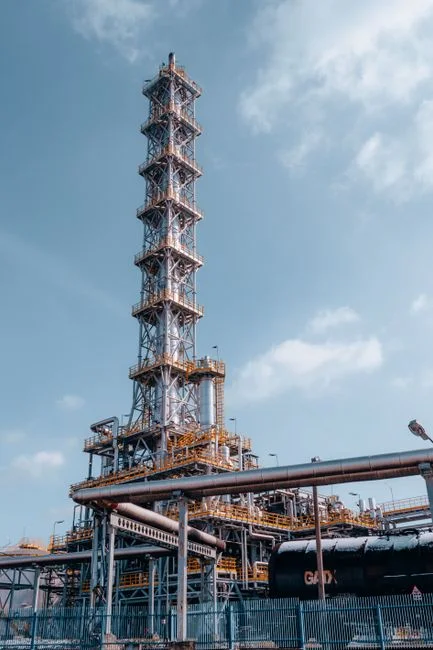
Pulp and paper wastewater can contain solids, BOD, COD, color, AOX, chlorinated chemicals and other organic compounds, while the academic review also identifies toxicity and poorly biodegradable organics as concerns. The reported generation rate can reach 70 m³ of wastewater per metric ton of paper, depending on raw material, finished product and water reuse; that is an academic context figure, not a Chester design flow (Hubbe et al., “A review of pulp and paper industry practices and opportunities,” supplied academic review). Production changes, recycle streams and water-reuse decisions can move both hydraulic and pollutant loads.
Use concentration and load as separate design inputs. Request average and peak flow, production rate, operating shifts, internal recycle, bypass routes, startup and shutdown conditions, and the sampling frequency required by the permit. Then calculate mass loading at the intended production and operating envelope. A concentration-only specification leaves equipment vulnerable when dilution or recycling changes the hydraulic profile.
| Characterization item | Required information | Why it changes the design |
|---|---|---|
| Hydraulics | Average and peak flow, production rate, shifts, recycle, bypasses and shutdowns | Sets equalization, hydraulic capacity, peak treatment and redundancy |
| Representative monitoring | Flow, TSS, BOD or other specified organics, pH, color, applicable AOX, oil and grease, metals or other named pollutants | Establishes the mass balance and identifies treatment targets |
| Stream segregation | Fiber-rich solids, high-strength process streams, bleaching-related streams, cooling water and seal water | Allows the designer to recover fiber, isolate AOX/color and avoid diluting concentrated loads |
| Variability | Production changes, shutdowns, chemical dosing changes and in-mill reuse | Determines equalization, control response and minimum sustained capacity |
| Monitoring plan | Parameters, locations, methods, frequencies and reporting conditions | Creates a traceable link between operation and permit compliance |
Separate streams before sizing equalization and biological equipment. Fiber recovery and save-all equipment can remove recoverable fiber before it reaches the wastewater plant. High-strength streams should not be blended indiscriminately with dilute cooling or seal water, because that can increase flow without improving treatment performance. Bleaching-related streams require AOX and color evaluation where applicable. The final sampling program must follow the current permit and sewer agreement rather than a generic industry monitoring list.
Prevent pass-through and interference with a staged treatment train
Pass-through is a POTW permit violation caused by an industrial discharge, while interference inhibits or disrupts POTW treatment, sludge processes or disposal and causes a permit or sludge violation. Both can arise from untreated or poorly controlled fractions, so the mill must address the pollutant mass and the receiving POTW’s treatment constraints—not merely obtain a low end-of-pipe concentration under one test condition.
- Fiber recovery and save-all: recover fiber and remove settleable or filterable material close to the source, reducing solids loading downstream.
- Primary clarification: remove readily settleable solids before equalization and biological treatment.
- Dissolved air flotation: capture colloidal solids, fine fibers and FOG that are poorly removed by settling. A pulp and paper DAF system is one candidate technology, but the required area and recycle ratio depend on the measured solids, oil and grease, flow and separation test results.
- Equalization and pH control: damp hydraulic and load peaks, mix or segregate streams as appropriate, and protect downstream biological and chemical systems from pH excursions.
- Biological treatment: remove biodegradable organics. Conventional primary clarification followed by activated sludge is widely implemented in pulp and paper operations; anaerobic stages may be appropriate for separable high-strength streams, while advanced oxidation, bioreactors and membranes provide additional removal where required (Hubbe et al., supplied academic review).
- Polishing: address residual solids, color, AOX or other parameters only where required by the confirmed limits.
- Sludge handling: provide conditioning, dewatering, storage and transport because a stable discharge process cannot be separated from residuals management.
PLC-controlled coagulant, flocculant and pH dosing should use operating parameters established through pilot testing. Jar tests can screen chemical products and preliminary dose ranges, but variable mill wastewater requires confirmation across representative production and wastewater conditions before chemical consumption, recirculation or treatment area is committed.
MBR is a polishing or biological-separation option where footprint is constrained or stringent solids separation is required. The supplied commercial research describes a membrane bioreactor wastewater system with near-reuse-quality effluent below 1 μm and capacities from 10 to 2,000 m³/day; those are supplier specifications, not a Chester permit requirement. The design must separately verify AOX removal, color behavior, scaling, membrane pretreatment and cleaning demand.
Choose DAF, biological treatment and polishing by risk
Equipment selection should begin with the controlling POTW local limit, the measured contaminant load and the reuse objective. Supplier capacity ranges indicate available configurations; they do not establish the capacity, removal performance or footprint required at a particular mill.
| Technology | Target contaminant or risk | Principal advantage | Principal risk | Required design input |
|---|---|---|---|---|
| DAF | Colloidal solids, fine fibers, FOG, oil and grease | Removes fractions that settle poorly and can reduce downstream biological loading | Wrong hydraulic loading or chemical dose; recycle and sludge effects | Flow envelope, solids/FOG profile, separation tests, flocculation data and recycle basis |
| Activated sludge | Biodegradable organics represented by BOD and related parameters | Conventional process with broad industrial application | Load variability, sludge settleability and toxicity or inhibition | Flow and load envelope, biodegradability, nutrients, temperature, settling and aeration demand |
| MBR | Biodegradable organics plus stringent solids separation | Compact biological treatment with strong suspended-solids separation | Foaming, fouling, scaling, AOX/color effects and membrane replacement | MLSS, solids loading, membrane flux, cleaning chemistry, pretreatment and replacement plan |
| Anaerobic pretreatment | Concentrated biodegradable streams | Can treat high-strength organic loads before aerobic polishing | Upset from variable loading, sulfides, temperature or incompatible constituents | Stream-specific flow and COD/BOD, biodegradability, alkalinity and sulfur profile |
| Advanced oxidation | Residual color, AOX or refractory organics where treatment is required | Targets oxidizable contaminants not removed by biological treatment | High chemical demand, by-products and increased oxidation of other constituents | Pilot results, residual compounds, reagent demand, contact time and downstream effects |
For DAF, the supplied commercial source states that the system addresses suspended solids, FOG, oil and grease and colloidal matter, with 13 models from 4–300 m³/h. It labels 15–25 m³/m²·h as HydropureWater 2026 field data. Treat that figure as supplier-specific field information to verify against the selected wastewater, not as a universal design rate for every Chester mill. A comparison of the applicable selection questions is available in the supplied DAF versus clarifier selection guide.
For MBR, distinguish the catalog claim of near-reuse-quality effluent below 1 μm from the mill’s actual permit requirement. Verify AOX, color, scaling, membrane chemistry and pretreatment demands during design. For residuals, the supplied commercial source lists plate-and-frame filtration areas from 1 m² to 500 m² with manual, hydraulic or automatic control options. Press selection should follow upstream chemistry and sludge generation, and the broader industrial sludge dewatering equipment guide provides the relevant procurement framework. No supplied evidence supports one numeric Chester-area limit for all pulp and paper mills.
Build a procurement scope that reduces compliance risk
Each bidder should state the design basis rather than offer an unqualified treatment train. At minimum, the proposal should identify the Part 430 subpart, local limits relied upon, flow and pollutant-load envelope, treatment objectives, compliance-monitoring point, operating assumptions and excluded flows.
| RFP requirement | Information required from bidder | Approval check |
|---|---|---|
| Regulatory basis | Part 430 subpart, POTW local limits, permit conditions and sewer-agreement commitments | Does the proposal cite the mill’s current documents, not generic standards? |
| Design basis | Average and peak flow, production range, pollutant loads, operating shifts and recycle assumptions | Are flows and loads traceable to monitoring rather than catalog capacity? |
| Performance | Treatment objectives and, where commercially appropriate, guarantees tied to the permit | Are test conditions, sampling points and remedies defined? |
| Mechanical and controls | Hydraulic drawings, P&IDs, control narratives, alarms, bypass controls, utility demand and maintenance access | Can operators access and maintain the equipment safely? |
| Residuals | Sludge generation, conditioning, dewatering, storage and disposal route | Is there an identified route for every waste stream? |
| Commercial plan | Installation footprint, schedule, energy, chemicals, membrane or press lifecycle and spare-parts strategy | Are lead time, operating cost and disposal cost visible as decision variables? |
Require pilot or jar testing for variable pulp and paper wastewater before fixing DAF loading, chemical dose, biological loading or polishing requirements. The academic review identifies effective measurement, coagulants, flocculants, filter aids, DAF, save-alls and biological processes as elements that can improve treatment performance; this supports a test-based design rather than a prescriptive guarantee.
Include startup support, operator training, commissioning acceptance tests and documented response actions in the scope. Specify the automatic chemical dosing system requirement around the verified dose range and control sequence, not a fixed consumption figure. Sludge-conditioning and dewatering equipment must be included in the same process evaluation, with the plate-and-frame filter press selected only after upstream solids chemistry and production rates are defined. The supplied research does not support quoting a universal Chester project cost; request itemized capital, installation, energy, chemical, labor, membrane replacement and sludge-disposal costs for the buyer’s actual operating envelope.
Verify performance before the sewer connection
Commissioning must demonstrate that the installed train operates at the permit location and under the permit’s required conditions. Confirm the sampling location, frequency, analytical methods, reporting requirements, operating conditions and responsible party in the current industrial-user permit and sewer agreement. These details should match the approved proposal rather than a commissioning checklist created after equipment delivery.
Track flow, pH, TSS, BOD or other specified organics, color, AOX where applicable and every local-limit parameter against operating trends. A single passing sample does not demonstrate stable control during production swings, startup, shutdown or chemical-dosing changes. Review equalization level, biological stability, filtration performance, sludge-dewatering operation and chemical inventory together.
Functionally test bypasses, interlocks, alarms, flow pacing, pH control and automatic chemical dosing. Operators need documented actions for upset loads, high color or AOX, membrane or DAF upset, sludge accumulation, off-spec discharge and loss of monitoring capability. Tie every proposed equipment value back to the current permits, influent testing and final proposal; supplier field data and catalog ranges do not override the enforceable site-specific basis.
Frequently Asked Questions
What limits govern a Chester pulp and paper mill discharging to a municipal sewer?
The governing framework includes the applicable 40 CFR Part 430 categorical subpart, the National Pretreatment Program in 40 CFR Part 403, the POTW’s approved local limits and the mill’s current industrial-user permit and sewer or pretreatment agreement. The supplied research does not establish one universal Chester limit. Obtain the controlling documents and confirm any narrative BMP, monitoring condition, fee or prohibited discharge before sizing equipment.
Is DAF always required for pulp and paper wastewater?
No. DAF is a candidate primary unit where the waste stream contains colloidal solids, fine fibers, FOG or oil and grease that settle poorly, but the requirement depends on the permit, measured pollutant mass, stream segregation and the rest of the treatment train. A primary clarification or other upstream recovery step may change the DAF duty. Use pilot or test data to determine whether DAF adds needed removal rather than assuming it is mandatory.
How should DAF and MBR equipment be sized?
Require average and peak flow, production and operating envelope, pollutant loads, required removal, footprint constraints, sludge route, pretreatment demands and pilot or test results. Supplier ranges such as 4–300 m³/h for the listed DAF models and 10–2,000 m³/day for the listed MBR system describe available configurations, not a site-specific selection. Confirm redundancy, duty allocation and performance under the mill’s variable wastewater.
What should a buyer request in a wastewater treatment proposal?
Request the regulatory basis, design flows and loads, guaranteed performance tied to the permit where appropriate, process guarantees, controls, redundancy, utilities, installation schedule, training, startup support and lifecycle costs. Also require a complete sludge route, membrane or solids-equipment replacement plan, chemical-storage provisions and documented acceptance tests. These checks allow a buyer to compare bids on the same engineering and compliance basis.
Where can compliance risk be reduced during procurement?
Reduce risk by verifying current permits, confirming the categorical subpart and local limits, separating and characterizing waste streams, conducting pilot testing, specifying monitored bypasses and alarms, and defining operator response actions. Also verify pretreatment for MBR, chemical-control limits for DAF, solids conditioning and dewatering capacity, redundancy for critical units and acceptance tests before sewer connection. This approach addresses both pass-through and interference rather than guaranteeing performance under one isolated test condition.
Related Equipment
- pulp and paper DAF system — specifications, capacity range, and technical data