Determine Which Wastewater Obligations Transfer with the Site
When PepsiCo acquires a plant in Texas, the site’s wastewater obligations depend on how it discharges water, not on the acquirer’s brand. Review the existing TPDES permit, municipal-sewer pretreatment requirements, industrial-stormwater coverage, and any construction, dewatering or no-discharge authorization. Under 30 TAC Chapters 305 and 319, a transfer may need TCEQ approval; changes to process flow or pollutant profile may require an amendment. Sewer-discharging sites may also be subject to 40 CFR Part 403 and local sewer limits. The acquisition team should verify permit status, sampling history, stormwater plans, operator coverage and legacy violations before closing.
Start with a site water map. Identify process wastewater, cooling and washing flows, sanitary sewage, stormwater, crusher wastewater, groundwater dewatering, sludge and hauled residuals. Then classify every destination: direct discharge to a Texas water body, municipal sewer, onsite treatment followed by permitted discharge, subsurface disposal or off-site haul-off. The relevant instrument follows the discharge pathway, not the acquisition itself.
The commercial Texas acquisition guide identifies individual TPDES permits, general TPDES permits, pretreatment or Significant Industrial User requirements, industrial-stormwater coverage and separate aquifer-protection or dewatering authorizations as possible baseline instruments. A Texas plant-acquisition wastewater due diligence checklist should use that list to organize document requests.
Do not assume that ownership changes a facility’s categorical status, permit limits or route. Request the acquired site’s actual permits and operating records. For transaction context only, PepsiCo announced the $1.2 billion Siete Foods acquisition on October 1, 2024 and expected it to close in the first half of 2025; the announcement did not disclose site wastewater details.
| Discharge pathway | Documents and approvals to verify | Transaction issue |
|---|---|---|
| Direct or onsite-treated discharge | Individual or general TPDES permit; effluent limits; DMRs; financial assurance | Ownership transfer versus substantive amendment |
| Municipal sewer | POTW permit or sewer-use requirements; pretreatment permit; local limits; surcharge schedule | SIU status, monitoring and local-limit exposure |
| Industrial stormwater | TXR050000 coverage; Notice of Intent; current SWP3 | Coverage and chemical inventory after closing |
| Construction or dewatering | TXR150000 coverage; construction SWP3; dewatering authorization | Timing, discharge chemistry and temporary approvals |
| Subsurface disposal or haul-off | Authorization; waste characterization; manifests; disposal contracts | Long-term capacity, cost and liability allocation |
Review the TPDES Permit Before the Transaction Closes
A TPDES permit must be reviewed at both the ownership and operating levels because the permit defines the site’s authorized flow, pollutants and compliance record. Request the complete permit, permittee information, authorized flow, pollutant limits, monitoring requirements, financial assurance, discharge monitoring reports, correspondence, notices of violation and amendment history.
The supplied commercial guide identifies 30 TAC Chapter 305 as the central Texas wastewater-permitting framework and 30 TAC Chapter 319 as relevant to wastewater operations. It distinguishes an administrative ownership transfer from an amendment: changing raw materials, process flow, effluent volume or pollutant profile requires permit review rather than transfer alone. If the acquisition introduces a process change, resolve that question before representing the existing permit as sufficient.
For planning, the same guide gives 30–60 days for administrative-only transfers and 120–270 days for transfers combined with process-flow or permit amendments (HydropureWater commercial guide, 2026). These are planning ranges, not agency commitments. Confirm current forms, filing requirements, financial assurance and approval sequencing directly with TCEQ. A detailed legacy wastewater liabilities during industrial acquisitions review should also cover successor exposure, outstanding orders and historical violations.
Maintain sampling, discharge monitoring report submissions and licensed-operator coverage continuously through the transition. The commercial guide identifies missed DMR submissions under 30 TAC § 305 as an enforcement trigger. Closing should therefore preserve laboratory contracts, chain-of-custody procedures, calibration records and responsible personnel, not merely transfer a permit file.
For sewer-discharging sites, run the TPDES and POTW reviews in parallel. A valid TPDES position does not establish that the plant may discharge to the municipal sewer or comply with its local limits.
Resolve Sewer Discharge, Pretreatment and SIU Exposure

Municipal-sewer exposure must be evaluated against the receiving POTW’s requirements, not treated as a routine utility connection. Obtain the sewer-use ordinance, industrial-user permit, surcharge schedule, discharge limits, monitoring requirements and most recent headworks analysis. These records establish whether the plant’s flow, pollutants and anticipated expansion are acceptable to the receiving system.
The supplied commercial guide explains that pretreatment obligations arise when plant flow reaches a municipal sewer and that SIU status can attach to categorical process wastewater. For a food or beverage plant, test whether any food-processing, beverage, cleaning or related stream falls within a categorical standard under 40 CFR Part 403. The guide specifically cites 40 CFR Part 413 for electroplating and Part 433 for metal finishing; those citations do not establish that either category applies to a food-and-beverage site.
Compare applicable local limits with any federal categorical standard. The commercial guide warns that local limits may be tighter and calls for an industrial waste survey where a categorical stream cannot be pretreated onsite. In that case, evaluate hauling and disposal capacity, waste characterization, treatment cost and permit implications. See how food and beverage plants near Rembrandt meet pretreatment limits for the operating questions to resolve.
| Question | Required evidence | Decision consequence |
|---|---|---|
| Is the flow subject to an industrial-user permit? | POTW permit, sewer-use ordinance and discharge authorization | Define monitoring, reporting and payment obligations |
| Is any stream categorical? | Process description, raw materials and applicable 40 CFR Part 403 analysis | Determine whether SIU requirements attach |
| Which limits control? | Local limits, federal categorical standards and headworks analysis | Establish the binding treatment target |
| Can onsite treatment meet the limits? | Waste survey, variability data and preliminary mass balance | Choose treatment, hauling or permit strategy |
| Who carries post-closing cost? | Legacy sampling results, permit status and supplier quotations | Allocate capital, operating and compliance reserves |
Confirm Stormwater, Construction and Dewatering Controls
Stormwater, construction and dewatering controls remain relevant even when the main process-wastewater permit is in order. Determine whether industrial stormwater may contact industrial materials, process areas or exposed equipment. The commercial Texas guide identifies TXR050000 as the applicable general permit for that exposure, independent of the status of process wastewater.
Confirm that the Notice of Intent is active and that the site-specific SWP3 is signed and dated within the permit term. Review exposed materials, outdoor storage, vehicle washing, loading areas and drainage paths. A transfer or new Notice of Intent may be needed after ownership changes; obtain the current filing status rather than assuming continuity.
Assess construction, demolition and grading under the Texas Construction General Permit TXR150000. The commercial guide associates this coverage with a parallel construction SWP3 and separate inspection and corrective-action records. Include those records in construction contracting and environmental indemnities so installation work does not create an unmanaged stormwater obligation.
Characterize construction dewatering for suspended solids, metals and hydrocarbons. Match the discharge route to an existing TPDES authorization, temporary authorization or dedicated permit only after reviewing the facts. Also determine whether well-field redevelopment, stormwater injection or subsurface disposal requires separate aquifer-protection review. These approvals should not be buried inside a general construction schedule.
Translate Wastewater Character into Treatment and Equipment Scope
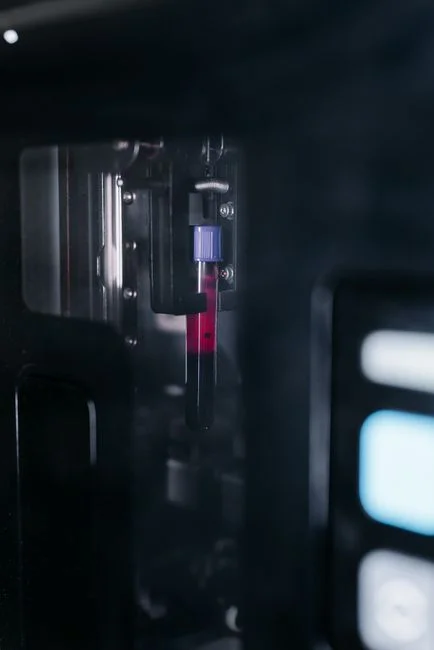
Treatment scope should follow the signed permit and sewer limits, supported by an influent characterization. Establish flow, BOD, TSS, oil and grease, pH, temperature, nutrients, dissolved solids and any beverage- or food-processing constituents relevant to the discharge route. Include production and cleaning cycles, because a bottling or food plant may have a low-flow average but a high-concentration slug.
The PepsiCo demonstration reported by Aquacycl involved bottling and crusher operations. Its crusher wastewater contained variable mixtures of sodas, energy drinks, teas and ready-to-drink coffee. The agreed KPI was removal of 800 pounds of BOD per day when incoming BOD exceeded 60,000 mg/L, or 85% BOD removal below that concentration. Aquacycl reported more than 1,350 pounds per day of BOD removal, TSS removal up to 140 pounds per day and influent BOD as high as 149,500 mg/L during the seven-month demonstration (Aquacycl case study, accessed 2026).
That evidence is useful for evaluating highly variable, high-strength food and beverage wastewater, but it is not a design basis for an unspecified acquired site. The 100 tons per month greenhouse-gas mitigation reported in the case study is demonstration-specific, and the contractual permit-compliance guarantee should be reviewed directly for exclusions, feed conditions, duration and remedies.
| Equipment decision | Applicable objective | Information required before selection |
|---|---|---|
| Industrial DAF wastewater treatment system | High-rate removal of suspended solids, FOG, oil and grease or colloidal matter before biological or membrane treatment | Flow range, load variation, pH, chemical demand, solids characteristics and required removal efficiency |
| Integrated MBR wastewater treatment system | Biological treatment with fine solids separation and potential reuse objectives | Organic load, nutrient targets, membrane flux, pretreatment needs, reuse criteria and redundancy |
A DAF system for food and beverage wastewater may fit a solids or FOG-removal duty. HydropureWater’s industrial DAF product line provides capacities from 4 to 300 m³/h across 13 standard models (HydropureWater commercial information, 2026). An integrated MBR wastewater treatment system may fit biological treatment with fine solids separation. HydropureWater states that its MBR system handles 10 to 2,000 m³/day and provides filtration below 1 μm (HydropureWater commercial information, 2026). These catalog figures do not establish suitability for a particular acquisition.
Size equipment only after reviewing the signed permit, local sewer limits, influent variability, operating data and redundancy requirements. The DAF and MBR comparison in the MBR design guide provides an initial process screen, not a substitute for a site-specific mass balance.
Build a Closing-to-Operation Compliance Plan
Wastewater integration should begin at closing with uninterrupted monitoring, operator coverage and permit ownership. The commercial guide’s recommended sequence is to complete five actions within the first 90 days after closing: confirm DMR cadence and assign an authorized representative; submit the receiving POTW’s baseline monitoring report; refresh the SWP3 chemical inventory; verify licensed wastewater-operator coverage; and train operations on the SIU self-monitoring schedule (HydropureWater commercial guide, 2026).
Preserve laboratory contracts, chain-of-custody procedures, calibration records and monitoring-data continuity throughout the transaction. Re-baseline best-management practices for the operating inventory actually introduced by PepsiCo; do not copy the former operator’s chemical list without verification.
Price permit-transfer work, monitoring, treatment modifications, operator coverage, potential haul-off and legacy liabilities into post-closing reserves and the environmental risk allocation. A closing-to-operation sewer compliance sequence should be coordinated with operations, environmental counsel and the receiving POTW.
| Timing | Action | Evidence to retain |
|---|---|---|
| Before closing | Resolve permit status, compliance gaps, treatment needs and cost responsibility | Permit file, monitoring history, violation record, vendor proposals and risk allocation |
| At closing | Maintain sampling, reporting, operator coverage and laboratory controls | Continuity records, operator credentials, calibration logs and chain-of-custody procedures |
| First 90 days | Complete transfer filings, baseline reporting, SWP3 review and operator training | Approval correspondence, DMR calendar, POTW submittal, updated SWP3 and training records |
| Post-closing capital work | Implement only the approved permit-aligned treatment scope | Design basis, acceptance criteria, performance testing and compliance records |
Frequently Asked Questions
Can PepsiCo operate the Texas plant under the existing wastewater permit immediately after closing?
Do not assume automatic coverage. The supplied commercial guide states that TCEQ approval is required before a new operator officially takes over an existing TPDES permit (HydropureWater commercial guide, 2026). Counsel should confirm whether the transaction requires an administrative transfer, amendment or both.
How long should the acquisition team allow for a wastewater permit transfer?
The supplied guide gives planning ranges of 30–60 days for administrative-only transfers and 120–270 days for transfers combined with process-flow or permit amendments (HydropureWater commercial guide, 2026). Confirm the applicable agency schedule and submission requirements with TCEQ; these ranges are not quotations or guaranteed review periods.
What treatment system should a food or beverage plant evaluate after an acquisition?
Compare the measured wastewater profile, permit route and reuse objective with the available data. DAF is suited to suspended-solids and FOG removal, while MBR combines biological treatment with fine membrane separation. Request current influent testing, production variability and the binding discharge limits before selecting capacity or process configuration.
How should a buyer select a wastewater equipment supplier for an acquired Texas plant?
Require site-specific influent data, permit and sewer-limit review, sizing calculations, controls scope, installation planning, operator training, maintenance support and documented performance criteria. Require any permit-compliance guarantee to define its feed conditions, exclusions, remedies and testing method. Also request delivered pricing and lifecycle-cost assumptions; no supplied research provides a project price for an unspecified acquisition.
What records should the buyer obtain before closing?
Obtain the complete permit, TPDES and POTW correspondence, DMRs, monitoring results, SWP3 and Notice of Intent records, sludge records, notices of violation, consent decrees, financial-assurance documents and the POTW’s current sewer-use requirements. For additional equipment-screening and commercial inputs, review the supplied food-processing treatment-package guidance, but verify all site-specific assumptions before committing capital.