Which Texas wastewater permits apply to an acquired plant
Wastewater compliance at a Texas industrial site follows a federal-state-local framework: the federal Clean Water Act (CWA) and EPA's NPDES program set the floor, and Texas administers the program as TPDES through the Texas Commission on Environmental Quality (TCEQ) under 30 TAC Chapters 305 and 319. An acquirer stepping into a plant in 2026 should expect to find one of three baseline discharge instruments: an individual TPDES permit, a general TPDES permit, or a no-dispose authorization with on-site treatment and off-site haul-off.
Industrial stormwater coverage under the Texas Industrial Stormwater General Permit (TXR050000) applies whenever stormwater can contact industrial materials, process areas, or exposed equipment. Where the plant sends any flow to a municipal sewer, pretreatment obligations attach under 30 TAC Chapter 305 and the receiving POTW's Sewer Use Ordinance, and a Significant Industrial User (SIU) designation is likely if process wastewater carries categorical pollutants. Aquifer-protection reviews and dewatering discharges can add separate TCEQ approvals, particularly during construction or well-field redevelopment.
| Permit / Authorization | Texas Citation | Typical Trigger at an Acquired Site |
|---|---|---|
| Individual TPDES Permit | 30 TAC Chapter 305, Subchapter B | Direct discharge to a Texas water body above general-permit thresholds |
| General TPDES Permit (TXR150000/TXR050000) | 30 TAC Chapter 305, Subchapter F | Construction or industrial stormwater discharge under defined limits |
| No-Discharge / On-Site Disposal Authorization | 30 TAC § 305.132 | Zero surface discharge; subsurface disposal or off-site haul-off only |
| Pretreatment / SIU Permit (via POTW) | 30 TAC Chapter 305, Subchapter C; 40 CFR 403 | Categorical process waste (e.g., metal finishing) routed to a municipal sewer |
| Aquifer Protection / Dewatering Authorization | 30 TAC Chapter 331 / 285 | Construction dewatering or stormwater injection into a regulated aquifer |
The TCEQ Water Quality Division accepts individual wastewater permit applications electronically via its FTP server (per TCEQ Wastewater and Stormwater permitting guidance, 2026), and most TPDES permits are reissued on 5-year cycles. The following section details the administrative steps for assuming these existing permits.
Transferring the TPDES permit to the SK On entity
TCEQ approval is required before an existing TPDES permit may be operated under a new owner's name, and most of these transfers are completed post-closing. The acquirer files a transfer request on TCEQ's prescribed form, attaches the new operator's legal-entity documentation and TCEQ core data form, and supplies updated financial assurance—typically a performance bond, letter of credit, or a demonstrated net-worth alternative at the level set by the existing permit's conditions.
If SK On intends to change raw materials, process flow, effluent volume, or the pollutant profile, the transaction is a permit amendment, not a mere transfer. Amendments follow 30 TAC Chapter 305 public-notice and, in contested cases, contested-case-hearing timelines that can run 120-270 days from a complete application. Permittees should keep all Discharge Monitoring Report (DMR) filings, sampling, and licensed operator coverage continuous through the transition window; a lapse in DMR submission is a 30 TAC § 305 enforcement trigger and a frequent source of penalties during ownership changes.
Counsel reviews Texas Water Code § 13.301 during diligence, even though § 13.301 governs IOU/WSC water and sewer utility systems and the 2021 rate-flexibility amendment (per Lloyd Gosselink Rochelle & Townsend, 2026), not industrial sites. The exercise confirms there is no overlapping utility-system or CCN transfer on the property and that the acquirer is not inadvertently acquiring a certificated utility service area that would trigger PUC approval.
Pretreatment, Significant Industrial User status, and local limits

An EV battery plant qualifies as a Significant Industrial User under 40 CFR 403 if any process wastewater reaches a POTW, because cathode and anode coating, electrode slurry, and NMP solvent streams are typically categorical under 40 CFR Part 433 (Metal Finishing) and may separately trigger 40 CFR Part 413 (Electroplating) limits. An SIU designation imposes baseline monitoring reports (BMRs), categorical compliance reports, 90-day compliance sampling for at least one year, and routine self-monitoring with chain-of-custody.
Local POTWs run Enforcement Response Plans that escalate pretreatment violations from Notice of Violation, to administrative order, to publication of significant noncompliance, and ultimately to permit revocation or termination of service. SK On's diligence team should request the receiving POTW's Sewer Use Ordinance, surcharge tables, and most recent headworks analysis before closing, because local limits are often tighter than the federal categorical standards—particularly for nickel, cobalt, and lithium. A categorical stream that cannot be pretreated on site may require an industrial waste survey and an approved haul-off plan, an option that materially changes operating cost and should be priced into the deal model. For a sector view of how EV plants meet 2026 pretreatment limits, see this EV plant pretreatment compliance under 40 CFR 403 breakdown.
Industrial stormwater, construction, and dewatering obligations
The Texas Industrial Stormwater General Permit (TXR050000) requires an active Notice of Intent and a current Site-Specific Stormwater Pollution Prevention Plan (SWP3) that is signed and dated within the permit term. Any expansion, demolition, or grading that disturbs one or more acres triggers the TCEQ Construction General Permit (TXR150000) and a parallel construction SWP3, with separate inspection and corrective-action logs. Dewatering during construction can be discharged under the existing TPDES permit, a temporary short-term authorization, or—if the volume or chemistry warrants—a dedicated TPDES permit; the choice depends on total suspended solids, metals, and hydrocarbon content of the groundwater.
Best management practices should be re-baselined within 30 days of closing to reflect any new chemical inventory SK On introduces. Air permitting is technically separate but is screened in parallel, because wastewater aeration basins, thermal oxidizers, and solvent-recovery units often sit at the intersection of 30 TAC Chapter 115 air rules and the plant's wastewater permit. Solids handling—sludge dewatering, brine concentration, and filter-press liquors—typically routes through a dissolved air flotation system for oil and coating-solids removal before downstream biological or membrane polish.
Diligence, successor liability, and EV-battery-specific overlays
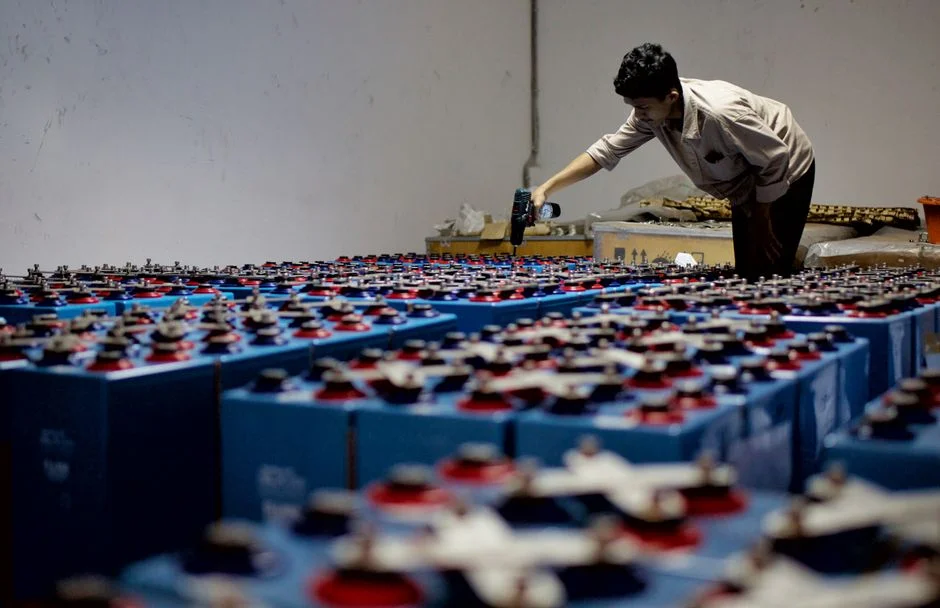
Phase I must be upgraded to Phase II at any acquired Texas site where historical operations included plating lines, solvent storage, landfill areas, or known PFAS use. Under federal successor-liability doctrine and TCEQ enforcement practice, prior effluent violations, NPDES consent decrees, and outstanding TCEQ orders can transfer to the new operator, and the deal team should quantify outstanding NOVs, Agreed Orders, and any supplemental environmental projects in the environmental indemnification escrow.
Foreign acquirers must screen CFIUS notification obligations: a wastewater-impacted industrial site handling critical chemicals or supplying EV-battery cells can be a covered transaction, and the deal timeline must absorb a 30-90 day CFIUS review window where applicable. EV-battery federal funding (DoE Title XVII loan guarantees, IRA Section 45X advanced manufacturing production credits) carries recordkeeping and clawback provisions that interact with chemical-use reporting and wastewater permit data. Within the first 90 days post-closing, run this compliance sequence: (1) confirm DMR cadence and assign an authorized representative, (2) submit a baseline monitoring report for the receiving POTW, (3) refresh SWP3 chemical inventory, (4) verify licensed wastewater operator coverage, and (5) train operations on the new SIU self-monitoring schedule. For new treatment trains, pairing an MBR membrane bioreactor downstream of a PLC-controlled chemical dosing system is a common configuration for mixed metal-finishing and coating-solvent influent, with a rotary mechanical bar screen protecting the upstream equalization basin. A broader equipment-selection view is in this electronics assembly wastewater treatment plant supplier guide.
Frequently Asked Questions
How long does a TPDES permit transfer take after closing in Texas?
TCEQ approval is required before the new operator may officially take over an existing TPDES permit, and most transfers are filed and processed post-closing under 30 TAC Chapter 305. Administrative-only transfers without process changes typically resolve in 30-60 days; transfers that bundle in a permit amendment for new process flows can run 120-270 days, so the deal schedule should treat transfer as a post-closing workstream, not a closing condition.
What makes an EV battery plant a Significant Industrial User at a Texas POTW?
A plant becomes an SIU when it discharges categorical process waste to a municipal sewer above the thresholds in 40 CFR 403, which is the case for electrode coating, slurry preparation, and NMP solvent streams that fall under 40 CFR Part 433 (Metal Finishing) and 40 CFR Part 413 (Electroplating). SIU status triggers baseline monitoring reports, 90-day compliance sampling, and routine self-monitoring under the receiving POTW's Sewer Use Ordinance.
Does SK On need industrial stormwater coverage at an acquired Texas plant?
Yes, if any stormwater contacts industrial materials, equipment, or process areas, the site must maintain active coverage under the Texas Industrial Stormwater General Permit (TXR050000) and a current site-specific SWP3. Coverage is independent of wastewater status and follows the operator, so SK On must file a transfer or new NOI as part of the 90-day post-closing integration.
What CFIUS and federal-funding overlays apply to a foreign acquirer of a Texas EV-battery plant?
Foreign acquirers should screen CFIUS notification obligations because a wastewater-impacted EV-battery site can meet the definition of a covered transaction involving critical technology, with typical CFIUS review windows of 30-90 days. Federal funding under DoE Title XVII and IRA Section 45X adds recordkeeping and chemical-quantity reporting that must be aligned to TPDES DMRs and pretreatment BMMRs to avoid clawback risk.
Can prior wastewater violations transfer to the new owner under Texas successor liability?
Yes. Federal successor-liability doctrine and TCEQ enforcement practice can transfer prior effluent violations, NPDES consent decrees, and outstanding TCEQ orders to the acquiring entity, and a 2026 diligence program should price those into the environmental indemnity, escrow, and reps-and-warranties insurance.