

What the right package plant must solve at the development site
A Mexico City housing-development package plant should be selected against the receiving route, verified flow and loading, underground construction constraints, and operating responsibility—not the number of homes. A private decentralized system is a different procurement from city-scale municipal infrastructure: the latter often uses activated sludge, ponds or MBR, but its institutional, hydraulic and operating arrangements cannot be copied directly into a residential development.
The EPC contractor should request average daily flow, peak-hour flow, peak-day flow, wastewater strength, sewer-entry geometry, development phasing and a growth allowance. The discharge route must also be fixed early: a permitted sewer connection, discharge to an approved national receiving body, or planned reuse each creates a different regulatory and process-guarantee basis under NOM-001-SEMARNAT-2021.
Groundwater, soil bearing capacity, flood level, access for maintenance, odor and noise controls, and sludge-removal routes are go/no-go constraints. They can eliminate a nominal footprint or process before equipment is compared. The underground A/O package sewage treatment plant range covers 1–80 m³/h and is intended for residential communities among other decentralized applications, but that catalog boundary is not a design flow. The approach is similar to packaged sewage treatment options for housing developments: site evidence must precede process selection.
Build the hydraulic and loading basis before choosing a process
Average flow establishes the biological loading basis, while peak-hour and peak-day conditions test hydraulic capacity, equalization and controls. A package selected from unit count alone can be oversized at average conditions and overloaded during morning and evening peaks. The engineer should therefore document the complete flow series, not only a daily total.
Do not repurpose the social water-cycle indicator reported in the Social Life Cycle Assessment of Mexico City’s Water Cycle, published by Advanced Sustainable Systems. That study equates labor to 0.062 WH per 1 m³ of water and reports 94% of WH in relation to its QoE indicator. These values describe social performance, not wastewater hydraulics or biological loading.
| Design input | What the engineer establishes | Why it affects package selection |
|---|---|---|
| Average and peak flow | Daily load, peak-hour hydraulics and peak-day condition | Checks biological capacity, equalization and peak treatment duty |
| Wastewater characterization | BOD, COD, TSS, pH and temperature | Establishes organic and solids loading rather than flow alone |
| Contaminant survey | Industrial, commercial, grease and household chemicals | Identifies toxicity, inhibition and pretreatment requirements |
| Receiving route | Confirmed permit, limits and monitoring basis | Defines treatment targets and test obligations |
| Site and climate | Groundwater, soil, flood level and temperature assumptions | Controls structural design, access, odor control and cold-weather operation |
The Mexico Municipal Sewage Treatment: Costs & NOM Guide published by HydropureWater describes conventional activated sludge at 2,000–4,000 mg/L MLSS and 6–12 hours HRT, compared with MBR at 8,000–12,000 mg/L MLSS and 4–8 hours HRT. The same guide notes that winter cooling slows algal and bacterial activity in ponds and can compromise discharge performance; mechanical systems require their own temperature and performance review.
Influent sampling must cover BOD, COD, TSS, pH, temperature and flow, with screening for contaminants that could enter a residential sewer. These remain preliminary inputs until the licensed local engineer completes the project-specific hydraulic, process, structural and permit calculations.
Compare buried A/O, SBR and MBR package configurations
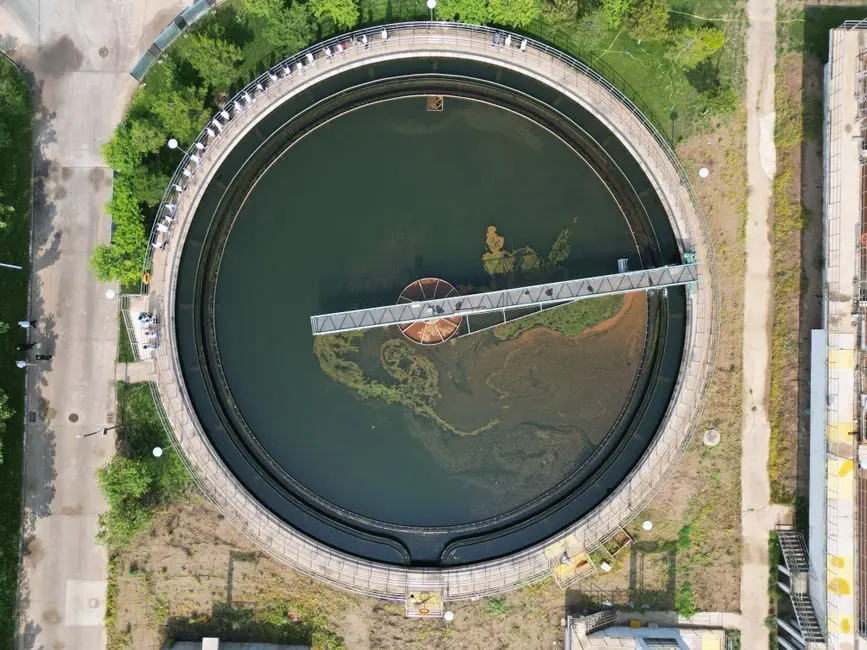
The buried A/O configuration is usually the most straightforward baseline for conventional domestic sewage, while MBR is the stronger candidate when footprint or reuse requirements dominate. SBR remains technically credible, but it must be compared using sequence timing, equalization, controls redundancy and the stability of the development’s occupancy profile. The supplied research does not provide Mexico City-specific SBR pricing or performance data, so no unsupported SBR figures should be inserted.
| Criterion | Buried A/O | SBR | MBR |
|---|---|---|---|
| Initial process position | Baseline for conventional domestic sewage with an established discharge route | Alternative where cyclic biological treatment suits stable flows and available controls | Preferred when footprint is tight or low-turbidity effluent supports reuse |
| Land and installation | Buried package supports landscaping above the installation | Requires review of basin arrangement, equalization and access | Compact package with smaller footprint |
| Equipment complexity | Integrated anoxic/aerobic contact oxidation, sedimentation and disinfection | Sequence timing, switching equipment and control redundancy | Membrane modules, blowers, cleaning and spare-module risk |
| Operating focus | Inspection of aeration, settling, disinfection and sludge removal | Monitoring cycle operation and hydraulic buffering | Process monitoring plus membrane cleaning and replacement planning |
| Key procurement question | Is the baseline duty and discharge route confirmed? | Does equalization and controls redundancy cover the occupancy profile? | Do energy and maintenance costs justify the required effluent quality? |
The WSZ reference combines anoxic/aerobic contact oxidation, sedimentation and disinfection in one fully automated underground package. The MBR wastewater treatment system reference uses submerged PVDF membrane filtration and is described as producing effluent below 1 μm with a footprint approximately 60% smaller than conventional systems. These are product characteristics, not substitutes for site-specific guarantees.
HydropureWater’s Mexico municipal guide states that ponds require approximately 20–30 times the footprint of MBR at the same daily flow. Membrane filtration also does not guarantee automatic compliance: pretreatment, sampling, cleaning, spare modules and operator competence remain critical. The supplier’s local service is a procurement criterion because the guide identifies imported membrane and blower delays as a cause of multi-week outages. Further context is available in its MBBR domestic sewage design and buying guide.
Match the package plant to Mexico City discharge and permitting conditions
NOM-001-SEMARNAT-2021 is the governing national standard cited by HydropureWater for discharges to national receiving bodies; SEMARNAT published it in the Diario Oficial de la Federación on 11 March 2022, updating NOM-001-SEMARNAT-1996. The permit pathway must nevertheless be confirmed for the development because sewer connection, direct discharge and reuse are not interchangeable regulatory routes.
Many earlier designs use working targets of BOD below 30 mg/L, TSS below 40 mg/L and fecal coliforms below 1,000 MPN/100 mL, according to the HydropureWater Mexico municipal guide. Those historical values must not be substituted for the receptor-specific tables and sampling methods confirmed in the 2021 standard. Process guarantees should therefore follow the approved route rather than generic brochure language.
Identify the competent authority and permit conditions before ordering. The HydropureWater guide states that plants above 1,000 m³/day commonly perform daily flow, pH and temperature checks and weekly BOD and TSS analyses, while smaller communities should prioritize low-operator package systems. For a housing development, the supplier’s monitoring scope should match the confirmed permit and operating arrangement.
The Tijuana River Watershed Public Updates from the US EPA reports that the United States and Mexico signed a memorandum of understanding in Mexico City on July 24, 2025, committing EPA and SEMARNAT to transparency and public participation in wastewater decisions involving the Tijuana River. It does not determine a private development’s permit, but it reinforces the need for traceable documentation and stakeholder requirements in Mexico City-region projects.
The contract should allocate performance criteria, test methods, documentation, training and permit-support duties explicitly. HydropureWater’s Mexican wastewater compliance requirements article provides useful context for separating equipment performance from the recipient’s legal obligations.
Compare capital cost, operating cost and lifecycle risk
Published benchmarks support an initial budget comparison, not a Mexico City quotation. HydropureWater’s package WSZ planning benchmark is approximately $1,500–$2,800 per m³/day for capital cost and approximately $0.18–$0.30/m³ for operating cost. Its broader Mexico municipal range extends from about $300 per m³/day for ponds to $4,000 per m³/day for advanced MBR, with operating costs generally between $0.05 and $0.45/m³.
| Budget line | Evidence-based planning benchmark | Information required for the development budget |
|---|---|---|
| Equipment and civil works | WSZ package: approximately $1,500–$2,800 per m³/day | Verified duty, civil scope, excavation, access structures and installation |
| Operating cost | WSZ package: approximately $0.18–$0.30/m³; municipal range: $0.05–$0.45/m³ | Local energy tariff, labor model, chemicals, laboratory and sludge route |
| Energy and aeration | Activated-sludge plants may assign 40–60% of OPEX to energy | Blower turndown, aeration efficiency and performance at peak load |
| Long-term replacement | No universal package price supported by the research | Membrane or blower replacement assumptions and local spares |
| Owner obligations | No complete development budget supplied | Standby power, preventive maintenance, compliance testing and disposal routes |
The developer should budget energy, chemicals, labor, sludge handling, membrane replacement, laboratory testing, preventive maintenance and standby power separately from the equipment price. The 40–60% activated-sludge energy share reported in the HydropureWater guide makes blower turndown and aeration efficiency material lifecycle questions.
Build low, central and high operating scenarios over 10 years, but clearly identify energy prices, labor rates and replacement timing as project assumptions rather than sourced facts. The quotation should also define civil works, collection layout, installation, commissioning, remote monitoring, consumables, spares, service response and sludge disposal. Broad comparisons of technology-specific capital and operating costs can support structure, but Mexico City site inputs must replace overseas assumptions.
Choose the package plant through a weighted site decision
The shortlist should score A/O, SBR and MBR against verified site and commercial criteria rather than product claims. Give the discharge route, peak flow and wastewater characterization veto status: neither option should advance while those inputs remain unresolved. A buried A/O package is the baseline candidate for conventional domestic sewage where underground space is available, the discharge route is confirmed and maintainable operation is the priority. MBR is preferred where space is the binding constraint or reuse justifies additional energy and membrane lifecycle costs.
| Decision question | Required evidence | Selection consequence |
|---|---|---|
| Is the treatment route approved? | Permit pathway, receiving body and confirmed criteria | No process guarantee before confirmation |
| Does hydraulic capacity cover peaks? | Average, peak-hour and peak-day flow series | Check package duty and equalization |
| Is the wastewater compatible? | Sampling and contaminant survey | Define pretreatment or revise selection |
| Which process fits the physical site? | Footprint, groundwater, soil, flood and access survey | Reject infeasible layouts |
| Can the owner operate and maintain it? | Named operator, service plan and critical spares | Include operating capability in final score |
| Which option has acceptable lifecycle risk? | 10-year low, central and high scenarios | Select on total cost and service exposure |
For a conventional housing development with sufficient underground space and a straightforward compliant route, the buried A/O package is the practical baseline. When land is constrained or reuse is central, the compact MBR configuration deserves serious comparison. The final matrix should become the scoring sheet for the RFQ, not a substitute for project-specific engineering.
Issue a procurement-ready request for quotation
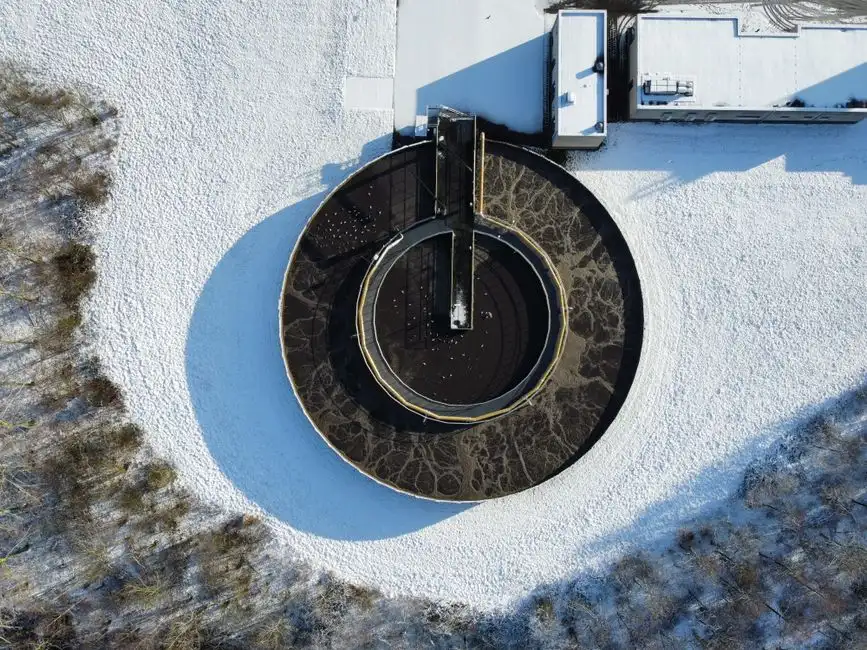
The RFQ should attach the wastewater flow series, catchment map, development phasing, sampling results, soil and groundwater information, receiving-route details and preliminary permit correspondence. This evidence allows bidders to size and price the same problem rather than offer incompatible duty assumptions.
- Require each supplier to state design flow, process description, guaranteed duty points, hydraulic and biological loading criteria, reactor and clarification basis, disinfection method, sludge production, controls, utilities and dimensions.
- Request the complete lifecycle price, local service coverage, critical-spares list, membrane or blower replacement assumptions, commissioning tests and compliance-test protocol.
- Require one fully priced base case, clearly identified alternatives, exclusions and provisional-sum allowances where site information remains incomplete.
- Bind performance claims to the confirmed discharge route and current NOM-001-SEMARNAT-2021 requirements, including the test method and acceptance protocol.
Technical submittals should also cover civil interfaces, buried access, odor and noise controls, standby-power demand, remote monitoring, sludge removal, operator training and long-term service responsibility. A plate-frame filter press may be proposed for sludge dewatering, but its inclusion must follow the selected process’s sludge characteristics and disposal route rather than form part of an unevaluated package.
Frequently Asked Questions
How much does a packaged sewage treatment plant cost for a housing development in Mexico City?
HydropureWater gives a package WSZ planning benchmark of approximately $1,500–$2,800 per m³/day and approximately $0.18–$0.30/m³ for operating cost. This is not a Mexico City quotation. Request a base price with verified duty, civil works, installation, utilities, commissioning, sludge handling, critical spares and a 10-year operating breakdown.
Should a Mexico City housing development choose A/O or MBR?
Choose A/O as the baseline when space, the discharge route and simple operation favor a less equipment-intensive process. Choose MBR when footprint is constrained or reuse quality justifies higher energy and membrane-maintenance exposure. Final selection still requires verified peaks, wastewater characterization and permit criteria.
What flow capacity does a residential package sewage plant need?
The WSZ catalog range covers 1–80 m³/h, but catalog capacity is not the required duty. Size against average flow, peak-hour and peak-day loading, wastewater strength, growth and redundancy using the project-specific engineering basis.
What local permits apply to a packaged sewage plant in Mexico City?
The answer depends on whether the route is a sewer connection, direct discharge to an approved receiving body or reuse. Confirm NOM-001-SEMARNAT-2021, receptor-specific limits, sampling methods and local conditions with the competent authority before ordering equipment or writing performance guarantees.