What Changes the Choice Between DAF and a Clarifier?
For pulp-and-paper wastewater in Tullahoma, choose dissolved air flotation (DAF) when rapid fiber or solids capture, compact equipment, water reuse, or recovery of buoyant paper fibers is the priority. Choose gravity clarification—particularly an inclined-plate lamella clarifier—when flocculation, sludge recirculation, solids concentration, and gravity settling fit the stream and available footprint. The decision depends on measured flow, solids, fiber characteristics, chemicals, sludge handling, and reuse targets. HydropureWater’s DAF systems span 4–300 m³/h across 13 standard models, while its lamella clarifier uses inclined plates and sludge recirculation. Confirm the selected duty through wastewater testing and pilot work before final sizing.
DAF is a flotation process: air dissolved under pressure in recycle or conditioned wastewater is released as micro-bubbles, which attach to suspended matter and form a floating solids blanket for skimming. A lamella clarifier is a solids-separation stage in which conditioned solids settle, recirculated sludge is maintained, and inclined plates assist separation as clarified water leaves the zone. The broader pulp-and-paper DAF versus clarifier buyer guide provides a useful cross-check against stream-specific requirements.
Start by identifying the governing duty: pulp mill whitewater, process wastewater, raw water, and final effluent have different recovery, reuse, and compliance objectives. Ecologix Systems’ pulp-and-paper assessment identifies TSS, BOD, COD, color, wood fibers, fillers, and organic compounds in mill wastewater. Suspended-solids separation does not itself remove dissolved BOD, COD, or color, so biological or other downstream treatment may remain necessary.
| Selection driver | DAF starting point | Clarifier starting point | Required verification |
|---|---|---|---|
| Primary objective | Rapid solids or fiber capture; water reuse | Gravity settling and sludge concentration | Measured flow, TSS, fiber properties, and reuse target |
| Separation mechanism | Particle-bubble attachment and blanket skimming | Flocculation, settling, and inclined-plate separation | Conditioning and solids-separation test |
| Site and integration | Compact equipment footprint, recycle and pressure-saturation system | Clarifier structure, sludge recirculation, and blanket management | Installed-utility and maintenance review |
| Downstream duty | Recover water or fibers; retain downstream treatment | Concentrate flocculated solids or polish effluent | Permit limits and receiving-system constraints |
DAF or Clarifier: Pulp and Paper Application Matrix
Krofta identifies whitewater clarification as a DAF application used for more than 40 years and also identifies fiber recovery as a core DAF duty, making DAF the leading candidate where rapid separation and fiber capture govern the decision.
The strongest application match depends on the stream. Krofta’s published fiber-fractionation sequence uses a spray filter to capture longer fibers, followed by DAF to separate shorter fibers and TSS; retained longer fibers can return to papermaking. For raw-water clarification, Krofta reports a DAF clarification time of 3–5 minutes and contrasts it with longer gravity-clarifier settling times. That is a published clarification-time comparison, not a removal guarantee.
Warm-effluent reuse has a different configuration. Krofta describes DAF followed by spray-filter polishing: DAF removes a large percentage of TSS, while the spray filter captures smaller particles that could plug reuse spray nozzles. For flocculated-solids concentration and sludge recirculation, the HydropureWater lamella clarifier is the stronger starting point; its catalog gives a surface-loading rate of 20–40 m/h.
| Application | Preferred starting point | Supporting evidence | Principal advantages | Watch-outs | Test before selection |
|---|---|---|---|---|---|
| Whitewater clarification | DAF | Krofta reports whitewater clarification as a DAF application for more than 40 years | Rapid separation and fiber capture | Variable solids and fiber-rich skimmings | Representative solids and fiber-separation test |
| Paper fiber recovery | DAF | Krofta identifies DAF systems for fiber recovery | Separates buoyant fibers and supports water reuse | Recovered-fiber cleanliness and handling | Fiber-length and recovery test |
| Fiber fractionation | Spray filter followed by DAF | Krofta’s sequence captures longer fibers upstream and separates shorter fibers and TSS by DAF | Returns longer fibers to papermaking | Screen blinding and fiber carryover | Combined fractionation trial |
| Raw-water clarification | DAF | Krofta reports 3–5-minute clarification | Rapid clarification and compact installation | Source-water seasonality and conditioning needs | Seasonal raw-water trial |
| Reuse-water polishing | DAF plus spray filter | Krofta identifies spray filtering as protection against nozzle plugging | Supports reuse of warm effluent | Particle size at spray nozzles | Nozzle-protection and reuse test |
| Flocculated solids concentration | Lamella clarifier | HydropureWater catalog: 20–40 m/h surface-loading rate | Combines sludge recirculation, flocculation, and plate separation | Blanket depth and floc condition | Settling and hydraulic verification |
| Sludge recirculation | Lamella clarifier | HydropureWater catalog describes integrated recirculation | Supports solids concentration and consistent withdrawal | Recirculation balance and sludge handling | Recirculation and solids-concentration test |
| Footprint-constrained site | DAF subject to pilot results | Krofta describes raw-water DAF as compact and space-saving | Potentially limits installation area | Recycle, saturation, access, and utilities | Installed-layout review |
| Variable wastewater conditions | Pilot DAF or clarifier | Application performance depends on measured stream conditions | Allows selection against actual variability | Production grade and furnish changes | Multi-condition pilot program |
How DAF Captures Fibers, Fillers and Other Solids
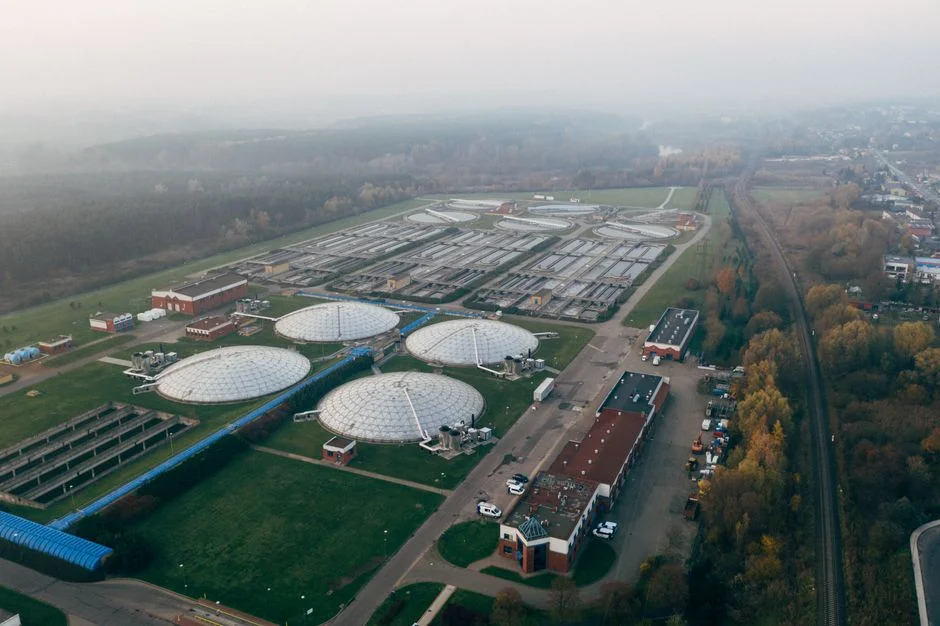
DAF separates suspended solids by attaching pressurized-dissolved air bubbles to particles, floating the aggregates, and skimming the resulting blanket; it is a solids-separation step rather than complete treatment for dissolved pollutants.
- Wastewater or conditioned recycle is pressurized so air dissolves under pressure.
- The saturated stream enters the flotation zone and the pressure is reduced.
- Micro-bubbles form and attach to fibers, fillers, and other suspended matter.
- The particle-bubble aggregates rise and form a floating blanket.
- Automatic skimming removes the concentrated solids from the surface.
Ecologix Systems describes pulp-and-paper wastewater as potentially containing wood fibers, fillers, TSS, BOD, COD, color, and organic compounds. The DAF mechanism directly addresses the suspended fraction: fibers, fillers, and other particulate material that can be floated and skimmed. It does not independently eliminate dissolved BOD, COD, or color, so a biological or other downstream process may still be required.
The HydropureWater micro-bubble DAF system uses micro-bubble technology and automatic skimming. The verified product catalog states a handling range of 4–300 m³/h across 13 standard models. For mill implementation, the supplier must establish whether recycle flow is available, how pH and conditioning chemicals will be controlled, how fiber-rich sludge will be removed, and where skimmings will be dewatered or returned to process.
Those questions determine whether the apparent simplicity of flotation translates into workable plant performance. A fiber-rich blanket may require reliable removal and discharge equipment, while chemical conditioning must remain compatible with fiber recovery, reuse water, and downstream biological treatment.
When Lamella Clarification Is the Better Fit
A lamella clarifier is the better starting point when gravity settling, flocculated-solids concentration, and sludge recirculation are the governing duties rather than fiber recovery or rapid flotation.
The HydropureWater lamella clarifier combines sludge recirculation, flocculation, and inclined-plate separation in one compact structure. Its catalog surface-loading rate is 20–40 m/h, but this is a comparison parameter—not a universal design load. The supplier must calculate the proposed arrangement against measured flow, solids, settling behavior, and the selected clarification duty.
Typical starting roles include gravity-settling solids concentration, separation of conditioned solids, integration with sludge recirculation, and polishing where water reuse is not the primary objective. Selection must address floc condition, solids settleability, sludge-blanket management, recirculation balance, and footprint access.
| Design check | Why it matters | Buyer evidence to request |
|---|---|---|
| Hydraulic loading | Relates the equipment geometry to the clarified-water duty | Calculation tied to measured peak and average flow |
| Solids loading | Links clarification capacity to expected solids accumulation | Solids balance and sludge withdrawal basis |
| Flocculation | Poor or unstable floc can impair settling and separation | Jar or pilot response to the actual wastewater |
| Sludge recirculation | Recirculation supports solids concentration but must remain balanced | Recirculation rate, solids inventory, and withdrawal controls |
| Blanket management | Accumulated sludge affects separation and access | Blanket-depth control and sludge-removal arrangement |
| Fiber recovery | Clarification alone does not selectively recover long fibers | Screen or fiber-recovery stage ahead of clarification |
If fiber value or reuse-nozzle protection is the priority, evaluate a screen or dedicated fiber-recovery stage ahead of clarification. That upstream duty can prevent the lamella clarifier from being asked to perform separation it was not selected to manage.
Size the System Around the Stream, Not the Product
Equipment should be sized from measured wastewater and the governing duty, not from a catalog flow range or an assumed TSS-removal rate.
Require characterization of peak and average flow, TSS, fiber type and length, fillers, COD, BOD, pH, temperature, settleability, floc response, and variability. For DAF, ask the supplier to document the basis for the 4–300 m³/h catalog range, including recycle ratio, pressure-saturation approach, hydraulic residence, flotation-zone loading, solids loading, and sludge-removal rate. For a lamella clarifier, require calculations showing how the design relates to the catalog’s 20–40 m/h surface-loading rate and how flocculation and sludge recirculation are sized.
Use the industrial DAF sizing method as a discipline for identifying missing design inputs, while the DAF engineering specifications and supplier decision framework provides a structure for comparing technical proposals. Neither substitutes for mill-specific wastewater data.
For variable or fiber-rich streams, run a representative pilot. Grade, furnish, production rate, and recycling-water demand can change waste characteristics, so a short steady test may not represent full operating variability.
Compare installed requirements as well as equipment: footprint, structural support, electrical service, compressed air if applicable, chemical storage, controls, access, odor control, noise, and future maintenance access. Do not accept a TSS-removal percentage or universal hydraulic loading rate until the supplier ties it to measured wastewater and the specified duty.
| Sizing input | DAF evaluation | Lamella evaluation |
|---|---|---|
| Flow and variability | Peak/average flow and recycle demand | Peak/average flow and hydraulic response |
| Solids and fibers | Flotation loading and skimming rate | Settling, solids inventory, and blanket management |
| Chemical conditioning | pH, coagulant or flocculant demand, recycle compatibility | Flocculation performance and recirculation balance |
| Hydraulic basis | Pressure saturation, residence, flotation-zone loading | Project-specific loading relative to 20–40 m/h catalog rate |
| Residuals | Clarified-water quality and downstream needs | Clarified-water quality and sludge concentration |
| Installed requirements | Recycle, air, controls, skimming, maintenance access | Structure, recirculation, sludge withdrawal, access |
Plan for Solids, Chemical Use and Downstream Treatment
Both technologies change the form and handling of solids, but neither clarification step alone establishes downstream compliance.
DAF produces a skimmable fiber-rich or solids blanket. A lamella clarifier produces sludge through settling and recirculation. Either way, the mill needs a defined route from collection through stabilization, dewatering, disposal, or return to process. If recovered fiber-rich sludge requires further dewatering, evaluate the plate-and-frame filter press option, but first establish its suitability through sludge characterization rather than assuming that any fiber-rich sludge will dewater acceptably.
DAF may require chemical dosing to condition the wastewater before flotation; where dosing is required, integrate an automatic chemical dosing system with the process controls. Lamella clarification depends on flocculation and sludge recirculation. HydropureWater’s lamella-clarifier catalog states that chemical consumption can be reduced by up to 30%, but that product-specific claim must be validated against the mill’s actual chemical demand and wastewater response.
Select downstream treatment from the residual load and end use: biological treatment may be needed for dissolved organics, filtration may be needed for reuse, and dewatering may be needed for sludge. A permit limits or reuse specification should therefore appear in the equipment basis of design, not after the clarifier has been ordered.
Tullahoma Permitting, Pretreatment and Due-Diligence Checklist
EPA/600/2-89/053, published in September 1986, identifies enforceable industrial-waste permits, comprehensive discharge and influent monitoring, source tracking for upsets, and in-plant operational control as the core elements of an effective program to minimize interference at publicly owned treatment works.
The historical report describes prohibited discharges that obstruct wastewater flow or upset treatment processes and prohibits increasing influent wastewater temperature above 40°C. It states that POTWs with hydraulic design capacity greater than 5 mgd must establish formal pretreatment programs; smaller POTWs may also require one when categorical standards apply or nondomestic discharge problems or permit violations exist. Because this is a 1986 source, buyers must confirm current federal, state, and local requirements rather than rely on it as current law.
Before committing equipment, obtain the current permit, sewer-use limits, local pretreatment requirements, discharge destination, and receiving-system process constraints. Confirm whether the mill discharges directly to a receiving stream or through a POTW, and identify limits for flow, TSS, pH, temperature, and any regulated constituents.
Then request the supplier’s due-diligence package: the measured peak-flow and water-quality envelope, completed pilot report, control narrative, mechanical guarantees, installation drawings, service scope, spare-parts list, operator training plan, and maintenance access drawings. A pilot scope should specify production-grade samples, operating hours, flow variation, chemical conditions, fiber and solids measurements, sludge observations, and acceptance criteria.
The pretreatment-limit due-diligence framework is useful for structuring these permit and operational questions, although the receiving authority and applicable requirements remain site-specific.
Frequently Asked Questions
Which technology is more economical for a Tullahoma pulp mill?
Neither technology can be declared more economical without a priced lifecycle comparison. Ask each supplier to quote the selected duty, recycle and compressed-air requirements, chemicals, foundations, controls, installation, sludge handling, energy, maintenance, and downstream impacts. Compare those inputs against the value of recovered fiber, reuse water, avoided disposal, and the verified pilot results; no defensible price can be stated from the available research alone.
What flow rate can HydropureWater DAF equipment handle?
HydropureWater’s verified product catalog states that its micro-bubble DAF equipment handles 4–300 m³/h across 13 standard models. That is a catalog range, not automatic confirmation that any mill duty fits: the supplier must still match the selected model to measured peak and average flow, solids loading, fiber characteristics, recycle requirements, and operating variability.
What should a mill verify before approving a clarifier?
Approve only after checking the current permit and sewer-use limits, the measured flow and water-quality envelope, and the receiving system’s treatment constraints. Also require a project-specific hydraulic calculation, clarification and sludge-handling design, representative pilot results, controls narrative, installation requirements, and confirmation that the proposed arrangement addresses any pretreatment or discharge constraints.