Why Mosul Needs a Project-Specific Sewage Treatment Design
Untreated discharge into the Tigris River makes domestic sewage treatment in Mosul a site-specific risk issue rather than a catalogue selection exercise. The Iraqi National Journal of Earth Science selected eight Tigris River sampling sites downstream of Mosul sewage valleys and a Sharekhan comparison site. During spring sampling, water temperature ranged from 18.0–19.1 °C, total dissolved solids from 352–442 mg/L, pH from 7.65–7.93, turbidity from 12–24 NTU and total hardness from 355–485 mg/L. Dissolved oxygen was 2.4–3.1 mg/L. The study classified the river water as poor–very poor for drinking and poultry watering and good–poor for irrigation, livestock watering and aquatic life.
Those findings support reducing untreated discharge and planning the receiving water carefully, but they do not establish a universal Mosul effluent limit or demonstrate the performance of an equipment model. The sample was seasonal and regional. Each project still needs verified wastewater data, a defined effluent route and confirmation from the relevant Iraqi authority. The broader Iraq domestic sewage treatment equipment guide explains why collection, solids handling, disinfection and approval must be considered together.
| Evidence from the Tigris study | Reported result | Procurement implication |
|---|---|---|
| Sampling scope | Eight sites after Mosul sewage valleys and one Sharekhan comparison site | Use as regional context, not as site-specific effluent characterization |
| Water temperature | 18.0–19.1 °C | Seasonal receiving-water context only; project wastewater temperature must be measured |
| TDS and pH | 352–442 mg/L; 7.65–7.93 | Do not substitute river chemistry for the wastewater design analysis |
| Turbidity and hardness | 12–24 NTU; 355–485 mg/L | Receiving-water risk requires site-specific discharge planning |
| Dissolved oxygen | 2.4–3.1 mg/L | Protect receiving-water conditions without inferring an unstated legal threshold |
| Water-quality classification | Poor–very poor for drinking and poultry watering; good–poor for irrigation, livestock watering and aquatic life | Effluent destination and reuse authority requirements remain separate decisions |
Build the Design Basis Before Selecting Equipment
Verified flow and load determine whether any equipment range is technically relevant; population alone cannot size the plant. The buyer should request normal, peak and minimum flow, organic load, suspended solids, nutrients, pH and wastewater temperature. Identify industrial, hospital, commercial and food-service contributors because these streams can change both pretreatment requirements and the receiving process. A mixed-use compound cannot be treated as uniformly domestic merely because it is described as residential.
Collection conditions must also be established. Record septic-tank or tanker discharge characteristics, infiltration and inflow, seasonal variation, available sewer connections, odor-control requirements and whether outside inflow is technically and legally excluded. Confirm soil conditions, groundwater level, flood exposure, available footprint, maintenance access and power reliability. These inputs determine excavation, foundations, installation method, utilities and operating arrangements for an underground package treatment plant.
The effluent destination must be fixed before disinfection or polishing is selected. State whether the objective is approved receiving-water discharge, irrigation reuse, groundwater infiltration or another approved use, then obtain the applicable authority conditions. The domestic sewage treatment guide for Sulaymaniyah applies the same design-basis discipline to another Iraqi city; site data, not geography alone, should determine the equipment.
| Design-basis input | Information to obtain | Decision affected |
|---|---|---|
| Hydraulic and organic load | Normal, peak and minimum flow; organic load; suspended solids; nutrients; pH; temperature | Process capacity, hydraulic treatment and biological loading |
| Wastewater contributors | Domestic, commercial, industrial, hospital, food-service or mixed streams | Pretreatment and separate consent to include or exclude streams |
| Collection conditions | Septic-tank or tanker discharge, infiltration and inflow, seasonal variation and sewer connections | Actual flow entering the unit and required inlet controls |
| Site conditions | Soil, groundwater, flood exposure, footprint, access and power reliability | Civil design, installation feasibility and utilities |
| Effluent objective | Receiving water, irrigation reuse, groundwater infiltration or another approved use | Disinfection, polishing and approval requirements |
Specify Every Stage of the Treatment Train

A complete sewage treatment train has six functions: inlet and flow control; screening or solids exclusion; biological treatment; solids separation; disinfection; and effluent handling. The sequence must be shown in the tender documents so suppliers cannot price only the reactor and leave essential interfaces unresolved. Each bidder should identify where every function occurs, which equipment provides it and who remains responsible for upstream and downstream work.
For package systems, require confirmation that the quotation includes inlet flow control, screening, odor management, sludge removal and the final effluent connection, or state each exclusion explicitly. Incoming rags, plastics, grit and excessive solids need a defined control point because they affect biological treatment, settling and membranes. If the project needs upstream solids exclusion, specify whether the supplier or contractor will provide screening and the associated access and maintenance provisions.
Sludge is a design output, not an incidental by-product. Biological treatment and solids separation generate residues that require a defined removal, storage and transport route. Include extraction, handling, storage and disposal responsibilities in the process boundary. The hydraulic rotary mechanical bar screen can be evaluated as a solids-exclusion stage, while a plate-frame filter press represents solids dewatering; neither selection removes the need to define the wider sludge route.
The equipment quotation must also distinguish process equipment from site obligations. Excavation, foundations, civil works, electrical supply, connections, controls, commissioning, training and performance testing should be allocated explicitly. A price that excludes civil works, utilities, sludge handling or acceptance testing is not a complete installation offer.
Choose Between a WSZ Package and an MBR System
WSZ and MBR catalogue capacities describe different process configurations and planning units, not interchangeable solutions. The verified HydropureWater WSZ catalogue specifies an underground WSZ sewage treatment package rated from 1–80 m³/h, combining anoxic/aerobic biological contact oxidation, sedimentation and disinfection in one buried unit. It also states automated operation without an operator, landscaping above the installation and an alternative trailer-mounted configuration.
The verified MBR catalogue specifies an MBR membrane bioreactor for wastewater reuse rated from 10–2,000 m³/day, using submerged PVDF membrane filtration, filtration stated below 1 μm and a footprint stated to be 60% smaller than conventional systems. These are catalogue claims. They are not independent evidence of project performance, reuse approval, energy consumption or suitability under Mosul site conditions.
The hourly WSZ range and daily MBR range must be checked against the same verified hydraulic and organic design basis. Capacity cannot be inferred by converting catalogue figures without knowing the operating regime, equalization, peak conditions and organic load. A unit inside a published range can still be unsuitable if pretreatment, peak flow, solids separation or effluent quality cannot be maintained.
Choose WSZ where compact buried integration, integrated biological treatment, sedimentation and disinfection fit the footprint, excavation and operating requirements. Confirm inlet control, upstream solids exclusion, sludge extraction, electrical supply and access. Evaluate MBR where the treatment objective requires membrane separation or reuse-oriented treatment, but require a membrane-pretreatment plan, cleaning regime, replacement provision, energy assessment and operator-capability review. The January 2024 Journal of Food Protection review, Waterborne Diseases and Wastewater Treatment in Iraq, states that Iraqi wastewater treatment plants are often poorly maintained or overloaded; lifecycle support therefore deserves more attention than headline capacity.
| Decision point | WSZ package | MBR system |
|---|---|---|
| Catalogue capacity basis | 1–80 m³/h | 10–2,000 m³/day |
| Stated process | Anoxic/aerobic contact oxidation, sedimentation and disinfection in one buried unit | Submerged PVDF membrane filtration |
| Stated separation scale | Not established in the supplied WSZ research | Filtration below 1 μm |
| Configuration | Below-grade installation with landscaping above, or trailer-mounted alternative | Footprint stated to be 60% smaller than conventional systems |
| Primary attraction | Compact integration and automated operation | Fine membrane separation and reuse-oriented treatment |
| Must be verified | Flow and load duty, pretreatment, sludge route, excavation, power and controls | Membrane pretreatment, cleaning, replacement, energy, controls and operator capability |
Assess Decentralized Alternatives and Advanced Treatment
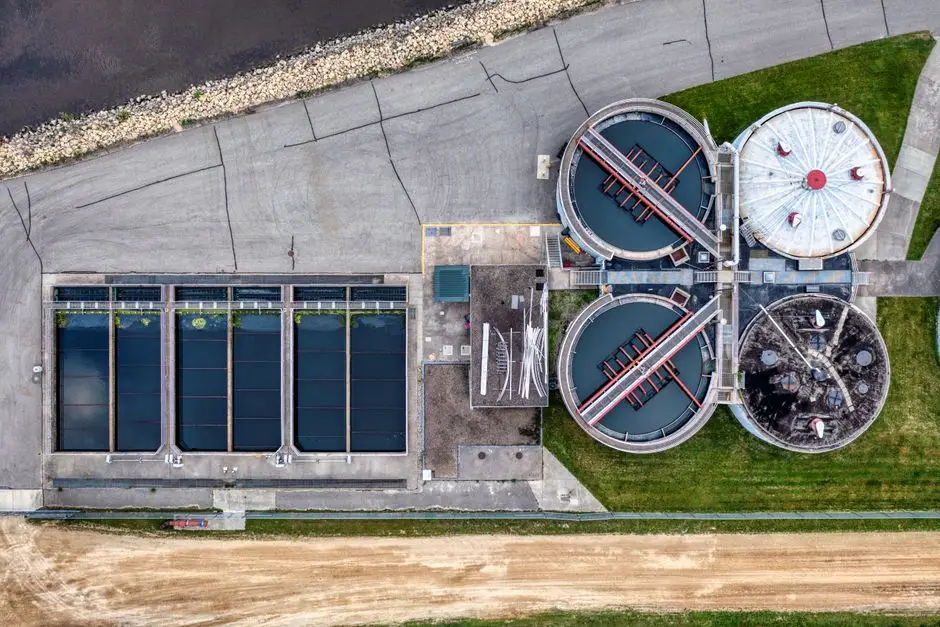
Constructed wetlands, vermifiltration and membrane polishing are conditional alternatives, not automatic replacements for package plants. The InTechOpen chapter Application of Vermifiltration for Domestic Sewage Treatment describes a process combining filtration with earthworms, states that it can be decentralized and requires comparatively less expertise, and reports its application to domestic septic-tank sewage. It does not establish compliance with an unspecified Mosul discharge requirement.
Use constructed wetlands or vermifiltration only after checking land availability, hydraulic loading, climate performance, pretreatment, vegetation management and maintenance capability. Their lower equipment intensity does not remove the need for controlled influent quality, reliable solids removal and a defined effluent route. The buyer must also establish who will maintain vegetation or the vermifiltration media and how seasonal performance will be monitored.
Where the reuse objective requires finer clarification than the primary biological process can provide, evaluate ultrafiltration as a downstream step rather than treating the primary unit as proof of reuse suitability. The verified HydropureWater UF catalogue specifies 2,000–40,000 L/h capacity, 0.03 μm PVDF membranes, automatic backwash and air scour, and acceptance of influent turbidity up to 300 ppm. These are catalog specifications, not guarantees for project influent or finished effluent.
| Option | What the supplied research supports | Gate before selection |
|---|---|---|
| Constructed wetland | A decentralized treatment route using vegetation, soil and associated biological processes | Land, hydraulic loading, climate, pretreatment and maintenance capability |
| Vermifiltration | Filtration combined with earthworms; described as decentralizable and comparatively less expertise-intensive by InTechOpen | Site-specific treatment performance and approved effluent route |
| Ultrafiltration polishing | Catalogue capacity of 2,000–40,000 L/h; 0.03 μm PVDF membranes; automatic backwash and air scour; influent turbidity stated up to 300 ppm | Actual feed quality, required treatment objective and authority requirements |
Compare Quotes Using a Common Scope
A comparable quotation requires the same design basis, process boundary and site assumptions for every bidder. Issue the verified flow and wastewater analysis, peak and minimum flows, drawings, soil and groundwater information, flood exposure, footprint, access, power availability, effluent objective and required operating availability. Add the collection-system boundary, pretreatment responsibilities and applicable authority requirements. A package price issued without these inputs is not a comparable project price.
Require bidders to define equipment duty and every exclusion. The response should address inlet control, screening, biological treatment, solids separation, disinfection, sludge handling, controls, utilities, installation method, commissioning tasks and performance tests. The equipment duty must correspond to the confirmed design flow and load, with assumptions stated rather than hidden behind a catalogue range.
Request a delivery and installation schedule rather than a production lead time. It should cover civil works, excavation for a buried unit, foundations, electrical supply, transport, commissioning, training, imported-equipment logistics and site interfaces. The schedule should identify which tasks belong to the supplier, buyer and local contractor, including dates for access and approvals.
Commercial comparison must also include maintenance intervals, spare-parts availability, local or remote support, membrane or media replacement planning and responsibility for laboratory and compliance testing. The supplied research does not establish a valid Iraq-wide price for domestic sewage treatment in Mosul. Buyers should request itemized equipment, freight, import arrangements, taxes, installation, civil works, warranty, excavation and groundwater-related assumptions. The quotation framework in the packaged sewage treatment plant comparison illustrates why common scope matters, although the project conditions remain specific to Mosul.
| Bid package | Required supplier response | Commercial risk if omitted |
|---|---|---|
| Process and equipment | Duty, boundaries, pretreatment, sludge route, controls, utilities and performance test | Unresolved process and operating interfaces |
| Civil and installation | Excavation, foundations, electrical works, connections and commissioning responsibilities | Change during site works |
| Programme | Equipment, transport, civil works, permits, commissioning, training and acceptance dates | Shipment date mistaken for project completion |
| Lifecycle support | Maintenance, spares, support, membrane or media replacement and laboratory scope | System cannot be maintained or verified after handover |
| Compliance | Applicable Iraqi authority requirements and project-specific written confirmation | General certificate mistaken for site or reuse approval |
Control Installation, Commissioning and Acceptance Risk
Acceptance must be based on confirmed flow and load, not on a catalogue capacity being within a published range. The agreement should state the design duty, operating conditions, sampling points, monitoring responsibilities and performance criteria before handover. If the contractor has relied on population data, seasonal assumptions or a screening basis, those assumptions need to be resolved before acceptance testing.
Commissioning should verify the collection-system boundary, upstream solids control, downstream effluent connections, sludge removal, utilities, controls and operator training. The contractor should demonstrate that the treatment process operates with the intended equipment and that operating records explain how the agreed duty will be maintained. Where the project includes membranes, confirm the agreed cleaning and replacement procedures during both commissioning and operator handover.
For a buried installation, include excavation, foundations, access, flood protection, landscaping and electrical interfaces in the contractor’s programme. Confirm that surface works do not obstruct inspection, sludge removal or access to controls. The relevant Iraqi authority should provide written, project-specific confirmation for the intended discharge point or reuse application; a general product certificate does not establish site approval.
Agree performance tests, sampling points, monitoring responsibilities and acceptance criteria before handover. The MBBR domestic sewage design and buying guide provides a related framework for separating equipment claims from confirmed project performance. For Mosul, that separation is essential because regional river evidence, supplier catalogues and site approval answer different questions.
Frequently Asked Questions
What flow data is needed to size domestic sewage treatment in Mosul?
Request normal, peak and minimum flow, organic load, suspended solids, nutrients, pH and temperature, together with collection-system records and representative wastewater analysis. Check the selected WSZ or MBR against that design basis and the project’s operating regime; do not size from population or compare the WSZ hourly range directly with the MBR daily range.
How should buyers compare WSZ and MBR quotations for a Mosul site?
Issue both suppliers the same verified flows, wastewater analysis, site drawings, groundwater and flood information, effluent objective and pretreatment assumptions. Require WSZ and MBR offers to state process boundaries, utilities, sludge handling, installation, commissioning and performance tests. Treat published capacity and footprint claims as catalogue specifications until demonstrated for the stated site duty.
What should be included when budgeting a domestic sewage treatment installation?
Request itemized equipment, freight, import arrangements, taxes, civil works, excavation, electrical supply, installation, controls, sludge handling, commissioning, training and warranty terms. The supplied research establishes no valid Iraq-wide or Mosul price, so a defensible budget requires these inputs and each bidder’s exclusions. A headline package price alone will not establish the installed cost.
Which supplier and compliance checks are essential before ordering?
Ask bidders to document maintenance intervals, spare-parts availability, local or remote support, membrane or media replacement, laboratory scope and responsibility for compliance testing. Require written confirmation from the relevant Iraqi authority for the specific discharge point or reuse application. A general certificate does not demonstrate project-specific approval, and no supplier should be selected without a defined lifecycle support plan.