
Establish the permit basis before selecting equipment
Fabricated metals plants near Hager City meet sewer pretreatment limits by identifying the applicable rules, characterizing variable wastewater, and applying a treatment train matched to the contaminants. Stamping, machining, pickling, plating, anodizing, and chromic finishing generate different combinations of oil, suspended solids, dissolved metals, hexavalent chromium, and cyanide. A typical train includes equalization, oil removal, chrome reduction, cyanide oxidation, hydroxide precipitation, DAF or lamella clarification, pH adjustment, and monitoring. The plant must comply with the stricter of federal categorical standards and the receiving POTW’s local limits under 40 CFR 403.5.
40 CFR Part 433 is the first applicability question, not the equipment specification. According to HydropureWater’s 2026 fabricated-metals pretreatment research, the metal-finishing category includes forming, finishing, forging, foundry, metal-spraying, and machining-wash operations co-located with plating or anodizing lines. A stamping operation that ships dry parts to a separate finisher is generally outside the category; operating zinc, nickel, or chromic-acid tanks places the facility within it. The buyer must document actual production steps rather than infer coverage from the company’s fabrication description.
Next, determine whether the plant is an existing or new source. Pretreatment Standards for Existing Sources, or PSES, and Pretreatment Standards for New Sources, or PSNS, are separate requirements; HydropureWater’s 2026 research states that PSNS is tighter and that many POTWs use PSNS-equivalent local limits as a conservative baseline. That research also states that POTW local limits under 40 CFR 403.5 are at least as stringent as categorical standards and may add caps for copper, nickel, zinc, lead, silver, oil and grease, TSS, and pH. For each parameter, the controlling requirement is the stricter applicable limit—not automatically the federal table.
Before sizing equipment, request the current sewer-use agreement, POTW local-limit table, industrial-user discharge permit, monitoring frequency, sampling method, resampling provisions, and enforcement terms. Ask the POTW and regulator to confirm permit transfer, grandfathering, construction status, and any applicable compliance schedule in writing. Hager City limits should not be inferred from federal standards or from the regional metals-plant sewer compliance guide.
| Decision item | Evidence to obtain | Why it controls the design |
|---|---|---|
| Part 433 applicability | Process list; plating, anodizing, pickling, and machining-wash operations; tank inventory | Determines whether federal categorical standards apply |
| Source status | Construction date and regulator confirmation | Distinguishes PSES from PSNS and resolves grandfathering questions |
| Controlling limits | Current POTW local-limit table and categorical limits | Sets the parameter-by-parameter design envelope |
| Monitoring obligation | Permit, sampling method, frequency, resampling, and enforcement terms | Defines the final sampling point and operating evidence required |
Characterize wastewater across a complete production week
A full production week is necessary because fabrication wastewater is released in variable batch dumps rather than as a steady stream. HydropureWater’s 2026 research specifically warns that a four-hour composite can miss a Friday-afternoon dump and cause the equalization basin to be undersized. The sample period must therefore cover normal production days, batch tank dumps, changeovers, cleanup, and any known Friday or end-of-week discharge pattern. A single grab sample or short composite cannot establish a defensible sizing basis.
Map each source before combining it. Relevant streams can include stamping and machining washwater, drawing compounds, compressed-air condensate, grinding swarf, casting sand, acid pickling, plating rinses, chromic-acid anodizing, hard chrome, and cyanide plating. Record which drains are segregated, which enter a common floor-drain system, and whether a stream is dumped continuously or accumulated for batch treatment. Obtain flow records, production schedules, pH trends, metals and oil analyses, cyanide and hexavalent-chromium results where applicable, and details of every tank dump and floor-drain route.
HydropureWater’s 2026 field data reports mixed floor-drain oils at 50–500 mg/L, total dissolved metals at 5–200 mg/L, TSS at 100–1,000 mg/L, and pH swings between 2 and 12 across batch dumps. The same research describes a stamping cell that can remain near pH 7 with low metals while a hard-chrome line can exceed 50 mg/L Cr(VI) and lower pH below 2 during a rinse dump. Those are mixed-drain field ranges, not guaranteed plant limits or design flows.
The process mix changes the result, so separate sample points matter. A plating rinse can be dilute but metallically concentrated; machining washwater may carry emulsified oil; a tank dump may change pH, flow, and contaminant concentration simultaneously. Equalization basin sizing should follow the measured weekly flow and dump profile, not an assumed average. If the DAF versus lamella clarifier comparison is used in preliminary planning, its equipment criteria remain secondary to plant-specific characterization.
| Information request | Minimum purpose | Design consequence |
|---|---|---|
| Complete-week flow and composite data | Capture batch and end-of-week dumps | Sets equalization volume, pumping duty, and production-cycle assumptions |
| Source-stream map | Separate plating, pickling, machining, and floor drains | Identifies segregated treatment and dilution effects |
| Metals, oil, TSS, and pH analyses | Define contaminant load and chemical demand | Establishes precipitation, flotation, and clarification duties |
| Cyanide and Cr(VI) analyses | Confirm presence and concentration | Determines whether oxidation and reduction are required |
| Species-specific silver data, if applicable | Avoid reliance on total metals | Supports accurate treatment and compliance analysis |
Match each contaminant family to its treatment step
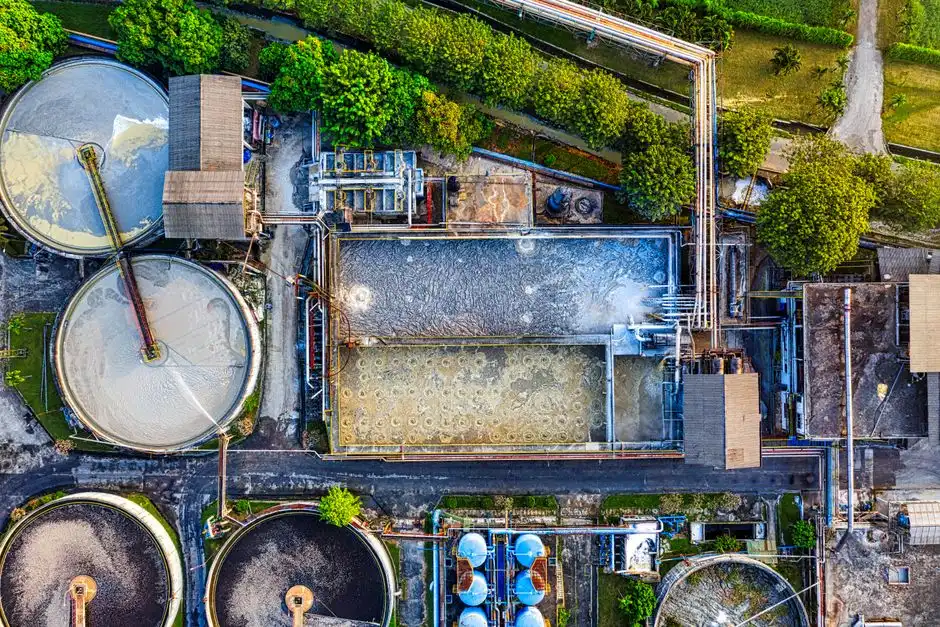
Each contaminant family requires a distinct removal mechanism, and omitting one stage can invalidate the downstream chemistry. HydropureWater’s 2026 research identifies free and emulsified oils from stamping, machining, and drawing compounds; dissolved heavy metals from plating rinses and pickling; hexavalent chromium from chromic-acid anodizing, hard chrome, and conversion coating; and suspended solids from swarf, casting sand, and hydroxide floc. Cyanide is present where alkaline zinc, copper, cadmium, or silver plating remains in use.
- Screening and equalization: Protect downstream equipment with a rotary mechanical bar screen, then blend batch dumps to stabilize flow and chemistry. Failure mode: tramp metal and rags damage equipment or enter the sludge train.
- Oil removal: Remove free oil physically and address emulsified oil by chemical break or an appropriate separation step. Failure mode: residual oil fouls clarification equipment, interferes with chemical conditioning, and causes an oil-and-grease exceedance.
- Hexavalent-chromium reduction: HydropureWater’s 2026 research specifies sodium metabisulfite or ferrous sulfate at pH 2–3 and approximately 250–300 mV ORP. Failure mode: Cr(VI) is not converted to the trivalent form that can be removed by hydroxide precipitation.
- Cyanide oxidation: Oxidize cyanide before metals precipitation. Failure mode: cyanide resolubilizes downstream metal precipitates and creates an uncontrolled compliance risk.
- Metal hydroxide precipitation: Raise pH and add the required chemistry so dissolved metals precipitate. The same 2026 research places the precipitation stage at pH 8.5–9.5, where reduced chromium precipitates as Cr(OH)₃. Failure mode: dissolved metals remain soluble at discharge.
- Flotation or clarification: Remove the resulting hydroxide floc with an industrial DAF system for metal-finishing wastewater or a suitable lamella clarifier. Failure mode: floc carryover raises TSS and discharges precipitated metals.
- pH trim and final monitoring: Trim only as required by the controlling limit, then verify compliance with both daily-maximum and monthly-average requirements at the designated monitoring point. Failure mode: chemistry meets an internal target but fails the POTW’s final discharge condition.
A PLC-controlled chemical dosing skid should coordinate pH adjustment, reduction or oxidation, and polymer feed. The research identifies NaOH or H₂SO₄ for pH adjustment, sodium metabisulfite for chrome reduction, NaOCl for cyanide destruction, and polymer for floc. Each pump needs a calibration column and stroke-count totalizer; otherwise the operator is dosing without a defensible measure of chemical delivery.
| Process step | Primary target | Failure mode if omitted or uncontrolled |
|---|---|---|
| Screening and equalization | Trash, batch variability, flow and pH swings | Equipment damage, chemical overfeed, unstable downstream chemistry |
| Oil removal | Free and emulsified oil | Clarifier fouling and oil-and-grease exceedance |
| Chrome reduction | Hexavalent chromium | Hexavalent chromium remains soluble |
| Cyanide oxidation | Cyanide | Precipitated metals resolubilize |
| Hydroxide precipitation | Dissolved metals | Metals remain in solution |
| DAF or lamella clarification | Metal hydroxide floc and TSS | Solids carryover and metal discharge |
| pH trim and monitoring | Final discharge condition | Permit exceedance despite acceptable upstream reaction conditions |
Select DAF or lamella clarification from operating risks
DAF is the stronger fit when floatable oil, FOG, colloids, and fragile metal-hydroxide floc must be removed. HydropureWater’s 2026 DAF catalog covers 4–300 m³/h across 13 standard models. Lamella clarification becomes more attractive when compact footprint, clarified-solids handling, and the research’s 20–40 m/h surface-loading range are central to the project. Neither device removes dissolved metals before precipitation, and neither substitutes for oil removal or chemical conditioning.
For DAF, HydropureWater’s 2026 research identifies three governing design variables: hydraulic surface loading of 4–20 m/h depending on model and floc density; an air-to-solids ratio of 0.005–0.060, with 0.02 identified as a typical design point; and recycle of 10–30% of forward flow. Increasing the air-to-solids ratio can produce a drier float but raises blower demand and may break fragile floc. Increasing recycle can improve TSS removal, but it dilutes the chemistry and increases equalization demand. These trade-offs must be evaluated against the actual production cycle rather than selected from catalog defaults.
| Decision criterion | Prefer DAF when | Consider lamella when |
|---|---|---|
| Primary separation target | Oil, FOG, colloids, and fragile hydroxide floc are important | Precipitation floc and clarified solids are the main targets |
| Site constraint | Equipment arrangement can accommodate its hydraulic duty | Compact footprint is a defining project requirement |
| Surface loading | Selected model and wastewater characteristics support the proposed loading | Proposal addresses the research’s 20–40 m/h range |
| Sludge handling | Float can be dewatered using the selected solids-handling method | Lamella solids discharge integrates with the plant’s sludge system |
| Verification required | Surface loading, A/S, and recycle are checked against actual characterization | Loading, feed chemistry, and solids handling are checked against the equipment proposal |
Do not make this decision before settling equalization duty, chemical recovery, oil-removal performance, and production-cycle fluctuations. The operating comparison in HydropureWater’s 2026 treatment-train research supports a contaminant-based choice, not a one-size-fits-all preference. Require each bidder to reconcile its selected surface loading, chemical feed, and recycle rate with the submitted wastewater characterization and proposed equipment geometry.
Control chemistry, upsets, and sludge as one operating system
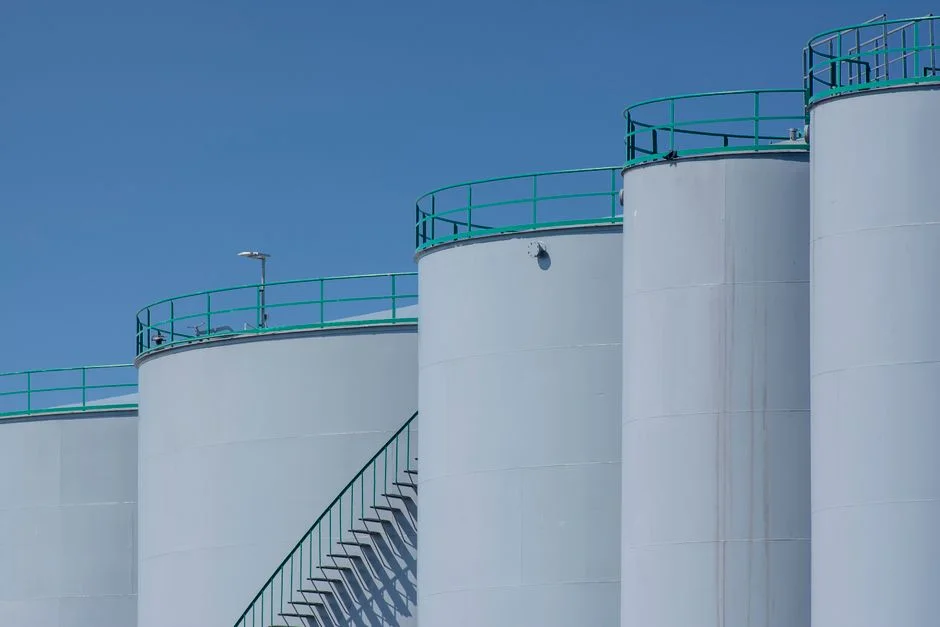
Automatic control is part of the treatment process, not an accessory package. HydropureWater’s 2026 research specifies flow-paced feedforward dosing with pH and ORP feedback on a PLC-controlled automatic chemical dosing skid. The skid scope should cover pH-adjustment chemicals, sodium metabisulfite, NaOCl, and polymer. Require pump calibration columns, stroke-count totalizers, chemical-level alarms, and an accessible operating interface for the PLC-controlled chemical dosing skid.
Upsets must have a defined destination. The 2026 research calls for alarms and shutdown interlocks when pH moves outside the target range, ORP leaves its target range, or TSS is high; affected flow should return to the equalization-basin header rather than continue toward sewer discharge. This requires sufficient equalization capacity and a physically credible diversion route. A written alarm setpoint without available holding capacity is not a control strategy.
Metal-hydroxide sludge must be included in the mass balance. HydropureWater’s 2026 research reports floated sludge at 2–5% dry solids and describes dewatering to 25–35% with a plate-and-frame filter press. It states that belt presses are capped around 22% dry solids for metal hydroxide. Compare disposal arrangements on wet tonnage, achievable dry solids, chemical use, press-cycle time, filtrate quality, and disposal acceptance rather than equipment price alone.
Place a rotary mechanical bar screen upstream of equalization to remove rags, wipes, and tramp metal. The 2026 research identifies this as protection against premature filter-press cloth failure. A plate-and-frame filter press also requires a defined cake-disposal route, filtrate destination, wash-water handling, and operator access.
- Verify chemical calibration records and stroke-count totals during each shift review.
- Test pH, ORP, flow, and diversion interlocks under documented operating conditions.
- Track chemical inventory, equalization level, sludge volume, press-cycle performance, and sampling results.
- Reconcile laboratory results with the contemporaneous flow, pH, ORP, dose, and clarification records.
Design for compliance evidence and future polishing
The compliance matrix should be the bridge between equipment operation and permit evidence. For every controlled parameter, identify the controlling limit and its source, analytical method, sample point, monitoring frequency, equipment setpoint, operating record, and responsible operator. Distinguish POTW local limits from federal categorical requirements in the file; do not combine them into an undocumented “house limit.” Final effluent must be checked against the applicable daily-maximum and monthly-average requirements before discharge.
Link each laboratory result to operating data from the same period: flow, pH, ORP, chemical dose, equalization level, and DAF or clarifier settings. A passing sample without a corresponding operating record is difficult to defend during an enforcement review. Conversely, an operating record showing a chemical excursion can trigger an internal investigation even when the sample was compliant. The MBR integrated wastewater treatment system and reverse-osmosis water purification system should remain conditional additions rather than assumed components of the base train.
Advanced polishing has defined roles in HydropureWater’s 2026 research: MBR for BOD or COD tightening and reuse; RO for sub-ppm TDS or very strict metal caps; and anion exchange or granular activated carbon for PFAS polishing. The research describes EPA’s 2026 PFAS rulemaking as scoped to chrome-finishing facilities, but states that no current numerical PFAS limit for chrome finishers was available. Preserve footprint, utilities, control points, and connections for a future polish skid instead of installing one without an identified requirement.
For rinsewater reuse, define the required water quality before selecting the treatment train. HydropureWater’s 2026 research states that a multi-media filter upstream of RO should maintain SDI15 below 3. Use that condition within the multi-media filtration and ultrapure-water system review, then validate the complete reuse specification rather than inferring it from pretreatment compliance.
Turn the design into a procurement-ready scope
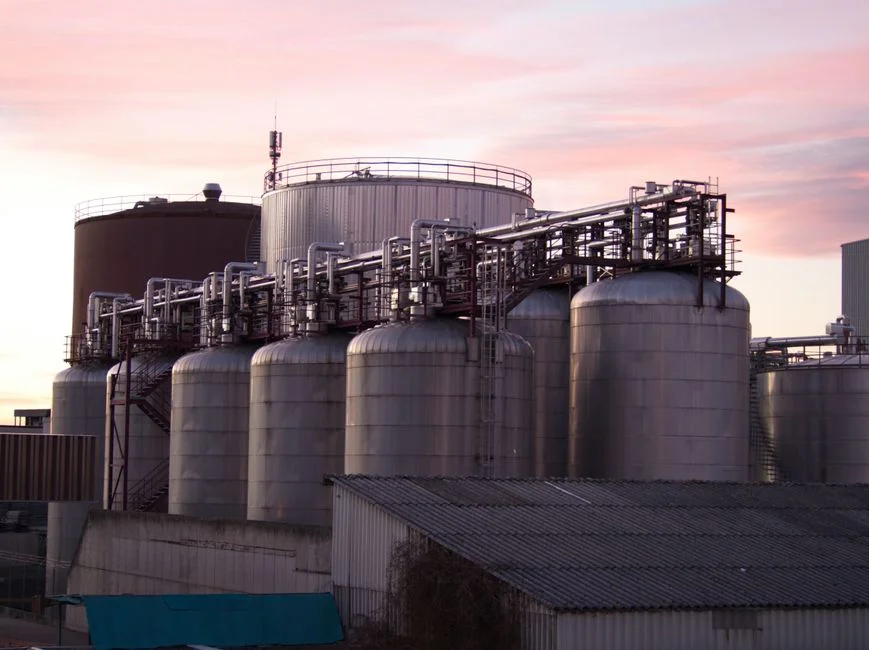
Issue the request for proposal only after assembling the controlling permit basis and the complete-week wastewater characterization. The bid package should include current POTW limits, industrial-user permit, sewer agreement, source-stream map, production schedules, analytical results, flow records, tank-dump information, chemical-use data, reuse requirements, and downstream sludge constraints. Without these inputs, equipment bids will conceal assumptions that later become change orders or compliance risk.
Require every bidder to list assumptions and provide sizing calculations, control narratives, chemical ranges, duty cycles, utilities, controls I/O, alarms, interlocks, and solids-balance calculations. Ask bidders to identify which unit operation achieves each compliance limit, where the final monitoring point will be located, and how upset flow is contained. Chemical consumption, sludge wet tonnage, dewatering performance, operator workload, maintenance access, and future polishing connections belong in the lifecycle comparison.
The coagulant dosing system design criteria should be used to test whether chemical-feed assumptions are documented, but it cannot substitute for site data. Do not accept catalog performance as a guarantee of sewer compliance. HydropureWater’s 2026 research instructs buyers to verify site-specific design values against current permits, influent testing, and the final equipment proposal. Any bidder that cannot reconcile its equipment to the POTW limit table and full-week characterization has not supplied a compliance-grade design.
Frequently Asked Questions
Do fabricated metals plants always fall under 40 CFR Part 433?
No. Applicability depends on whether the facility performs covered metal-finishing activities. HydropureWater’s 2026 research says that a stamping-only operation shipping dry parts to a separate finisher is generally outside the category, while a facility operating zinc, nickel, or chromic-acid tanks is inside it. Obtain regulator confirmation and document the plant’s actual operations.
How much wastewater equalization should be provided near Hager City?
The research provides no universal volume. Base sizing on a complete week of composite flow and production records because a short composite can miss batch dumps and undersize the basin. Request the measured flow profile, dump schedule, production variability, and maximum continuous discharge before setting the working volume.
Should a fabricated metals plant buy DAF or a lamella clarifier?
Choose DAF when oil, FOG, colloids, or fragile hydroxide floc are principal targets; consider lamella clarification when compact solids separation and the research’s 20–40 m/h surface-loading range are priorities. Verify the selection against stream characterization, the proposed surface loading, chemical demand, recycle rate, and sludge-handling route.
What should a wastewater-equipment supplier demonstrate for compliance risk?
Require permit-specific sizing calculations, controls and interlock narratives, chemical dosing ranges, sludge balances, final monitoring points, and every assumption tied to the submitted wastewater data. A second check is whether the proposed final sample point, diversion route, and upset alarms correspond directly to the POTW permit requirements.
Does a fabricated metals plant need RO, MBR, or PFAS treatment in 2026?
Not routinely. Advanced polishing is justified when local limits are tighter, reuse requires it, or a new rule applies. HydropureWater’s 2026 research identifies live EPA PFAS rulemaking for chrome-finishing facilities but states that no current numerical PFAS limit for chrome finishers was available. The practical procurement action is to preserve a future polish-skid connection, not install an undefined polishing duty.
What should a buyer request before approving the capital cost?
Request a complete-week wastewater characterization, the current POTW limit table and permit, production and dump schedules, stream map, chemical analyses, and reuse requirements from the bidder. Then require a written assumption register, sizing calculations, utilities and chemical demand, sludge balance, controls I/O, alarms, interlocks, and lifecycle-cost inputs. Do not compare bids on purchase price alone, and do not treat an unsupported catalog guarantee as proof of sewer compliance.