Separate the data center wastewater streams
A Charlotte data center needs separate wastewater plans for sanitary sewage and process water because the streams have different contaminants, flow characteristics, receiving infrastructure, and permit pathways. Cooling tower blowdown is the principal process stream when evaporative cooling is used: evaporation leaves dissolved minerals and treatment chemicals behind, so concentrated recirculating water must be drained to control scale, corrosion, and fouling. Softener regeneration reject, RO reject, cleaning wastewater, maintenance drain-down, and condensate also require characterization. The data center wastewater and cooling blowdown planning guide provides a useful starting framework for stream separation.
Black & Veatch’s data center blowdown guidance, as presented by Black Forge Data Centers, provides the central water-balance test: every gallon of make-up water that is not evaporated becomes wastewater and is more mineralized than the utility supply. Request average and peak flow, temperature, pH, conductivity, hardness, silica, suspended solids, and chemical residuals from the mechanical designer. These inputs should be tied to the selected cooling option, source-water analysis, cycles of concentration, and chemical program.
| Stream | Primary design concern | Information required before selecting equipment |
|---|---|---|
| Sanitary sewage | Sewer service, sanitary capacity, and separate permitting assumptions | Average and peak flow; building phasing; grease, solids, and chemical contributions; service agreement requirements |
| Cooling tower blowdown | Dissolved salts, temperature, suspended solids, and residual treatment chemicals | Cooling configuration; cycles of concentration; make-up-water analysis; chemical residuals; average and peak blowdown |
| Softener, RO, and filter backwash | Variable composition and batch discharge | Regeneration frequency; reject volume; conductivity; hardness; silica; cleaning chemicals |
| Cleaning, drain-down, and condensate | Episodic flow and possible chemical or thermal excursions | Event frequency; source; temperature; pH; solids; chemical additives; storage and discharge route |
Match Charlotte discharge options to the regulatory path
Sewer discharge is viable only when the Charlotte-area control authority confirms both physical capacity and acceptable waste character. Obtain written confirmation covering service availability, hydraulic capacity, local pretreatment limits, metering, user fees, monitoring, and whether an industrial user permit or development agreement is required. Capacity must be checked from the campus connection through lift stations and the receiving plant, not inferred from plant-wide headroom.
Black Forge Data Centers summarizes EPA’s significant industrial user tests: an industrial user that discharges an average of at least 25,000 gallons per day of process wastewater, generates process flow equal to at least 5% of the POTW’s average dry-weather hydraulic or organic capacity, or is designated because it could harm the plant may qualify as an SIU. The 25,000-gallon calculation excludes sanitary, noncontact cooling, and boiler blowdown flows. That exclusion does not settle whether cooling tower blowdown counts for the other tests; obtain the control authority’s written determination because SIU status governs permit, sampling, reporting, and inspection duties.
A direct surface-water route requires an NPDES authorization from North Carolina. Determine whether a state general permit covers the proposed cooling-water and blowdown discharge or whether an individual permit is required. A stormwater system is not a substitute for a process-wastewater route. Black Forge Data Centers notes that some states offer general permits for noncontact cooling water and cooling tower blowdown, but eligibility and receiving-water conditions must be confirmed for the proposed North Carolina outfall.
Reuse without surface-water discharge begins with the end use. Cooling makeup, process water, construction dust control, equipment washdown, and irrigation each require different quality and residual-control objectives. Temporary hauling may bridge a schedule gap, but it requires an authorized receiving facility, a residual classification, transport documentation, and confirmation that the destination can accept the stream.
| Route | Decision test | Evidence required | Main operational risk |
|---|---|---|---|
| Sanitary sewer | Will the control authority accept the flow and pollutant profile? | Capacity confirmation, sewer-use requirements, local limits, permit path, metering and fee terms | Pass through, interference, sewer surcharging, or peak-flow constraints |
| Direct surface-water discharge | Does an NPDES general or individual permit cover the discharge? | Permit eligibility, receiving-water assessment, outfall limitations, monitoring and reporting plan | Temperature, salinity, chemical residuals, and watershed impact |
| On-site reuse | Can the recovered water meet the selected end-use specification? | End-use water-quality target, cooling-system compatibility, residual management, storage and distribution plan | Scaling, corrosion, biological growth, or treatment-chemical incompatibility |
| Temporary hauling | Can an authorized facility receive the waste and support the project schedule? | Waste determination, generator documentation, carrier and facility approvals, disposal path | Limited capacity, transport disruption, and incomplete residual management |
Commercial agreements show that sewer arrangements can materially affect a project, but they are not Charlotte standards. Black Forge Data Centers reports that the Goodyear agreement secured 1.2 million gallons per day of treatment capacity, while the Shreveport proposal estimated about 2.5 million gallons per day of wastewater and blowdown. Neither establishes a Charlotte requirement.
Define the water-quality targets from the permit and reuse plan
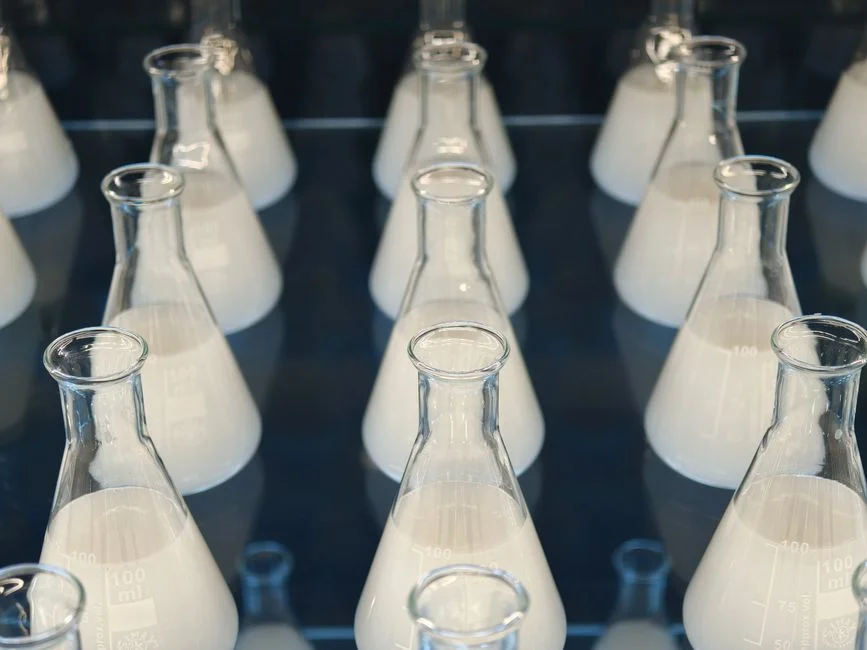
Water-quality criteria must come from the controlling authority and the intended reuse, not from a generic TDS target. Request the applicable sewer-use ordinance, local limits, permit language, sampling points, monitoring frequency, discharge-temperature limit, pH range, and chemical-residual restrictions from the Charlotte-area control authority. For a surface-water route, obtain the applicable NPDES limits and monitoring requirements instead.
Initial screening should cover total dissolved solids, temperature, pH, suspended solids, and residual biocides, anti-scalants, scale inhibitors, corrosion inhibitors, and dispersants. Genesis Water Technology publishes a preliminary blowdown profile of 1,200–6,000 mg/L TDS, 4–8 times the TDS of makeup water, and 10–50 mg/L suspended solids. Treat these values as screening conditions, not Charlotte design limits: the supplied research does not establish a current numeric discharge limit for the Charlotte-area authority.
For cooling makeup reuse, chemistry compatibility is part of the treatment objective. Biocide, scale-inhibitor, corrosion-inhibitor, and dispersant residues can accumulate in blowdown and interfere with membrane treatment or cooling-system chemistry. The design must therefore define the residual concentrations permitted in the recovered water and demonstrate compatibility with the existing cooling chemical program, not merely show that the permeate meets a laboratory TDS result.
Also distinguish compliance from operability. A permit-compliant stream can still foul membranes, precipitate in the cooling system, or create unsafe handling conditions. The design basis should connect each treatment objective to a monitored parameter, an operating response, and the permit or reuse specification it satisfies.
Select a treatment train by objective and risk
Select the least complex train that meets the confirmed discharge or reuse target. Ultrafiltration removes suspended solids, colloids, bacteria, and particles but does not remove dissolved salts. The supplied ultrafiltration pretreatment for cooling blowdown uses 0.03-micron PVDF membranes, accepts feed turbidity up to 300 ppm, includes automatic backwash and air scour, and covers a flow range of 2,000–40,000 L/h. Use it when particulate and biological control are the objectives or when it protects downstream NF or RO.
Nanofiltration is the lower-pressure option when hardness and partial demineralization drive the requirement. Genesis Water Technology gives an operating pressure of 75–150 psi and reports permeate TDS at 30–50% of feed concentration. RO is the more comprehensive desalination step: the same source gives an operating pressure of 150–400 psi and reports removal of 95–99% of dissolved solids, hardness, silica, and most treatment chemicals.
Recovery cannot be selected independently of concentrate chemistry. Genesis Water Technology reports typical recoveries of 90–95% for UF, 70–85% for NF, and 50–85% for RO, while noting that scaling and concentrate chemistry constrain membrane recovery. The concentrate therefore requires a permitted destination before either membrane system is considered complete.
Mechanical vapor compression or another evaporative concentration step is appropriate when membrane recovery is constrained by scaling or osmotic limits. Genesis Water Technology reports 95–98% recovery from concentrate streams, distillate below 10 mg/L TDS, and energy consumption of 15–25 kWh per 1,000 US gallons of distillate. Full zero liquid discharge should remain the final option because it adds crystallization and solid-waste management; the source reports 95–99% overall recovery and substantially greater capital and operating complexity.
Include chemical dosing where the confirmed train requires pH adjustment, coagulation, antiscalant, biocide neutralization, or another specialty treatment. A PLC-controlled chemical dosing system must be compatible with membrane materials, the cooling chemical program, and permit restrictions.
| Objective | Potential train | What it addresses | Residual or operating issue |
|---|---|---|---|
| Particulate or biological control | UF, with filtration and chemical conditioning as required | Suspended solids, colloids, particles, and biological material | Backwash waste, membrane cleaning, and no dissolved-solids removal |
| Partial demineralization | UF pretreatment followed by NF | Hardness and a portion of dissolved solids | Concentrate disposal, scaling control, and residual treatment chemicals |
| Cooling makeup or low-TDS reuse | UF pretreatment followed by RO | Most dissolved salts, hardness, silica, and treatment chemicals | Higher pressure, concentrate management, antiscalant, and energy use |
| Additional recovery from membrane concentrate | Mechanical vapor compression or thermal concentration | Concentrate volume and production of low-TDS distillate | Energy demand, brine handling, and final residual destination |
| Elimination of liquid discharge | Membrane concentration, evaporation, crystallization, and solids management | Water recovery and conversion of dissolved solids to a managed solid residue | Highest capital, operating, and solid-waste complexity |
Reduce blowdown before treating the remaining flow
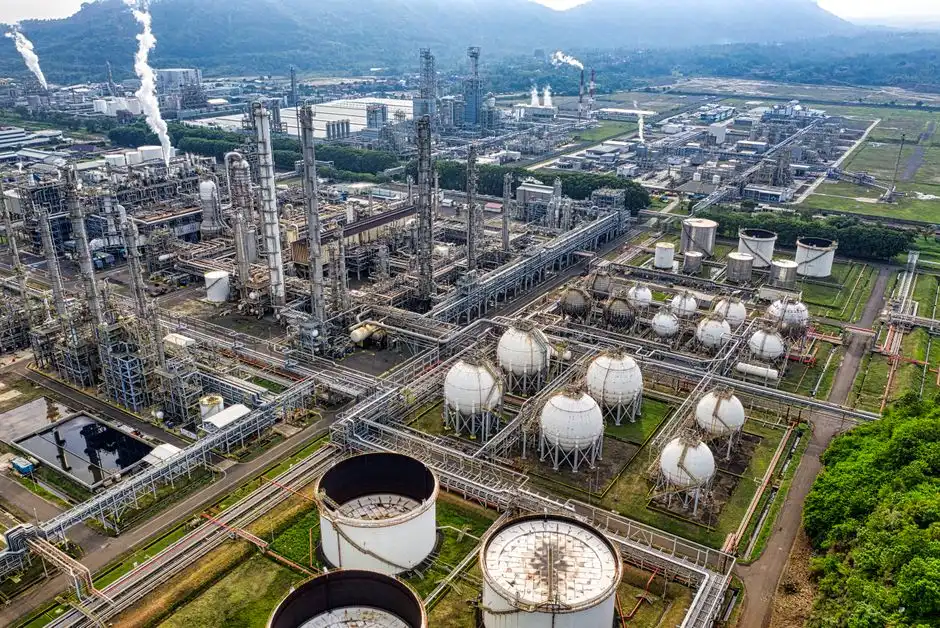
Reduce avoidable discharge before sizing treatment equipment. Evaluate cycles of concentration, side-stream filtration, cooling-system optimization, closed-loop cooling, air cooling, and advanced liquid cooling as a linked mechanical and permitting decision. Lower blowdown flow reduces the treatment train, residual volume, monitoring burden, and sewer exposure, but higher cycles of concentration also increase scaling and membrane-feed risk.
Genesis Water Technology reports that a cooling tower operating at 4 cycles of concentration loses approximately 25–30% of makeup water to blowdown. At a facility using 10 million gallons monthly, the source converts that condition to 2.5–3 million gallons discharged or lost. These figures are planning examples, not a Charlotte design basis.
North Carolina State University’s Center for Natural Resources, in its 2026 discussion of data centers and local water resources, identifies closed-loop or air-cooling technologies and advanced liquid cooling as ways to reduce direct water consumption. It also states that cost-effective retrofit and deployment speed remain uncertain. A Charlotte project should therefore compare alternatives on schedule, electrical demand, water demand, retrofit feasibility, and site constraints rather than treating dry cooling as automatically preferable.
Reuse and conservation should be evaluated together. Returning suitable permeate as cooling makeup may increase cycles of concentration, reduce freshwater demand, and shrink the flow requiring sewer disposal. The lower-water cooling strategy for data centres provides additional context, but the project engineer should obtain modeled average and peak blowdown for each candidate cooling design, including makeup-water quality and summer peak-load conditions.
Use the selected cooling model to establish the water balance, treatment flow, and residual generation. Do not size membranes from a generic percentage of makeup water; the answer depends on evaporation, cycles of concentration, precipitation and blowdown, and any water-recovery return to the cooling loop.
Build a permit-ready implementation plan
A permit-ready plan should follow a fixed sequence:
- Establish the water balance. Document the cooling design, average and peak blowdown, make-up water, cycles of concentration, average and peak sanitary flow, all treatment rejects, and intended discharge or reuse.
- Characterize the waste. Complete source-water and wastewater analyses covering the parameters requested by the mechanical designer and control authority. Record the cooling chemical package, including biocides, anti-scalants, scale inhibitors, corrosion inhibitors, and dispersants.
- Resolve the authority pathway. Submit the industrial user or discharge application early enough for the authority to evaluate local limits, sewer capacity, monitoring, and any sewer-service agreement or developer contribution. A data center wastewater permit and sewer agreement assessment shows why permit and capacity questions should be developed together.
- Design the complete system. Provide equalization and temperature-control capacity where the utility or biological process requires it. Cooling or holding tanks may be needed before discharge.
- Close the residual loop. Confirm how pretreatment waste, membrane concentrate, evaporation brine, or crystallization solids will be managed. No treatment claim is complete until every residual stream has a permitted destination.
- Commission and monitor. Establish sampling points for flow, temperature, pH, conductivity, and every constituent named in the written permit. Define laboratory methods, chain of custody, reporting schedules, and corrective-action thresholds. Include start-up testing, operator training, spare membranes, dosing-equipment redundancy, and change control for chemical-package revisions.
Keep the immediate compliance path separate from longer-term water-recovery investment. A sewer-connected project may need only the pretreatment and monitoring required by its permit. Reuse, closed-loop cooling, and zero liquid discharge should remain separately justified alternatives until the authority, mechanical design, water balance, and end-use quality targets are confirmed.
Frequently Asked Questions
What inputs are required to size wastewater treatment for a Charlotte data center?
Obtain average and peak process flow, cycles of concentration, source-water analysis, predicted blowdown chemistry, permit limits, intended reuse quality, and residual-disposal requirements from the mechanical engineer and control authority. Do not size the system from a generic blowdown percentage or a vendor’s preliminary chemistry profile.
How should a buyer compare wastewater treatment suppliers?
Require each bidder to state the guaranteed feed-water basis, average and peak design flow, recovery rate, concentrate quality, membrane or media warranty, automatic-control scope, monitoring duties, and lifecycle documentation. Check that proposed chemical dosing and materials are compatible with the cooling program and written permit; headline recovery alone does not establish a complete train.
What should a Charlotte project include in its industrial pretreatment and discharge review?
Treat sewer capacity, local limits, temperature, chemical residuals, monitoring, and residual handling as one approval package. Confirm SIU status with the control authority, and confirm whether North Carolina general-permit coverage is available for any direct surface-water route. Permitability and utility acceptance are as important as treatment performance.
How should the project compare treatment cost and equipment budget?
Request a lifecycle comparison covering equalization, temperature control, pretreatment, membranes or thermal equipment, chemical dosing, residual handling, monitoring, energy, maintenance, and replacement. The supplied research does not provide a Charlotte quotation, so any budget should state the flow basis, water analysis, permit limits, reuse objective, and residual destination used by the supplier.
How long should wastewater treatment equipment lead time be allowed?
The supplied research does not establish an equipment lead time. Obtain a project schedule from the selected supplier only after the design basis, authority pathway, residual route, and cooling design are sufficiently fixed; otherwise the quoted schedule may not correspond to the permitted system.