Identify the Rules That Control Auburndale Sewer Discharges
Food and beverage plants near Auburndale meet pretreatment limits by designing to the strictest applicable federal, Florida and site-specific POTW requirements. EPA’s National Pretreatment Program is implemented through approved state and local authorities, while local limits apply at the plant’s connection to the POTW collection system. A defensible 2026 treatment train starts with screening and equalization, follows with DAF for FOG and suspended solids, then uses biological treatment, chemical phosphorus control and final polishing as required. Equipment should be sized from actual flow, BOD, FOG, pH, temperature and permit data—not generic food-processing assumptions.
The Auburndale POTW, its industrial user permit, sewer use ordinance and the plant’s point of connection determine the enforceable site-specific limits. EPA explains that local limits are designed to protect the POTW, its sludge processes and receiving waters; they apply at the industrial user’s end-of-pipe discharge, which is the point of connection to the POTW collection system (EPA, “Pretreatment Standards and Requirements—Local Limits,” accessed 2026). This food and beverage pretreatment-limit compliance guide describes the broader permit-to-equipment approach.
The controlling rule stack has four parts:
- 40 CFR Part 403 establishes the National Pretreatment Program and prohibited-discharge provisions.
- An applicable federal categorical subpart establishes process-specific numerical floors. The supplied research identifies 40 CFR 405 for dairy products, 406 for grain mills, 407 for canned and preserved fruits and vegetables, 408 for canned and preserved seafood and 409 for meat products (HydropureWater, “How US Food & Beverage Plants Meet Pretreatment Limits Before Sewer Discharge,” 2026).
- Florida’s approved pretreatment program and applicable state requirements provide another regulatory layer.
- The Auburndale POTW’s permit and sewer use ordinance impose the site-specific requirements that directly control the plant’s discharge.
| Rule layer | What it controls | Engineer’s use in Auburndale |
|---|---|---|
| 40 CFR Part 403 | National pretreatment framework and prohibited discharges | Screen the proposed discharge for interference, pass-through and prohibited characteristics. |
| Applicable categorical subpart | Process-specific pollutant limits and monitoring conditions | Confirm classification from the actual manufacturing process, SIC/NAICS code and production operations. |
| Florida approved program | State administration of delegated pretreatment requirements | Confirm Florida reporting, monitoring and enforcement procedures applicable to the receiving authority. |
| POTW permit and sewer use ordinance | Local numerical limits, narrative conditions, monitoring and discharge authorization | Use the point-of-connection discharge conditions as the final engineering basis and compare them with every other applicable layer. |
Do not classify every beverage or food wastewater under one assumed subpart. A dairy, brewery, grain mill, cannery, seafood processor and meat processor can generate different streams, pollutants and applicable requirements. Federal categorical limits are a floor; POTW local limits and permit conditions can be stricter and therefore govern the final design (HydropureWater, 2026). The permit package should state the receiving POTW, permit number, applicable subpart, sampling point, limit basis and all reporting conditions before equipment is priced.
Characterize Each Waste Stream Before Sizing Equipment
A food-processing wastewater design cannot be based on one daily average because production schedules, clean-in-place cycles and product changeovers can change flow, organic load, pH and temperature within hours (Hixson, “Wastewater Treatment Solutions for Food Processing,” 2026). The practical design basis is a stream-by-stream sampling plan tied to the production calendar, followed by flow records that capture the actual operating envelope.
Build the sampling plan around normal production, start-up, shutdown, product changeover, floor washing and clean-in-place periods. Do not combine every result into one composite sample: that can conceal a short FOG slug, acidic CIP dump or warm high-strength release. The six governing parameters identified in the supplied HydropureWater research are BOD/COD, TSS, FOG, total phosphorus, pH and temperature (HydropureWater, 2026).
| Parameter | Research benchmark and scope | Design consequence |
|---|---|---|
| BOD | Dairy and meat processing commonly produce 1,000–10,000 mg/L BOD (HydropureWater, 2026). | Size equalization and biological treatment for organic load and peak discharge, not only flow. |
| FOG | Several thousand mg/L can occur in fryer, rendering and stickwater streams (HydropureWater, 2026). | Establish whether DAF is required and determine conditioning and skimming capacity. |
| Total phosphorus | Cereal, dairy and meat wastewater commonly contains 10–100 mg/L as P (HydropureWater, 2026). | Determine whether chemical precipitation and solids separation are needed. |
| pH and temperature | CIP can cause pH swings and temperatures above 40 °C (HydropureWater, 2026). | Provide equalization, mixing, trim control and sufficient hold-up. |
Request average flow, peak flow, peak-to-average ratio, production schedules, cleaning-cycle volumes, anticipated product changes and flow-recorder history. Hixson notes that batch changes, CIP cycles and seasonal peaks can create major swings in flow, organic load, pH and temperature (Hixson, 2026). The hydraulic comparison should include a complete CIP discharge scenario, not merely a production-period average.
Segregate streams before assigning equipment:
- Process wastewater: washing, cooking and packaging water generally carries much of the soluble BOD and suspended material.
- Floor wash: often concentrates FOG and sanitary solids and may need direct routing to DAF.
- CIP rinses: require pH and temperature assessment; chemical dumps may need dedicated equalization or controlled dosing.
- Cooling-water blowdown: may have a lower organic load but can contain heat, oil or chemicals and should not automatically enter biological treatment.
Use the MBBR design for food-processing wastewater to evaluate biological-stage loading after those streams have been separated. The resulting flow, load and chemistry—not a generic food-processing category—become the equipment sizing basis.
Build a Treatment Train Around the Limiting Pollutant
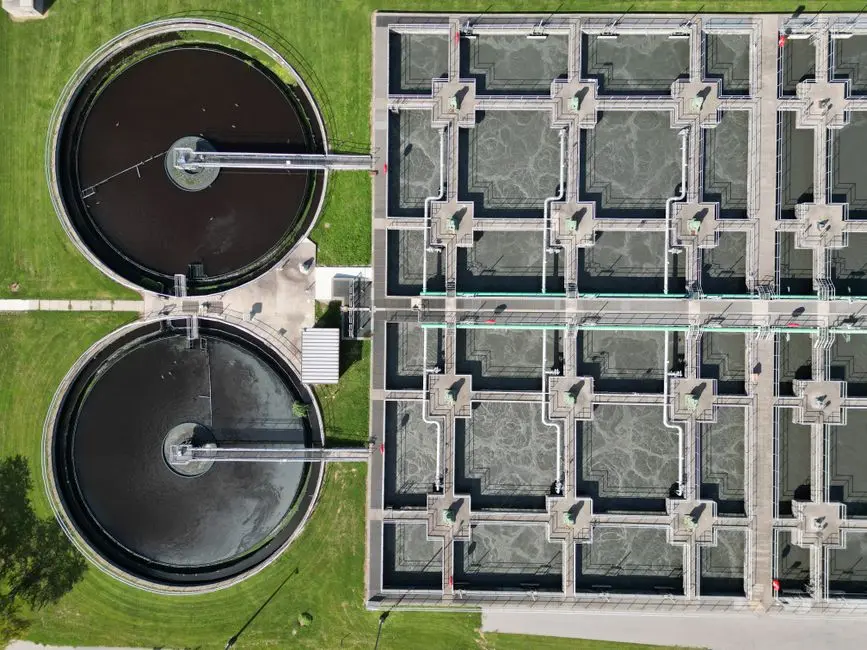
The defensible treatment sequence is screening, equalization, DAF, biological treatment, chemical phosphorus control where required, final polishing and sludge dewatering (HydropureWater, 2026). Every stage should answer a permit or process question; a unit that does not remove the binding pollutant or protect a downstream stage is not justified by the permit alone.
Screening protects pumps and downstream biological processes from product solids, pulp, seeds and packaging debris. Equalization buffers production surges and CIP chemical dumps, with pH trim and flow control preventing shock loading. Hixson identifies screening and equalization as the first barriers against plugging and biological upset (Hixson, 2026).
DAF is the primary catalog match for FOG, oil, grease and colloidal solids. The supplied HydropureWater research gives F&B design references of 4–25 m/h hydraulic loading, a 0.005–0.02 air-to-solids ratio and 20–40% recycle (HydropureWater, 2026). An industrial DAF system for FOG and suspended-solids removal should be selected from those benchmarks, but the final cell area, recycle and chemical system must reflect the plant’s measured stream and permit target.
Biological treatment addresses dissolved BOD and COD. HydropureWater’s design references specify 8–24 hours HRT for conventional activated sludge and 4–10 hours for MBR; corresponding MLSS ranges are 3,000–5,000 mg/L and 8,000–12,000 mg/L, respectively (HydropureWater, 2026). The same source lists effluent below 30 mg/L BOD and below 5 mg/L TSS as an MBR design reference—not as a promised Auburndale result. A supplier should guarantee performance at the permit sampling point after the complete treatment train, not at a generic MBR outlet.
Chemical phosphorus control applies where total phosphorus is binding. HydropureWater cites typical F&B application ranges of 50–250 mg/L alum or 30–150 mg/L ferric chloride; actual dose depends on the phosphorus form and mixed-liquor alkalinity (HydropureWater, 2026). Flow-proportional automatic dosing can reduce chemical consumption by 10–20% compared with manual feed, according to the same 2026 source. That claim supports an automatic control requirement; it is not a plant-specific saving.
A lamella clarifier can provide final solids polishing where footprint is constrained, with a sourced surface-loading reference of 20–40 m/h (HydropureWater, 2026). DAF skimmings and biological waste activated sludge should be routed to sludge dewatering. The supplied plate-and-frame filter-press reference spans 1–500 m² (HydropureWater, 2026), but the selected area must be based on solids production, cake route and operating schedule.
| Stage | Primary purpose | Permit or failure mode addressed | Design reference |
|---|---|---|---|
| Screening | Remove large solids | Pump plugging and biological-system protection | Plant-specific solids inventory |
| Equalization | Buffer flow, load and chemical dumps | Hydraulic overload and pH shock | Measured peak and CIP duration |
| DAF | Remove FOG and floatable solids | FOG pass-through | 4–25 m/h; 0.005–0.02 air-to-solids; 20–40% recycle (HydropureWater, 2026) |
| Biological treatment | Remove soluble BOD and COD | Organic pass-through | 8–24 h conventional; 4–10 h MBR (HydropureWater, 2026) |
| Phosphorus precipitation | Remove total phosphorus | TP exceedance | 50–250 mg/L alum or 30–150 mg/L ferric chloride (HydropureWater, 2026) |
| Final polishing | Remove residual solids | TSS breakthrough | 20–40 m/h lamella surface-loading reference (HydropureWater, 2026) |
| Sludge dewatering | Reduce sludge volume | Residual solids and disposal route | 1–500 m² plate-and-frame reference (HydropureWater, 2026) |
The DAF installation and commissioning protocol provides a useful reference for proving hydraulic performance, conditioning, recycle operation and skimming before the DAF enters the guaranteed performance test.
Match Equipment to the Failure Mode and Permit Risk
Equipment selection should begin with the mechanism most likely to cause permit noncompliance, because a larger tank or more skimming capacity does not correct every failure. The supplied research maps common POTW rejection mechanisms to treatment weaknesses: FOG pass-through to under-dosed DAF coagulant or hydraulic overload, pH excursions to inadequate equalization or a failed trim loop, CIP hydraulic overload to an undersized equalization basin, and TP solids breakthrough to poor flocculation control (HydropureWater, 2026).
| Observed failure | Checks before adding capacity | Corrective equipment or control response |
|---|---|---|
| FOG pass-through | DAF hydraulic loading, recycle, coagulant dose, feed temperature and emulsified-oil character | Correct DAF sizing and conditioning; investigate emulsified oil before changing skimming capacity. |
| pH excursion | Equalization volume, mixing effectiveness, trim-loop operation and complete CIP-discharge volume | Increase effective hold-up, improve mixing or repair automatic pH controls. |
| Hydraulic overload | Measured peak flow, peak-to-average ratio and the four-hour CIP scenario | Correct equalization and pumping capacity using measured flows, not average daily flow. |
| TP solids breakthrough | Phosphorus form, chemical dose, alkalinity, mixing, flocculation and solids separation | Improve chemical phosphorus control and clarification before adding biological nutrient removal. |
For DAF procurement, the sourced performance reference is 25–50 mg/L oil and grease with TSS of 50–100 mg/L across 4–25 m/h hydraulic loading (HydropureWater, 2026). This is a benchmark for comparing bids, not a guarantee of an Auburndale result. The guarantee should name the feed conditions, sampling point and test method that make the performance value meaningful.
Where the permit requires low solids and BOD in a constrained footprint, compare an integrated MBR biological treatment system against conventional biological treatment plus polishing. MBR offers a compact route to separated biomass and low solids, but the buyer must examine aeration energy, controls, membrane maintenance, chemical cleaning and residual-sludge handling. The DAF-versus-clarifier equipment comparison provides a useful decision framework for primary and polishing equipment, but the permit and measured wastewater remain controlling.
Require bidders to diagnose the plant’s actual failure mode. A DAF that removes free oil can still fail on emulsified oil; a clarifier can polish solids but does not replace FOG removal; and biological treatment does not correct an unbuffered pH dump. This cause-and-effect check prevents the common mistake of buying a larger vessel for a mechanical or control problem.
Turn the Permit into a Procurement and Compliance Package

The equipment scope should reproduce the permit as a measurable procurement and compliance package. A bidder must identify the receiving POTW, permit number, applicable categorical subpart, point of connection and every applicable numerical and narrative condition. If the permit is unavailable or ambiguous, the bidder should identify the information needed before offering a performance guarantee rather than substituting generic federal limits.
Request separate guaranteed values for flow, BOD/COD, TSS, FOG, total phosphorus, pH and temperature. Each guarantee should identify the sampling point, test method, averaging basis and influent envelope. Include automatic controls for flow-proportional chemical dosing, pH trim, tank level, pump status, high-level alarms and event logging. A digital-twin guide for wastewater-plant control and event review can inform the control narrative, but the permit remains the source for monitoring and reporting obligations.
HydropureWater reports that many F&B permits require recurring 24-hour composite sampling for BOD, TSS, FOG and total phosphorus, with pH and flow monitoring for significant industrial users (HydropureWater, 2026). The Auburndale permit must be checked to determine whether those provisions apply. Sampling equipment, calibration, chain of custody, data validation and reporting responsibilities should therefore appear in the scope.
- Identify the POTW, permit, categorical subpart and applicable limits.
- Attach the wastewater characterization, flow study and stream map.
- Define the treatment train, equipment sizing basis and performance guarantees.
- Include controls, monitoring, alarms, event records and permit reporting support.
- Require factory and site acceptance testing, startup, operator training, preventive maintenance and critical spares.
- Require bypass and contingency procedures for CIP dumps, power loss, high-strength releases and equipment failure, coordinated with the POTW where the permit requires it.
For cost and schedule decisions, request a vendor quotation tied to the same influent basis, guarantee point, controls scope, utility requirements and sludge-disposal assumptions. A lower equipment price is not comparable if it omits installation, chemical storage, membranes, startup, monitoring or permit support. Delivery and commissioning dates should be stated as contractual milestones rather than assumed from catalog availability.
Frequently Asked Questions
Which Auburndale-area permit and sewer authority controls a specific plant?
The controlling documents must be identified from the plant’s official permit records: the Auburndale POTW or other receiving authority, the industrial user permit, sewer use ordinance and point of connection. The pretreatment-limit compliance guide provides the broader workflow, but the plant’s own permit controls until the authority confirms otherwise.
Is a DAF system sufficient for Auburndale food-process wastewater?
No, not by itself. DAF is the primary stage for FOG and floatable solids, but it does not independently control pH, soluble BOD/COD, phosphorus or monitoring obligations. Those parameters must be checked against the permit and assigned to equalization, biological treatment, chemical dosing or polishing.
How should a buyer compare DAF with an MBR?
Compare them against the same wastewater characterization, permit targets, footprint, energy demand, sludge route and reuse objectives. DAF is primarily a FOG and solids-removal stage; an integrated MBR biological treatment system is a biological and solids-separation option. Neither should be selected from a generic performance sheet.
What should a supplier demonstrate before award?
Require the influent basis, guarantee point, test method, controls scope, installation schedule and operating-support commitments. Confirm that startup, acceptance testing, operator training, preventive maintenance, spares and permit-required monitoring are included. For pricing comparison, request a line-item quotation using the same design flow and performance definitions.
What should happen after an excursion?
Immediately isolate or divert the release where safe, notify the authority as required by the permit, sample the excursion, document corrective action and review the root cause. Do not rely on a generic reporting deadline: use the notification timing written in the plant’s actual permit and coordination procedures.
Related Equipment
- industrial DAF system for FOG and suspended-solids removal — specifications, capacity range, and technical data