What Limits Apply to a Killeen Chemical Plant?
Chemical plants near Killeen meet sewer pretreatment limits by controlling discharge to the most stringent applicable requirement: federal general prohibitions, applicable categorical pretreatment standards, and site-specific local limits issued through the receiving POTW’s control mechanism. Under 40 CFR Part 403, a discharge may not cause pass-through or interference. A typical treatment train combines flow and pH equalization, PLC-controlled chemical dosing, source control, oil and solids removal, clarification, and biological polishing where required. EnviroTech identifies TCEQ Region 9 in Waco as the regional administrator for the Killeen–Fort Cavazos area, but each plant must verify its permit, categorical subpart, local limits, wastewater characteristics, monitoring, and batch-release controls before selecting equipment.
The applicable requirements form three layers. Under 40 CFR 403.5(a) and 403.5(b), general and specific prohibitions restrict discharges that cause pass-through or interference and discharges containing specifically prohibited pollutants. EPA’s 2026 pretreatment guidance traces pass-through to 40 CFR 403.3(p): a discharge exits the POTW in quantities or concentrations that cause or aggravate an NPDES permit violation. Interference, defined at 40 CFR 403.3(k), both inhibits or disrupts POTW treatment or sludge processes and causes a permit or sludge-use violation.
The second layer is the applicable categorical standard. EPA’s 2026 guidance identifies 40 CFR Parts 405–471 as the categorical-standard framework, including Part 414 for organic chemicals, plastics, and synthetic fibers; Part 415 for inorganic chemicals; Part 417 for soap and detergent manufacturing; Part 419 for petroleum refining; and Part 433 for metal finishing. The current subpart and its production-basis limits must be confirmed rather than assumed from the plant’s industry label.
The third layer consists of local limits. EPA identifies these as site-specific numeric or narrative limits and best management practices developed by the POTW to protect its treatment, sludge, and receiving waters. They can be more stringent than federal categorical limits and apply at the industrial user’s end-of-pipe connection. EnviroTech identifies TCEQ Region 9 in Waco as the regional administrator for the Killeen–Fort Cavazos area, but its commercial guidance does not establish a universal Killeen limit for every chemical facility.
| Requirement layer | Controlling reference | What the buyer must verify |
|---|---|---|
| General and specific prohibitions | 40 CFR 403.5(a) and 403.5(b) | Prohibited discharges, pass-through, and interference risks |
| Categorical pretreatment standards | Applicable subpart under 40 CFR Parts 405–471 | Current subpart, production basis, limits, monitoring, and reporting |
| Local limits | POTW control mechanism and approved pretreatment program | Site-specific limits, discharge point, monitoring frequency, and forms |
Build the Compliance File Before Selecting Equipment
A defensible equipment request begins with the documents that establish the legal and operating basis for the discharge. Request the current POTW control mechanism, approved local limits, applicable categorical subpart, discharge-point location, monitoring frequency, reporting forms, and inspection history. The Texas plant wastewater acquisition requirements provide a useful verification structure for separating confirmed permit references from missing design inputs.
Significant Industrial User (SIU) status is determined from the current regulatory record. EPA’s 2026 pretreatment guidance identifies three SIU triggers: coverage by a categorical pretreatment standard; average process-wastewater discharge of 25,000 gpd or more; or a process waste stream contributing 5% or more of the POTW’s average dry-weather hydraulic or organic capacity. A categorical SIU is subject to a baseline monitoring report, scheduled compliance reports, a written control mechanism, and POTW inspection and sampling under 40 CFR 403.12.
Characterize each production stream rather than relying on plant-wide averages. The data request should cover flow, pH, TSS, oil and grease, metals, COD, BOD, and batch-release behavior. For slug-load planning, also obtain the batch sequence, maximum release rate, pollutant concentration, and available equalization volume. Missing or nonrepresentative data is a design hold point; it should not be replaced with assumed treatment requirements.
- Identify the control mechanism and current categorical subpart.
- Confirm SIU status, monitoring, reporting, and inspection obligations.
- Obtain representative stream-by-stream wastewater and production data.
- Record batch sequence, peak release conditions, and available equalization.
Map Each Wastewater Problem to the Right Treatment Step

The treatment train must follow the wastewater’s actual contaminants and batch pattern rather than a generic description of a chemical plant. Start with source segregation and collection, then equalization, pH adjustment, physical removal, dissolved-contaminant treatment, biological polishing where required, and end-of-pipe monitoring before discharge. Equalization dampens swings in pH, flow, temperature, and concentration while reducing wear on pumps, membranes, and instrumentation.
Retention must follow the production pattern. EPA’s 2026 guidance notes that batch operations with long cycles or shared collection systems may need hours to days of equalization, while continuous operations can often use 4–8 hours; verified flow and batch data are required for final sizing. Equalization prevents a release from causing pass-through or interference and keeps downstream treatment within its operating envelope.
Match each principal problem to a treatment function. Oils, FOG, suspended solids, and colloidal material point to DAF; dissolved metals point to chemical precipitation followed by clarification; high COD or BOD points to biological polishing; and pH excursions point to equalization plus controlled dosing. Industrial operators can compare the functional roles of industrial DAF pretreatment systems and PLC-controlled chemical dosing systems, but those selections do not replace permit-based design.
For batch plants, 40 CFR 403.8(f) provides the basis for a slug-load control plan. EPA’s 2026 guidance describes a slug load as a non-routine pollutant release or hydraulic surge capable of causing pass-through or interference. The written plan should connect equalization capacity, flow and pH monitoring, sampling, batch holds, and release authorization. The controlling pollutant and most stringent applicable limit determine which unit operations are necessary.
| Observed problem | Primary treatment function | Design basis still required |
|---|---|---|
| Batch pH, flow, temperature, or concentration swings | Equalization and controlled chemical dosing | Batch sequence, peak release rate, concentration, and available volume |
| Oil, FOG, suspended solids, or colloidal matter | DAF or another physical-removal step | Flow, contaminant loading, and required separation performance |
| Dissolved metals | Precipitation followed by clarification | Metal species, concentrations, pH response, and solids loading |
| High COD or BOD | Biological treatment or polishing | Biodegradability, loading, treatment objective, and permit basis |
Compare the Core Equipment Options
Core pretreatment equipment performs distinct functions and should be compared as a system. Automatic chemical dosing controls pH and feeds coagulant or flocculant; DAF removes suspended solids, FOG, oil and grease, and colloidal material; lamella clarification separates precipitated or settled solids; and an MBR combines biological treatment with membrane solids separation. Selecting a machine because it addresses one contaminant does not establish that the complete train will meet the controlling limit.
HydropureWater’s DAF catalog identifies 13 standard models with capacities from 4 to 300 m³/h. Its lamella clarifier specification states surface-loading rates of 20–40 m/h, while its MBR range is 10–2,000 m³/day. These are catalog distinctions, not final design values. A buyer still needs average and peak flow, batch-release conditions, contaminant loading, treatment objectives, and permit-derived performance criteria.
MBR is relevant when water reuse is an objective or when biological treatment with membrane solids separation is required. For discharge-only service, conventional biological treatment or a simpler aerobic basin may be sufficient, according to HydropureWater’s 2026 pretreatment guidance. An MBR biological wastewater treatment system should be justified by reuse and effluent objectives rather than selected as a default advanced option.
| Equipment | Primary role | Published scope | Selection caution |
|---|---|---|---|
| Automatic chemical dosing system | pH adjustment and coagulant or flocculant feed | Application depends on verified chemistry and control requirements | Define reagent, duty, interlocks, and control narrative |
| DAF | Suspended-solids, FOG, oil, and colloidal-matter separation | HydropureWater: 13 models; 4–300 m³/h | Catalog capacity is not a complete design basis |
| Lamella clarifier | Separation of settled or precipitated solids | HydropureWater: 20–40 m/h surface-loading rate | Verify solids loading, settling behavior, and peak flow |
| MBR | Biological treatment with membrane solids separation | HydropureWater: 10–2,000 m³/day | Confirm treatment objective, reuse need, and load |
Prove Compliance Before the Sewer Discharge
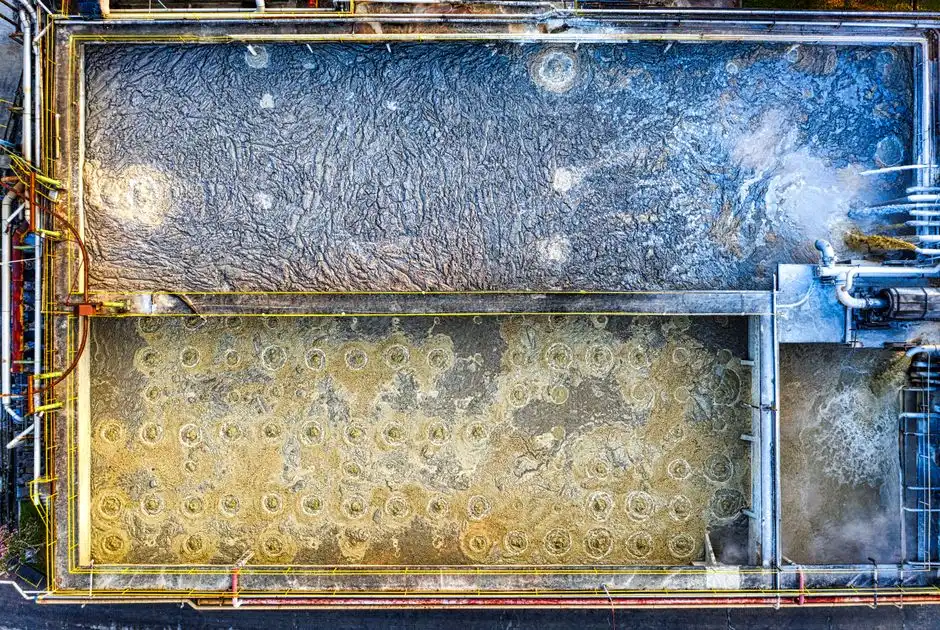
Compliance must be demonstrated at the industrial user’s end-of-pipe discharge point, using monitoring and records that match the control mechanism and local limits. EPA’s pretreatment guidance identifies the point of connection to the POTW collection system as the location where POTWs impose local limits. Sampling and monitoring plans should therefore identify the representative discharge point rather than relying only on upstream process samples.
Use automatic chemical dosing to maintain pH and feed treatment chemicals consistently. The control logic should show the measured value, control target, alarms, chemical inventory response, and operator actions rather than relying on undocumented manual adjustments. Verify the sensors and sample points against the monitoring plan.
Operating procedures should cover equalization levels, batch holds, sampling, calibration, chemical inventory, alarm response, escalation, and release authorization. Retain monitoring results, laboratory analyses, flow records, calibration records, batch-release documentation, and corrective actions for inspections and reporting.
A failed result should trigger a hold and investigation, not an immediate uncontrolled retry. Confirm the sample, identify whether dosing, process variation, or a batch release caused the excursion, assess potential pass-through or interference, document corrective action, and authorize further discharge only after the required release checks are complete. This sequence turns treatment operation into defensible compliance evidence.
What Drives Cost and Supplier Selection?
Cost depends on the treatment objective, wastewater chemistry, flow, and the applicable limits rather than equipment brand alone. EnviroTech’s 2026 Killeen service page provides two commercial estimates: simple pH adjustment at $300–$800 per month and comprehensive metals removal at $2,000–$10,000 per month. These vendor estimates vary with flow, contaminant type, and discharge limits; they are not universal Killeen tariffs or quotations for a particular plant.
Each proposal should include the process basis, influent data, preliminary mass balance, hydraulic calculations, control narrative, equipment scope, commissioning plan, and stated compliance exclusions. Ask the supplier which permit or local-limit assumption was used in sizing and which inputs remain the owner’s responsibility. Evaluate the complete train—equalization, pH control, physical removal, clarification, biological treatment where needed, and monitoring—not one machine in isolation.
For operating-cost comparisons, the 2026 wastewater treatment labor-cost benchmark is a separate reference for staffing and operating labor. The DAF versus clarifier selection for chemical wastewater comparison illustrates why the buyer should select by treatment function and verified influent rather than by a generic equipment preference.
Frequently Asked Questions
Which limit controls a chemical plant’s discharge to a Killeen sewer?
The most stringent applicable requirement controls. Check the general and specific prohibitions, the current categorical subpart for the plant’s actual production activity, and the receiving POTW’s local limits and control mechanism. Research does not establish a universal Killeen limit for every chemical facility.
What wastewater data is needed before buying treatment equipment?
Request representative data by production stream: flow,
Frequently Asked Questions
What pretreatment limits apply to a chemical plant in Killeen, Texas?
Chemical plants in Killeen must adhere to the City of Killeen’s Industrial Pretreatment Program, which aligns with federal EPA categorical pretreatment standards. Facilities are typically restricted by local limits including a maximum pH range of 5.0 to 11.0, Total Suspended Solids (TSS) limits often capped at 300-500 mg/L, and specific concentrations for heavy metals like Chromium, Copper, and Zinc. Failure to meet these numerical thresholds can result in surcharges or the revocation of the facility's wastewater discharge permit.
Do I need DAF or a lamella clarifier for chemical wastewater?
The choice depends on the specific gravity and nature of your contaminants. Dissolved Air Flotation (DAF) is typically required if your wastewater contains high concentrations of fats, oils, grease (FOG), or low-density suspended solids that require microscopic air bubbles for buoyancy-driven separation. A lamella clarifier is superior for high-density inorganic solids and metal hydroxides where gravity settling is the primary mechanism; the inclined plate design allows for a 50-80% smaller footprint compared to conventional circular clarifiers, which is advantageous for space-constrained sites.
How should equalization be sized for batch chemical wastewater?
Equalization basins for batch processing should be sized to hold at least 1.5 to 2 times the volume of the largest single batch discharge to account for diurnal flow variations and process upsets. For chemical plants, the basin must include active mixing—typically via mechanical agitators or coarse-bubble aeration—to ensure a homogenous influent concentration before downstream treatment, preventing chemical shock loads that could exceed pH or toxicity limits.
What should I include when comparing industrial wastewater equipment suppliers?
When evaluating vendors for the Killeen market, require a detailed submittal package that includes technical specifications for materials of construction (such as 316L stainless steel or HDPE compatibility with your specific chemicals), documented pilot testing results, and a guaranteed Performance Bond. You should specifically request a list of three comparable installations within the Central Texas region and verify the availability of local field service technicians to ensure compliance with Killeen’s rapid-response requirements for system failures.
How much does chemical wastewater pretreatment cost near Killeen?
Capital expenditure for a small-to-medium scale industrial pretreatment system in the Killeen area typically ranges from $150,000 to $750,000, depending on the complexity of the treatment train and the required automation level. Operational costs, including chemical dosing (coagulants/flocculants), sludge dewatering and disposal fees, and utility consumption, generally add an annual O&M cost of $30,000 to $120,000. These figures are highly dependent on the specific influent loading rates and the regulatory stringency of the discharge permit at the time of system commissioning.