What Changes When ExxonMobil Acquires an Arizona Plant?
Wastewater requirements for an ExxonMobil acquisition in Arizona depend on the acquired plant’s actual permits, streams, treatment assets and discharge destinations—not the buyer’s identity alone. The buyer should map every stream, obtain applicable ADEQ, sewer and groundwater authorizations, and ask each authority whether the ownership change requires notice, amendment, transfer or a new permit. No supplied evidence identifies an ExxonMobil Arizona plant, its permit number, flow, outfall or effluent limits, so no plant-specific compliance or cost conclusion can be made without verified acquisition data.
The acquisition changes the party evaluating future compliance, but it does not create one universal wastewater obligation. A stock transaction and an asset transaction may have different consequences for permits held by a subsidiary, an operating company or a facility owner. The controlling question is whether ExxonMobil can continue operating every wastewater discharge within valid authorizations after closing.
The administrative outcome depends on the permit and the transaction. A regulator may require a notice, responsible-party update, permit amendment, transfer approval or new authorization. Operational changes can trigger a substantive review even if the legal owner does not change, including new production, changed chemicals, expanded flows or a new treatment train.
Do not rely on corporate identity or a seller’s compliance summary as the legal baseline. Review the original authorizations, modifications, correspondence and enforcement history, and use the plant-acquisition wastewater due-diligence framework to organize the legal and engineering work. A related acquisition workflow for an industrial plant can support the same sequence: establish the site baseline, confirm the transfer path, reconcile operations and then assess treatment.
Map the Wastewater Route Before Reviewing Permits
Each stream’s destination determines the controlling regime; an industrial site can simultaneously have direct-discharge, sewer, groundwater, reuse and zero-discharge obligations. Build the inventory before reviewing permit language so that each authorization is tested against the right stream, authority and operating condition.
- Identify each source, process origin, sampling point, flow pattern, seasonality, destination and responsible operator.
- Separate process water, contact water, stormwater, sewage, contaminated runoff and imported wastewater.
- Determine whether water is discharged, reused, recycled, disposed, stored or transported for treatment.
- Assign an authority and evidence request to every route.
Do not treat a zero-discharge facility as a permitted discharger. A zero-discharge operation manages water without an authorized outfall, but it still requires evidence of containment, storage, treatment, recycling and contingency capacity. Freeport-McMoRan’s 2017 CDP response stated that most company mining operations were managed as zero-discharge facilities and only a few discharged water; that company-level context does not establish the target’s classification.
Reclaimed water may be an operational input rather than a discharge. The same 2017 CDP response reported 29,700 megaliters of wastewater received from another organization in 2016 and total withdrawals of 329,800 megaliters. For the target, request the supply agreement, governing permit, quality terms, measurement records and confirmation that continuity will survive the transaction.
Also keep Arizona direct potable reuse in a separate workstream. Ariz. Admin. Code tit. 18, § R18-9-A801 defines the relevant direct potable reuse classification; it is not a general industrial treatment standard.
| Wastewater route | Primary authority or control | Evidence to obtain |
|---|---|---|
| Direct discharge | ADEQ discharge authorization | Original permit, attachments, amendments, monitoring and discharge records |
| Municipal or industrial sewer | Sewer authority’s industrial pretreatment requirements | Current permit, local limits, prohibited discharges, surcharges and enforcement history |
| Groundwater or land disposal | Applicable groundwater, containment, land-use or aquifer-protection authorization | Authorization, liner or containment evidence, monitoring and closure obligations |
| On-site reuse or recycling | Water-quality, reuse, air and other applicable approvals | Quality criteria, supply contracts, monitoring and contingency plan |
| Zero discharge | Site-specific containment, treatment and storage obligations | Water balance, pond or tank records, system capacity and emergency controls |
| Direct potable reuse | ADEQ advanced water purification pathway, if the project qualifies | ADEQ applicability determination, source-water characterization and pilot documentation |
Determine Which Arizona Authorizations Control

The permit file must identify the legal requirement, effective date, compliance condition and transaction action for every discharge pathway. Missing documents should remain an unresolved item rather than being treated as evidence that no permit is needed.
| Authorization path | Extract from the permit file | Confirm with the authority |
|---|---|---|
| ADEQ direct discharge | Effluent limits, averaging periods, monitoring points, sampling frequency, analytical methods, reporting deadlines and compliance schedules | Whether the ownership change requires notice, amendment, transfer approval or a new authorization |
| Industrial pretreatment | Local limits, prohibited discharges, monitoring, surcharge calculation, sampling authority and enforcement history | The sewer authority’s written change-of-ownership position and available treatment capacity |
| Groundwater, land disposal or on-site treatment | Containment, liner, monitoring, reporting, closure and corrective-action requirements | Whether the transaction changes the operator, facility description or responsible party |
| Direct potable reuse | Advance permit, source-water characterization, pilot work, monitoring and annual reporting | Whether the proposed use legally qualifies and which current provisions govern |
Request original ADEQ industrial wastewater, discharge, pretreatment, groundwater and aquifer-protection documents, together with modifications, renewals, monitoring reports, notices of violation, consent orders and agency correspondence. For direct discharge, do not infer numerical limits from examples; use the limits and compliance schedules in the target’s applicable authorization.
For sewer discharge, obtain the current pretreatment permit and local rules rather than applying generic Arizona limits. For groundwater or on-site disposal, examine containment and monitoring evidence, closure duties and unresolved corrective actions.
For a project that may qualify as direct potable reuse, the U.S. EPA’s October 2025 REUSExplorer summary identifies advance permitting under § R18-9-B806, applications under § R18-9-C816 and an annual report due by March 30 under § R18-9-E831. Confirm the governing provisions and project classification directly with ADEQ.
Do not transfer unrelated permit data into the acquisition file. ADEQ Permit No. 99245, identified by EPA in its April 30, 2025 order, applies to Freeport-McMoRan Morenci Inc. in Greenlee County. Likewise, the cited Arizona Title V provisions concern air-quality monitoring, recordkeeping and reporting—not wastewater obligations.
Test the Permit File Against Current Operations
Permit compliance must be demonstrated against actual plant conditions, not only against a seller’s representation. Reconcile every permitted discharge, monitoring obligation, reporting deadline, corrective-action deadline and financial-assurance requirement with the physical piping, outfalls and operating record.
Request at least one year of influent and effluent analytical data, operating-flow records, storm-event data, bypass and spill logs, pond-level records and sampling chain-of-custody documentation. Compare laboratory results with discharge-monitoring reports, then investigate missed samples, late reports, exceedances, unresolved corrective actions, unpermitted discharges and inconsistencies in analytical methods.
Build a wastewater mass balance around the operating envelope. Evaluate average and peak flows, storm runoff, production rates, downtime and planned expansion. A steady-state calculation does not capture rainfall, power loss, equipment failure, contamination or a sudden production increase. Model where water goes if reuse, recycling or zero-discharge operation is interrupted; the failure path may create a discharge that is absent from normal operating plans.
Test the installed system rather than its nameplate rating. Review redundancy, chemical and consumable supply, controls, alarms, sludge handling, operator competency, maintenance history, bypasses and manual interventions. The mining wastewater sewer-limit compliance review illustrates why sewer discharge requires both permit reconciliation and operating-capacity evidence.
Keep direct potable reuse classification and ADEQ confirmation separate from conventional industrial-wastewater permitting. The former addresses whether a project falls within a specific reuse pathway; it does not replace review of the plant’s actual discharge authorizations.
Select Treatment Only After the Compliance Path Is Known
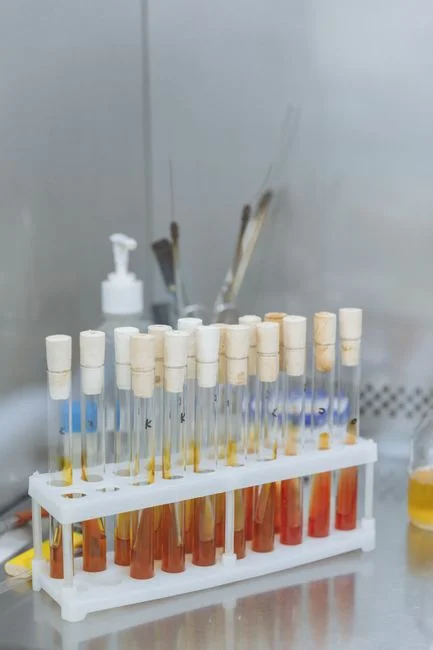
Treatment should be selected from measured pollutant load, flow variation, applicable effluent performance, residual handling and site constraints. A catalog capacity is a screening value; it is not proof of permit compliance or an adequate design for the acquired plant.
| Screening option | Applicability indicated by site evidence | Catalog-stated screening value | Required verification |
|---|---|---|---|
| DAF | Suspended solids, oil and grease, FOG or colloidal material | 4–300 m³/h across 13 standard models | Acquired-site test, chemical consumption and sludge volume |
| MBR | Biological treatment, solids separation and membrane polishing | 10–2,000 m³/day; near-reuse-quality effluent below 1 μm filtration | Organic loading, membrane condition, cleaning and downtime |
| UF | Solids, colloid and bacteria removal or RO pretreatment | 2,000–40,000 L/h; 0.03 μm PVDF membrane; automatic backwash | Integrity testing, backwash frequency and recovery |
| Integrated purification | High-turbidity water within the stated application envelope | Up to 3,000 mg/L to below 3 mg/L turbidity at 10–200 m³/h | Feed-water range and performance under actual conditions |
| Solids handling | Clarification and dewatering of generated residuals | Clarifier surface-loading rates of 20–40 m/h; plate-and-frame filtration areas of 1–500 m² | Sludge characteristics, filter duty, cake handling and disposal route |
These values come from the HydropureWater catalog, not from the unidentified plant’s permit or operating data. For example, an industrial DAF system for solids, oil and FOG removal can screen flotation duties, while an integrated MBR wastewater treatment system can screen biological and membrane-treatment alternatives. The DAF versus clarifier for mining wastewater comparison is useful for structuring an engineering review, not for assigning a required technology.
Use chemical dosing only after the required chemistry, flow-paced control, containment, supply and operator-response needs are defined. Require a performance test using acquired-site wastewater against the actual permit or sewer conditions. The test should establish chemical consumption, sludge generation, utilities, staffing, redundancy and residual disposal. Where the target remains unidentified, equipment selection remains provisional until flow, chemistry, limits and existing condition are verified.
Convert Findings Into Closing Conditions and Capital Decisions
Every unresolved wastewater issue should become a transaction decision with evidence, an owner, a deadline and a remedy. A compliance blocker is different from a monitoring correction or an efficiency opportunity; only issues supported by the site record should become conditions, price adjustments or indemnities.
| Risk rating | Example finding | Transaction response | Required record |
|---|---|---|---|
| Red | No demonstrated authority to discharge; unresolved transfer status; material uncorrected exceedance; treatment incapable of required performance | Closing condition, regulator-approved cure, price adjustment or seller-backed indemnity | Permit correspondence, compliance history, performance test and capital estimate |
| Amber | Incomplete monitoring history; residual classification uncertain; permit modification or near-term capital need identified | Escrow, reserve, seller credit, covenant or funded post-closing action | Gap analysis, authority determination, vendor proposal and disposal records |
| Green | Authority confirmed, obligations verified, treatment performance demonstrated and liabilities allocated | Document delivery and normal compliance tracking | Complete permit file, baseline data, test results and assignment language |
Allocate pre-closing violations, legacy sludge, unpermitted discharges, outstanding monitoring and capital remediation expressly in the purchase-and-sale documents. A closing certificate should not erase liability that survives the transaction. Track each item by authority, requirement, responsible person, evidence, deadline, capital cost and residual risk.
Price only identified gaps using vendor proposals and ExxonMobil’s site-specific flow, chemistry, labor and energy data. The supplied research contains no defensible ExxonMobil Arizona plant-specific wastewater cost figure, so neither a purchase-price adjustment nor a capital reserve can be stated reliably without those inputs.
Frequently Asked Questions
Does ExxonMobil need a new Arizona wastewater permit after acquiring the plant?
Not necessarily, and the supplied research cannot answer this for an unidentified target. The applicable authorization may permit a notice, responsible-party update, amendment, transfer approval or new permit after an ownership change. Ask ADEQ or the relevant sewer authority to confirm the path for each authorization, and make required approvals or filings closing conditions where appropriate. Operational changes may require review even if the permit transfers without substantive modification.
What wastewater data should the buyer request before closing?
Request all permits and modifications, enforcement records, at least one year of analytical and flow data, storm and bypass logs, spill records, residual and sludge records, sampling chain-of-custody files, drawings, equipment condition, utility consumption and operator training records. The buyer should also obtain the governing reclaimed-water supply agreement and the seller’s wastewater mass balance. These records connect legal requirements to actual operations.
How much will wastewater treatment cost after the acquisition?
No supported plant-specific number is available from the supplied evidence. A defensible estimate requires measured flow, wastewater chemistry, applicable permit or sewer limits, existing treatment capacity, asset condition, residual handling and site-specific vendor pricing. Request a scoped engineering estimate and written supplier proposal, then add the buyer’s labor, utilities and consumables assumptions. Without those inputs, a generic capital figure is not transaction evidence.
Should the buyer select DAF, MBR or UF before the permit review is complete?
Use them for technical screening only. Final selection and sizing should follow wastewater characterization, authorization review, installed-capacity assessment and acquired-site performance testing. Require suppliers to state the design basis, test protocol, utilities, chemicals, residuals, exclusions, warranty conditions and training. This approach is consistent with the treatment-selection review for an acquired industrial facility, but the target’s own data must control.
Which unresolved findings should block closing?
Unsupported authority to discharge, unresolved permit-transfer status, treatment capacity that cannot meet the applicable conditions, and uncorrected material exceedances are candidates for a closing decision. Historical contamination, legacy sludge, missing monitoring records and capital remediation may instead require specific indemnities, reserves or covenants, depending on the evidence. The transaction team should retain every unresolved item as an explicit risk rather than treating a permit-transfer filing as the end of due diligence.