What Makes Pharmaceutical Wastewater Difficult to Treat?
Pharmaceutical wastewater treatment in Côte d’Ivoire should be designed around three linked questions: what is in the stream, which contaminants control treatment performance, and where will the treated water be discharged or reused. The June 2024 Journal of Water Process Engineering review, “Navigating the complexity of pharmaceutical wastewater treatment,” reports that complex manufacturing and multiple raw materials generate pharmaceutical intermediates and metabolic by-products alongside residual pharmaceuticals. The same review describes the resulting effluent as highly toxic and difficult to purify, with potential human-health and environmental concerns associated with residual pharmaceuticals and antibiotic resistance. A process effective for sanitary sewage should therefore not be assumed suitable without stream-specific characterization.
The review identifies COD, BOD, TN, NH3-N, TP, TSS and SS as principal analytical parameters. Its summary of pharmaceutical wastewater characteristics draws on a study based on 229 samples, which supports multi-batch sampling rather than reliance on one clean-out sample. Sampling should cover production, cleaning and laboratory waste, and identify whether streams can be segregated.
Keep four contaminant groups separate. Soluble active pharmaceutical ingredients and API residues are not the same load as high-BOD bulk organics. Refractory compounds may persist through biological treatment, while suspended solids, inhibitory constituents and cleaning chemicals can change biological performance. This distinction should drive sampling and equipment selection; industrial effluent treatment planning for West Africa provides a broader site-planning reference, but local stream data must remain the controlling input.
The Right Treatment Train for Ivory Coast Projects
Pharmaceutical wastewater treatment plants combine pretreatment, biochemical treatment, and advanced treatment to manage complex effluent. For a Côte d’Ivoire project, that sequence should be converted into a site-specific process flow: equalization and characterization; solids, oil or grease removal where justified; biological treatment; membrane separation where required; and final polishing for residual pharmaceuticals or refractory organics.
Equalization is the first engineering checkpoint, not merely an inlet tank. It stabilizes batch flows, gives the laboratory a defined sample basis and protects downstream biology. If solids, oil and grease or colloidal material are significant, a DAF wastewater pretreatment system can remove them before biological treatment. DAF does not remove dissolved API residues by itself, so its role must be stated as load reduction and solids capture.
Biological treatment should then address biodegradable bulk organics, with process selection driven by biodegradability, inhibition, temperature, loading and operating capability. Where a membrane-based biological stage is justified, an integrated MBR membrane bioreactor combines biological treatment with membrane filtration and can support industrial process-water or reuse requirements.
Final polishing has a different job. Activated carbon removes residual dissolved organics that pass through conventional biological and physical stages; advanced oxidation can chemically treat selected residual compounds. The exact train should be fixed only after representative effluent testing and confirmation of the discharge or reuse destination in Côte d’Ivoire.
| Process stage | Primary role | Selection evidence required |
|---|---|---|
| Equalization and characterization | Stabilize flow and define the treatment basis | Batch-flow record, campaign sampling and analytical results |
| DAF or other solids/oil pretreatment | Remove suspended solids, FOG, oil and grease and colloidal material | Solids, FOG, oil-and-grease and colloid data |
| Biochemical treatment | Remove biodegradable bulk organics and support nitrogen management | COD, BOD, nutrients, inhibition, temperature and loading data |
| MBR or other membrane stage | Combine biological treatment with membrane separation where required | Effluent target, flux behavior, pretreatment needs and recovery requirements |
| Activated-carbon or advanced oxidation | Polish residual dissolved or refractory contaminants | Compound-specific analysis and bench or pilot results |
Match Equipment to the Contaminant Profile
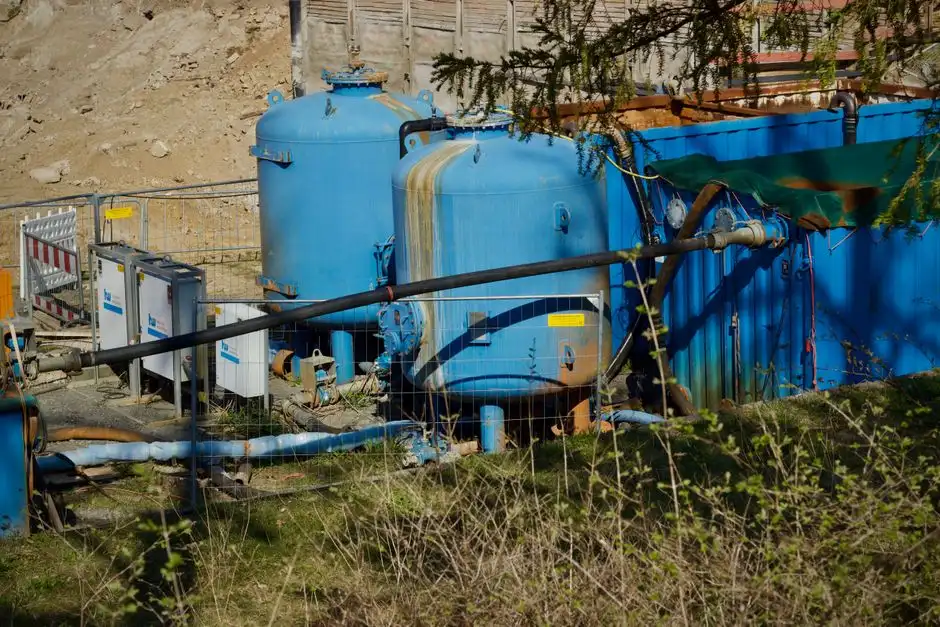
Equipment selection follows the contaminant profile, with each technology evaluated for a defined role rather than as a universal pharmaceutical wastewater solution. The decision depends on what remains after upstream treatment, the required effluent quality and the consequences of membrane or carbon failure.
DAF is a physical pretreatment option for suspended solids, FOG, oil and grease and colloidal matter. The supplied DAF catalog covers 4–300 m³/h across 13 standard models. That range establishes catalog boundaries only; it does not establish the flow or loading for a pharmaceutical plant. An MBR combines biological treatment with membrane filtration, and the supplied MBR catalog covers 10–2,000 m³/day, uses submerged PVDF membranes and specifies filtration below 1 μm for industrial process-water and reuse applications.
The supplied UF catalog covers 2,000–40,000 L/h, uses 0.03 μm PVDF membranes and provides automatic backwash and air scour. UF is a filtration barrier: it should not be presented as a solution for refractory dissolved organics or API residues that remain below its separation threshold.
Chlorine dioxide has a different function again. The supplied application scope covers microbial control in hospital effluent, industrial cooling loops and process wastewater; it does not establish it as a bulk-COD removal process. The June 2024 review lists UASB, SBR, CASS, MBR, ICEAS, MSBR, EGSB, BAF and ABR among biological approaches, underscoring that the biological stage must reflect the actual stream and local operating capability.
| Option | Documented role or scope | Decision point |
|---|---|---|
| DAF | Suspended solids, FOG, oil and grease and colloidal matter; catalog: 4–300 m³/h, 13 standard models | Use before biology when the characterized solids or oil load justifies it |
| MBR | Biological treatment plus membrane filtration; submerged PVDF, below 1 μm; catalog: 10–2,000 m³/day | Use where biological separation and reuse quality justify the added controls and maintenance |
| UF | 0.03 μm PVDF, automatic backwash and air scour; catalog: 2,000–40,000 L/h | Use as a barrier, not as a substitute for refractory-organic removal |
| Chlorine dioxide | Microbial control in hospital effluent, industrial cooling loops and process wastewater | Use for disinfection or oxidation duty, not assumed bulk-COD removal |
For the biological stage, request the reviewer to demonstrate how each proposed process responds to the site’s biodegradability, inhibition, temperature and loading profile. This is also where UF system performance and operating requirements should be evaluated against pretreatment needs rather than selected by nominal flow alone.
How Activated Carbon and Advanced Polishing Should Be Positioned
Activated carbon removes contaminants by adsorption, where dissolved pollutants move from the water into the carbon’s pores and attach to its surface. The mechanism is governed by contaminant chemistry, pore structure, hydraulic conditions and contact time. Spent carbon retains the removed material and requires an appropriate management route.
According to the activated-carbon supplier, micropores below 2 nm favor low-molecular-weight organics, while mesopores from 2–50 nm provide access for larger pharmaceutical molecules and humic substances. The same supplier states that thermal reactivation at 900 °C restores 90–95% of adsorption capacity and permits multiple service cycles. These are supplier-supplied carbon data, not a guarantee of performance on a specific Côte d’Ivoire effluent.
That distinction matters during design. Pharmaceutical effluents contain residual APIs and synthesis intermediates, but their adsorption behavior cannot be inferred from product names alone. The supplier supports bench-scale testing with real effluent to forecast carbon use rate and bed life before full-scale commitment. Buyers should require test data to identify the carbon grade, contact conditions, expected loading, replacement interval and spent-carbon handling route.
Advanced oxidation should be evaluated separately and against named residual compounds identified during analysis. The supplied research does not establish a universal oxidation technology, dose or guaranteed removal for a pharmaceutical effluent. A claim that either activated-carbon polishing or advanced oxidation will solve the site problem should therefore be tested against actual effluent and the required discharge or reuse quality. An RO and UF membrane-element review is useful for filtration selection, but it does not remove the need to identify dissolved contaminants.
Build a Site-Appropriate Design and Compliance Brief
A comparable design brief must give bidders the same stream, destination and performance basis. Start with production, cleaning and laboratory wastewater records showing batch variation, flow peaks, stream segregation and the pharmaceutical products and synthesis intermediates handled. These are site facts a supplier cannot responsibly infer from “pharmaceutical effluent” alone.
Request COD, BOD, TN, NH3-N, TP, TSS and SS results, supported by compound-specific analysis selected from the plant’s API and synthesis chemistry. Define sampling frequency, analytical methods and whether results represent individual batches, campaign composites or daily composites. The sampling plan should also establish whether inhibition testing or toxicity assessment is needed; the June 2024 review’s evidence that the effluent may be highly toxic does not itself provide a toxicity threshold for design.
The intended discharge route must be recorded: municipal sewer, treated-water outlet, receiving water or reuse. Obtain confirmation of the current applicable Côte d’Ivoire requirements for that route from the responsible local authority before final design. The supplied research does not establish a Côte d’Ivoire discharge limit, so any numerical guarantee must come from the confirmed local requirement or another formally applicable basis.
Ask bidders to price pretreatment, biological treatment, membranes, advanced treatment, disinfection, sludge handling, controls and utility demand as separate scopes. Each proposal should state assumptions, startup provisions, operator training, spare parts, remote support and performance tests. Generic catalog capacity is not proof of suitability.
| Brief item | Minimum information bidders must receive or return |
|---|---|
| Wastewater basis | Flow record, batch peaks, stream segregation, products and intermediates, and representative analyses |
| Discharge or reuse route | Named destination, applicable local conditions, required effluent quality and sampling point |
| Process scope | Separate pretreatment, biology, membranes, polishing, disinfection, sludge and utility duties |
| Commercial assumptions | Design flow, duty cycle, site utilities, startup, training, spares, support and performance tests |
This information request also supports industrial effluent treatment planning for West Africa, while the final design basis must reflect the particular facility and confirmed discharge route.
Pilot, Procure and Commission the Treatment Plant
Pilot testing converts the design brief into evidence before a full-scale purchase. Begin with a process-flow diagram showing every production, cleaning and laboratory waste stream; every unit operation; bypasses; reuse connections; and sampling points. Mark where streams are segregated, equalized or combined, because the mixed influent may differ materially from any individual waste stream.
Run bench or pilot work on representative samples across operating campaigns. The activated-carbon supplier specifically supports this approach for forecasting carbon use rate and bed life. For the complete train, compare removal of bulk organics, nutrients, solids, residual APIs and any compounds identified as inhibitory. Record reagent consumption, sludge or spent-media generation, energy demand and control response rather than documenting only the best final sample.
Compare bids on a consistent basis: design flow, analytical method, duty cycle, recovery, sludge production, energy demand, controls scope and warranty. If DAF and clarification are being compared, use the DAF versus clarifier selection framework to test the physical-removal objective, footprint, operating controls and residues against representative effluent.
Before acceptance, define factory acceptance testing, site acceptance testing, operator training and a final-discharge sampling protocol. Include a contingency review for changed products, production expansion or batch-composition shifts. The June 2024 review identifies evolving pollutants and treatment challenges, so a treatment train that fits today’s product mix may not fit tomorrow’s.
Frequently Asked Questions
What inputs are needed to size a pharmaceutical wastewater treatment plant in Côte d’Ivoire?
Provide representative flow data, production and cleaning batch peaks, wastewater analyses for COD, BOD, TN, NH3-N, TP, TSS and SS, compound-specific results, the reuse target and the confirmed discharge route. Catalog capacity cannot substitute for these inputs. The supplier should state its design flow, duty cycle and basis for residual loading.
How should suppliers be selected for a pharmaceutical wastewater treatment package?
Check process guarantees against the confirmed effluent requirement
Frequently Asked Questions
How much does a pharmaceutical wastewater treatment plant cost in Ivory Coast?
The capital expenditure for a pharmaceutical wastewater treatment plant in Ivory Coast typically ranges from $150,000 to over $1.5 million USD, depending on the daily flow rate and the complexity of the chemical compounds present. Small-scale modular systems may start at the lower end, while high-capacity facilities requiring advanced oxidation processes (AOP) for complex active pharmaceutical ingredients (APIs) scale significantly higher due to imported specialized equipment and civil engineering requirements.
Operational costs must also account for local electricity tariffs and the importation of chemical reagents, which often fluctuate. It is standard to budget an additional 10-15% of the total capital investment annually for maintenance, sludge disposal compliance, and analytical monitoring to meet Ivorian environmental standards.
Which pharmaceutical wastewater treatment equipment should I ask suppliers to quote?
To ensure compliance with local environmental regulations, your request for quotation should specify primary, secondary, and tertiary treatment stages. Essential equipment includes equalization tanks with pH control systems, dissolved air flotation (DAF) units for initial organic load reduction, and biological reactors. For pharmaceutical-specific streams, you must include advanced oxidation systems such as Ozone generators (O3) or UV/H2O2 reactors to break down non-biodegradable APIs.
Additionally, prioritize the inclusion of membrane filtration units (such as ultrafiltration or MBR) and activated carbon adsorption towers for polishing the effluent. Ensure that all sensors—specifically TOC (Total Organic Carbon), COD (Chemical Oxygen Demand), and pH probes—are industrial-grade and compatible with standard SCADA systems for real-time monitoring.
How do I size a pharmaceutical wastewater treatment system for production peaks?
Sizing must be based on the maximum daily hydraulic load during peak production cycles rather than average daily output. Engineers typically apply a peaking factor of 1.5 to 2.0 to the average flow rate to ensure the equalization tank has sufficient hydraulic retention time (HRT) to buffer high-concentration batch discharges. This prevents shock loading of biological treatment stages, which can otherwise lead to biomass toxicity and system failure.
You should calculate your sizing based on a worst-case scenario where 100% of production lines are active simultaneously. Ensure that the equalization basin capacity is designed to store at least 24 hours of peak influent to allow for flow equalization and consistent chemical dosing, which is critical for maintaining stable treatment efficiency in variable pharmaceutical effluent.
What wastewater analyses are needed before choosing a treatment process in Côte d’Ivoire?
Before selecting a process, you must conduct a comprehensive characterization of the wastewater, focusing on COD, BOD5 (Biochemical Oxygen Demand), and the BOD/COD ratio to determine biodegradability. It is essential to test for specific parameters including total nitrogen, total phosphorus, heavy metals, and toxicity assays (such as Ecotoxicity tests). Furthermore, a GC-MS (Gas Chromatography-Mass Spectrometry) analysis is required to identify specific APIs and solvents present in the waste stream.
These analyses must be performed by an accredited laboratory in Côte d’Ivoire or a qualified international partner to ensure results align with the standards set by the Ivorian Ministry of Environment, Sustainable Development and Ecological Transition. Identifying non-biodegradable fractions is the most critical step, as it dictates whether biological treatment alone is sufficient or if advanced chemical oxidation is required.
Is MBR or activated carbon the better choice for residual pharmaceutical pollution?
The choice depends on the specific nature of the residual pollutants: Membrane Bioreactors (MBR) are superior for high-efficiency removal of suspended solids and bacteria, providing a consistent high-quality effluent suitable for reuse. However, MBRs are biological processes and may struggle with persistent, non-biodegradable pharmaceutical compounds that pass through the biomass unaffected.
Activated carbon, specifically Granular Activated Carbon (GAC) or Powdered Activated Carbon (PAC), is significantly more effective at adsorbing dissolved organic micro-pollutants and trace APIs that biological systems cannot degrade. In most pharmaceutical applications, a combined approach—using MBR for bulk organic removal and activated carbon as a tertiary polishing step—is considered the industry best practice for achieving compliance with stringent discharge limits for complex chemical effluents.